Inhaltsangabe
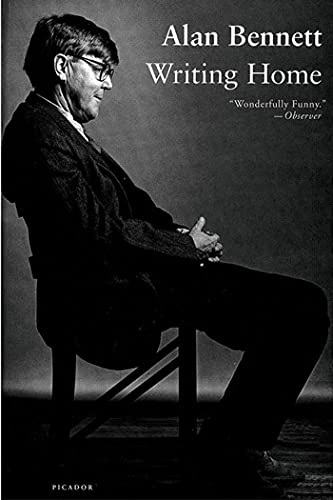
Bringing together the hilarious, revealing, and lucidly intelligent writing of one of England's best known literary figures, Writing Home includes the journalism, book and theater reviews, and diaries of Alan Bennett, as well as "The Lady in the Van," his unforgettable account of Miss Shepherd, a London eccentric who lived in a van in Bennett's garden for more than twenty years. This revised and updated edition includes new material from the author, including more recent diaries and his introduction to his Oscar-nominated screenplay for The Madness of King George. A chronicle of one of the most important literary careers of the twentieth century, Writing Home is a classic history of a life in letters.
Die Inhaltsangabe kann sich auf eine andere Ausgabe dieses Titels beziehen.
Über die Autorin bzw. den Autor
Alan Bennett has been one of England's leading dramatists since the success of Beyond the Fringe in the 1960s. His work includes the Talking Heads television series, and the stage plays Forty Years On, The Lady in the Van, A Question of Attribution, and The Madness of King George III. His play, The History Boys (now a major motion picture), won six Tony Awards, including best play, in 2006. In the same year his memoir, Untold Stories, was a number-one bestseller in the United Kingdom.
Auszug. © Genehmigter Nachdruck. Alle Rechte vorbehalten.
Writing Home
By Alan BennettPicador
Copyright © 2003 Alan BennettAll right reserved.
ISBN: 9780312422578
The Treachery of Books
‘What you want to be’, Mam said to my brother and me, ‘is gentlemen farmers. They earn up to £10 a week.’ This was in Leeds some time in the early years of the war, when my father, a butcher at Armley Lodge Road Co-op, was getting £6 a week and they thought themselves not badly off. So it’s not the modesty of my mother’s aspirations that seems surprising now but the direction. Why gentlemen farmers? And the answer, of course, was books.
We had, it’s true, had some experience of a farm. I was five when the war started, and Monday 4 September 1939 should have been my first day at school; but that was not to be. I wish I could record our family as gathered anxiously round the wireless, as most were at eleven o’clock that Sunday morning, but I already knew at the age of five that I belonged to a family that without being in the least bit remarkable or eccentric yet managed never to be quite like other families. If we had been, my brother and I would have been evacuated with all the other children the week before, but Mam and Dad hadn’t been able to face it. So, not quite partaking in the national mood and, as ever, unbrushed by the wings of history, Mr Chamberlain’s broadcast found us on a tram going down Tong Road into Leeds. Fearing the worst, my parents had told my brother and me that we were all going out into the country that day and we were to have a picnic – something I had hitherto only come across in books. So on that fateful Sunday morning what was occupying my mind was the imminent conjunction of life with literature; that I should remember nothing of the most momentous event in the twentieth century because of the prospect of an experience found in books was, I see now, a melancholy portent.
Nor was the lesson that life was not going to live up to literature slow in coming, since the much-longed-for picnic wasn’t eaten as picnics were in books, on a snowy tablecloth set in a field by a stream, but was taken on a form in the bus station at Vicar Lane, where we waited half that day for any bus that would take us out of the supposedly doomed city.
Early that afternoon a bus came, bound for Pateley Bridge, the other side of Harrogate. Somewhere along the way and quite at random the four of us got off and our small odyssey was ended. It was a village called Wilsill, in Nidderdale. There were a few houses, a shop, a school and a church and, though we were miles from any town, even here the stream had been dammed to make a static water tank in readiness for the firefighters and the expected bombs. Opposite the bus-stop was a farm. My father was a shy man and, though I’m sure there were many larger acts of bravery being done elsewhere that day, to knock at the door of the farm and ask some unknown people to take us in still seems to me to be heroic. Their name was Weatherhead and they did take us in and without question, as people were being taken in all over England that first week of the war.
That night Dad took the bus back to Leeds, my mother weeping as if he were returning to the front, and there at Wilsill we stayed – but for how long? My brother, then aged eight, says it was three weeks; to me, three years younger, it seemed months; but, weeks or months, very happy it was until, once it became plain nothing was going to happen for a while, we went back home, leaving Byril Farm (which is now, alas, not a farm and has carriage lamps) standing out in my mind as the one episode in my childhood that lived up to the story-books.
I had read quite a few story-books by this time, as I had learned to read quite early by dint, it seemed to me, of staring over my brother’s shoulder at the comic he was reading until suddenly it made sense. Though I liked reading (and showed off at it), it was soon borne in upon me that the world of books was only distantly related to the world in which I lived. The families I read about were not like our family (no family ever quite was). These families had dogs and gardens and lived in country towns equipped with thatched cottages and mill-streams, where the children had adventures, saved lives, caught villains, and found treasure before coming home, tired but happy, to eat sumptuous teas off chequered tablecloths in low-beamed parlours presided over by comfortable pipe-smoking fathers and gentle aproned mothers, who were invariably referred to as Mummy and Daddy.
In an effort to bring this fabulous world closer to my own, more threadbare, existence, I tried as a first step substituting ‘Mummy’ and ‘Daddy’ for my usual ‘Mam’ and ‘Dad’, but was pretty sharply discouraged. My father was hot on anything smacking of social pretension; there had even been an argument at the font because my aunties had wanted my brother given two Christian names instead of plain one.
Had it been only stories that didn’t measure up to the world it wouldn’t have been so bad. But it wasn’t only fiction that was fiction. Fact too was fiction, as textbooks seemed to bear no more relation to the real world than did the story-books. At school or in my Boy’s Book of the Universe I read of the minor wonders of nature – the sticklebacks that haunted the most ordinary pond, the newts and toads said to lurk under every stone, and the dragonflies that flitted over the dappled surface. Not, so far as I could see, in Leeds. There were owls in hollow trees, so the nature books said, but I saw no owls – and hollow trees were in pretty short supply too. The only department where nature actually lined up with the text was frog-spawn. Even in Leeds there was that, jamjars of which I duly fetched home to stand beside great wilting bunches of bluebells on the backyard window-sill. But the tadpoles never seemed to graduate to the full-blown frogs the literature predicted, invariably giving up the ghost as soon as they reached the two-legged stage when, unbeknownst to Mam, they would have to be flushed secretly down the lav.
It was the same when we went on holiday. If the books were to be believed, every seashore was littered with starfish and delicately whorled shells, seahorses in every rockpool and crabs the like of which I had seen only in Macfisheries’ window. Certainly I never came across them at Morecambe, nor any of the other advertised treasures of the seashore. There was only a vast, untenanted stretch of mud and somewhere beyond it the sea, invisible, unpaddleable and strewn with rolls of barbed wire to discourage any parachutist undiscerning enough to choose to land there.
These evidences of war and the general shortage of treats and toys made me somehow blame the shortcomings of the natural world on the current hostilities. I don’t recall seeing a magnolia tree in blossom until I was fifteen or so, and when I did I found myself thinking ‘Well, they probably didn’t have them during the war.’ And so it was with shells and starfish and all the rest of Nature’s delights: she had put these small treasures into storage for the duration, along with signposts, neon lights and the slot machines for Five Boys chocolate that stood, invariably empty, on every railway platform.
This sense of deprivation, fully developed by the time I was seven or eight, sometimes came down to particular words. I had read in many stories, beginning I suppose with Babes in the Wood, how the childish hero and heroine, lost in the forest, had...
We had, it’s true, had some experience of a farm. I was five when the war started, and Monday 4 September 1939 should have been my first day at school; but that was not to be. I wish I could record our family as gathered anxiously round the wireless, as most were at eleven o’clock that Sunday morning, but I already knew at the age of five that I belonged to a family that without being in the least bit remarkable or eccentric yet managed never to be quite like other families. If we had been, my brother and I would have been evacuated with all the other children the week before, but Mam and Dad hadn’t been able to face it. So, not quite partaking in the national mood and, as ever, unbrushed by the wings of history, Mr Chamberlain’s broadcast found us on a tram going down Tong Road into Leeds. Fearing the worst, my parents had told my brother and me that we were all going out into the country that day and we were to have a picnic – something I had hitherto only come across in books. So on that fateful Sunday morning what was occupying my mind was the imminent conjunction of life with literature; that I should remember nothing of the most momentous event in the twentieth century because of the prospect of an experience found in books was, I see now, a melancholy portent.
Nor was the lesson that life was not going to live up to literature slow in coming, since the much-longed-for picnic wasn’t eaten as picnics were in books, on a snowy tablecloth set in a field by a stream, but was taken on a form in the bus station at Vicar Lane, where we waited half that day for any bus that would take us out of the supposedly doomed city.
Early that afternoon a bus came, bound for Pateley Bridge, the other side of Harrogate. Somewhere along the way and quite at random the four of us got off and our small odyssey was ended. It was a village called Wilsill, in Nidderdale. There were a few houses, a shop, a school and a church and, though we were miles from any town, even here the stream had been dammed to make a static water tank in readiness for the firefighters and the expected bombs. Opposite the bus-stop was a farm. My father was a shy man and, though I’m sure there were many larger acts of bravery being done elsewhere that day, to knock at the door of the farm and ask some unknown people to take us in still seems to me to be heroic. Their name was Weatherhead and they did take us in and without question, as people were being taken in all over England that first week of the war.
That night Dad took the bus back to Leeds, my mother weeping as if he were returning to the front, and there at Wilsill we stayed – but for how long? My brother, then aged eight, says it was three weeks; to me, three years younger, it seemed months; but, weeks or months, very happy it was until, once it became plain nothing was going to happen for a while, we went back home, leaving Byril Farm (which is now, alas, not a farm and has carriage lamps) standing out in my mind as the one episode in my childhood that lived up to the story-books.
I had read quite a few story-books by this time, as I had learned to read quite early by dint, it seemed to me, of staring over my brother’s shoulder at the comic he was reading until suddenly it made sense. Though I liked reading (and showed off at it), it was soon borne in upon me that the world of books was only distantly related to the world in which I lived. The families I read about were not like our family (no family ever quite was). These families had dogs and gardens and lived in country towns equipped with thatched cottages and mill-streams, where the children had adventures, saved lives, caught villains, and found treasure before coming home, tired but happy, to eat sumptuous teas off chequered tablecloths in low-beamed parlours presided over by comfortable pipe-smoking fathers and gentle aproned mothers, who were invariably referred to as Mummy and Daddy.
In an effort to bring this fabulous world closer to my own, more threadbare, existence, I tried as a first step substituting ‘Mummy’ and ‘Daddy’ for my usual ‘Mam’ and ‘Dad’, but was pretty sharply discouraged. My father was hot on anything smacking of social pretension; there had even been an argument at the font because my aunties had wanted my brother given two Christian names instead of plain one.
Had it been only stories that didn’t measure up to the world it wouldn’t have been so bad. But it wasn’t only fiction that was fiction. Fact too was fiction, as textbooks seemed to bear no more relation to the real world than did the story-books. At school or in my Boy’s Book of the Universe I read of the minor wonders of nature – the sticklebacks that haunted the most ordinary pond, the newts and toads said to lurk under every stone, and the dragonflies that flitted over the dappled surface. Not, so far as I could see, in Leeds. There were owls in hollow trees, so the nature books said, but I saw no owls – and hollow trees were in pretty short supply too. The only department where nature actually lined up with the text was frog-spawn. Even in Leeds there was that, jamjars of which I duly fetched home to stand beside great wilting bunches of bluebells on the backyard window-sill. But the tadpoles never seemed to graduate to the full-blown frogs the literature predicted, invariably giving up the ghost as soon as they reached the two-legged stage when, unbeknownst to Mam, they would have to be flushed secretly down the lav.
It was the same when we went on holiday. If the books were to be believed, every seashore was littered with starfish and delicately whorled shells, seahorses in every rockpool and crabs the like of which I had seen only in Macfisheries’ window. Certainly I never came across them at Morecambe, nor any of the other advertised treasures of the seashore. There was only a vast, untenanted stretch of mud and somewhere beyond it the sea, invisible, unpaddleable and strewn with rolls of barbed wire to discourage any parachutist undiscerning enough to choose to land there.
These evidences of war and the general shortage of treats and toys made me somehow blame the shortcomings of the natural world on the current hostilities. I don’t recall seeing a magnolia tree in blossom until I was fifteen or so, and when I did I found myself thinking ‘Well, they probably didn’t have them during the war.’ And so it was with shells and starfish and all the rest of Nature’s delights: she had put these small treasures into storage for the duration, along with signposts, neon lights and the slot machines for Five Boys chocolate that stood, invariably empty, on every railway platform.
This sense of deprivation, fully developed by the time I was seven or eight, sometimes came down to particular words. I had read in many stories, beginning I suppose with Babes in the Wood, how the childish hero and heroine, lost in the forest, had...
„Über diesen Titel“ kann sich auf eine andere Ausgabe dieses Titels beziehen.
Weitere beliebte Ausgaben desselben Titels

Suchergebnisse für Writing Home

Beispielbild für diese ISBN
Writing Home
Anbieter: Wonder Book, Frederick, MD, USA
Verkäuferbewertung 5 von 5 Sternen

Zustand: Good. Good condition. A copy that has been read but remains intact. May contain markings such as bookplates, stamps, limited notes and highlighting, or a few light stains. Artikel-Nr. W06I-01188
Beispielbild für diese ISBN
Writing Home
Anbieter: Better World Books, Mishawaka, IN, USA
Verkäuferbewertung 5 von 5 Sternen
Zustand: Good. Revised. Used book that is in clean, average condition without any missing pages. Artikel-Nr. 4508113-6
Beispielbild für diese ISBN
Writing Home
Anbieter: Better World Books, Mishawaka, IN, USA
Verkäuferbewertung 5 von 5 Sternen
Zustand: Very Good. Revised. Used book that is in excellent condition. May show signs of wear or have minor defects. Artikel-Nr. 4292976-6
Beispielbild für diese ISBN
Writing Home
Anbieter: ThriftBooks-Atlanta, AUSTELL, GA, USA
Verkäuferbewertung 5 von 5 Sternen
Paperback. Zustand: Very Good. No Jacket. May have limited writing in cover pages. Pages are unmarked. ~ ThriftBooks: Read More, Spend Less. Artikel-Nr. G0312422571I4N00
Beispielbild für diese ISBN
Writing Home
Anbieter: MusicMagpie, Stockport, Vereinigtes Königreich
Verkäuferbewertung 5 von 5 Sternen
Zustand: Very Good. 1752573572. 7/15/2025 9:59:32 AM. Artikel-Nr. U9780312422578
Gebraucht kaufen
EUR 8,58
Versand:
EUR 6,27
Von Vereinigtes Königreich nach USA
Anzahl: 1 verfügbar
Foto des Verkäufers
Writing Home
Anbieter: Southampton Books, Sag Harbor, NY, USA
Verkäuferbewertung 5 von 5 Sternen
Paperback. Zustand: Like New. FIRST THUS. First Edition Thus, First Printing. Not price-clipped. Published by Picador, 2003. Octavo. Paperback. Book is like new with light toning to the page ends and light shelf wear. 100% positive feedback. 30 day money back guarantee. NEXT DAY SHIPPING! Excellent customer service. Please email with any questions. All books packed carefully and ship with free delivery confirmation/tracking. All books come with free bookmarks. Ships from Sag Harbor, New York. Artikel-Nr. 308240
Beispielbild für diese ISBN
Writing Home
Anbieter: Revaluation Books, Exeter, Vereinigtes Königreich
Verkäuferbewertung 5 von 5 Sternen
Paperback. Zustand: Brand New. reprint edition. 688 pages. 8.25x5.25x1.25 inches. In Stock. Artikel-Nr. x-0312422571
Neu kaufen
EUR 49,11
Versand:
EUR 14,27
Von Vereinigtes Königreich nach USA
Anzahl: 2 verfügbar
Beispielbild für diese ISBN
Writing Home
Anbieter: medimops, Berlin, Deutschland
Verkäuferbewertung 5 von 5 Sternen
Zustand: very good. Gut/Very good: Buch bzw. Schutzumschlag mit wenigen Gebrauchsspuren an Einband, Schutzumschlag oder Seiten. / Describes a book or dust jacket that does show some signs of wear on either the binding, dust jacket or pages. Artikel-Nr. M00312422571-V
Gebraucht kaufen
EUR 7,21
Versand:
EUR 105,00
Von Deutschland nach USA
Anzahl: 1 verfügbar