
Verwandte Artikel zu Prepared for Rage
Inhaltsangabe
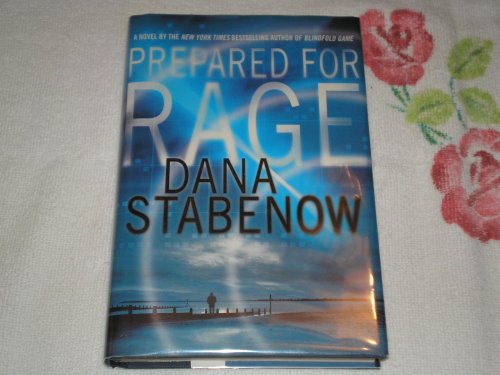
Following A Deeper Sleep, her most successful Kate Shugak novel to date, the Edgar Award winner and New York Times bestselling thriller writer Dana Stabenow delivers a nail-biting, all-too-real novel of international suspense.
A terrorist with a most personal grudge, an FBI analyst challenged to be three steps ahead of the intelligence, a Coast Guard captain assigned to keep watch on that very American of symbols from the water, an astronaut who takes her job very seriously—the paths of all of these characters converge on one clear morning in Florida. NASA is preparing to launch the space shuttle, this time with a high-paying visitor on board as a guest, and the FBI and the Coast Guard are doing everything they can to help the launch go off without a hitch. But one Pakistani man with a bottomless personal grudge and the commitment of many zealous men behind him is determined to strike back at the most visible target he can find.
Once again Dana Stabenow, who researched this gripping scenario by spending weeks living on board a Coast Guard cutter as it conducted its mission in the eastern Pacific, delivers an action-driven thriller with an ingenious, frightening, straight-from-the-headlines plot, certain to be her next bestseller.
Die Inhaltsangabe kann sich auf eine andere Ausgabe dieses Titels beziehen.
Über die Autorin bzw. den Autor
Dana Stabenow, Edgar Award–winning author of one stand-alone thriller, fifteen Kate Shugak mysteries, four Liam Campbell mysteries, and three science-fiction novels, also occassionally writes for Alaska magazine. She spent two months on board the U.S. Coast Guard cutter Munro researching this novel, blogging daily about her experiences. In 2007, she was awarded the Governor’s Award for the Arts and Humanities by the governor of Alaska. Dana lives in Alaska, where she was born and raised.
Von der hinteren Coverseite
Outstanding Praise for Dana Stabenow
“All the elements that have made the author’s signature Kate Shugak crime series successful shine in this fifteenth entry: Kate’s personal growth as a woman and as an investigator, the Alaskan environment in all its unforgiving beauty, and a mystery whose solution remains in doubt until the end.”
—Publishers Weekly (starred review) on A Deeper Sleep
“Stabenow once again presents us with a cleverly conceived and crisply written thriller that provides a provocative glimpse of life as it is lived and justice as it is served on America’s last frontier.”
—The San Diego Union-Tribune on A Deeper Sleep
“A taut, atmospheric thriller . . . The author paints convincing portraits of masterminds, mercenaries, and CIA operatives, and jacks up the adrenaline with a high-speed ocean chase.”
—People magazine on Blindfold Game
“A tense and tautly written thrill ride that keeps readers hooked all the way to the explosive climax . . . By the time the plot kicks into high gear, the setting is firmly established as both authentic and believably dangerous.”
—San Francisco Chronicle on Blindfold Game
“Edgar winner Stabenow has crafted a taut, credible thriller that should win her a much larger audience. . . . Stabenow has established herself as a fine mystery writer, but she may have found her true métier with this excellent thriller.”
—Publishers Weekly (starred review) on Blindfold Game
“Every time I think Dana Stabenow has gotten as good as she can get, she comes up with something better.”
—The Washington Times
“An intelligent crime novel that reflects both [Stabenow’s] love of wilderness and her understanding of the complex questions of profit versus the purity of the frontier.”
—The Dallas Morning News on A Fine and Bitter Snow
“If you haven’t discovered this splendid North Country series, now is the time. . . . Highly entertaining.”
—USA Today on Hunter’s Moon
Aus dem Klappentext
Following A Deeper Sleep, her most successful Kate Shugak novel to date, the Edgar Award winner andNew York Times bestselling thriller writer Dana Stabenow delivers a nail-biting, all-too-real novel of international suspense.
A terrorist with a most personal grudge, an FBI analyst challenged to be three steps ahead of the intelligence, a Coast Guard captain assigned to keep watch on that very American of symbols from the water, an astronaut who takes her job very seriously the paths of all of these characters converge on one clear morning in Florida. NASA is preparing to launch the space shuttle, this time with a high-paying visitor on board as a guest, and the FBI and the Coast Guard are doing everything they can to help the launch go off without a hitch. But one Pakistani man with a bottomless personal grudge and the commitment of many zealous men behind him is determined to strike back at the most visible target he can find.
Once again Dana Stabenow, who researched this gripping scenario by spending weeks living on board a Coast Guard cutter as it conducted its mission in the Caribbean, delivers an action-driven thriller with an ingenious, frightening, straight-from-the-headlines plot, certain to be her next bestseller.
Auszug. © Genehmigter Nachdruck. Alle Rechte vorbehalten.
Chapter 1
“I feel like I’m in a third-world country,” Parker said, breaking a silence that had endured the entire distance from the Iwo Jima, moored at the Riverwalk in downtown New Orleans.
“Haiti,” Helms said. She looked around with the same expression of bewilderment she’d worn all day. “Where is everyone? There should be ambulances and helicopters and—and police cars.” She looked back at the two officers, almost pleading. “It can’t be only us. It can’t be.”
Everything in St. Bernard Parish was backwards, if not upside down. The cars were in the water. The boats were on the land. Enormous barges, stripped of their containers, were beached hundreds of feet from the nearest canal. Trailers had been forcibly separated from their tractors and were scattered haphazardly across drenched and flattened fields like so many giant Tonka toys. Electrical transmission towers lay on their sides, half-submerged in bayous much deeper and wider than they had been not twenty-four hours before. The houses, those that remained standing, were minus doors, windows, roofs.
The landscape was not improved by the almost total absence of life. Once they saw a woman peer out at them from behind a tree. It didn’t make any of them feel better when she screamed, a high, thin, terrified sound, and went crashing headlong through the underbrush, getting as far away from them as fast as she could. Once they saw a dog, a pit bull, emaciated and hostile, who growled menacingly at them before it, too, ran off. Cal would have shot it if he’d thought to bring a gun.
He realized with a faint sense of shock that they might actually need one.
The dog had been savaging the body of a woman. In spite of the swelling and the decay after a week’s worth of lying in the sun, it was obvious that she had not died in Katrina, but afterward, and that she might have found her death a merciful ending to what had come before. And like all the other bodies they had found that day, she was black.
Cal had never before been quite so conscious of the whiteness of his skin.
Parker got a poncho out of the back of their jeep—they had run out of body bags—and covered her, holding his breath so he wouldn’t retch. He backed off and stood looking down at the olive green bundle for a moment. “Animals,” he said.
“Americans,” Helms said, in such disbelief it was almost a question.
Parker raised his head and looked at Cal. “I was stationed in D.C. in 2001. I thought I’d never see anything like that again.” He shook his head. “I hoped I wouldn’t. But this—this is—” Words failed him. Parker was in his forties, in the Coast Guard long enough to work his way up to chief warrant officer, a veteran of patrols in the Caribbean and the Eastern Pacific and the Bering, like Cal, a cutterman.
On 9/11 Cal had been in New York City, testifying at a UN hearing on international maritime regulations. He had been in a cab on the way to the United Nations building when the first plane had gone in. It had been a beautiful morning, he remembered, clear, cool, the streets of New York filled with parents taking their children to school, people headed to work. He’d reported to the scene as soon as news of what happened had penetrated his meeting, and worked three days and nights helping to dig people, mostly dead, out of the debris. He, too, had never wanted to see anything like that ever again.
“Where is everyone?” Helms said. A yeoman with much less time served, still in high school when the planes went into the towers and the Pentagon and that field in Pennsylvania, she had watched the response on television with the rest of her peers. There had been a massive response of fire and rescue personnel and equipment to that disaster. She looked around now, expecting a line of response vehicles, ambulances, fire trucks, heavy equipment to begin the process of recovery to roll up and disgorge the people who were supposed to be doing this kind of work, people who were trained in it. “I was just here to see New Orleans,” she said numbly. “I wanted to hear some good music, eat some beignets, walk around the French Quarter.” She looked at Cal again, imploringly. “Captain, where is everybody?”
He couldn’t answer her.
They waited with the body. The bad news was that it was their twenty-first body that day. The good news was that the Disaster Mortuary Affairs team wouldn’t be that far behind them, so they wouldn’t have to wait long.
And they didn’t, the pickup driven by the same two exhausted men whipsawing around the wreckage on what was left of the road and skidding to a halt a few feet from Cal’s knees. This time they didn’t even say hello, just went for the stretcher, stained with unmentionable substances from previous retrievals, muscled the body onto it and into the pickup, the back of which was getting crowded.
No one asked for the poncho back. The men didn’t say good-bye. The three of them stood watching as the pickup careened around an overturned midnight blue Buick LeSabre with three of four tires missing and rattled off.
The sun was setting behind a gathering bank of low-lying clouds, leeching the light from the destroyed landscape and rendering everything suddenly more sinister. It began to drizzle, and a moment later the drizzle increased to a steady rain. If anything the sense of menace increased.
“Let’s get back,” Cal said.
The yeoman looked up the road. “There have to be other bodies,” she said.
Cal knew how she felt, but he could feel the presence of many eyes trained on them, and again felt the acute lack of any kind of protection. “Tomorrow,” he said.
But the next day the FEMA representative mercifully asked, “Who here knows about ships?” Cal put up his hand and found himself deputy director in charge of three cruise ships brought into New Orleans to provide temporary shelter for those left homeless by Katrina. He brought Parker and Helms with him, and the three of them gladly left the collection of bodies to other authorities.
He found himself reporting directly to the Coast Guard vice admiral, who was acting as the principal federal officer for Katrina response, and for perhaps the first time in his life didn’t rue the fact that the old man was a friend of his father’s. Between the Port Authority, the stevedores’ union, and the ship’s agent, all of whose offices were a shambles, it was a challenge just to maintain the ships’ water reserves, which entailed finding sixty tanker trucks to deliver eight hundred tons of water per day per ship.
Finding them was one thing, keeping them was something else again. Across the six most affected parishes potable water was in short supply and tanker trucks capable of delivering it were in high demand. When he found one, it was all he could do to hang on to it before it was lost or stolen. One was hijacked right off the dock before it had even managed to offload its cargo, and when eventually the truck was found again the hijacker was apprehended in the act of selling said cargo for a dollar a gallon. He could have gotten five, he explained to the arresting officer, but he didn’t want to price himself out of the market.
Initially Cal had no staff except for CWO Parker and YN1 Helms, which didn’t help, and cell phones didn’t work inside the skins of the ships so he...
„Über diesen Titel“ kann sich auf eine andere Ausgabe dieses Titels beziehen.
Suchergebnisse für Prepared for Rage

Beispielbild für diese ISBN
Prepared for Rage: A Novel
Anbieter: World of Books (was SecondSale), Montgomery, IL, USA
Verkäuferbewertung 5 von 5 Sternen

Zustand: Good. Item in good condition. Textbooks may not include supplemental items i.e. CDs, access codes etc. Artikel-Nr. 00100937265
Gebraucht kaufen
EUR 3,75
Versand gratis
Versand innerhalb von USA
Versand innerhalb von USA
Anzahl: 4 verfügbar
Beispielbild für diese ISBN
Prepared for Rage: A Novel
Anbieter: World of Books (was SecondSale), Montgomery, IL, USA
Verkäuferbewertung 5 von 5 Sternen
Zustand: Very Good. Item in very good condition! Textbooks may not include supplemental items i.e. CDs, access codes etc. Artikel-Nr. 00091808420
Gebraucht kaufen
EUR 3,75
Versand gratis
Versand innerhalb von USA
Versand innerhalb von USA
Anzahl: 3 verfügbar
Beispielbild für diese ISBN
Prepared for Rage: A Novel
Verlag:
Minotaur Books (edition First Edition), 2008
ISBN 10: 0312369735
ISBN 13: 9780312369736
Gebraucht
Hardcover
Erstausgabe
Anbieter: BooksRun, Philadelphia, PA, USA
Verkäuferbewertung 5 von 5 Sternen
Hardcover. Zustand: Fair. First Edition. With dust jacket. The item might be beaten up but readable. May contain markings or highlighting, as well as stains, bent corners, or any other major defect, but the text is not obscured in any way. Artikel-Nr. 0312369735-7-1-29
Gebraucht kaufen
EUR 4,90
Versand gratis
Versand innerhalb von USA
Versand innerhalb von USA
Anzahl: 1 verfügbar
Beispielbild für diese ISBN
Prepared for Rage: A Novel
Verlag:
Minotaur Books (edition First Edition), 2008
ISBN 10: 0312369735
ISBN 13: 9780312369736
Gebraucht
Hardcover
Erstausgabe
Anbieter: BooksRun, Philadelphia, PA, USA
Verkäuferbewertung 5 von 5 Sternen
Hardcover. Zustand: Very Good. First Edition. With dust jacket. It's a well-cared-for item that has seen limited use. The item may show minor signs of wear. All the text is legible, with all pages included. It may have slight markings and/or highlighting. Artikel-Nr. 0312369735-11-6-29
Gebraucht kaufen
EUR 5,02
Versand gratis
Versand innerhalb von USA
Versand innerhalb von USA
Anzahl: 1 verfügbar
Beispielbild für diese ISBN
Prepared for Rage: A Novel
Anbieter: Wonder Book, Frederick, MD, USA
Verkäuferbewertung 5 von 5 Sternen
Zustand: Very Good. Very Good condition. Very Good dust jacket. A copy that may have a few cosmetic defects. May also contain light spine creasing or a few markings such as an owner's name, short gifter's inscription or light stamp. Artikel-Nr. T14C-03098
Gebraucht kaufen
EUR 6,16
Versand gratis
Versand innerhalb von USA
Versand innerhalb von USA
Anzahl: 2 verfügbar
Beispielbild für diese ISBN
Prepared for Rage: A Novel
Anbieter: ThriftBooks-Dallas, Dallas, TX, USA
Verkäuferbewertung 5 von 5 Sternen
Hardcover. Zustand: Very Good. No Jacket. Former library book; May have limited writing in cover pages. Pages are unmarked. ~ ThriftBooks: Read More, Spend Less. Artikel-Nr. G0312369735I4N10
Gebraucht kaufen
EUR 6,34
Versand gratis
Versand innerhalb von USA
Versand innerhalb von USA
Anzahl: 1 verfügbar
Beispielbild für diese ISBN
Prepared for Rage: A Novel
Anbieter: ThriftBooks-Atlanta, AUSTELL, GA, USA
Verkäuferbewertung 5 von 5 Sternen
Hardcover. Zustand: Very Good. No Jacket. Former library book; May have limited writing in cover pages. Pages are unmarked. ~ ThriftBooks: Read More, Spend Less. Artikel-Nr. G0312369735I4N10
Gebraucht kaufen
EUR 6,36
Versand gratis
Versand innerhalb von USA
Versand innerhalb von USA
Anzahl: 1 verfügbar
Beispielbild für diese ISBN
Prepared for Rage: A Novel
Anbieter: ThriftBooks-Atlanta, AUSTELL, GA, USA
Verkäuferbewertung 5 von 5 Sternen
Hardcover. Zustand: Very Good. No Jacket. Missing dust jacket; May have limited writing in cover pages. Pages are unmarked. ~ ThriftBooks: Read More, Spend Less. Artikel-Nr. G0312369735I4N01
Gebraucht kaufen
EUR 6,36
Versand gratis
Versand innerhalb von USA
Versand innerhalb von USA
Anzahl: 1 verfügbar
Beispielbild für diese ISBN
Prepared for Rage
Verlag:
St. Martin's Press, 2008
ISBN 10: 0312369735
ISBN 13: 9780312369736
Gebraucht
Hardcover
Erstausgabe
Anbieter: Better World Books: West, Reno, NV, USA
Verkäuferbewertung 5 von 5 Sternen
Zustand: Fine. First Edition. Used book that is in almost brand-new condition. May contain a remainder mark. Better World Books: Buy Books. Do Good. Artikel-Nr. 55748617-75
Gebraucht kaufen
EUR 6,47
Versand gratis
Versand innerhalb von USA
Versand innerhalb von USA
Anzahl: 1 verfügbar
Beispielbild für diese ISBN
Prepared for Rage
Verlag:
St. Martin's Press, 2008
ISBN 10: 0312369735
ISBN 13: 9780312369736
Gebraucht
Hardcover
Erstausgabe
Anbieter: Better World Books, Mishawaka, IN, USA
Verkäuferbewertung 5 von 5 Sternen
Zustand: Good. First Edition. Pages intact with minimal writing/highlighting. The binding may be loose and creased. Dust jackets/supplements are not included. Stock photo provided. Product includes identifying sticker. Better World Books: Buy Books. Do Good. Artikel-Nr. GRP13963987
Gebraucht kaufen
EUR 6,47
Versand gratis
Versand innerhalb von USA
Versand innerhalb von USA
Anzahl: 2 verfügbar