
Verwandte Artikel zu No Speed Limit: Meth Across America
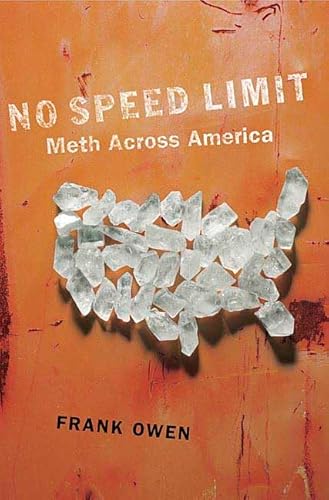
Inhaltsangabe
Hells Angels and fallen televangelist Ted Haggard. Cross-country truckers and suburban mothers. Trailer parks, gay sex clubs, college campuses, and military battlefields. In this fascinating book, Frank Owen traces the spread of methamphetamine—meth—from its origins as a cold and asthma remedy to the stimulant wiring every corner of American culture.
Meth is the latest “epidemic” to attract the attention of law enforcement and the media, but like cocaine and heroin its roots are medicinal. It was first synthesized in the late nineteenth century and applied in treatment of a wide range of ailments; by the 1940s meth had become a wonder drug, used to treat depression, hyperactivity, obesity, epilepsy, and addictions to other drugs and alcohol. Allied, Nazi, and Japanese soldiers used it throughout World War II, and the returning waves of veterans drove demand for meth into the burgeoning postwar suburbs, where it became the “mother’s helper” for a bored and lonely generation.
But meth truly exploded in the 1960s and ’70s, when biker gang cooks using burners, beakers, and plastic tubes brought their expertise from California to the Ozarks, the Southwest, and other remote rural areas where the drug could be manufactured in kitchen labs. Since then, meth has been the target of billions of dollars in federal, state, and local anti-drug wars. Murders, violent assaults, thefts, fires, premature births, and AIDS—rises in all of these have been blamed on the drug that crosses classes and subcultures like no other.
Acclaimed journalist Frank Owen follows the users, cooks, dealers, and law enforcers to uncover a dramatic story being played out in cities, small towns, and farm communities across America. No Speed Limit is a panoramic, high-octane investigation by a journalist who knows firsthand the powerful highs and frightening lows of meth.
Die Inhaltsangabe kann sich auf eine andere Ausgabe dieses Titels beziehen.
Über die Autorinnen und Autoren
Frank Owen has been a journalist for fifteen years, writing for Playboy, The New York Times, The Village Voice, Newsday, The Washington Post, Spin, Details, and Vibe, among other publications. His critically acclaimed book Clubland: The Fabulous Rise and Murderous Fall of Club Culture, was published in 2003 by St. Martin's Press. He lives in New York.
Frank Owen has been a journalist for fifteen years, writing for Playboy, The New York Times, The Village Voice, Newsday, The Washington Post, Spin, Details, and Vibe, among other publications. His critically acclaimed book Clubland: The Fabulous Rise and Murderous Fall of Club Culture, was published in 2003 by St. Martin’s Press. He lives in New York.
Von der hinteren Coverseite
Hells Angels and fallen televangelist Ted Haggard. Cross-country truckers and suburban mothers. Trailer parks, gay sex clubs, college campuses, and military battlefields. In this fascinating book, Frank Owen traces the spread of methamphetamine—meth—from its origins as a cold and asthma remedy to the stimulant wiring every corner of American culture.
Meth is the latest “epidemic” to attract the attention of law enforcement and the media, but like cocaine and heroin its roots are medicinal. It was first synthesized in the late nineteenth century and applied in treatment of a wide range of ailments; by the 1940s meth had become a wonder drug, used to treat depression, hyperactivity, obesity, epilepsy, and addictions to other drugs and alcohol. Allied, Nazi, and Japanese soldiers used it throughout World War II, and the returning waves of veterans drove demand for meth into the burgeoning postwar suburbs, where it became the “mother’s helper” for a bored and lonely generation.
But meth truly exploded in the 1960s and ’70s, when biker gang cooks using burners, beakers, and plastic tubes brought their expertise from California to the Ozarks, the Southwest, and other remote rural areas where the drug could be manufactured in kitchen labs. Since then, meth has been the target of billions of dollars in federal, state, and local anti-drug wars. Murders, violent assaults, thefts, fires, premature births, and AIDS—rises in all of these have been blamed on the drug that crosses classes and subcultures like no other.
Acclaimed journalist Frank Owen follows the users, cooks, dealers, and law enforcers to uncover a dramatic story being played out in cities, small towns, and farm communities across America. No Speed Limit is a panoramic, high-octane investigation by a journalist who knows firsthand the powerful highs and frightening lows of meth.
Meth is the latest “epidemic” to attract the attention of law enforcement and the media, but like cocaine and heroin its roots are medicinal. It was first synthesized in the late nineteenth century and applied in treatment of a wide range of ailments; by the 1940s meth had become a wonder drug, used to treat depression, hyperactivity, obesity, epilepsy, and addictions to other drugs and alcohol. Allied, Nazi, and Japanese soldiers used it throughout World War II, and the returning waves of veterans drove demand for meth into the burgeoning postwar suburbs, where it became the “mother’s helper” for a bored and lonely generation.
But meth truly exploded in the 1960s and ’70s, when biker gang cooks using burners, beakers, and plastic tubes brought their expertise from California to the Ozarks, the Southwest, and other remote rural areas where the drug could be manufactured in kitchen labs. Since then, meth has been the target of billions of dollars in federal, state, and local anti-drug wars. Murders, violent assaults, thefts, fires, premature births, and AIDS—rises in all of these have been blamed on the drug that crosses classes and subcultures like no other.
Acclaimed journalist Frank Owen follows the users, cooks, dealers, and law enforcers to uncover a dramatic story being played out in cities, small towns, and farm communities across America. No Speed Limit is a panoramic, high-octane investigation by a journalist who knows firsthand the powerful highs and frightening lows of meth.
Aus dem Klappentext
Hells Angels and fallen televangelist Ted Haggard. Cross-country truckers and suburban mothers. Trailer parks, gay sex clubs, college campuses, and military battlefields. In this fascinating book, Frank Owen traces the spread of methamphetamine meth from its origins as a cold and asthma remedy to the stimulant wiring every corner of American culture.
Meth is the latest epidemic to attract the attention of law enforcement and the media, but like cocaine and heroin its roots are medicinal. It was first synthesized in the late nineteenth century and applied in treatment of a wide range of ailments; by the 1940s meth had become a wonder drug, used to treat depression, hyperactivity, obesity, epilepsy, and addictions to other drugs and alcohol. Allied, Nazi, and Japanese soldiers used it throughout World War II, and the returning waves of veterans drove demand for meth into the burgeoning postwar suburbs, where it became the mother s helper for a bored and lonely generation.
But meth truly exploded in the 1960s and 70s, when biker gang cooks using burners, beakers, and plastic tubes brought their expertise from California to the Ozarks, the Southwest, and other remote rural areas where the drug could be manufactured in kitchen labs. Since then, meth has been the target of billions of dollars in federal, state, and local anti-drug wars. Murders, violent assaults, thefts, fires, premature births, and AIDS rises in all of these have been blamed on the drug that crosses classes and subcultures like no other.
Acclaimed journalist Frank Owen follows the users, cooks, dealers, and law enforcers to uncover a dramatic story being played out in cities, small towns, and farm communities across America. No Speed Limit is a panoramic, high-octane investigation by a journalist who knows firsthand the powerful highs and frightening lows of meth.
Meth is the latest epidemic to attract the attention of law enforcement and the media, but like cocaine and heroin its roots are medicinal. It was first synthesized in the late nineteenth century and applied in treatment of a wide range of ailments; by the 1940s meth had become a wonder drug, used to treat depression, hyperactivity, obesity, epilepsy, and addictions to other drugs and alcohol. Allied, Nazi, and Japanese soldiers used it throughout World War II, and the returning waves of veterans drove demand for meth into the burgeoning postwar suburbs, where it became the mother s helper for a bored and lonely generation.
But meth truly exploded in the 1960s and 70s, when biker gang cooks using burners, beakers, and plastic tubes brought their expertise from California to the Ozarks, the Southwest, and other remote rural areas where the drug could be manufactured in kitchen labs. Since then, meth has been the target of billions of dollars in federal, state, and local anti-drug wars. Murders, violent assaults, thefts, fires, premature births, and AIDS rises in all of these have been blamed on the drug that crosses classes and subcultures like no other.
Acclaimed journalist Frank Owen follows the users, cooks, dealers, and law enforcers to uncover a dramatic story being played out in cities, small towns, and farm communities across America. No Speed Limit is a panoramic, high-octane investigation by a journalist who knows firsthand the powerful highs and frightening lows of meth.
Auszug. © Genehmigter Nachdruck. Alle Rechte vorbehalten.
Chapter One
The Rise of Nazi Dope
Springfield, Missouri
Stanley Harris trundles up to meet me in an oily old truck that spits out a trail of exhaust fumes. I'm staying at a local "meth motel," one of a string of fifty-dollar-a-night establishments arranged along a neon corridor on Glenstone Avenue, on the northern edge of town. The motels are often frequented by methamphetamine manufacturers, so-called cooks, who sign in under false names and pay in cash, then go up to their rooms where they cover the door cracks with wet towels to mask the smell and then they start making the drug. Harris is here to show me some of the sights and give me a tour of some of the local meth landmarks.
"I used to sell meth out of that motel across the street." He points to another hostelry on the other side of the highway, one slightly swankier than the threadbare place where I'm staying.
Harris is a walking meth history lesson, living proof that sometimes speed doesn't kill. A roofer by trade, he's only forty-six, but he's been shooting up methamphetamine for thirty-five-years, ever since at the age of eleven he eased a spike into his arm in the school playground while trying to impress an older crowd of boys.
"I was real scared at first," he says in a raspy country accent, sounding as if his vocal chords have been rubbed raw by sandpaper. "But after I did it I felt like I was on top of the world."
In the following three and a half decades, Harris shot up meth when he was happy and he shot up meth when he was sad. He shot up even when yellow puss was oozing from gangrenous holes in his arms and his doctors told him if he didn't stop injecting himself they might have to amputate them. He continued to shoot up after twice flatlining during heart attacks. He spent half a lifetime pumping gram after gram of methamphetamine into his veins, in the process creating chaos in the lives of everybody he loved. But six months before I met him in early December 2005, Stanley Harris quit.
Harris is a stocky man with graying hair and big black circles ringing his eyes that give him the appearance of a demented panda bear. His big, hairy, tattooed arms resemble gnarled and rotted-out tree trunks. A hyperactive chatterbox, when he speaks the words come flooding out of his mouth accompanied by a barrage of facial ticks and herky-jerky hand gestures. When he does pause for a moment, he doesn't so much take a breath as wheeze like a puff of wind.
Even though at the time I spoke to him he had just pled guilty to drug manufacturing and distribution charges and was facing life in state prison as a persistent offender, Harris was a happy man.
"I'm real happy because thanks to Jesus I'm not a servant to meth anymore." He smiles, revealing a dental disaster zone. Harris doesn't have bad teeth, he has practically no teeth; some of them he lost in bar fights and motorcycle accidents, he says, but most of them fell out because of his meth habit.
As world-class dope habits go, Stanley's was a monster. At the height of his addiction, he was shooting an eight ball (an eighth of an ounce) of meth a day. But in early 2005, Harris finally hit rock bottom. He'd tried to kick the drug a number of times, but within hours of completing a treatment program he'd shoot up again. He was on parole and had already given two dirty urine samples. He was sure he was headed back to jail. It was then he decided that he was going to go on one last binge and either kill himself or let the police do the job. On his fourteenth day without sleep, Harris collapsed and was admitted to Sigma House, a local treatment center. After detoxing for a couple of days, an Alcoholics Anonymous counselor came to see him and they had a conversation about God that awoke long-dormant religious feelings in Harris.
"I used to hate Jesus Christ," says Harris, who as an impressionable teenager was so influenced by the movie The Exorcist that he used to get down on his knees and pray to Satan. "I thought he was a pussy. What had he ever done for Stanley? But by this point I was ready for something to work in my life because if it don't work, I might as well blow my head off."
Missourians have been mainlining methamphetamine since the 1950s. In a 1959 article, Time magazine reported about a new drug craze among some Kansas City, Missouri, high school students who had learned how to extract and then inject the methamphetamine contained in Valo inhalers, which could be bought at the time in local drug stores for seventy-five cents apiece. The magazine highlighted the case of Gary A. Hamilton, aged twenty-two, who was arrested after ordering tea at a lunch counter, pouring the hot water into an inhaler, and then taking pictures of himself in an automatic photo booth injecting the liquid into his arm.
A Kansas City narcotics detective was quoted as saying: "There are at least two hundred known users in the city, and at least twice as many that we don't know about."
Meth in Missouri isn't a new phenomenon, then, but a persistent and entrenched problem that has been around for decades. But something happened in the Ozarks in the early 1990s, something that dramatically changed the local meth landscape and turned a manageable problem into a genuine crisis, something that by the end of the decade had transformed the southwest corner of the state into a meth-manufacturing Mecca.
To call Missouri the meth lab capital of America is a little misleading. The phrase "meth laboratory" summons up images of foaming beakers, flaming Bunsen burners, and bubbling three-necked flasks, the sort of elaborate glassware and equipment found commonly at so-called superlab sites in California and Mexico. While it's true that Missouri has reported more "meth lab incidents"--a catchall phrase that includes not just working labs but also abandoned labs, stockpiles of ingredients, and chemical dump sites--than any other state for four years in a row (2002-2005), most of the labs seized are what the Drug Enforcement Administration calls STLs (small toxic labs): do-it-yourself operations that employ everyday household items like coffee filters, plastic bottles, Pyrex dishes, and liquid blenders to produce small amounts of the drug. To an outsider who stumbles across one, these so-called mom-and-pop labs would seem like little more than a messy garage or an untidy garden shed.
A better way to describe Missouri would be to call it the kitchen chemistry capital of the United States, a place that in the mid-1990s saw an extraordinary fivefold increase in the number of hobbyists churning out homemade meth, a phenomenon comparable to the heyday of moonshining during Prohibition and an illicit drug manufacturing boom that is only now beginning to subside. In 1992, local authorities raided nineteen meth labs in the Ozarks and the DEA raided only two in the entire state. By 2004, there were more than 2,800 meth lab incidents--that's roughly one meth lab for every two thousand Missourians. While the State Highway Patrol reported a 44 percent decrease in meth lab busts in the last six months of 2005, a drop largely credited to a new state law making it harder for local cooks to acquire the supplies of pseudoephedrine-containing cold medicines they need to make the drug, it wasn't enough of a decrease to prevent Missouri once again leading the nation in meth lab incidents.
Bathed in a late autumn glow, Springfield doesn't seem like a community ravaged by meth despite its reputation as a paradise for tweakers (chronic users). The Battlefield Mall--named in memory of Wilson's Creek, a...
„Über diesen Titel“ kann sich auf eine andere Ausgabe dieses Titels beziehen.
Suchergebnisse für No Speed Limit: Meth Across America

Beispielbild für diese ISBN
No Speed Limit: The Highs and Lows of Meth
Verlag:
St. Martin's Press (edition First Edition), 2007
ISBN 10: 0312356161
ISBN 13: 9780312356163
Gebraucht
Hardcover
Erstausgabe
Anbieter: BooksRun, Philadelphia, PA, USA
Verkäuferbewertung 5 von 5 Sternen

Hardcover. Zustand: Very Good. First Edition. With dust jacket. It's a well-cared-for item that has seen limited use. The item may show minor signs of wear. All the text is legible, with all pages included. It may have slight markings and/or highlighting. Artikel-Nr. 0312356161-11-1-29
Gebraucht kaufen
EUR 4,71
Versand gratis
Versand innerhalb von USA
Versand innerhalb von USA
Anzahl: 1 verfügbar
Beispielbild für diese ISBN
No Speed Limit : The Highs and Lows of Meth
Anbieter: Better World Books, Mishawaka, IN, USA
Verkäuferbewertung 5 von 5 Sternen
Zustand: Good. Former library copy. Pages intact with minimal writing/highlighting. The binding may be loose and creased. Dust jackets/supplements are not included. Includes library markings. Stock photo provided. Product includes identifying sticker. Better World Books: Buy Books. Do Good. Artikel-Nr. 4404701-75
Gebraucht kaufen
EUR 6,18
Versand gratis
Versand innerhalb von USA
Versand innerhalb von USA
Anzahl: 3 verfügbar
Beispielbild für diese ISBN
No Speed Limit : The Highs and Lows of Meth
Anbieter: Better World Books, Mishawaka, IN, USA
Verkäuferbewertung 5 von 5 Sternen
Zustand: Very Good. Former library copy. Pages intact with possible writing/highlighting. Binding strong with minor wear. Dust jackets/supplements may not be included. Includes library markings. Stock photo provided. Product includes identifying sticker. Better World Books: Buy Books. Do Good. Artikel-Nr. 2264428-75
Gebraucht kaufen
EUR 6,18
Versand gratis
Versand innerhalb von USA
Versand innerhalb von USA
Anzahl: 1 verfügbar
Beispielbild für diese ISBN
No Speed Limit: The Highs and Lows of Meth
Anbieter: ThriftBooks-Atlanta, AUSTELL, GA, USA
Verkäuferbewertung 5 von 5 Sternen
Hardcover. Zustand: Fair. No Jacket. Readable copy. Pages may have considerable notes/highlighting. ~ ThriftBooks: Read More, Spend Less. Artikel-Nr. G0312356161I5N00
Gebraucht kaufen
EUR 6,25
Versand gratis
Versand innerhalb von USA
Versand innerhalb von USA
Anzahl: 1 verfügbar
Beispielbild für diese ISBN
No Speed Limit: The Highs and Lows of Meth
Anbieter: ThriftBooks-Dallas, Dallas, TX, USA
Verkäuferbewertung 5 von 5 Sternen
Hardcover. Zustand: Very Good. No Jacket. Former library book; May have limited writing in cover pages. Pages are unmarked. ~ ThriftBooks: Read More, Spend Less. Artikel-Nr. G0312356161I4N10
Gebraucht kaufen
EUR 6,25
Versand gratis
Versand innerhalb von USA
Versand innerhalb von USA
Anzahl: 1 verfügbar
Beispielbild für diese ISBN
No Speed Limit: The Highs and Lows of Meth
Anbieter: Wonder Book, Frederick, MD, USA
Verkäuferbewertung 5 von 5 Sternen
Zustand: Very Good. Very Good condition. Good dust jacket. A copy that may have a few cosmetic defects. May also contain light spine creasing or a few markings such as an owner's name, short gifter's inscription or light stamp. Artikel-Nr. N02B-04187
Gebraucht kaufen
EUR 6,42
Versand gratis
Versand innerhalb von USA
Versand innerhalb von USA
Anzahl: 1 verfügbar