
Verwandte Artikel zu I Capture the Castle
Inhaltsangabe
One of the 20th century's most beloved novels is still winning hearts, Dodie Smith's I Capture the Castle!
"This book has one of the most charismatic narrators I've ever met." -- J.K. Rowling, author of the Harry Potter series
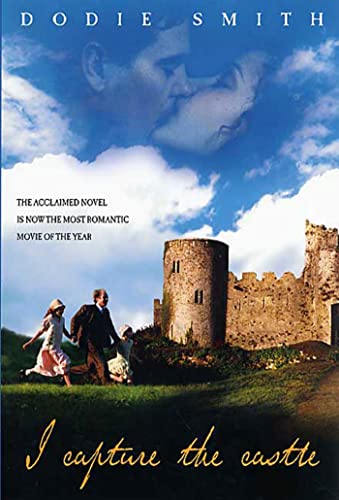
Adapted to a feature film in 2003, I Capture the Castle tells the story of seventeen-year-old Cassandra and her family, who live in not-so-genteel poverty in a ramshackle old English castle. Here she strives, over six turbulent months, to hone her writing skills. She fills three notebooks with sharply funny yet poignant entries. Her journals candidly chronicle the great changes that take place within the castle's walls, and her own first descent into love.
By the time she pens her final entry, she has "captured the castle"-- and the heart of the reader-- in one of literature's most enchanting entertainments.
Die Inhaltsangabe kann sich auf eine andere Ausgabe dieses Titels beziehen.
Über die Autorin bzw. den Autor
Dorothy Gladys "Dodie" Smith, born in 1896 in Lancashire, England, was one of the most successful female dramatists of her generation. She wrote Autumn, Crocus, and Dear Octopus, among other plays. I Capture the Castle, her first novel, was written in the 1940s while she was living in America. An immediate success, it marked her crossover from playwright to novelist, and was produced as a play in 1954. Smith also wrote the novels The Town in Bloom, It Ends with Revelations, A Tale of Two Families, and The Girl in the Candle-Lit Bath, but she is best known today as the author of two highly popular stories for young readers: The Hundred and One Dalmatians and The Starlight Barking. She died in 1990.
Auszug. © Genehmigter Nachdruck. Alle Rechte vorbehalten.
I Capture the Castle
By Dodie SmithSt. Martin's Press
Copyright © 1976 Dorothy Gladys Beesely
All rights reserved.
ISBN: 978-0-312-31616-7All rights reserved.
Contents
Title Page,
Copyright Notice,
I. The Sixpenny Book,
II. The Shilling Book,
III. The Two-Guinea Book,
Reading Group Guide,
Also by Dodie Smith,
About the Author,
Copyright,
CHAPTER 1
I WRITE THIS sitting in the kitchen sink. That is, my feet are in it; the rest of me is on the draining-board, which I have padded with our dog's blanket and the tea-cosy. I can't say that I am really comfortable, and there is a depressing smell of carbolic soap, but this is the only part of the kitchen where there is any daylight left. And I have found that sitting in a place where you have never sat before can be inspiring — I wrote my very best poem while sitting on the hen-house. Though even that isn't a very good poem. I have decided my poetry is so bad that I mustn't write any more of it.
Drips from the roof are plopping into the water-butt by the back door. The view through the windows above the sink is excessively drear. Beyond the dank garden in the courtyard are the ruined walls on the edge of the moat. Beyond the moat, the boggy ploughed fields stretch to the leaden sky. I tell myself that all the rain we have had lately is good for nature, and that at any moment spring will surge on us. I try to see leaves on the trees and the courtyard filled with sunlight. Unfortunately, the more my mind's eye sees green and gold, the more drained of all colour does the twilight seem.
It is comforting to look away from the windows and towards the kitchen fire, near which my sister Rose is ironing — though she obviously can't see properly, and it will be a pity if she scorches her only nightgown. (I have two, but one is minus its behind.) Rose looks particularly fetching by firelight because she is a pinkish person; her skin has a pink glow and her hair is pinkish gold, very light and feathery. Although I am rather used to her I know she is a beauty. She is nearly twenty-one and very bitter with life. I am seventeen, look younger, feel older. I am no beauty but have a neatish face.
I have just remarked to Rose that our situation is really rather romantic — two girls in this strange and lonely house. She replied that she saw nothing romantic about being shut up in a crumbling ruin surrounded by a sea of mud. I must admit that our home is an unreasonable place to live in. Yet I love it. The house itself was built in the time of Charles II, but it was grafted on to a fourteenth-century castle that had been damaged by Cromwell. The whole of our east wall was part of the castle; there are two round towers in it. The gatehouse is intact and a stretch of the old walls at their full height joins it to the house. And Belmotte Tower, all that remains of an even older castle, still stands on its mound close by. But I won't attempt to describe our peculiar home fully until I can see more time ahead of me than I do now.
I am writing this journal partly to practise my newly acquired speed-writing and partly to teach myself how to write a novel — I intend to capture all our characters and put in conversations. It ought to be good for my style to dash along without much thought, as up to now my stories have been very stiff and self-conscious. The only time father obliged me by reading one of them, he said I combined stateliness with a desperate effort to be funny. He told me to relax and let the words flow out of me.
I wish I knew of a way to make words flow out of father. Years and years ago, he wrote a very unusual book called Jacob Wrestling, a mixture of fiction, philosophy and poetry. It had a great success, particularly in America, where he made a lot of money by lecturing on it, and he seemed likely to become a very important writer indeed. But he stopped writing. Mother believed this was due to something that happened when I was about five.
We were living in a small house by the sea at the time. Father had just joined us after his second American lecture tour. One afternoon when we were having tea in the garden, he had the misfortune to lose his temper with mother very noisily just as he was about to cut a piece of cake. He brandished the cake-knife at her so menacingly that an officious neighbour jumped the garden fence to intervene and got himself knocked down. Father explained in court that killing a woman with our silver cake-knife would be a long, weary business entailing sawing her to death, and he was completely exonerated of any intention of slaying mother. The whole case seems to have been quite ludicrous, with everyone but the neighbour being very funny. But father made the mistake of being funnier than the judge and, as there was no doubt whatever that he had seriously damaged the neighbour, he was sent to prison for three months.
When he came out he was as nice a man as ever — nicer, because his temper was so much better. Apart from that, he didn't seem to me to be changed at all. But Rose remembers that he had already begun to get unsociable — it was then that he took a forty years' lease of the castle, which is an admirable place to be unsociable in. Once we were settled here he was supposed to begin a new book. But time went on without anything happening and at last we realized that he had given up even trying to write — for years now, he has refused to discuss the possibility. Most of his life is spent in the gatehouse room, which is icy cold in winter as there is no fireplace; he just huddles over an oil-stove. As far as we know, he does nothing but read detective novels from the village library. Miss Marcy, the librarian and schoolmistress, brings them to him. She admires him greatly and says "the iron has entered into his soul."
Personally, I can't see how the iron could get very far into a man's soul during only three months in jail — anyway, not if the man had as much vitality as father had; and he seemed to have plenty of it left when they let him out. But it has gone now; and his unsociability has grown almost into a disease — I often think he would prefer not even to meet his own household. All his natural gaiety has vanished. At times he puts on a false cheerfulness that embarrasses me, but usually he is either morose or irritable — I think I should prefer it if he lost his temper as he used to. Oh, poor father, he really is very pathetic. But he might at least do a little work in the garden. I am aware that this isn't a fair portrait of him. I must capture him later.
Mother died eight years ago, from perfectly natural causes. I think she must have been a shadowy person, because I have only the vaguest memory of her and I have an excellent memory for most things. (I can remember the cake-knife incident perfectly — I hit the fallen neighbour with my little wooden spade. Father always said this got him an extra month.)
Three years ago (or is it four? I know father's one spasm of sociability was in 1931) a stepmother was presented to us. We were surprised. She is a famous artists' model who claims to have been christened Topaz — even if this is true there is no law to make a woman stick to a name like that. She is very beautiful, with masses of hair so fair that it is almost white, and a quite extraordinary pallor. She uses no make-up, not even powder. There are two paintings of her in the Tate Gallery: one by Macmorris, called "Topaz in Jade", in which she wears a magnificent jade necklace; and one by H. J. Allardy which shows her nude on an old...
„Über diesen Titel“ kann sich auf eine andere Ausgabe dieses Titels beziehen.
Suchergebnisse für I Capture the Castle

Beispielbild für diese ISBN
I Capture the Castle
Anbieter: World of Books (was SecondSale), Montgomery, IL, USA
Verkäuferbewertung 5 von 5 Sternen

Paperback. Zustand: Good. One of the 20th century's most beloved novels is still winning hearts, Dodie Smith's I Capture the Castle! "This book has one of the most charismatic narrators I've ever met." -- J.K. Rowling, author of the Harry Potter series Adapted to a feature film in 2003, I Capture the Castle tells the story of seventeen-year-old Cassandra and her family, who live in not-so-genteel poverty in a ramshackle old English castle. Here she strives, over six turbulent months, to hone her writing skills. She fills three notebooks with sharply funny yet poignant entries. Her journals candidly chronicle the great changes that take place within the castle's walls, and her own first descent into love. By the time she pens her final entry, she has "captured the castle"-- and the heart of the reader-- in one of literature's most enchanting entertainments. Artikel-Nr. 00103454164
Gebraucht kaufen
EUR 3,90
Versand gratis
Versand innerhalb von USA
Versand innerhalb von USA
Anzahl: 13 verfügbar
Beispielbild für diese ISBN
I Capture the Castle: Movie Tie-In Edition
Anbieter: World of Books (was SecondSale), Montgomery, IL, USA
Verkäuferbewertung 5 von 5 Sternen
Zustand: Acceptable. Item in good condition. Textbooks may not include supplemental items i.e. CDs, access codes etc. Artikel-Nr. 00068762884
Gebraucht kaufen
EUR 3,90
Versand gratis
Versand innerhalb von USA
Versand innerhalb von USA
Anzahl: 1 verfügbar
Beispielbild für diese ISBN
I Capture the Castle: Movie Tie-In Edition
Verlag:
St. Martin's Griffin (edition Media tie-in), 2003
ISBN 10: 031231616X
ISBN 13: 9780312316167
Gebraucht
Paperback
Anbieter: BooksRun, Philadelphia, PA, USA
Verkäuferbewertung 5 von 5 Sternen
Paperback. Zustand: Very Good. Media tie-in. It's a well-cared-for item that has seen limited use. The item may show minor signs of wear. All the text is legible, with all pages included. It may have slight markings and/or highlighting. Artikel-Nr. 031231616X-11-22
Gebraucht kaufen
EUR 4,60
Versand gratis
Versand innerhalb von USA
Versand innerhalb von USA
Anzahl: 1 verfügbar
Beispielbild für diese ISBN
I Capture the Castle
Anbieter: ThriftBooks-Atlanta, AUSTELL, GA, USA
Verkäuferbewertung 5 von 5 Sternen
Paperback. Zustand: Fair. No Jacket. Former library book; Readable copy. Pages may have considerable notes/highlighting. ~ ThriftBooks: Read More, Spend Less. Artikel-Nr. G031231616XI5N10
Gebraucht kaufen
EUR 5,96
Versand gratis
Versand innerhalb von USA
Versand innerhalb von USA
Anzahl: 1 verfügbar
Beispielbild für diese ISBN
I Capture the Castle
Anbieter: ThriftBooks-Reno, Reno, NV, USA
Verkäuferbewertung 5 von 5 Sternen
Paperback. Zustand: Fair. No Jacket. Former library book; Readable copy. Pages may have considerable notes/highlighting. ~ ThriftBooks: Read More, Spend Less. Artikel-Nr. G031231616XI5N10
Gebraucht kaufen
EUR 5,96
Versand gratis
Versand innerhalb von USA
Versand innerhalb von USA
Anzahl: 1 verfügbar
Beispielbild für diese ISBN
I Capture the Castle
Anbieter: ThriftBooks-Dallas, Dallas, TX, USA
Verkäuferbewertung 5 von 5 Sternen
Paperback. Zustand: Fair. No Jacket. Former library book; Readable copy. Pages may have considerable notes/highlighting. ~ ThriftBooks: Read More, Spend Less. Artikel-Nr. G031231616XI5N10
Gebraucht kaufen
EUR 5,96
Versand gratis
Versand innerhalb von USA
Versand innerhalb von USA
Anzahl: 1 verfügbar
Beispielbild für diese ISBN
I Capture the Castle
Anbieter: ThriftBooks-Reno, Reno, NV, USA
Verkäuferbewertung 5 von 5 Sternen
Paperback. Zustand: Very Good. No Jacket. Former library book; May have limited writing in cover pages. Pages are unmarked. ~ ThriftBooks: Read More, Spend Less. Artikel-Nr. G031231616XI4N10
Gebraucht kaufen
EUR 5,96
Versand gratis
Versand innerhalb von USA
Versand innerhalb von USA
Anzahl: 1 verfügbar
Beispielbild für diese ISBN
I Capture the Castle
Anbieter: ThriftBooks-Dallas, Dallas, TX, USA
Verkäuferbewertung 5 von 5 Sternen
Paperback. Zustand: Good. No Jacket. Former library book; Pages can have notes/highlighting. Spine may show signs of wear. ~ ThriftBooks: Read More, Spend Less. Artikel-Nr. G031231616XI3N10
Gebraucht kaufen
EUR 5,96
Versand gratis
Versand innerhalb von USA
Versand innerhalb von USA
Anzahl: 1 verfügbar
Beispielbild für diese ISBN
I Capture the Castle
Anbieter: ThriftBooks-Reno, Reno, NV, USA
Verkäuferbewertung 5 von 5 Sternen
Paperback. Zustand: Good. No Jacket. Former library book; Pages can have notes/highlighting. Spine may show signs of wear. ~ ThriftBooks: Read More, Spend Less. Artikel-Nr. G031231616XI3N10
Gebraucht kaufen
EUR 5,96
Versand gratis
Versand innerhalb von USA
Versand innerhalb von USA
Anzahl: 1 verfügbar
Beispielbild für diese ISBN
I Capture the Castle
Anbieter: ThriftBooks-Atlanta, AUSTELL, GA, USA
Verkäuferbewertung 5 von 5 Sternen
Paperback. Zustand: Good. No Jacket. Pages can have notes/highlighting. Spine may show signs of wear. ~ ThriftBooks: Read More, Spend Less. Artikel-Nr. G031231616XI3N00
Gebraucht kaufen
EUR 5,96
Versand gratis
Versand innerhalb von USA
Versand innerhalb von USA
Anzahl: 4 verfügbar