
Verwandte Artikel zu Clubland: The Fabulous Rise and Murderous Fall of Club...
Inhaltsangabe
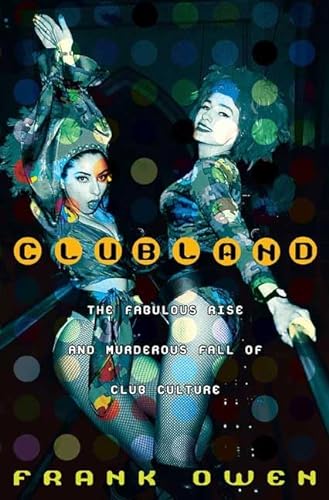
In 1995, journalist Frank Owen began researching a story on “Special K,” a new designer drug that fueled the after-midnight club scene. He went to buy and sample the drug at the internationally-notorious Limelight, a decrepit church converted into a Manhattan disco, where pulse-pounding music, gender-bending dancers, and uninhibited sideshows attracted long lines of hopeful onlookers. Clubland is the story of Owen’s six year journey behind the velvet ropes, into the cavernous clubs where any transformation was possible, every extreme permissible—even murder.
At first, Owen found an unexpected common ground between very different people: stockbrokers danced with transvestites, pacifier-sucking “club kids” with celebrities, thick-necked jocks with misfits. But as money flowed into the clubs, the music darkened, the drugs intensified, and the carnival spiraled out of control. Four men defined the scene, all of them outsiders, who saw in clubland the chance to escape their pasts and reinvent themselves by making their own rules. Peter Gatien rose from a small Canadian milltown to become the most powerful club operator in America; Michael Alig, a gay misfit from the midwest, escaped to Manhattan where he won a legion of fashion-and-drug enamored followers; Lord Michael Caruso left Staten Island’s bars for the rave parties of England, returning as clubland’s leading drug dealer and techno music pioneer; and Chris Paciello began as a brutal Bensonhurst gang member, then recast himself as the glamorous prince of Miami Beach, partying with Madonna and Jennifer Lopez at the exclusive nightspots he created. Each of them had secrets that led them over the edge, and when when clubland fell, it left behind tragic human consequences: the disillusioned, the strung out, and the dead.
A tour de force of investigative and participatory journalism, Clubland offers a dramatic exposé of a world built on illusion, where morality is ambiguous, identity changeable, and money the root of both ecstasy and evil.
In 1995, journalist Frank Owen began researching a story on “Special K,” a new designer drug that fueled the after-midnight club scene. He went to buy and sample the drug at the internationally-notorious Limelight, a decrepit church converted into a Manhattan disco, where pulse-pounding music, gender-bending dancers, and uninhibited sideshows attracted long lines of hopeful onlookers. Clubland is the story of Owen’s six year journey behind the velvet ropes, into the cavernous clubs where any transformation was possible, every extreme permissible—even murder.
At first, Owen found an unexpected common ground between very different people: stockbrokers danced with transvestites, pacifier-sucking “club kids” with celebrities, thick-necked jocks with misfits. But as money flowed into the clubs, the music darkened, the drugs intensified, and the carnival spiraled out of control. Four men defined the scene, all of them outsiders, who saw in clubland the chance to escape their pasts and reinvent themselves by making their own rules. Peter Gatien rose from a small Canadian milltown to become the most powerful club operator in America; Michael Alig, a gay misfit from the midwest, escaped to Manhattan where he won a legion of fashion-and-drug enamored followers; Lord Michael Caruso left Staten Island’s bars for the rave parties of England, returning as clubland’s leading drug dealer and techno music pioneer; and Chris Paciello began as a brutal Bensonhurst gang member, then recast himself as the glamorous prince of Miami Beach, partying with Madonna and Jennifer Lopez at the exclusive nightspots he created. Each of them had secrets that led them over the edge, and when when clubland fell, it left behind tragic human consequences: the disillusioned, the strung out, and the dead.
A tour de force of investigative and participatory journalism, Clubland offers a dramatic exposé of a world built on illusion, where morality is ambiguous, identity changeable, and money the root of both ecstasy and evil.
At first, Owen found an unexpected common ground between very different people: stockbrokers danced with transvestites, pacifier-sucking “club kids” with celebrities, thick-necked jocks with misfits. But as money flowed into the clubs, the music darkened, the drugs intensified, and the carnival spiraled out of control. Four men defined the scene, all of them outsiders, who saw in clubland the chance to escape their pasts and reinvent themselves by making their own rules. Peter Gatien rose from a small Canadian milltown to become the most powerful club operator in America; Michael Alig, a gay misfit from the midwest, escaped to Manhattan where he won a legion of fashion-and-drug enamored followers; Lord Michael Caruso left Staten Island’s bars for the rave parties of England, returning as clubland’s leading drug dealer and techno music pioneer; and Chris Paciello began as a brutal Bensonhurst gang member, then recast himself as the glamorous prince of Miami Beach, partying with Madonna and Jennifer Lopez at the exclusive nightspots he created. Each of them had secrets that led them over the edge, and when when clubland fell, it left behind tragic human consequences: the disillusioned, the strung out, and the dead.
A tour de force of investigative and participatory journalism, Clubland offers a dramatic exposé of a world built on illusion, where morality is ambiguous, identity changeable, and money the root of both ecstasy and evil.
Die Inhaltsangabe kann sich auf eine andere Ausgabe dieses Titels beziehen.
Über die Autorin bzw. den Autor
Frank Owen was born in Manchester, England. A music critic for ten years, and now a full time writer, he has written stories for The Village Voice, Spin, Details, Vibe, Newsday, and The Washington Post, among others. He now resides in New York with his wife Chene.
Auszug. © Genehmigter Nachdruck. Alle Rechte vorbehalten.
Chapter One
THE ONE-EYED DON
New York City, Early October 1995
It was one of those brilliant autumn days in New York, the city radiant with luminous color. While the soothing afternoon light skipped gaily across the surface of the Hudson River, Peter Gatien's world was all grim turmoil. A couple of nights ago, in the early hours, the stony-faced Gatien saw his flagship venue in Chelsea, the Limelight, padlocked by the NYPD. Friday evening, just at the peak of business, and his temple of thump-thump-thump-located at the corner of Twentieth Street and Sixth Avenue in a weathered Victorian pile that once housed St. Peter's Episcopal church, then later a drug treatment center-was packed to the vaulted rafters with gyrating penitents hanging off the two tiers of metal balconies that surrounded the cavernous main floor. The irony wasn't lost on the revelers, who seemed to take a perverse delight in frolicking on the altar or sniffing blow in the pulpit. Out on the churning dance floor, the atmosphere was like the pagan party scene in some Hollywood biblical epic, the last fling of a primitive tribe threatened with extinction by powerful social trends few of its members could fully comprehend.
Meanwhile, a string of stretch limousines idled impatiently outside the noisy nightclub, which was fast becoming a stone monument to an era of all-out licentiousness, now vanishing under the puritanical political regime that had taken over the city. Nonetheless, a long procession of young party people, all eager to pay the twenty-dollar admittance, shuffled along the avenue. A drag queen with a clipboard and a bad attitude inspected the line for the undesirable or the unfashionable.
All of a sudden, the block was filled with police cars and paddy wagons, their flashing blue lights illuminating the bulky brown façade and soaring bell tower. A team of undercover detectives-men and women who had been busy buying drugs in the Limelight since early August-was already in position inside the club, when a phalanx of fifty uniformed cops, wearing nylon NYPD windbreakers and carrying high-powered flashlights, stormed through the narrow front entrance of the edifice, rushed up the spiral staircase and through the lobby, which was filled with the obligatory video monitors and bad art installations. Their senses assaulted on all flanks, some of the police wore earplugs to protect themselves against the cacophony emanating from the colossal speakers. Above their heads, half-naked gifts writhed in cages. Barreling down the dark corridors, pushing their way through the startled crowd, and peering into murky recesses, the cops fanned out through the labyrinthine club, each of them carrying a list with the names and photos of thirty known drug dealers.
The Limelight was a huge space. The ceiling stretched four stories high over the main dance floor. Five staircases from the main chamber led to numerous lounges, alcoves, VIP rooms, and the chapel area (sometimes known as the Shampoo Bar), all of which were decorated in different themes (the TV Room, the Peacock Room, the Topiary Room, the Opium Den, the Arcadia Room). No wonder the cops became disoriented and had trouble finding their way around.
The paramilitary seizure did not go according to plan. The police were puzzled that none of Gatien's employees seemed particularly surprised by the bombshell assault. As the animated night dwellers filed out of the club, the cops also wondered why twenty-six of the intended targets were absent that night. They'd received numerous reports about the furious drug action at the club. They'd heard about the special rooms, designated as hard-core drug spots, where guards stood outside and permitted only trusted patrons to enter. But, that night, the place was cleaner than the manicured grounds of Disney World.
In the end, the bust was a nonevent. An embarrassed NYPD only managed to make three minor arrests of small-time marijuana peddlers. The cops suspected that someone had tipped off Gatien in advance about the raid. While the Limelight was temporarily padlocked as a public nuisance, within a week Gatien was back in business, having paid a $30,000 fine and posted a $160,000 bond. He also filed a list of nightclub employees with city hall and agreed to forfeit the bond in the event that anybody on the list was involved in peddling drugs on the premises.
The raid was the disappointing culmination of a two-month investigation into Gatien's operation, fueled by the demise earlier in the year of eighteen-year-old Nicholas Mariniello, who died at his parents' New Jersey home after a night of partying at the Limelight. His heartbroken parents suspected their son had died of an overdose of the designer drug Ecstasy-a commonly used social lubricant among the young ravers and club kids who flocked to the Chelsea hot spot. For years, the local precinct had been deluged with angry and tearful calls from ordinary suburban moms and dads saying their kids, some as young as fifteen or sixteen, had come home stoned or had gone missing after a visit to the Limelight. But the Mariniello family was politically connected. They knew important people. They phoned former New Jersey Governor Tom Kean, who supposedly put in a personal call to New York Mayor Rudolph Giuliani. Manhattan District Attorney Robert Morgenthau began to probe Gatien's finances. Major behind-the-scenes cogs whirred into action, even though the Morris County, New Jersey medical examiner, after conducting an external examination (Mariniello's parents nixed the idea of an autopsy), revealed the cause of death not as chemical overindulgence but instead "asphyxia due to hanging" and the manner of death as "suicide."
Special narcotics prosecutor Robert Silbering, the city's top drug enforcement official, whose office assisted in the raid, defended the police action: "It's not as if we targeted the club without good reason," he commented. "According to the information that the police department received, the drug dealing at the Limelight was both open and substantial."
Pacing up and down in his spacious office at the Tunnel, another one of his lucrative Manhattan dance halls, the normally unflappable Peter Gatien was scalding mad. Not that you could easily tell. Red-faced fury was not Gatien's style.
Like its owner, the Tunnel had a decidedly spooky quality. Situated right by the West Side Highway, the gigantic club was housed in a former railway depot-40,000 square feet of enveloping blackness-that was said to be haunted by the ghosts of the homeless people who used to live there. When the place was empty, employees swore you could hear the sounds of crying children.
Gatien was dressed like he had just come from the gym. A framed photograph of the club owner posing with the Staten Island rap group Wu-Tang Clan sat on his desk. Expensive-looking art prints with a nautical theme hung on the walls. A rack of silver weights gathered dust in the corner. From the next room came the sharp sound of a shredding machine hungrily eating up documents.
The forty-four-year-old Gatien, who was passably handsome in a gaunt sort of way, looked like he was nursing a hangover. His lips were dry and cracked; his thin, short hair plastered to his skull. He appeared both edgy and exhausted. His pallid skin looked like it hasn't seen sunshine in ages.
In the wake of the raid, the club owner had spent the morning meeting with his lawyers and fielding phone calls from anxious investors and landlords worried about the stability of his nighttime kingdom. He was afraid those months of delicate negotiations with the Forty-Second Street Business Improvement District-regarding a new club to replace his former Times Square hangout, Club USA-were now ruined. He also feared that because of the bad publicity, the Atlanta Olympic Committee would withdraw...
THE ONE-EYED DON
New York City, Early October 1995
It was one of those brilliant autumn days in New York, the city radiant with luminous color. While the soothing afternoon light skipped gaily across the surface of the Hudson River, Peter Gatien's world was all grim turmoil. A couple of nights ago, in the early hours, the stony-faced Gatien saw his flagship venue in Chelsea, the Limelight, padlocked by the NYPD. Friday evening, just at the peak of business, and his temple of thump-thump-thump-located at the corner of Twentieth Street and Sixth Avenue in a weathered Victorian pile that once housed St. Peter's Episcopal church, then later a drug treatment center-was packed to the vaulted rafters with gyrating penitents hanging off the two tiers of metal balconies that surrounded the cavernous main floor. The irony wasn't lost on the revelers, who seemed to take a perverse delight in frolicking on the altar or sniffing blow in the pulpit. Out on the churning dance floor, the atmosphere was like the pagan party scene in some Hollywood biblical epic, the last fling of a primitive tribe threatened with extinction by powerful social trends few of its members could fully comprehend.
Meanwhile, a string of stretch limousines idled impatiently outside the noisy nightclub, which was fast becoming a stone monument to an era of all-out licentiousness, now vanishing under the puritanical political regime that had taken over the city. Nonetheless, a long procession of young party people, all eager to pay the twenty-dollar admittance, shuffled along the avenue. A drag queen with a clipboard and a bad attitude inspected the line for the undesirable or the unfashionable.
All of a sudden, the block was filled with police cars and paddy wagons, their flashing blue lights illuminating the bulky brown façade and soaring bell tower. A team of undercover detectives-men and women who had been busy buying drugs in the Limelight since early August-was already in position inside the club, when a phalanx of fifty uniformed cops, wearing nylon NYPD windbreakers and carrying high-powered flashlights, stormed through the narrow front entrance of the edifice, rushed up the spiral staircase and through the lobby, which was filled with the obligatory video monitors and bad art installations. Their senses assaulted on all flanks, some of the police wore earplugs to protect themselves against the cacophony emanating from the colossal speakers. Above their heads, half-naked gifts writhed in cages. Barreling down the dark corridors, pushing their way through the startled crowd, and peering into murky recesses, the cops fanned out through the labyrinthine club, each of them carrying a list with the names and photos of thirty known drug dealers.
The Limelight was a huge space. The ceiling stretched four stories high over the main dance floor. Five staircases from the main chamber led to numerous lounges, alcoves, VIP rooms, and the chapel area (sometimes known as the Shampoo Bar), all of which were decorated in different themes (the TV Room, the Peacock Room, the Topiary Room, the Opium Den, the Arcadia Room). No wonder the cops became disoriented and had trouble finding their way around.
The paramilitary seizure did not go according to plan. The police were puzzled that none of Gatien's employees seemed particularly surprised by the bombshell assault. As the animated night dwellers filed out of the club, the cops also wondered why twenty-six of the intended targets were absent that night. They'd received numerous reports about the furious drug action at the club. They'd heard about the special rooms, designated as hard-core drug spots, where guards stood outside and permitted only trusted patrons to enter. But, that night, the place was cleaner than the manicured grounds of Disney World.
In the end, the bust was a nonevent. An embarrassed NYPD only managed to make three minor arrests of small-time marijuana peddlers. The cops suspected that someone had tipped off Gatien in advance about the raid. While the Limelight was temporarily padlocked as a public nuisance, within a week Gatien was back in business, having paid a $30,000 fine and posted a $160,000 bond. He also filed a list of nightclub employees with city hall and agreed to forfeit the bond in the event that anybody on the list was involved in peddling drugs on the premises.
The raid was the disappointing culmination of a two-month investigation into Gatien's operation, fueled by the demise earlier in the year of eighteen-year-old Nicholas Mariniello, who died at his parents' New Jersey home after a night of partying at the Limelight. His heartbroken parents suspected their son had died of an overdose of the designer drug Ecstasy-a commonly used social lubricant among the young ravers and club kids who flocked to the Chelsea hot spot. For years, the local precinct had been deluged with angry and tearful calls from ordinary suburban moms and dads saying their kids, some as young as fifteen or sixteen, had come home stoned or had gone missing after a visit to the Limelight. But the Mariniello family was politically connected. They knew important people. They phoned former New Jersey Governor Tom Kean, who supposedly put in a personal call to New York Mayor Rudolph Giuliani. Manhattan District Attorney Robert Morgenthau began to probe Gatien's finances. Major behind-the-scenes cogs whirred into action, even though the Morris County, New Jersey medical examiner, after conducting an external examination (Mariniello's parents nixed the idea of an autopsy), revealed the cause of death not as chemical overindulgence but instead "asphyxia due to hanging" and the manner of death as "suicide."
Special narcotics prosecutor Robert Silbering, the city's top drug enforcement official, whose office assisted in the raid, defended the police action: "It's not as if we targeted the club without good reason," he commented. "According to the information that the police department received, the drug dealing at the Limelight was both open and substantial."
Pacing up and down in his spacious office at the Tunnel, another one of his lucrative Manhattan dance halls, the normally unflappable Peter Gatien was scalding mad. Not that you could easily tell. Red-faced fury was not Gatien's style.
Like its owner, the Tunnel had a decidedly spooky quality. Situated right by the West Side Highway, the gigantic club was housed in a former railway depot-40,000 square feet of enveloping blackness-that was said to be haunted by the ghosts of the homeless people who used to live there. When the place was empty, employees swore you could hear the sounds of crying children.
Gatien was dressed like he had just come from the gym. A framed photograph of the club owner posing with the Staten Island rap group Wu-Tang Clan sat on his desk. Expensive-looking art prints with a nautical theme hung on the walls. A rack of silver weights gathered dust in the corner. From the next room came the sharp sound of a shredding machine hungrily eating up documents.
The forty-four-year-old Gatien, who was passably handsome in a gaunt sort of way, looked like he was nursing a hangover. His lips were dry and cracked; his thin, short hair plastered to his skull. He appeared both edgy and exhausted. His pallid skin looked like it hasn't seen sunshine in ages.
In the wake of the raid, the club owner had spent the morning meeting with his lawyers and fielding phone calls from anxious investors and landlords worried about the stability of his nighttime kingdom. He was afraid those months of delicate negotiations with the Forty-Second Street Business Improvement District-regarding a new club to replace his former Times Square hangout, Club USA-were now ruined. He also feared that because of the bad publicity, the Atlanta Olympic Committee would withdraw...
„Über diesen Titel“ kann sich auf eine andere Ausgabe dieses Titels beziehen.
Suchergebnisse für Clubland: The Fabulous Rise and Murderous Fall of Club...

Beispielbild für diese ISBN
Clubland: The Fabulous Rise and Murderous Fall of Club Culture
Anbieter: ThriftBooks-Dallas, Dallas, TX, USA
Verkäuferbewertung 5 von 5 Sternen

Hardcover. Zustand: Fair. No Jacket. Former library book; Readable copy. Pages may have considerable notes/highlighting. ~ ThriftBooks: Read More, Spend Less. Artikel-Nr. G0312287666I5N10
Gebraucht kaufen
EUR 5,97
Versand gratis
Versand innerhalb von USA
Versand innerhalb von USA
Anzahl: 1 verfügbar
Beispielbild für diese ISBN
Clubland: The Fabulous Rise and Murderous Fall of Club Culture
Anbieter: ThriftBooks-Reno, Reno, NV, USA
Verkäuferbewertung 5 von 5 Sternen
Hardcover. Zustand: Good. No Jacket. Pages can have notes/highlighting. Spine may show signs of wear. ~ ThriftBooks: Read More, Spend Less. Artikel-Nr. G0312287666I3N00
Gebraucht kaufen
EUR 5,97
Versand gratis
Versand innerhalb von USA
Versand innerhalb von USA
Anzahl: 1 verfügbar
Beispielbild für diese ISBN
Clubland: The Fabulous Rise and Murderous Fall of Club Culture
Anbieter: ThriftBooks-Dallas, Dallas, TX, USA
Verkäuferbewertung 5 von 5 Sternen
Hardcover. Zustand: Good. No Jacket. Former library book; Pages can have notes/highlighting. Spine may show signs of wear. ~ ThriftBooks: Read More, Spend Less. Artikel-Nr. G0312287666I3N10
Gebraucht kaufen
EUR 5,97
Versand gratis
Versand innerhalb von USA
Versand innerhalb von USA
Anzahl: 1 verfügbar
Beispielbild für diese ISBN
Clubland: The Fabulous Rise and Murderous Fall of Club Culture
Anbieter: ThriftBooks-Atlanta, AUSTELL, GA, USA
Verkäuferbewertung 5 von 5 Sternen
Hardcover. Zustand: Good. No Jacket. Pages can have notes/highlighting. Spine may show signs of wear. ~ ThriftBooks: Read More, Spend Less. Artikel-Nr. G0312287666I3N00
Gebraucht kaufen
EUR 5,97
Versand gratis
Versand innerhalb von USA
Versand innerhalb von USA
Anzahl: 1 verfügbar
Beispielbild für diese ISBN
Clubland: The Fabulous Rise and Murderous Fall of Club Culture
Anbieter: ThriftBooks-Atlanta, AUSTELL, GA, USA
Verkäuferbewertung 5 von 5 Sternen
Hardcover. Zustand: Very Good. No Jacket. Former library book; May have limited writing in cover pages. Pages are unmarked. ~ ThriftBooks: Read More, Spend Less. Artikel-Nr. G0312287666I4N10
Gebraucht kaufen
EUR 5,97
Versand gratis
Versand innerhalb von USA
Versand innerhalb von USA
Anzahl: 1 verfügbar
Beispielbild für diese ISBN
Clubland: The Fabulous Rise and Murderous Fall of Club Culture
Anbieter: ThriftBooks-Atlanta, AUSTELL, GA, USA
Verkäuferbewertung 5 von 5 Sternen
Hardcover. Zustand: Fair. No Jacket. Readable copy. Pages may have considerable notes/highlighting. ~ ThriftBooks: Read More, Spend Less. Artikel-Nr. G0312287666I5N00
Gebraucht kaufen
EUR 5,97
Versand gratis
Versand innerhalb von USA
Versand innerhalb von USA
Anzahl: 1 verfügbar
Beispielbild für diese ISBN
Clubland: The Fabulous Rise and Murderous Fall of Club Culture
Anbieter: ThriftBooks-Dallas, Dallas, TX, USA
Verkäuferbewertung 5 von 5 Sternen
Hardcover. Zustand: Good. No Jacket. Pages can have notes/highlighting. Spine may show signs of wear. ~ ThriftBooks: Read More, Spend Less. Artikel-Nr. G0312287666I3N00
Gebraucht kaufen
EUR 5,97
Versand gratis
Versand innerhalb von USA
Versand innerhalb von USA
Anzahl: 1 verfügbar
Beispielbild für diese ISBN
Clubland : The Fabulous Rise and Murderous Fall of Club Culture
Verlag:
St. Martin's Press, 2003
ISBN 10: 0312287666
ISBN 13: 9780312287665
Gebraucht
Hardcover
Erstausgabe
Anbieter: Better World Books, Mishawaka, IN, USA
Verkäuferbewertung 5 von 5 Sternen
Zustand: Very Good. 1st. Pages intact with possible writing/highlighting. Binding strong with minor wear. Dust jackets/supplements may not be included. Stock photo provided. Product includes identifying sticker. Better World Books: Buy Books. Do Good. Artikel-Nr. 8258532-6
Gebraucht kaufen
EUR 6,55
Versand gratis
Versand innerhalb von USA
Versand innerhalb von USA
Anzahl: 1 verfügbar
Beispielbild für diese ISBN
Clubland : The Fabulous Rise and Murderous Fall of Club Culture
Verlag:
St. Martin's Press, 2003
ISBN 10: 0312287666
ISBN 13: 9780312287665
Gebraucht
Hardcover
Erstausgabe
Anbieter: Better World Books, Mishawaka, IN, USA
Verkäuferbewertung 5 von 5 Sternen
Zustand: Good. 1st. Former library copy. Pages intact with minimal writing/highlighting. The binding may be loose and creased. Dust jackets/supplements are not included. Includes library markings. Stock photo provided. Product includes identifying sticker. Better World Books: Buy Books. Do Good. Artikel-Nr. 3181515-6
Gebraucht kaufen
EUR 6,55
Versand gratis
Versand innerhalb von USA
Versand innerhalb von USA
Anzahl: 1 verfügbar
Beispielbild für diese ISBN
Clubland: The Fabulous Rise and Murderous Fall of Club Culture
Anbieter: Sell Books, Elland, YORKS, Vereinigtes Königreich
Verkäuferbewertung 5 von 5 Sternen
hardcover. Zustand: Good. Our good condition books are generally good for reading but not for gifting or collecting. They could have imperfections such as creasing, fanning, inscriptions, margin notes, yellowing, staining on edge or cover or pages, bumps, scuffs, etc etc (sometimes multiple of these). It's a wide category that encompasses anything that isn't almost-new down to anything that is slightly better than poor. We would NOT recommend gifting Good books - these should be considered reading copies. Our books are dispatched from a Yorkshire former cotton mill. We list via barcode/ISBN so please note that the images are stock images and may not be the exact copy you receive, furthermore the details about edition and year might not be accurate as many publishers reuse the same ISBN for multiple editions and as we simply scan a barcode or enter an ISBN we do not check the validity of the edition data when listing. If you're looking for an exact edition please don't order (at least not without checking with us first, although we don't always have time to check). We aim to dispatch prompty, the service used will depend on order value and book size. We can ship to most countries, see our shipping policies. Payment is via Abe only. Artikel-Nr. P-BHS00129-RAG-20231018-G
Gebraucht kaufen
EUR 18,79
EUR 14,20 Versand
Versand von Vereinigtes Königreich nach USA
Versand von Vereinigtes Königreich nach USA
Anzahl: 1 verfügbar