
Verwandte Artikel zu Stonewall: The Riots That Sparked the Gay Revolution
Inhaltsangabe
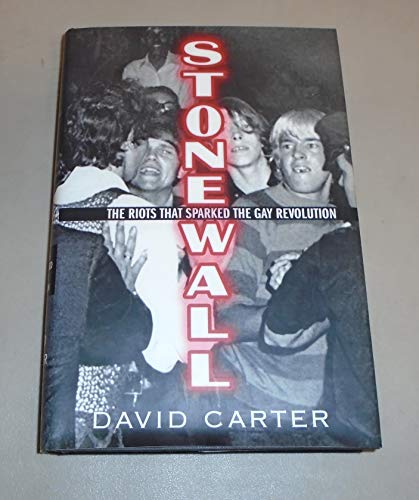
In June of 1969, a series of riots over police action at The Stonewall Inn, a small, dank, mob-run gay bar in Greenwich Village, New York changed the longtime landscape of homosexuals in society, literally overnight. These riots are widely acknowledged as the 'first shot' that ushered in a previously unimagined era of openness, political action, and massive social change. From an era when lesbians and gays were routinely closeted and in fear of losing their jobs, their apartments, their families and even their freedom, these riots - barely covered in the media at the time - were the spark that led to a new militancy and openness in the gay political movement. The name "Stonewall" has itself become almost synonymous with the struggle for gay rights and, yet, there has been relatively little hard information generally available about the riots themselves.
For the first time, David Carter provides an in-depth account of those riots as well as a complete background of the bar, the area in which the riots occurred, the social, political, and legal climate that led up to those events. He also dispels many of the accumulated myths, provides previously unknown facts, and new insight into what is the most significant rebellion against the status quo until the tearing down of the Berlin Wall. Based on over a decade of research, hundreds of interviews, and an exhaustive search of public and private records, Stonewall is the definitive story of one of modern history's most singular events.
For the first time, David Carter provides an in-depth account of those riots as well as a complete background of the bar, the area in which the riots occurred, the social, political, and legal climate that led up to those events. He also dispels many of the accumulated myths, provides previously unknown facts, and new insight into what is the most significant rebellion against the status quo until the tearing down of the Berlin Wall. Based on over a decade of research, hundreds of interviews, and an exhaustive search of public and private records, Stonewall is the definitive story of one of modern history's most singular events.
Die Inhaltsangabe kann sich auf eine andere Ausgabe dieses Titels beziehen.
Über die Autorin bzw. den Autor
David Carter has had a varied career as a writer, editor, and filmmaker. He is the author of biographies of Salvador Dali and George Santayana, he edited and compiled Spontaneous Mind, a collection of interviews with Allen Ginsberg, and directed the film Meher Baba in Italy for Peter Townshend. Carter has a B.A. from Emory University and an M.A. from the University of Wisconsin. He is a resident of Greenwich Village in New York City.
Rezensionen
In the late 1960s, homosexual sex was illegal in every state but Illinois; now the news routinely covers the latest on gay marriages. So the subtitle says it all--or does it? The six days of riots sparked by police action in the early morning of June 28, 1969, against a popular Greenwich Village gay bar, the Stonewall Inn, constituted a homosexual "shot heard 'round the world" that transformed an American subculture. Carter's carefully researched, well-crafted writing portrays Stonewall as part of a larger civil and human rights movement and a spur to the gay rights movement. Stonewall precipitated great change--the formation of the Gay Liberation Front and Gay Activists Alliance, for instance--and that leads Carter to examine the socio-politico-cultural convergence that resulted in the riots. Hundred of interviews figure into Carter's thorough exploration that dispels long-held myths and provides fresh facts about a freedom fight some liken to the fall of the Berlin Wall. Whitney Scott
Copyright © American Library Association. All rights reserved
While the centerpiece here is undoubtedly his hour-by-hour relating of the explosive June 1969 riots, Carter, an editor of Allen Ginsberg's interviews (Spontaneous Mind, 20o1), also provides an extended prelude that highlights the places, activists and others who come to play key roles. Carter's beloved Greenwich Village and what he calls its "queer geography," which enabled gay culture to form, flourish and consolidate itself, emerges as an inimitable, finely detailed hero. But for Carter, the most audacious, energetic and enterprising of riot participants were the drag queens, homeless queer youths and other gender transgressors whose position on the farthest margins of society enabled their radical response to oppression. What they and others managed to do, Carter renders with fresh care and enthusiasm, getting new quotes and offering unfamiliar perspectives, such as the Mafia's role both as a patron of the gay scene in New York City (including the Stonewall Inn, which it owned and operated) and as a blackmailer of famous homosexuals. He ends appropriately with the emergence of the Gay Liberation Front and the Gay Activist Alliance, as well as the first gay pride parade, held in June 1970. While it may distract readers interested only in the story of gay liberation, Carter's logistical history of what gay author Edmund White called "our Bastille Day" will become a permanent addition to the great histories of the civil rights era.
Copyright © Reed Business Information, a division of Reed Elsevier Inc. All rights reserved.
„Über diesen Titel“ kann sich auf eine andere Ausgabe dieses Titels beziehen.
Suchergebnisse für Stonewall: The Riots That Sparked the Gay Revolution

Beispielbild für diese ISBN
Stonewall: The Riots That Sparked the Gay Revolution
Anbieter: World of Books (was SecondSale), Montgomery, IL, USA
Verkäuferbewertung 5 von 5 Sternen

Hardback. Zustand: Good. Artikel-Nr. 00109010588
Gebraucht kaufen
EUR 3,49
Versand gratis
Versand innerhalb von USA
Versand innerhalb von USA
Anzahl: 1 verfügbar
Beispielbild für diese ISBN
Stonewall: The Riots That Sparked the Gay Revolution
Anbieter: ThriftBooks-Atlanta, AUSTELL, GA, USA
Verkäuferbewertung 5 von 5 Sternen
Hardcover. Zustand: Good. No Jacket. Pages can have notes/highlighting. Spine may show signs of wear. ~ ThriftBooks: Read More, Spend Less. Artikel-Nr. G0312200250I3N00
Gebraucht kaufen
EUR 6,17
Versand gratis
Versand innerhalb von USA
Versand innerhalb von USA
Anzahl: 1 verfügbar
Beispielbild für diese ISBN
Stonewall: The Riots That Sparked the Gay Revolution
Anbieter: ThriftBooks-Dallas, Dallas, TX, USA
Verkäuferbewertung 5 von 5 Sternen
Hardcover. Zustand: Good. No Jacket. Former library book; Pages can have notes/highlighting. Spine may show signs of wear. ~ ThriftBooks: Read More, Spend Less. Artikel-Nr. G0312200250I3N10
Gebraucht kaufen
EUR 6,17
Versand gratis
Versand innerhalb von USA
Versand innerhalb von USA
Anzahl: 1 verfügbar
Beispielbild für diese ISBN
Stonewall: The Riots That Sparked the Gay Revolution
Anbieter: ThriftBooks-Dallas, Dallas, TX, USA
Verkäuferbewertung 5 von 5 Sternen
Hardcover. Zustand: Very Good. No Jacket. Former library book; May have limited writing in cover pages. Pages are unmarked. ~ ThriftBooks: Read More, Spend Less. Artikel-Nr. G0312200250I4N10
Gebraucht kaufen
EUR 6,17
Versand gratis
Versand innerhalb von USA
Versand innerhalb von USA
Anzahl: 1 verfügbar
Beispielbild für diese ISBN
Stonewall: The Riots That Sparked the Gay Revolution
Anbieter: ThriftBooks-Dallas, Dallas, TX, USA
Verkäuferbewertung 5 von 5 Sternen
Hardcover. Zustand: Fair. No Jacket. Readable copy. Pages may have considerable notes/highlighting. ~ ThriftBooks: Read More, Spend Less. Artikel-Nr. G0312200250I5N00
Gebraucht kaufen
EUR 6,17
Versand gratis
Versand innerhalb von USA
Versand innerhalb von USA
Anzahl: 1 verfügbar
Beispielbild für diese ISBN
Stonewall: The Riots That Sparked the Gay Revolution
Anbieter: ThriftBooks-Atlanta, AUSTELL, GA, USA
Verkäuferbewertung 5 von 5 Sternen
Hardcover. Zustand: Very Good. No Jacket. May have limited writing in cover pages. Pages are unmarked. ~ ThriftBooks: Read More, Spend Less. Artikel-Nr. G0312200250I4N00
Gebraucht kaufen
EUR 6,17
Versand gratis
Versand innerhalb von USA
Versand innerhalb von USA
Anzahl: 1 verfügbar
Beispielbild für diese ISBN
Stonewall: The Riots That Sparked the Gay Revolution
Anbieter: ThriftBooks-Atlanta, AUSTELL, GA, USA
Verkäuferbewertung 5 von 5 Sternen
Hardcover. Zustand: Very Good. No Jacket. Former library book; May have limited writing in cover pages. Pages are unmarked. ~ ThriftBooks: Read More, Spend Less. Artikel-Nr. G0312200250I4N10
Gebraucht kaufen
EUR 6,17
Versand gratis
Versand innerhalb von USA
Versand innerhalb von USA
Anzahl: 1 verfügbar
Beispielbild für diese ISBN
Stonewall: The Riots That Sparked the Gay Revolution
Anbieter: ThriftBooks-Reno, Reno, NV, USA
Verkäuferbewertung 5 von 5 Sternen
Hardcover. Zustand: Good. No Jacket. Pages can have notes/highlighting. Spine may show signs of wear. ~ ThriftBooks: Read More, Spend Less. Artikel-Nr. G0312200250I3N00
Gebraucht kaufen
EUR 6,17
Versand gratis
Versand innerhalb von USA
Versand innerhalb von USA
Anzahl: 1 verfügbar
Beispielbild für diese ISBN
Stonewall : The Riots That Sparked the Gay Revolution
Anbieter: Better World Books, Mishawaka, IN, USA
Verkäuferbewertung 5 von 5 Sternen
Zustand: Very Good. Former library copy. Pages intact with possible writing/highlighting. Binding strong with minor wear. Dust jackets/supplements may not be included. Includes library markings. Stock photo provided. Product includes identifying sticker. Better World Books: Buy Books. Do Good. Artikel-Nr. 4899987-6
Gebraucht kaufen
EUR 8,60
Versand gratis
Versand innerhalb von USA
Versand innerhalb von USA
Anzahl: 1 verfügbar
Beispielbild für diese ISBN
Stonewall : The Riots That Sparked the Gay Revolution
Anbieter: Better World Books, Mishawaka, IN, USA
Verkäuferbewertung 5 von 5 Sternen
Zustand: Good. Former library copy. Pages intact with minimal writing/highlighting. The binding may be loose and creased. Dust jackets/supplements are not included. Includes library markings. Stock photo provided. Product includes identifying sticker. Better World Books: Buy Books. Do Good. Artikel-Nr. GRP95030935
Gebraucht kaufen
EUR 8,60
Versand gratis
Versand innerhalb von USA
Versand innerhalb von USA
Anzahl: 2 verfügbar