
Verwandte Artikel zu Understanding Your Young Teen: Practical Wisdom for...
Inhaltsangabe
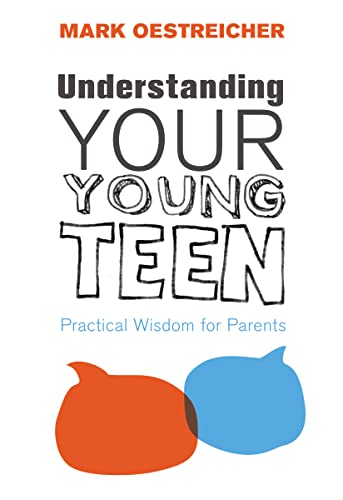
Between the ages of 11-14, adolescents experience one of the most significant periods of change they’ll face during their lifetimes—physically, mentally, emotionally, relationally and spiritually. Mothers and fathers of young teens are presented with new challenges in understanding, communicating with and parenting their kids during this time in their lives. Understanding Your Young Teen offers insights on early adolescent development, new research and cultural changes, and practical applications for parenting and living with young teens. Mark Oestreicher has worked with young teens for nearly three decades, and is also the parent of two teenagers. Based on his research and experience, this book is presented to parents of young teens as a conversation from one parent to another. With transparency about his own experience parenting, and examples from his extensive involvement with thousands of other young teens and parents, Understanding Your Young Teen dives into the developmental realities of early adolescence. Oestreicher educates parents on the latest research and cultural shifts that affect their children, revealing opportunities for faith formation in the lives of young teens.
Die Inhaltsangabe kann sich auf eine andere Ausgabe dieses Titels beziehen.
Über die Autorin bzw. den Autor
Mark Oestreicher (Marko) is a veteran youth worker and former president of Youth Specialties. The author of dozens of books, including Youth Ministry 3.0 and Middle School Ministry, Marko is a sought after speaker, writer and consultant. Marko leads The Youth Cartel, providing a variety of resources, coaching and consultation to youth workers, churches and ministries. Marko lives in San Diego with his wife Jeannie and two teenage children, Liesl and Max. www.whyismarko.com.
Auszug. © Genehmigter Nachdruck. Alle Rechte vorbehalten.
Understanding Your Young Teen
By Mark OestreicherZondervan
Copyright © 2012 Mark OestreicherAll right reserved.
ISBN: 978-0-310-67114-5
Contents
Acknowledgments.............................................................................................................7Introduction................................................................................................................91. Can Anything Good Come of This Age?......................................................................................172. It's All about Change....................................................................................................293. Walking Hormones? (Physical and Sexual Development)......................................................................414. Mind-Warp (Cognitive Development)........................................................................................655. Roller-Coaster Freak Show (Emotional Development)........................................................................876. Best Friends Forever! (Relational Change)................................................................................1017. I Can Do It! Just Don't Leave Me (Independence)..........................................................................1138. Operating System Upgrade (Spiritual Development).........................................................................1279. White-Hot Temporary (Early Adolescent Culture)...........................................................................14310. The Overlapping Transition (A Few More Implications)....................................................................165My Prayer for You...........................................................................................................173Bonus Chapter: See Jane Face New Issues (by Kara Powell and Brad Griffin of the Fuller Youth Institute).....................175Endnotes....................................................................................................................185About the Author............................................................................................................199
Chapter One
Can Anything Good Come of This Age?
Derek was, well, a challenging kid to have in our middle school group. He was a natural leader, charismatic, and good looking. And he was disruptive. Not disruptive in an "Oh, he just needs to take his medication" way, or even in a "He has all the squirrelly characteristics of a young teen boy, turned to 11 on the dial" way. Derek was intentionally disruptive. His timid mom couldn't control him, and she had no idea what to do with him.
Smart and scheming, Derek would regularly manipulate entire hordes of boys and girls in our group into behaviors that would create havoc and get everyone except Derek in trouble with their parents. If there were a group of kids hiding somewhere in a stairwell, Derek was usually the kid who got them there. If students were caught smoking or drinking, then Derek was likely the provider. If all the kids in a certain section of the room were sitting with their arms crossed and "I dare you to teach me something" expressions firmly fixed on their faces, then they were almost assuredly imitating Derek.
I met many times with both Derek and his mom. I chatted with each of them on the phone frequently. I took Derek out for sodas and meals and showed him grace and love. I tried to help his mom with her challenging role of setting boundaries for him.
While there were certainly many factors involved, the struggle, as it pertained to Derek's disruption in our group, came down to two particularly vivid facts: 1) He didn't want to be there; and 2) his mom used attendance at our group as a punishment. She revealed this to me once, with only the tiniest bit of embarrassment. When she grounded him, he simply ignored it. When she took away other privileges, he either overrode her or manipulated her into reversing her decision. The only thing she'd ever found that "worked" was telling Derek he had to come to our church middle school group. And since he was almost always in trouble for something, we saw Derek fairly regularly.
I asked Derek's mom about this approach—more specifically, I asked if she thought it was healthy for Derek's spiritual development to experience church as a punishment. Her response was revealing: "I don't know what else to do. I can't handle him; when I send him to you, at least I don't have to worry about him for a few hours. I don't understand Derek at all, and I have no idea how to get through to him."
Natalie was another student in that same group. She was the youth group flirt. Her family was extremely active in our church, and she was present at everything we did. She wasn't overtly disruptive like Derek, but she was still exceedingly disinterested in anything other than constant chatting with friends, flirting with boys, and working on her next conquest.
In many ways, Natalie wasn't particularly unique— we had other girls (and guys) with the same values and behaviors. What made Natalie's situation stand out was her parents' perspective. One day they sat with me in my office, very frustrated, and asked, "Why can't you do something about Natalie? Why can't you change her? What's the point of our constantly bringing her to youth group if you can't fix her?" (To be fair, I'm not sure they actually used the word fix; but it was implied, even if they didn't use it.) But the most telling bit of the conversation was one sentence uttered by Natalie's mom: "She and her friends are nothing like I was at that age, and I don't understand her."
Yup, that's it in a nutshell. I've met with hundreds of parents during my years of middle school ministry, observed hundreds (or thousands) more, and often interact with parents of middle schoolers when I'm doing parenting seminars at churches. And this theme—this "I just don't understand my child" theme—is certainly common, if not nearly universal.
In fact, in my experience, just about the only parents of middle schoolers who think they do understand their child are those with an arrogant "What's there to understand?" attitude of indifference.
Common media portrayals of parents and young teens don't help. Parents are usually portrayed as bumbling and immature, while young teens (and teenagers in general) are often portrayed as savvier and smarter than their parents. I don't know about you, but I get really tired of the "doofus dad" stereotype I see on so much of the programming aimed at teenagers (as well as the "neurotic mom" stereotype).
But here's my observation: The gap between the perception many adults have of middle schoolers' potential and their actual potential is fairly wide. Most of this gap is rooted in complex cultural misunderstandings—even fear—of young teens.
I can't tell you how many times, over the years, I've been told by well-meaning church members and leaders: "God bless you for working with those kids; I sure couldn't do it." Or, "You must really be called to work with those kids because I can't understand how you do it."
I want to start this book by reframing a few things. And let's start with this one: The fact that you don't always understand your middle schooler is not cause for throwing in the towel, throwing your hands in the air, or any other defeatist metaphor involving throwing. The fact that you don't always understand your middle schooler is an opportunity. It's an opportunity to learn and grow; it's an opportunity to be...
„Über diesen Titel“ kann sich auf eine andere Ausgabe dieses Titels beziehen.
Suchergebnisse für Understanding Your Young Teen: Practical Wisdom for...

Beispielbild für diese ISBN
Understanding Your Young Teen: Practical Wisdom for Parents
Anbieter: World of Books (was SecondSale), Montgomery, IL, USA
Verkäuferbewertung 5 von 5 Sternen

Zustand: Good. Item in good condition. Textbooks may not include supplemental items i.e. CDs, access codes etc. Artikel-Nr. 00071969596
Gebraucht kaufen
EUR 4,27
Versand gratis
Versand innerhalb von USA
Versand innerhalb von USA
Anzahl: 3 verfügbar
Beispielbild für diese ISBN
Understanding Your Young Teen: Practical Wisdom for Parents
Anbieter: BooksRun, Philadelphia, PA, USA
Verkäuferbewertung 5 von 5 Sternen
Paperback. Zustand: Very Good. It's a well-cared-for item that has seen limited use. The item may show minor signs of wear. All the text is legible, with all pages included. It may have slight markings and/or highlighting. Artikel-Nr. 0310671140-11-1
Gebraucht kaufen
EUR 4,95
Versand gratis
Versand innerhalb von USA
Versand innerhalb von USA
Anzahl: 1 verfügbar
Beispielbild für diese ISBN
Understanding Your Young Teen : Practical Wisdom for Parents
Anbieter: Better World Books, Mishawaka, IN, USA
Verkäuferbewertung 5 von 5 Sternen
Zustand: Very Good. Pages intact with possible writing/highlighting. Binding strong with minor wear. Dust jackets/supplements may not be included. Stock photo provided. Product includes identifying sticker. Better World Books: Buy Books. Do Good. Artikel-Nr. 14291009-6
Gebraucht kaufen
EUR 6,16
Versand gratis
Versand innerhalb von USA
Versand innerhalb von USA
Anzahl: 2 verfügbar
Beispielbild für diese ISBN
Understanding Your Young Teen : Practical Wisdom for Parents
Anbieter: Better World Books: West, Reno, NV, USA
Verkäuferbewertung 5 von 5 Sternen
Zustand: Good. Former library copy. Pages intact with minimal writing/highlighting. The binding may be loose and creased. Dust jackets/supplements are not included. Includes library markings. Stock photo provided. Product includes identifying sticker. Better World Books: Buy Books. Do Good. Artikel-Nr. GRP98540809
Gebraucht kaufen
EUR 6,16
Versand gratis
Versand innerhalb von USA
Versand innerhalb von USA
Anzahl: 1 verfügbar
Beispielbild für diese ISBN
A Understanding Your Young Teen: Practical Wisdom for Parents
Anbieter: ThriftBooks-Dallas, Dallas, TX, USA
Verkäuferbewertung 5 von 5 Sternen
Paperback. Zustand: Very Good. No Jacket. Former library book; May have limited writing in cover pages. Pages are unmarked. ~ ThriftBooks: Read More, Spend Less. Artikel-Nr. G0310671140I4N10
Gebraucht kaufen
EUR 6,94
Versand gratis
Versand innerhalb von USA
Versand innerhalb von USA
Anzahl: 1 verfügbar
Beispielbild für diese ISBN
Understanding Your Young Teen: Practical Wisdom for Parents
Anbieter: Ria Christie Collections, Uxbridge, Vereinigtes Königreich
Verkäuferbewertung 5 von 5 Sternen
Zustand: New. In English. Artikel-Nr. ria9780310671145_new
Neu kaufen
EUR 19,77
EUR 11,05 Versand
Versand von Vereinigtes Königreich nach USA
Versand von Vereinigtes Königreich nach USA
Anzahl: Mehr als 20 verfügbar
Beispielbild für diese ISBN
Understanding Your Young Teen PB
Anbieter: Kennys Bookstore, Olney, MD, USA
Verkäuferbewertung 5 von 5 Sternen
Zustand: New. Num Pages: 208 pages, black & white illustrations. BIC Classification: VFXC1. Category: (G) General (US: Trade). Dimension: 203 x 139 x 15. Weight in Grams: 208. . 2012. Paperback. . . . . Books ship from the US and Ireland. Artikel-Nr. V9780310671145
Neu kaufen
EUR 25,95
EUR 9,33 Versand
Versand innerhalb von USA
Versand innerhalb von USA
Anzahl: 15 verfügbar