
Verwandte Artikel zu Politics - According to the Bible: A Comprehensive...
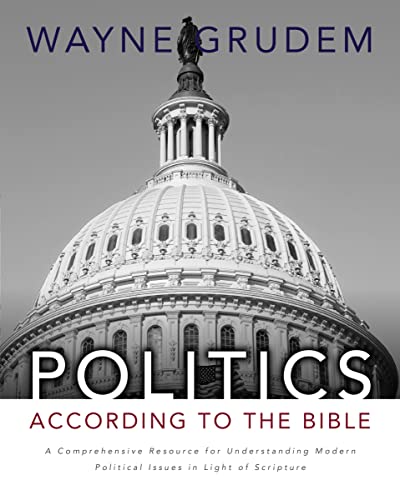
Politics - According to the Bible: A Comprehensive Resource for Understanding Modern Political Issues in Light of Scripture - Hardcover
Inhaltsangabe
Should Christians be involved in political issues?
This comprehensive and readable book presents a political philosophy from the perspective that the Gospel pertains to all of life, including politics. Politics—According to the Bible is an in-depth analysis of conservative and liberal plans to do good for the nation, evaluated in light of the Bible and common sense.
Evangelical Bible professor, and author of the bestselling book Systematic Theology, Wayne Grudem unpacks and rejects five common views about Christian influence on politics:
- "compel religion,"
- "exclude religion,"
- "all government is demonic,"
- "do evangelism, not politics," and
- "do politics, not evangelism."
Instead, he defends a position of "significant Christian influence on government" and explains the Bible's teachings about the purpose of civil government and the characteristics of good or bad governments. Grudem provides a thoughtful analysis of over fifty specific and current political issues dealing with:
- The protection of life.
- Marriage, the family, and children.
- Economic issues and taxation.
- The environment.
- National defense
- Relationships to other nations.
- Freedom of speech and religion.
- Quotas.
- And special interests.
Throughout this book, he makes frequent application to the current policies of the Democratic and Republican parties in the United States, but the principles discussed here are relevant for any nation.
Die Inhaltsangabe kann sich auf eine andere Ausgabe dieses Titels beziehen.
Über die Autorin bzw. den Autor
Wayne Grudem is distinguished research professor of Theology and Biblical Studies at Phoenix Seminary in Phoenix, Arizona. He holds degrees from Harvard (AB), Westminster Theological Seminary (MDiv, DD), and Cambridge (PhD). He is the author of more than 30 books including the bestselling Systematic Theology.
Von der hinteren Coverseite
A variety of perspectives exist within the Christian community when it comes to political issues and political involvement. This comprehensive and readable book presents a political philosophy from the perspective that the Gospel pertains to all of life so Christians should be involved in political issues. In brief, this is an analysis of conservative and liberal plans to do good for the nation, evaluated in light of the Bible and common sense.In this ground-breaking book, recognized evangelical Bible professor Wayne Grudem rejects five mistaken views about Christian influence on politics: (1) 'compel religion,' (2) 'exclude religion,' (3) 'all government is demonic,' (4) 'do evangel-ism, not politics,' and (5) 'do politics, not evangelism.' He proposes a better alternative: (6) 'significant Christian influence on government.' Then he explains the Bible's teachings about the purpose of civil government and the characteristics of good or bad government. Does the Bible support some form of democracy? Should judges and the courts hold the ultimate power in a nation? With respect to specific political issues, Grudem argues that most people's political views depend on deep-seated assumptions about several basic moral and even theological questions, such as whether God exists, whether absolute moral standards can be known, whether there is good and evil in each person's heart, whether people should be accountable for their good and bad choices, whether property should belong to individuals or to society, and whether the purpose of the earth's resources is to bring benefit to mankind. After addressing these foundational questions, Grudem provides a thoughtful, carefully-reasoned analysis of over fifty specific issues dealing with the protection of life, marriage, the family and children, economic issues and taxation, the environment, national defense, relationships to other nations, freedom of speech and religion, quotas, and special interests. He makes frequent application to the current policies of the Democratic and Republican parties in the United States, but the principles discussed here are relevant for any nation.
Auszug. © Genehmigter Nachdruck. Alle Rechte vorbehalten.
Politics-According to the Bible
A comprehensive resource for understanding modern political issues in light of scriptureBy Wayne GrudemZondervan
Copyright © 2010 Wayne A. GrudemAll right reserved.
ISBN: 978-0-310-33029-5
Contents
Preface....................................................................................................13Introduction...............................................................................................17Chapter 1: Five Wrong Views about Christians and Government................................................23Chapter 2: A Better Solution: Significant Christian Influence on Government................................55Chapter 3: Biblical Principles Concerning Government.......................................................77Chapter 4: A Biblical Worldview............................................................................116Chapter 5: The Courts and the Question of Ultimate Power in a Nation.......................................124Chapter 6: The Protection of Life..........................................................................157Chapter 8: The Family......................................................................................245Chapter 9: Economics.......................................................................................261Chapter 10: The Environment................................................................................320Chapter 11: National Defense...............................................................................387Chapter 12: Foreign policy.................................................................................436Chapter 13: Freedom of Speech..............................................................................484Chapter 14: Freedom of Religion............................................................................499Chapter 15: Special Groups.................................................................................513Chapter 16: The Problem of Media Bias: When the Watchdogs Fall Asleep......................................555Chapter 17: Application to Democratic and Republican Policies Today........................................572Chapter 18: Faith and Works, and Trusting God While Working in Politics and Government.....................591Scripture Index............................................................................................602Index of Names.............................................................................................608Subject Index..............................................................................................615
Chapter One
FIVE WRONG VIEWS ABOUT CHRISTIANS AND GOVERNMENTBefore explaining my own understanding of the proper role of Christians in politics, I need to examine what I think are five wrong views on this question-sadly mistaken views that have been propagated by many writers throughout history. Then in the following chapter I propose what I think is a better, more balanced solution.
A. GOVERNMENT SHOULD COMPEL RELIGION
The first wrong view (according to my judgment) is the idea that civil government should compel people to support or follow one particular religion.
Tragically, this "compel religion" view was held by many Christians in previous centuries. This view played a large role in the Thirty Years' War (1618-48) that began as a conflict between Protestants and Roman Catholics over control of various territories, especially in Germany. There were many other "wars of religion" in Europe, particularly between Catholics and Protestants, in the sixteenth and seventeenth centuries. Also in the sixteenth century, the Reformed and Lutheran Protestants persecuted and killed thousands from the Anabaptist groups in Switzerland and Germany who sought to have churches for "believers only" and practiced baptism by immersion for those who made a personal profession of faith.
Over the course of time, more and more Christians realized that this "compel religion" view is inconsistent with the teachings of Jesus and inconsistent with the nature of faith itself (see discussion below). Today I am not aware of any major Christian group that still holds to the view that government should try to compel people to follow the Christian faith.
But other religions still promote government enforcement of their religion. This is seen in countries such as Saudi Arabia, which enforces laws compelling people to follow Islam and where those who fail to comply can face severe penalties from the religious police. The law prohibits any public practice of any religion other than Islam and prohibits Saudis from converting to other religions. Islamic advocate Bilal Cleland writes at the pro-Islamic web site Islam for Today, "Legislation contained in the Quran becomes the basic law of the state."
The "compel religion" view is also used by violent groups around the world to justify persecution of Christians, such as the burning by Muslims of an entire Christian village in Pakistan, killing six Christians in early August 2009, or the warfare waged by Islamic militant groups against Christians in Nigeria, Sudan, and other sub-Saharan African countries. The "compel religion" view has also led to the violent persecution of Christians by some Hindu groups in India. In 1999 it was reported that fifty-one Christian churches and prayer halls were burned to the ground in the western state of Gujarat. An Australian missionary, Graham Staines, and his two young sons were burned to death in their jeep by a Hindu mob in Orissa state on the eastern coast of India. In 2007 it was reported by the Associated Press that Hindu extremists set fire to nearly a dozen churches.
But it must be noted that other Muslims and other Hindus also favor democracy and allowing varying degrees of freedom of religion.
In the early years of the United States, support for freedom of religion in the American colonies increased both because of a need to form a united country with people from various religious backgrounds (such as Congregational, Episcopalian, Presbyterian, Quaker, Baptist, Roman Catholic, and Jewish) and because many of the colonists had fled from religious persecution in their home countries. For example, the New England Pilgrims had fled from England where they had faced fines and imprisonment for failing to attend services in the Church of England and for conducting their own church services.
In 1779, just three years after the Declaration of Independence, Thomas Jefferson drafted the Virginia Act for Establishing Religious Freedom, which demonstrated the increasing support for religious freedom in the United States. Jefferson wrote:
Be it therefore enacted by the General Assembly, That no man shall be compelled to frequent or support any religious worship, place, or ministry whatsoever, nor shall be enforced, restrained, molested, or burdened in his body or goods, nor shall otherwise suffer on account of his religious opinions or belief; but that all men shall be free to profess, and by argument to maintain, their opinions in matters of religion, and that the same shall in nowise diminish, enlarge, or affect their civil capacities.
Several teachings of the Bible show that "government should compel religion" is an incorrect view, one that is contrary to the teachings of the Bible itself.
1. Jesus distinguished the realms of God and of Caesar
The first biblical argument against the "compel religion" view comes from Jesus' teachings in Matthew 22. Jesus'...
„Über diesen Titel“ kann sich auf eine andere Ausgabe dieses Titels beziehen.
Suchergebnisse für Politics - According to the Bible: A Comprehensive...

Beispielbild für diese ISBN
Politics According to the Bib
Anbieter: World of Books (was SecondSale), Montgomery, IL, USA
Verkäuferbewertung 5 von 5 Sternen

Zustand: Acceptable. Item in acceptable condition! Textbooks may not include supplemental items i.e. CDs, access codes etc. Artikel-Nr. 00101143571
Gebraucht kaufen
EUR 5,73
Versand gratis
Versand innerhalb von USA
Versand innerhalb von USA
Anzahl: 1 verfügbar
Beispielbild für diese ISBN
Politics According to the Bib
Anbieter: World of Books (was SecondSale), Montgomery, IL, USA
Verkäuferbewertung 5 von 5 Sternen
Zustand: Good. Item in good condition. Textbooks may not include supplemental items i.e. CDs, access codes etc. Artikel-Nr. 00107690987
Gebraucht kaufen
EUR 5,73
Versand gratis
Versand innerhalb von USA
Versand innerhalb von USA
Anzahl: 6 verfügbar
Beispielbild für diese ISBN
Politics According to the Bib
Anbieter: World of Books (was SecondSale), Montgomery, IL, USA
Verkäuferbewertung 5 von 5 Sternen
Zustand: Very Good. Item in very good condition! Textbooks may not include supplemental items i.e. CDs, access codes etc. Artikel-Nr. 00108947716
Gebraucht kaufen
EUR 5,73
Versand gratis
Versand innerhalb von USA
Versand innerhalb von USA
Anzahl: 1 verfügbar
Foto des Verkäufers
Politics - According to the Bible: A Comprehensive Resource for Understanding Modern Political Issues in Light of Scripture
Anbieter: Dream Books Co., Denver, CO, USA
Verkäuferbewertung 5 von 5 Sternen
Zustand: good. Gently used with minimal wear on the corners and cover. A few pages may contain light highlighting or writing, but the text remains fully legible. Dust jacket may be missing, and supplemental materials like CDs or codes may not be included. May be ex-library with library markings. Ships promptly! Artikel-Nr. DBV.0310330297.G
Gebraucht kaufen
EUR 5,74
Versand gratis
Versand innerhalb von USA
Versand innerhalb von USA
Anzahl: 2 verfügbar
Beispielbild für diese ISBN
Politics - According to the Bible: A Comprehensive Resource for Understanding Modern Political Issues in Light of Scripture
Anbieter: ThriftBooks-Atlanta, AUSTELL, GA, USA
Verkäuferbewertung 5 von 5 Sternen
Hardcover. Zustand: Good. No Jacket. Pages can have notes/highlighting. Spine may show signs of wear. ~ ThriftBooks: Read More, Spend Less. Artikel-Nr. G0310330297I3N00
Gebraucht kaufen
EUR 7,63
Versand gratis
Versand innerhalb von USA
Versand innerhalb von USA
Anzahl: 1 verfügbar
Beispielbild für diese ISBN
Politics - According to the Bible : A Comprehensive Resource for Understanding Modern Political Issues in Light of Scripture
Anbieter: Better World Books, Mishawaka, IN, USA
Verkäuferbewertung 5 von 5 Sternen
Zustand: Good. Pages intact with minimal writing/highlighting. The binding may be loose and creased. Dust jackets/supplements are not included. Stock photo provided. Product includes identifying sticker. Better World Books: Buy Books. Do Good. Artikel-Nr. 9886747-20
Gebraucht kaufen
EUR 11,93
Versand gratis
Versand innerhalb von USA
Versand innerhalb von USA
Anzahl: 1 verfügbar
Beispielbild für diese ISBN
Politics - According to the Bible
Anbieter: PBShop.store UK, Fairford, GLOS, Vereinigtes Königreich
Verkäuferbewertung 5 von 5 Sternen
HRD. Zustand: New. New Book. Shipped from UK. Established seller since 2000. Artikel-Nr. IB-9780310330295
Neu kaufen
EUR 44,26
EUR 8,88 Versand
Versand von Vereinigtes Königreich nach USA
Versand von Vereinigtes Königreich nach USA
Anzahl: 3 verfügbar
Beispielbild für diese ISBN
Politics - According to the Bible
Anbieter: Kennys Bookstore, Olney, MD, USA
Verkäuferbewertung 5 von 5 Sternen
Zustand: New. Num Pages: 624 pages, illustrations. BIC Classification: HRAM2; JP. Category: (U) Tertiary Education (US: College). Dimension: 239 x 195 x 47. Weight in Grams: 1206. . 2010. . . . . Books ship from the US and Ireland. Artikel-Nr. V9780310330295
Neu kaufen
EUR 57,04
EUR 9,04 Versand
Versand innerhalb von USA
Versand innerhalb von USA
Anzahl: 15 verfügbar
Beispielbild für diese ISBN
Politics - According to the Bible: A Comprehensive Resource for Understanding Modern Political Issues in Light of Scripture
Anbieter: Revaluation Books, Exeter, Vereinigtes Königreich
Verkäuferbewertung 5 von 5 Sternen
Hardcover. Zustand: Brand New. 8.4.2010 edition. 624 pages. 9.25x7.75x2.00 inches. In Stock. Artikel-Nr. xr0310330297
Neu kaufen
EUR 58,63
EUR 17,46 Versand
Versand von Vereinigtes Königreich nach USA
Versand von Vereinigtes Königreich nach USA
Anzahl: 2 verfügbar
Foto des Verkäufers
Politics - According to the Bible: A Comprehensive Resource for Understanding Modern Political Issues in Light of Scripture
Anbieter: moluna, Greven, Deutschland
Verkäuferbewertung 5 von 5 Sternen
Zustand: New. KlappentextrnrnPolitics---According to the Bible is a readable, comprehensive political philosophy, arguing for Christian involvement based on biblical teachings and a Christian worldview. Covering over 50 specific issues relating to protection . Artikel-Nr. 608246017
Neu kaufen
EUR 43,55
EUR 48,99 Versand
Versand von Deutschland nach USA
Versand von Deutschland nach USA
Anzahl: 3 verfügbar