
Verwandte Artikel zu Washed and Waiting: Reflections on Christian Faithfulness...
Inhaltsangabe
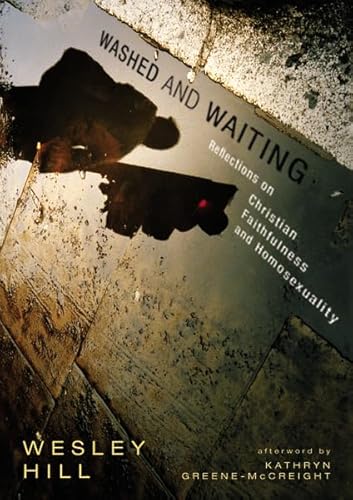
"Gay," "Christian," and “celibate” don't often appear in the same sentence. Yet many who sit next to us in the pew at church fit that description, says author Wesley Hill. As a celibate gay Christian, Hill gives us a glimpse of what it looks like to wrestle firsthand with God's "No" to same-sex relationships. What does it mean for gay Christians to live faithful to God while struggling with the challenge of their homosexuality? What is God's will for believers who experience same-sex desires? Those who choose celibacy are often left to deal with loneliness and the hunger for relationships. How can gay Christians experience God's favor and blessing in the midst of a struggle that for many brings a crippling sense of shame and guilt? Weaving together reflections from his own life and the lives of other Christians, such as Henri Nouwen and Gerard Manley Hopkins, Hill offers a fresh perspective on these questions. He advocates neither unqualified "healing" for those who struggle, nor their accommodation to temptation, but rather faithfulness in the midst of brokenness. "I hope this book may encourage other homosexual Christians to take the risky step of opening up their lives to others in the body of Christ," Hill writes. "In so doing, they may find, as I have, by grace, that being known is spiritually healthier than remaining behind closed doors, that the light is better than the darkness."
Die Inhaltsangabe kann sich auf eine andere Ausgabe dieses Titels beziehen.
Über die Autorin bzw. den Autor
Wesley Hill (PhD, Durham University, UK) is assistant professor of biblical studies at Trinity School for Ministry in Ambridge, Pennsylvania. He is the author of Washed and Waiting: Reflections on Christian Faithfulness and Homosexuality (Zondervan, 2010), Paul and the Trinity?: Persons, Relations, and the Pauline Letters? (Eerdmans, 2015), and Spiritual Friendship: Finding Love in the Church as a Celibate Gay Christian (Brazos, 2015). He is on the editorial board for Christianity Today and writes regularly for that magazine as well as for Books & Culture, First Things, and other publications.
Von der hinteren Coverseite
This is a book written primarily for gay Christians and those who love them. Part memoir, part pastoral-theological reflection, this book wrestles with three main areas of struggle that many gay Christians face: (1) What is God's will for sexuality?(2) If the historic Christian tradition is right and same-sex behavior is ruled out, how should gay Christians deal with their resulting loneliness? (3) How can gay Christians come to an experience of grace that rescues them from crippling feelings of shame and guilt?Author Wesley Hill is not advocating that it is possible for every gay Christian to become straight, nor is he saying that God affirms homosexuality. Instead, Hill comes alongside gay Christians and says, 'You are not alone. Here is my experience; it's like yours. And God is with us. We can share in God's grace.' While some authors profess a deep faith in Christ and claim a powerful experience of the Holy Spirit precisely in and through their homosexual practice, Hill's own story, by contrast, is a story of feeling spiritually hindered, rather than helped, by his homosexuality. His story testifies that homosexuality was not God's original creative intention for humanity---that it is, on the contrary, a tragic sign of human nature and relationships being fractured by sin---and therefore that homosexual practice goes against God's express will for all human beings, especially those who trust in Christ. This book is written mainly for those homosexual Christians who are trying to walk the narrow path of celibacy and are convinced that their discipleship to Jesus necessarily commits them to the demanding, costly obedience of choosing not to nurture their homosexual desires. With reflections from the lives of Henri Nouwen and Gerard Manley Hopkins, Wesley Hill encourages and challenges Christians with homosexual desires to live faithful to God's plan for human sexuality.
Auszug. © Genehmigter Nachdruck. Alle Rechte vorbehalten.
Washed and Waiting
Reflections on Christian Faithfulness and HomosexualityBy Wesley HillZONDERVAN
Copyright © 2010 Wesley HillAll right reserved.
ISBN: 978-0-310-33003-5
Contents
Author's Note...............................................9Acknowledgments.............................................11Introduction................................................13Prelude: Washed and Waiting.................................251. A Story-Shaped Life......................................51Interlude: the Beautiful incision...........................832. The End of Loneliness....................................95Postlude: "thou art Lightning and Love".....................1233. The Divine Accolade......................................131Afterword by Kathryn Greene-McCreight.......................151Notes.......................................................153
Chapter One
WASHED AND WAITING
You were washed, you were sanctified, you were justified in the name of the Lord Jesus Christ and by the Spirit of our God. 1 Corinthians 6:11
We ourselves, who have the firstfruits of the Spirit, groan inwardly as we wait eagerly for adoption as sons, the redemption of our bodies.... If we hope for what we do not see, we wait for it with patience. Romans 8:23, 25
Puberty came late for me, or so it felt at the time. I was almost thirteen years old, but far from being the exciting whirlwind of change that it was for my friends, the experience terrified me. From the very beginning of those unsettling months, I found strange new desires - it wasn't clear to me then that they were sexual - for the other guys my age who were going through the same turbulent transformation. I started noticing and being fascinated by the firming muscles and the growing hair of my male friends. I would steal glances at them whenever I could, trying not to be caught but unsure why I felt it necessary to be so secretive.
I remember being at an airport once for a field trip my church group took to the air traffic control tower. At some point, several friends of mine slipped away from the hawkish gaze of our teachers and started exploring the airport's souvenir shops and magazine racks. I jogged with them along one of the terminals, feeling rebellious and carefree, laughing. In one of the shops, they found Playboy magazines. They were in plain view on a shelf along the back wall, and one of my friends quickly opened one as the rest of us huddled around, ducking out of the salesclerk's line of sight. In an instant I felt like an outsider. I wouldn't have been able to express it at the time, but I realized something was different. I felt no rush, no thrill, no curiosity, no sense of the mysterious attraction that my friends all seemed to be relishing as they glanced nervously over their shoulders until the clerk saw us and angrily ordered us out of the shop.
In those tingly days of growing into a new kind of body, I wasn't sure why I had images of other guys, other males, parading through my excited yet faintly discomfited mind. Maybe all this was part of the process of growing up and would go away eventually? I didn't speculate too much about it all - I didn't know enough to ask good questions. Mostly I tried to weather what felt like a strange but soon-to-pass storm that was part guilty pleasure, part confusing agony.
Around this time, my parents made the decision that we should stop attending the large Southern Baptist church where we were members. I had not yet entered the youth group at that church and really had no desire to. I felt mortified by the pimples covering my temples, nose, and chin, and whenever I tried to talk to someone else my own age, I could feel my face turning a hot shade of red and my armpits sweating. I had spent my entire life up to that point in a sheltered Southern fundamentalism and would have preferred never to have a conversation with any peer if I could help it. My parents found a smaller, nondenominational church with a dozen kids in the youth group, most of whom I knew already and felt more at ease around, and we made the switch.
During the next three years, I grew out of much of the scared awkwardness of those first months of puberty. But changing churches and becoming less socially inept didn't make one iota's difference when it came to my sexuality. I still felt in my gut that something had gone wrong. Somehow genetic wires must have been crossed, and as a result there had been a glitch in my otherwise normal development.
As I left childhood behind and began to learn more about myself and the world I lived in, I came to realize that what had happened to my mind and body was drastically different from what had happened to my friends'. When I started meeting with a small group of guys at my church for prayer and accountability, lust was, predictably, one of the main topics of discussion. "We like to mentally undress girls we see - what should we do about that?" one of us maturely asked our twentysomething leader. "Come on, we're all red-blooded American males here," another one of the guys chimed in. "We can talk about our struggles openly." I came to realize, with a mild sense of panic, that I couldn't talk about my struggle openly - couldn't identify with my friends as they discussed their frustrations with knowing how to handle their hormones. My problem was never mentally undressing girls. As they talked, I planned how to keep my answers vague so that my difference would remain a secret.
* * *
My earliest childhood memories are of my mother reading colorful, rhyming Bible storybooks to me and helping me draw pictures with crayons of my favorite Bible characters. I understood at a very young age that Jesus had died on a cross, condemned by the Jewish high priests and the Roman government in Jerusalem, and that after lying three days in a tomb, he had risen from the dead. Growing up, I never doubted that this was, somehow, the most important news in the world and that it could be the center of people's lives because I saw that it was the center of my parents' lives. I prayed at a young age, in good evangelical fashion, to "ask Jesus into my heart." I was baptized at age eleven.
By the time I reached the ninth grade or so, I had been fully persuaded that Jesus was and is God come in the flesh for me and for my salvation, and I knew I wanted to spend the rest of my life loving and obeying him. Over time, my parents' nurturing role was replaced by my own reading of the Bible. In a process filled with starts and stops, I learned to pray, to dialogue with God on my own, as I drove my car or lay in my bed at night. I read books on spirituality and doctrine by C. S. Lewis, Frederick Buechner, J. I. Packer, Henri Nouwen, and John Piper. Self-motivated now, I started wrestling with the perennial problems of Christian discipleship. I looked for answers in the Bible and asked my youth pastor lots of questions over barbecue sandwiches and Cokes at a local greasy spoon.
Birdlike, I was testing my wings, coming of age. But at the same time that I was learning to engage with God as a hungry, growing young Christian, the realization dawned on me like a dead weight sinking in my stomach that no amount of spiritual growth seemed to have any effect on my sexual preference. The homoerotic attractions I had been conscious of since waking up to the strange new universe of sexuality...
„Über diesen Titel“ kann sich auf eine andere Ausgabe dieses Titels beziehen.
Suchergebnisse für Washed and Waiting: Reflections on Christian Faithfulness...

Beispielbild für diese ISBN
Washed and Waiting: Reflections on Christian Faithfulness and Homosexuality
Verlag:
Zondervan (edition 8/28/10), 2010
ISBN 10: 0310330033
ISBN 13: 9780310330035
Gebraucht
Paperback
Anbieter: BooksRun, Philadelphia, PA, USA
Verkäuferbewertung 5 von 5 Sternen

Paperback. Zustand: Fair. 8/28/10. The item might be beaten up but readable. May contain markings or highlighting, as well as stains, bent corners, or any other major defect, but the text is not obscured in any way. Artikel-Nr. 0310330033-7-1-13
Gebraucht kaufen
EUR 4,19
Versand gratis
Versand innerhalb von USA
Versand innerhalb von USA
Anzahl: 1 verfügbar
Beispielbild für diese ISBN
Washed and Waiting: Reflections on Christian Faithfulness and Homosexuality
Anbieter: World of Books (was SecondSale), Montgomery, IL, USA
Verkäuferbewertung 5 von 5 Sternen
Paperback. Zustand: Good. "Gay," "Christian," and "celibate" don't often appear in the same sentence. Yet many who sit next to us in the pew at church fit that description, says author Wesley Hill. As a celibate gay Christian, Hill gives us a glimpse of what it looks like to wrestle firsthand with God's "No" to same-sex relationships. What does it mean for gay Christians to live faithful to God while struggling with the challenge of their homosexuality? What is God's will for believers who experience same-sex desires? Those who choose celibacy are often left to deal with loneliness and the hunger for relationships. How can gay Christians experience God's favor and blessing in the midst of a struggle that for many brings a crippling sense of shame and guilt? Weaving together reflections from his own life and the lives of other Christians, such as Henri Nouwen and Gerard Manley Hopkins, Hill offers a fresh perspective on these questions. He advocates neither unqualified "healing" for those who struggle, nor their accommodation to temptation, but rather faithfulness in the midst of brokenness. "I hope this book may encourage other homosexual Christians to take the risky step of opening up their lives to others in the body of Christ," Hill writes. "In so doing, they may find, as I have, by grace, that being known is spiritually healthier than remaining behind closed doors, that the light is better than the darkness.". Artikel-Nr. 00099596564
Gebraucht kaufen
EUR 4,22
Versand gratis
Versand innerhalb von USA
Versand innerhalb von USA
Anzahl: 13 verfügbar
Beispielbild für diese ISBN
Washed and Waiting: Reflection
Anbieter: World of Books (was SecondSale), Montgomery, IL, USA
Verkäuferbewertung 5 von 5 Sternen
Zustand: Acceptable. Item in acceptable condition! Textbooks may not include supplemental items i.e. CDs, access codes etc. Artikel-Nr. 00107455542
Gebraucht kaufen
EUR 4,22
Versand gratis
Versand innerhalb von USA
Versand innerhalb von USA
Anzahl: 1 verfügbar
Beispielbild für diese ISBN
Washed and Waiting: Reflection
Anbieter: World of Books (was SecondSale), Montgomery, IL, USA
Verkäuferbewertung 5 von 5 Sternen
Zustand: Very Good. Item in very good condition! Textbooks may not include supplemental items i.e. CDs, access codes etc. Artikel-Nr. 00096966673
Gebraucht kaufen
EUR 4,22
Versand gratis
Versand innerhalb von USA
Versand innerhalb von USA
Anzahl: 4 verfügbar
Beispielbild für diese ISBN
Washed and Waiting: Reflections on Christian Faithfulness and Homosexuality
Anbieter: ThriftBooks-Dallas, Dallas, TX, USA
Verkäuferbewertung 5 von 5 Sternen
Paperback. Zustand: Very Good. No Jacket. May have limited writing in cover pages. Pages are unmarked. ~ ThriftBooks: Read More, Spend Less. Artikel-Nr. G0310330033I4N00
Gebraucht kaufen
EUR 6,01
Versand gratis
Versand innerhalb von USA
Versand innerhalb von USA
Anzahl: 1 verfügbar
Beispielbild für diese ISBN
Washed and Waiting: Reflections on Christian Faithfulness and Homosexuality
Anbieter: ThriftBooks-Atlanta, AUSTELL, GA, USA
Verkäuferbewertung 5 von 5 Sternen
Paperback. Zustand: Very Good. No Jacket. May have limited writing in cover pages. Pages are unmarked. ~ ThriftBooks: Read More, Spend Less. Artikel-Nr. G0310330033I4N00
Gebraucht kaufen
EUR 6,01
Versand gratis
Versand innerhalb von USA
Versand innerhalb von USA
Anzahl: 1 verfügbar
Beispielbild für diese ISBN
Washed and Waiting: Reflections on Christian Faithfulness and Homosexuality
Anbieter: ThriftBooks-Dallas, Dallas, TX, USA
Verkäuferbewertung 5 von 5 Sternen
Paperback. Zustand: Good. No Jacket. Pages can have notes/highlighting. Spine may show signs of wear. ~ ThriftBooks: Read More, Spend Less. Artikel-Nr. G0310330033I3N00
Gebraucht kaufen
EUR 6,01
Versand gratis
Versand innerhalb von USA
Versand innerhalb von USA
Anzahl: 1 verfügbar
Beispielbild für diese ISBN
Washed and Waiting: Reflections on Christian Faithfulness and Homosexuality
Anbieter: ThriftBooks-Atlanta, AUSTELL, GA, USA
Verkäuferbewertung 5 von 5 Sternen
Paperback. Zustand: Good. No Jacket. Former library book; Pages can have notes/highlighting. Spine may show signs of wear. ~ ThriftBooks: Read More, Spend Less. Artikel-Nr. G0310330033I3N10
Gebraucht kaufen
EUR 6,01
Versand gratis
Versand innerhalb von USA
Versand innerhalb von USA
Anzahl: 1 verfügbar
Beispielbild für diese ISBN
Washed and Waiting: Reflections on Christian Faithfulness and Homosexuality
Anbieter: ThriftBooks-Phoenix, Phoenix, AZ, USA
Verkäuferbewertung 5 von 5 Sternen
Paperback. Zustand: Good. No Jacket. Pages can have notes/highlighting. Spine may show signs of wear. ~ ThriftBooks: Read More, Spend Less. Artikel-Nr. G0310330033I3N00
Gebraucht kaufen
EUR 6,01
Versand gratis
Versand innerhalb von USA
Versand innerhalb von USA
Anzahl: 1 verfügbar
Beispielbild für diese ISBN
Washed and Waiting: Reflections on Christian Faithfulness and Homosexuality
Anbieter: ThriftBooks-Atlanta, AUSTELL, GA, USA
Verkäuferbewertung 5 von 5 Sternen
Paperback. Zustand: Good. No Jacket. Pages can have notes/highlighting. Spine may show signs of wear. ~ ThriftBooks: Read More, Spend Less. Artikel-Nr. G0310330033I3N00
Gebraucht kaufen
EUR 6,01
Versand gratis
Versand innerhalb von USA
Versand innerhalb von USA
Anzahl: 1 verfügbar