
Verwandte Artikel zu Introducing the Old Testament: A Short Guide to Its...
Inhaltsangabe
A quick, on-the-ground guide to the Old Testament of the Bible.
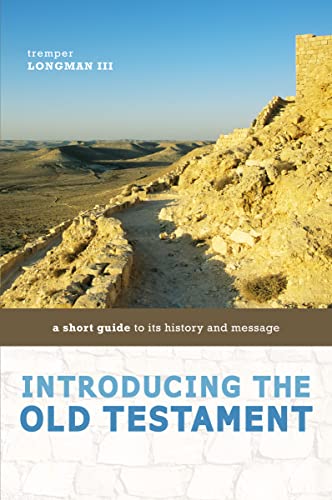
This rich and practical handbook—an abridged edition of the bestselling book An Introduction to the Old Testament—makes Old Testament scholarship accessible to the everyday reader.
Renowned Bible scholar Tremper Longman III gathers the best in historical research and literary analysis to lead you through each book of the Old Testament—from Genesis to Malachi. Most significantly, Longman explores the meaning of each book in light of its cultural setting.
Features include:
- A chapter on each book of the Old Testament with orientating data on what that book is about, key points to understand, when and why it was written, and references to key passages.
- A section in each chapter about how that book of the Bible anticipates the Gospel.
- End-of-chapter questions for group discussion or personal reflection.
- A bibliography of further resources.
Introducing the Old Testament makes the words, history, and culture of biblical times come alive for readers. Laypersons as well as church leaders will gain a solid understanding of the historical background and theological message of the Old Testament and be inspired to apply biblical truths to their lives.
Die Inhaltsangabe kann sich auf eine andere Ausgabe dieses Titels beziehen.
Über die Autorin bzw. den Autor
Tremper Longman III (PhD, Yale University) is a distinguished scholar and Professor Emeritus of Biblical Studies at Westmont College in Santa Barbara, California. He is on the advisory council of the BioLogos Foundation, and is the Old Testament editor for the revised Expositor's Bible Commentary and general editor for the Story of God Bible Commentary Old Testament, and has authored many articles and books on the Psalms and other Old Testament books.
Auszug. © Genehmigter Nachdruck. Alle Rechte vorbehalten.
Introducing the Old Testament
A short guide to its history and messageBy Tremper Longman IIIZONDERVAN
Copyright © 2012 Tremper Longman IIIAll right reserved.
ISBN: 978-0-310-29148-0
Contents
Abbreviations........................................................71. Thinking about the study of the old testament.....................92. The Book of Genesis...............................................113. The Book of Exodus................................................204. The Book of Leviticus.............................................275. The Book of Numbers...............................................316. The Book of Deuteronomy...........................................357. The Book of Joshua................................................418. The Book of Judges................................................489. The Book of Ruth..................................................5310. The Book of Samuel...............................................5711. The Book of Kings................................................6412. The Book of Chronicles...........................................7013. The Book of Ezra-Nehemiah........................................7614. The Book of Esther...............................................80Excursus on Theological History......................................8415. The Book of Job..................................................8616. The Book of Psalms...............................................9217. The Book of Proverbs.............................................10318. The Book of Ecclesiastes.........................................10819. The Book of Song of Songs........................................11220. The Book of Isaiah...............................................11621. The Book of Jeremiah.............................................12322. The Book of Lamentations.........................................13023. The Book of Ezekiel..............................................13424. The Book of Daniel...............................................14025. The Book of Hosea................................................14626. The Book of Joel.................................................15027. The Book of Amos.................................................15328. The Book of Obadiah..............................................15729. The Book of Jonah................................................16030. The Book of Micah................................................16531. The Book of Nahum................................................16832. The Book of Habakkuk.............................................17133. The Book of Zephaniah............................................17434. The Book of Haggai...............................................17735. The Book of Zechariah............................................18136. The Book of Malachi..............................................186Scripture Index......................................................189
Chapter One
THINKING ABOUT THE STUDY OF THE OLD TESTAMENT
The Old Testament contains those books written before the time of Jesus that are considered by the church to be the Word of God and thus, along with the New Testament, an authoritative guide to faith and practice. Unfortunately, many Christians ignore the Old Testament, even though it constitutes more than three-quarters of the Bible, because it is long, strange, and difficult. However, a knowledge of the Old Testament deepens our understanding of Jesus and the gospel and, though it is not always easy, studying it can enrich our spiritual life and knowledge of God.
About This Book
This book intends to provide the literary, historical, and theological background to the reading of the individual books of the Old Testament. Each chapter treats a single book of the Old Testament, and most chapters have the following structure (though not necessarily in the same order):
1. Content: What is the book about?
2. Authorship and Date: Who wrote the book and when?
3. Genre: What is the style of literature of the book?
4. Connections: How does the book anticipate the gospel?
There is also a short excursus exploring the genre of theological history (presented after the chapter on Esther). Much of the Old Testament is theological history; thus we give it a general treatment in the excursus while describing specific issues in the book chapters. Other genres (law, poetry, wisdom, prophecy, apocalyptic) are described in the relevant chapters.
Each chapter ends with references to further resources and then questions. What follows are some general resources for the study of the Old Testament.
Introductory
The NLT Study Bible. Wheaton, IL: Tyndale House, 2008.
The NIV Study Bible. Grand Rapids: Zondervan, 2011.
Intermediate
Alexander, T. Desmond, and D. W. Baker, eds. Dictionary of the Pentateuch. Downers Grove, IL: InterVarsity Press, 2003.
Arnold, B., and H. G. M. Williamson, eds. Dictionary of the Historical Books. Downers Grove, IL: InterVarsity Press, 2005.
Boda, M., and G. McConville, eds. Dictionary of the Prophets. Downers Grove, IL: InterVarsity Press, 2012.
Longman III, T., and P. Enns, eds. Dictionary of Wisdom, Poetry and Writings. Downers Grove, IL: InterVarsity Press, 2008.
Advanced
Longman III, T., and R. B. Dillard. Introduction to the Old Testament. 2nd ed. Grand Rapids: Zondervan, 2006.
Chapter Two
THE BOOK OF GENESIS
Content: What is Genesis About?
The title Genesis means "Beginnings," and this book is indeed about beginnings: the beginnings of the cosmos, human beings, sin, a people chosen by God, and much more. Genesis is the first part of what is really a five-part literary composition known as the Torah or Pentateuch. The main story of the Pentateuch concerns the founding of Israel as a nation emerging from Egypt and traveling toward the Promised Land. Genesis is the prequel or introduction to this great story.
We can divide the contents of the book of Genesis into three parts, beginning with an account of primordial history (Gen. 1–11) that describes the creation of the world and humanity (Gen. 1–2). The account of creation is written using highly figurative language that bears similarity and contrasts with other ancient Near Eastern creation accounts from Mesopotamia (Enuma Elish; Atrahasis), Canaan (Baal and Anat), and Egypt (the Memphite Theology in particular). The purpose is not to explain how God created creation, but to proclaim that it was Yahweh rather than one of the other creation gods of the ancient Near East. The creation text also informs its readers about the nature of God (who is both transcendent and immanent), the dignified status of both men and women in the world, and the importance of marriage, work, and Sabbath. The creation accounts reveal that God created a good physical universe, and the account of Adam and Eve's rebellion explains how sin and death came into the world (Gen. 3). The evil that people experience in themselves and from each other has nothing to do with how God created human beings, but rather with human choice to rebel rather than to submit to God.
The remainder of the primordial history contains both genealogies and three more stories. These stories all follow a similar pattern that reflects a pattern established in Genesis 3.
(1) Sin
Adam and Eve disobey God by eating from the tree of the knowledge of good and evil (3:6–7) Cain murders...
„Über diesen Titel“ kann sich auf eine andere Ausgabe dieses Titels beziehen.
Suchergebnisse für Introducing the Old Testament: A Short Guide to Its...

Beispielbild für diese ISBN
Introducing the Old Testament: A Short Guide to Its History and Message
Anbieter: ThriftBooks-Atlanta, AUSTELL, GA, USA
Verkäuferbewertung 5 von 5 Sternen

Paperback. Zustand: Good. No Jacket. Pages can have notes/highlighting. Spine may show signs of wear. ~ ThriftBooks: Read More, Spend Less. Artikel-Nr. G0310291488I3N00
Gebraucht kaufen
EUR 5,99
Versand gratis
Versand innerhalb von USA
Versand innerhalb von USA
Anzahl: 2 verfügbar
Beispielbild für diese ISBN
Introducing the Old Testament: A Short Guide to Its History and Message
Anbieter: ThriftBooks-Phoenix, Phoenix, AZ, USA
Verkäuferbewertung 5 von 5 Sternen
Paperback. Zustand: Good. No Jacket. Pages can have notes/highlighting. Spine may show signs of wear. ~ ThriftBooks: Read More, Spend Less. Artikel-Nr. G0310291488I3N00
Gebraucht kaufen
EUR 5,99
Versand gratis
Versand innerhalb von USA
Versand innerhalb von USA
Anzahl: 1 verfügbar
Beispielbild für diese ISBN
Introducing the Old Testament: A Short Guide to Its History and Message
Anbieter: ThriftBooks-Reno, Reno, NV, USA
Verkäuferbewertung 5 von 5 Sternen
Paperback. Zustand: Good. No Jacket. Pages can have notes/highlighting. Spine may show signs of wear. ~ ThriftBooks: Read More, Spend Less. Artikel-Nr. G0310291488I3N00
Gebraucht kaufen
EUR 5,99
Versand gratis
Versand innerhalb von USA
Versand innerhalb von USA
Anzahl: 1 verfügbar
Beispielbild für diese ISBN
Introducing the Old Testament: A Short Guide to Its History and Message
Anbieter: ThriftBooks-Atlanta, AUSTELL, GA, USA
Verkäuferbewertung 5 von 5 Sternen
Paperback. Zustand: Fair. No Jacket. Readable copy. Pages may have considerable notes/highlighting. ~ ThriftBooks: Read More, Spend Less. Artikel-Nr. G0310291488I5N00
Gebraucht kaufen
EUR 5,99
Versand gratis
Versand innerhalb von USA
Versand innerhalb von USA
Anzahl: 1 verfügbar
Beispielbild für diese ISBN
Introducing the Old Testament: A Short Guide to Its History and Message
Anbieter: ThriftBooks-Reno, Reno, NV, USA
Verkäuferbewertung 5 von 5 Sternen
Paperback. Zustand: Fair. No Jacket. Readable copy. Pages may have considerable notes/highlighting. ~ ThriftBooks: Read More, Spend Less. Artikel-Nr. G0310291488I5N00
Gebraucht kaufen
EUR 5,99
Versand gratis
Versand innerhalb von USA
Versand innerhalb von USA
Anzahl: 1 verfügbar
Beispielbild für diese ISBN
Introducing the Old Testament: A Short Guide to Its History and Message
Anbieter: ThriftBooks-Dallas, Dallas, TX, USA
Verkäuferbewertung 5 von 5 Sternen
Paperback. Zustand: Good. No Jacket. Pages can have notes/highlighting. Spine may show signs of wear. ~ ThriftBooks: Read More, Spend Less. Artikel-Nr. G0310291488I3N00
Gebraucht kaufen
EUR 5,99
Versand gratis
Versand innerhalb von USA
Versand innerhalb von USA
Anzahl: 2 verfügbar
Beispielbild für diese ISBN
Introducing the Old Testament: A Short Guide to Its History and Message
Anbieter: ThriftBooks-Dallas, Dallas, TX, USA
Verkäuferbewertung 5 von 5 Sternen
Paperback. Zustand: Fair. No Jacket. Readable copy. Pages may have considerable notes/highlighting. ~ ThriftBooks: Read More, Spend Less. Artikel-Nr. G0310291488I5N00
Gebraucht kaufen
EUR 5,99
Versand gratis
Versand innerhalb von USA
Versand innerhalb von USA
Anzahl: 1 verfügbar
Beispielbild für diese ISBN
Introducing the Old Testament: A Short Guide to Its History and Message
Anbieter: ThriftBooks-Dallas, Dallas, TX, USA
Verkäuferbewertung 5 von 5 Sternen
Paperback. Zustand: Very Good. No Jacket. May have limited writing in cover pages. Pages are unmarked. ~ ThriftBooks: Read More, Spend Less. Artikel-Nr. G0310291488I4N00
Gebraucht kaufen
EUR 5,99
Versand gratis
Versand innerhalb von USA
Versand innerhalb von USA
Anzahl: 1 verfügbar
Beispielbild für diese ISBN
Introducing the Old Testament : A Short Guide to Its History and Message
Anbieter: Better World Books, Mishawaka, IN, USA
Verkäuferbewertung 5 von 5 Sternen
Zustand: Good. Pages intact with minimal writing/highlighting. The binding may be loose and creased. Dust jackets/supplements are not included. Stock photo provided. Product includes identifying sticker. Better World Books: Buy Books. Do Good. Artikel-Nr. 5974795-6
Gebraucht kaufen
EUR 6,60
Versand gratis
Versand innerhalb von USA
Versand innerhalb von USA
Anzahl: 3 verfügbar
Beispielbild für diese ISBN
Introducing the Old Testament : A Short Guide to Its History and Message
Anbieter: Better World Books: West, Reno, NV, USA
Verkäuferbewertung 5 von 5 Sternen
Zustand: Good. Pages intact with minimal writing/highlighting. The binding may be loose and creased. Dust jackets/supplements are not included. Stock photo provided. Product includes identifying sticker. Better World Books: Buy Books. Do Good. Artikel-Nr. 5974795-6
Gebraucht kaufen
EUR 6,60
Versand gratis
Versand innerhalb von USA
Versand innerhalb von USA
Anzahl: 2 verfügbar