
Verwandte Artikel zu Charlotte Bronte: A Fiery Heart
Inhaltsangabe
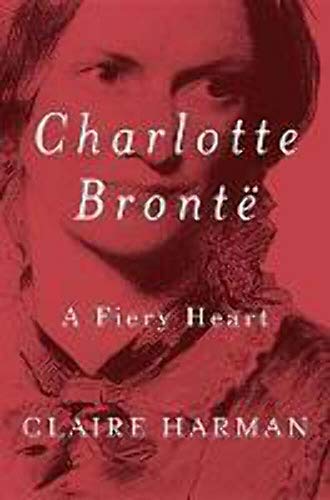
On the two hundredth anniversary of her birth, a landmark biography transforms Charlotte Brontë from a tragic figure into a modern heroine.
Charlotte Brontë famously lived her entire life in an isolated parsonage on a remote English moor with a demanding father and siblings whose astonishing childhood creativity was a closely held secret. The genius of Claire Harman’s biography is that it transcends these melancholy facts to reveal a woman for whom duty and piety gave way to quiet rebellion and fierce ambition.
Drawing on letters unavailable to previous biographers, Harman depicts Charlotte’s inner life with absorbing, almost novelistic intensity. She seizes upon a moment in Charlotte’s adolescence that ignited her determination to reject poverty and obscurity: While working at a girls’ school in Brussels, Charlotte fell in love with her married professor, Constantin Heger, a man who treated her as “nothing special to him at all.” She channeled her torment into her first attempts at a novel and resolved to bring it to the world's attention.
Charlotte helped power her sisters’ work to publication, too. But Emily’s Wuthering Heights was eclipsed by Jane Eyre, which set London abuzz with speculation: Who was this fiery author demanding love and justice for her plain and insignificant heroine? Charlotte Brontë’s blazingly intelligent women brimming with hidden passions would transform English literature. And she savored her literary success even as a heartrending series of personal losses followed.
Charlotte Brontë is a groundbreaking view of the beloved writer as a young woman ahead of her time. Shaped by Charlotte’s lifelong struggle to claim love and art for herself, Harman’s richly insightful biography offers readers many of the pleasures of Brontë’s own work.
Die Inhaltsangabe kann sich auf eine andere Ausgabe dieses Titels beziehen.
Über die Autorin bzw. den Autor
CLAIRE HARMAN is the author of Sylvia Townsend Warner, for which she won the John Llewellyn Rhys Prize, as well as biographies of Fanny Burney and Robert Louis Stevenson, and Jane’s Fame: How Jane Austen Conquered the World. She is a fellow of the Royal Society of Literature and a frequent reviewer. She divides her time between New York City and Oxford, England.
www.claireharman.com
Auszug. © Genehmigter Nachdruck. Alle Rechte vorbehalten.
Prologue
1 September 1843
It is 1 September 1843 and a 27-year-old Englishwoman is alone at the Pensionnat Heger in Brussels, a girls’ school where she is an unpaid student-teacher. It is halfway through the long vacation and everyone else who has a home or family to go to left weeks ago: the proprietress, Madame Heger, is at the seaside with her husband and children; the other teachers are on holiday or travelling.
Miss Brontë’s home is too far away to warrant a return for a mere two months. She can’t afford the cost of the journey back to her father’s Yorkshire parsonage, and, besides, arrangements should be kept to: Charlotte is a scrupulously dutiful person. But she is finding the empty dormitory oppressive, with all the beds covered in white cloths like a morgue; every meal is eaten alone, and the Pensionnat’s beautiful garden, with its old fruit trees and allée défendue of limes, seems more of a prison than a refuge when the rest of the school is abandoned. To escape the heavy solitude, it is Miss Brontë’s habit to go out and walk the city and the surrounding countryside for hours at a time. “I should inevitably fall into the gulf of low spirits if I stayed always by myself here without a human being to speak to,” she writes to her sister Emily, who was her companion at the school the previous year and knows the place well. The truth is, although she doesn’t tell Emily this, she is already in that gulf. She is desperately unhappy.
Her return to Brussels for a second year at the Pensionnat Heger Charlotte sees with hindsight to have been a terrible mistake, for she has fallen in love with someone who, it is painfully clear, will never see her in a romantic light. It is the headmistress’s husband, Monsieur Constantin Heger, a man of impressive intellect and spirit, the first person outside her immediate family to take her seriously, the first man to treat her as a potential equal. But the thrill of having his attention in her first year, as a pupil, has been followed by misery in the second, as his junior colleague. The Hegers have become wary of Charlotte’s ardour and eccentricities, and much more formal in their dealings with her. And now the man she considered her soul-mate is pretending that she is nothing special to him at all.
She looks in the mirror and sees, with ruthless clarity, a catalogue of defects; a huge brow, sallow complexion, prominent nose and a mouth that twists up slightly to the right, hiding missing and decayed teeth. She looks poor and ill-dressed, haunted and miserable, with none of the brilliant light from her “great honest eyes” that other people sometimes saw, and marvelled at. “[I]t is an imbecility which I reject with contempt—for women who have neither fortune nor beauty . . . not to be able to convince themselves that they are unattractive.” That’s what she had written six months earlier, when her friend Ellen, back home in Yorkshire, had ventured to suggest that there was some romantic motive for Charlotte’s return abroad.
The pain of staying indoors is too much: she sets off along the length of the parc Royal to the porte de Louvain, through the gate and up the long hill heading eastwards away from the city. “No inhabitant of Brussels need wander far to search for solitude,” she wrote later; “let him but move half a league from his own city and he will find her brooding still and blank over the wide fields, so drear though so fertile, spread out treeless and trackless round the capital of Brabant.” Her destination is the Protestant Cemetery in Saint-Josse-ten-Noode, two miles beyond the walls of this predominantly Catholic city, a walk down into the hamlet of Evere, then up to the crest of a hill beyond. There is no church here, just a few dozen graves in a walled garden, heavily overgrown with cypress and yew, with inscriptions in English, French and German: the foreign tongues of alienated people dying far from home.
Charlotte has come to visit a particular grave, that of Martha Taylor, one of the West Riding family who had encouraged her to come out to Brussels in the first place and whose elder sister Mary had been Charlotte’s most admired friend since girlhood. Charming, quirky Martha—a flirt and chatterbox—had been swept away by cholera: the last time Charlotte had been out to visit her grave was just two weeks after the funeral the previous October. Emily had been with her then, and Mary, and all three young women had gone back and spent a strange evening at the lodgings of another English family, the Dixons, in the rue Royale. But even that gloomy day seemed better than this utterly solitary one. The Dixons had all left Brussels now, as had Mary Taylor, and Emily was back home in Haworth.
From the cemetery Charlotte keeps walking away from the city, through valleys, farms and hamlets, to a hill where there is nothing but treeless fields as far as the eye can see. The furthest reach. She has to turn back, but coming into the city in the fading light she finds herself so desperately trying to put off returning to the Pensionnat that she ends up weaving around the surrounding streets to avoid it.
This unassuming-looking woman, tiny, unfashionable, darting out a look but not liking to hold one’s eye, was in extremis.
Passing by the towering west front of the city’s great cathedral, SS-Michel-et-Gudule, and hearing the bell calling the faithful to the evening service, Charlotte Brontë did something strange, unpredictable and entirely uncharacteristic: she followed the worshippers in. The prejudices that she had to overcome even to step inside the door of a Roman Catholic church were considerable; Charlotte, the daughter of an Irish Protestant minister, was, like all her family, ferociously anti-papist. She had been brought up to pity Catholics and to fear them—one of her great sources of discomfort in Belgium was the mere fact of being in a Catholic country, surrounded by a “Romanism” that “pervaded every arrangement.” Her letters from Brussels are full of remarks about the superstitious nature of her Catholic pupils and colleagues, their “sensual indulgence” and the childishness of minds “reared in slavery.” But, on that lonely September evening, she found herself wandering up and down the aisles of the venerable Gothic church and staying to hear the service. When it was over, she was still reluctant to leave and, gravitating towards a part of the cathedral where six or seven people were kneeling, she let herself be directed into a confessional. Explaining this queer whim to her sister the next day, she said, “I felt as if I did not care what I did, provided it was not absolutely wrong, and that it served to vary my life and yield a moment’s interest. I took a fancy to change myself into a Catholic and go and make a real confession to see what it was like.”
The ornate confessionals of Ste-Gudule are still there, guarded by massive wooden angels, with a central box for the priest and kneelers for penitents on either side. Charlotte had to wait at the grating for ten minutes while another confession proceeded in a barely audible whisper just a few feet away. It was a long interval for second and third thoughts to take hold, for the voice of her bigoted upbringing to shout down this strange “fancy”—but she stayed put and eventually heard the communicating grille open and in the half-light saw the priest leaning her way—her cue to begin.
What did she say? In the letter she wrote about the episode to Emily the next day, Charlotte described everything but the substance of her confession: she...
„Über diesen Titel“ kann sich auf eine andere Ausgabe dieses Titels beziehen.
Weitere beliebte Ausgaben desselben Titels

Suchergebnisse für Charlotte Bronte: A Fiery Heart

Beispielbild für diese ISBN
Charlotte Bront?: A Fiery Heart
Anbieter: World of Books (was SecondSale), Montgomery, IL, USA
Verkäuferbewertung 5 von 5 Sternen

Zustand: Good. Good condition ex-library book with usual library markings and stickers. Artikel-Nr. 00099883103
Gebraucht kaufen
EUR 5,77
Versand gratis
Versand innerhalb von USA
Versand innerhalb von USA
Anzahl: 2 verfügbar
Beispielbild für diese ISBN
Charlotte Bront?: A Fiery Heart
Anbieter: World of Books (was SecondSale), Montgomery, IL, USA
Verkäuferbewertung 5 von 5 Sternen
Zustand: Acceptable. Item in acceptable condition! Textbooks may not include supplemental items i.e. CDs, access codes etc. Artikel-Nr. 00101482602
Gebraucht kaufen
EUR 5,77
Versand gratis
Versand innerhalb von USA
Versand innerhalb von USA
Anzahl: 1 verfügbar
Beispielbild für diese ISBN
Charlotte Bront?: A Fiery Heart
Anbieter: World of Books (was SecondSale), Montgomery, IL, USA
Verkäuferbewertung 5 von 5 Sternen
Zustand: Good. Item in good condition. Textbooks may not include supplemental items i.e. CDs, access codes etc. Artikel-Nr. 00071226841
Gebraucht kaufen
EUR 6,05
Versand gratis
Versand innerhalb von USA
Versand innerhalb von USA
Anzahl: 1 verfügbar
Beispielbild für diese ISBN
Charlotte Brontë: A Fiery Heart
Anbieter: ThriftBooks-Reno, Reno, NV, USA
Verkäuferbewertung 5 von 5 Sternen
Hardcover. Zustand: Very Good. No Jacket. Former library book; May have limited writing in cover pages. Pages are unmarked. ~ ThriftBooks: Read More, Spend Less. Artikel-Nr. G0307962083I4N10
Gebraucht kaufen
EUR 6,53
Versand gratis
Versand innerhalb von USA
Versand innerhalb von USA
Anzahl: 1 verfügbar
Beispielbild für diese ISBN
Charlotte Brontë: A Fiery Heart
Anbieter: ThriftBooks-Reno, Reno, NV, USA
Verkäuferbewertung 5 von 5 Sternen
Hardcover. Zustand: Good. No Jacket. Former library book; Pages can have notes/highlighting. Spine may show signs of wear. ~ ThriftBooks: Read More, Spend Less. Artikel-Nr. G0307962083I3N10
Gebraucht kaufen
EUR 6,53
Versand gratis
Versand innerhalb von USA
Versand innerhalb von USA
Anzahl: 1 verfügbar
Beispielbild für diese ISBN
Charlotte Brontë: A Fiery Heart
Anbieter: ThriftBooks-Atlanta, AUSTELL, GA, USA
Verkäuferbewertung 5 von 5 Sternen
Hardcover. Zustand: Very Good. No Jacket. Missing dust jacket; May have limited writing in cover pages. Pages are unmarked. ~ ThriftBooks: Read More, Spend Less. Artikel-Nr. G0307962083I4N01
Gebraucht kaufen
EUR 6,56
Versand gratis
Versand innerhalb von USA
Versand innerhalb von USA
Anzahl: 1 verfügbar
Beispielbild für diese ISBN
Charlotte Brontë: A Fiery Heart
Anbieter: ThriftBooks-Dallas, Dallas, TX, USA
Verkäuferbewertung 5 von 5 Sternen
Hardcover. Zustand: Good. No Jacket. Former library book; Pages can have notes/highlighting. Spine may show signs of wear. ~ ThriftBooks: Read More, Spend Less. Artikel-Nr. G0307962083I3N10
Gebraucht kaufen
EUR 6,56
Versand gratis
Versand innerhalb von USA
Versand innerhalb von USA
Anzahl: 1 verfügbar
Beispielbild für diese ISBN
Charlotte Brontë: A Fiery Heart
Anbieter: ThriftBooks-Atlanta, AUSTELL, GA, USA
Verkäuferbewertung 5 von 5 Sternen
Hardcover. Zustand: Good. No Jacket. Former library book; Pages can have notes/highlighting. Spine may show signs of wear. ~ ThriftBooks: Read More, Spend Less. Artikel-Nr. G0307962083I3N10
Gebraucht kaufen
EUR 6,56
Versand gratis
Versand innerhalb von USA
Versand innerhalb von USA
Anzahl: 1 verfügbar
Beispielbild für diese ISBN
Charlotte Brontë: A Fiery Heart
Anbieter: ThriftBooks-Atlanta, AUSTELL, GA, USA
Verkäuferbewertung 5 von 5 Sternen
Hardcover. Zustand: Good. No Jacket. Pages can have notes/highlighting. Spine may show signs of wear. ~ ThriftBooks: Read More, Spend Less. Artikel-Nr. G0307962083I3N00
Gebraucht kaufen
EUR 6,56
Versand gratis
Versand innerhalb von USA
Versand innerhalb von USA
Anzahl: 1 verfügbar
Beispielbild für diese ISBN
Charlotte Brontë: A Fiery Heart
Anbieter: ThriftBooks-Dallas, Dallas, TX, USA
Verkäuferbewertung 5 von 5 Sternen
Hardcover. Zustand: Good. No Jacket. Pages can have notes/highlighting. Spine may show signs of wear. ~ ThriftBooks: Read More, Spend Less. Artikel-Nr. G0307962083I3N00
Gebraucht kaufen
EUR 6,56
Versand gratis
Versand innerhalb von USA
Versand innerhalb von USA
Anzahl: 1 verfügbar