
Verwandte Artikel zu Before the Wind
Inhaltsangabe
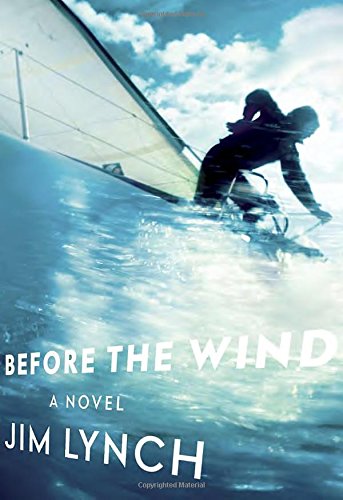
Following The Highest Tide, Border Songs, and Truth Like the Sun, Jim Lynch now gives us a grand and idiosyncratic family saga that will stand alongside Ken Kesey’s Sometimes a Great Notion.
Joshua Johannssen has spent all of his life surrounded by sailboats. His grandfather designed them, his father built and raced them, his Einstein-obsessed mother knows why and how they work (or not). For Josh and his two siblings, their backyard was the Puget Sound and sailing their DNA. But both his sister and brother fled many years ago: Ruby to Africa and elsewhere to do good works on land, and Bernard to god-knows-where at sea, a fugitive and pirate. Suddenly thirty-one, Josh—who repairs boats of all kinds in a Steinbeckian marina south of Seattle—is pained and confused by whatever the hell went wrong with his volatile family. His parents are barely speaking, his mystified grandfather is drinking harder, and he himself—despite an endless and comic flurry of online dates—hasn’t even come close to finding a girlfriend.
But when the Johannssens unexpectedly reunite for the most important race in these waters—all of them together on a classic vessel they made decades ago—they will be carried to destinies both individual and collective, and to a heart-shattering revelation. Past and present merge seamlessly and collide surprisingly as Jim Lynch reveals a family unlike any other, with the grace and humor and magic of a master storyteller.
Die Inhaltsangabe kann sich auf eine andere Ausgabe dieses Titels beziehen.
Über die Autorin bzw. den Autor
JIM LYNCH lives with his wife in Olympia, Washington. His novels The Highest Tide, Border Songs, and Truth Like the Sun have been adapted for the stage in Seattle. His prizes include the Indies Choice Honor Book Award, the Washington State Book Award for Fiction, and the Pacific Northwest Booksellers Award.
www.jimlynchbooks.com
Auszug. © Genehmigter Nachdruck. Alle Rechte vorbehalten.
Sailing like Einstein
Einstein wasn’t a great sailor, probably not even a mediocre one. He didn’t race or cruise, but he understood the pleasing mix of action and inaction and the thrill of a sunset sail into the spangled bliss. Many of us have fallen hard for all of this. On water, we feel competent and exalted, the glory lingering until we step ashore and trip on the curb and can’t find our keys and remember our yard is overgrown and the roof moss is two inches deep and the smoke detectors need fresh batteries and some rat died in the wall and our mothers sure wish we lived closer. At least somebody wants more of us. But the us we want more of is on a sleek boat with a clean bottom and crisp sails with wind on the beam.
Am I comparing us to Einstein? Yes. Sailboats attract the loons and geniuses among us, the romantics whose boats represent some outlaw image of themselves. We fall for these things, but what we’re slow to grasp is that it’s not the boats but rather those inexplicable moments on the water when time slows. The entire industry is built on a feeling, an emotion. It’s rarely the thing—or is it?
Regardless, boaters are suckers. They’ll pay more in moorage and repairs than their vessels are worth and rarely understand how swiftly rain and salt water conspire to corrode and rot, costs soaring as values spiral. And don’t get me started on racers who blow thousands to make their sailboats go half a smidge faster so they can finish eighth instead of eleventh in regattas so obscure they don’t make the tiniest print in the sports section. One local fanatic spent eleven grand on a carbon-fiber toilet to save seventeen pounds. There are plaques on the walls at Capital City Boatworks from skippers thanking us for overpriced paint jobs they’re convinced helped them win. It’s all in their heads. So yes, there’s a special wing of any boaters’ asylum for racers, but they’re all nuts. Myself included. Sinners too. Wrath began on boats, my grandfather told me, insisting Noah himself was a notorious cusser. But sloth, envy, lust, pride, greed and gluttony thrive here, too, as do naïveté, belligerence and other second-tier failings. Consider the new owner of that gutted twenty-one-foot speedboat against the fence there. He rammed the gas dock so hard last week that he tore a hole in the bow because he couldn’t find the brake. Or pull up a lawn chair and watch public ramps on any sunny Saturday and let the blooper reels begin. As the saying goes, all you need to become a boater is money, though you don’t necessarily need even that. Wait long enough, and somebody will pay you to haul theirs away.
Then, of course, there are those who refuse to ever let go. That gashed Pearson 36 peeking out of the first work bay hit a rock in a freak squall in March and lost its keel and rudder. Yet the owner insisted—before going under for three heart stents—to do whatever it took to get Sophia ready for the summer races.
Mr. Stanton, we gently counseled, fixing her may cost far more than you could sell her for.
“Who said anything about selling?” he asked, choking on his words. “I. Want. To. Sail. Sophia. Again.”
Do boats have souls? Apparently. At least their essence mingles with their owners’. And just as people start to look like their dogs, they eventually begin to resemble their boats. I could stroll through the marinas and boatyards of the world and pick out the owners from lineups, then straighten their masts, rewire their engines, paint their bottoms and set them free again, until something else dripped, jammed or snapped. Like most boat doctors, I try not to get too close to my customers, but while they begin as strangers I get to know them soon enough. Many become friends; some are family.
This morning it was my father waking me to announce he’d be bringing me a boat to fix. He didn’t say what that involved, nor ask if I had time or room in the yard. Just that he’d be bringing it all the way down from Seattle and might not arrive till five, so I’d better make damn certain the lift bastard waited for him. That was all. My father used the phone like a bullhorn, to make announcements and dispatch orders.
Bracing for his arrival, I made my final rounds as smitten boaters ogled the naked hulls propped on blocks and stands, the boatyard brimming, as usual, with everything from abandoned wrecks to gleaming yachts worth between nothing and a million. See that faded sloop with its snapped lifelines and waterline beard of sea slime? Catalina 27s are as common as gulls around here, but in the moony vision of Rex and Marcy, that neglected waif is an exotic, ocean-ready sailboat.
Barely in their twenties, they moved here from St. Louis to work on an organic chicken farm south of town and discovered their spiritual elixir when their hippie boss took them sailing just once. The next weekend they began scouring marinas for orphaned boats such as this worn-out twenty-seven-footer they snatched at auction for $875.
“Gonna fix her up and sail the islands this summer?” I asked, scanning the harbor for incoming masts.
Smiling too hard to speak, they were glancing at each other to see who’d admit what.
“We’re quitting in May and heading out,” Rex finally volunteered.
“For how long?”
“Indefinitely.”
I laughed before I could stop myself. “Sailed her yet?”
“Nope.” He grinned. “Can’t wait.”
“Spent a night on her?”
“Just in the lot here.” Marcy’s thick glasses made her eyes too big for her head. Now her teeth wouldn’t fit in her mouth either. “It’s totally comfortable,” she said.
While offering my most reassuring nod, I noticed a tall black mast rounding the marina entrance buoy and storming toward us along the dredged channel.
“Heading to Alaska first,” she told me, eyeing Rex to make sure she wasn’t oversharing.
“Cool,” I said. You’re batshit crazy, I thought.
Running a boatyard is like working in a dementia clinic. We commiserate with comforting nods and winces. We play cameos in daydreams and delusions.
“After that, we’re off to China,” Marcy added, swinging an arm around Rex’s bony hips and hooking a thumb inside his front pocket.
“Beautiful,” I said. You’re both gonna die, I thought.
Or maybe not. I tried to imagine them smiling lovingly in thirty-foot swells on their nineteenth straight day without seeing land. It was possible. Maybe they’d sail into transcendence. My problem was that Rex and Marcy from Missouri were already blurring with Chet and Laura from Nebraska, Jen and Osler from Texas and a dozen other bug-eyed, manifest-destiny couples I’d watched roll into this yard. If you haven’t noticed, people rarely run east in America. They flee west, to reinvent themselves in Vegas and Hollywood or farther north to our deep waters where ice ages conspired to sculpt this boating wonderland.
I can spot these adventure migrants in a blink because strains of this gentle madness course through my family the way diabetes or alcoholism clusters in others. For years, sailing bound us. We were racers, builders and cruisers. It was our family business, our sport, our drug of choice. Yet eventually, sailing blew us apart, too.
“Got an extra beer?” I asked.
Rex and Marcy crashed into each other lunging toward the cooler for a sweaty Pabst I needed for fortitude, seeing as how the...
„Über diesen Titel“ kann sich auf eine andere Ausgabe dieses Titels beziehen.
Suchergebnisse für Before the Wind

Beispielbild für diese ISBN
Before the Wind: A novel
Verlag:
Knopf (edition First Edition), 2016
ISBN 10: 0307958981
ISBN 13: 9780307958983
Gebraucht
Hardcover
Erstausgabe
Anbieter: BooksRun, Philadelphia, PA, USA
Verkäuferbewertung 5 von 5 Sternen

Hardcover. Zustand: Very Good. First Edition. With dust jacket. It's a well-cared-for item that has seen limited use. The item may show minor signs of wear. All the text is legible, with all pages included. It may have slight markings and/or highlighting. Artikel-Nr. 0307958981-11-1-29
Gebraucht kaufen
EUR 5,34
Versand gratis
Versand innerhalb von USA
Versand innerhalb von USA
Anzahl: 1 verfügbar
Beispielbild für diese ISBN
Before the Wind: A novel
Anbieter: World of Books (was SecondSale), Montgomery, IL, USA
Verkäuferbewertung 5 von 5 Sternen
Zustand: Very Good. Item in very good condition! Textbooks may not include supplemental items i.e. CDs, access codes etc. Artikel-Nr. 00110184329
Gebraucht kaufen
EUR 5,52
Versand gratis
Versand innerhalb von USA
Versand innerhalb von USA
Anzahl: 2 verfügbar
Beispielbild für diese ISBN
Before the Wind: A novel
Verlag:
Knopf (edition First Edition), 2016
ISBN 10: 0307958981
ISBN 13: 9780307958983
Gebraucht
Hardcover
Erstausgabe
Anbieter: BooksRun, Philadelphia, PA, USA
Verkäuferbewertung 5 von 5 Sternen
Hardcover. Zustand: Very Good. First Edition. It's a well-cared-for item that has seen limited use. The item may show minor signs of wear. All the text is legible, with all pages included. It may have slight markings and/or highlighting. Artikel-Nr. 0307958981-11-1
Gebraucht kaufen
EUR 5,71
Versand gratis
Versand innerhalb von USA
Versand innerhalb von USA
Anzahl: 1 verfügbar
Beispielbild für diese ISBN
Before the Wind: A novel
Anbieter: Wonder Book, Frederick, MD, USA
Verkäuferbewertung 5 von 5 Sternen
Zustand: As New. Like New condition. Like New dust jacket. A near perfect copy that may have very minor cosmetic defects. Artikel-Nr. J05O-01083
Gebraucht kaufen
EUR 6,65
Versand gratis
Versand innerhalb von USA
Versand innerhalb von USA
Anzahl: 1 verfügbar
Beispielbild für diese ISBN
Before the Wind: A novel
Verlag:
Knopf Doubleday Publishing Group, 2016
ISBN 10: 0307958981
ISBN 13: 9780307958983
Gebraucht
Hardcover
Erstausgabe
Anbieter: Better World Books, Mishawaka, IN, USA
Verkäuferbewertung 5 von 5 Sternen
Zustand: Very Good. First Edition. Former library copy. Pages intact with possible writing/highlighting. Binding strong with minor wear. Dust jackets/supplements may not be included. Includes library markings. Stock photo provided. Product includes identifying sticker. Better World Books: Buy Books. Do Good. Artikel-Nr. GRP97182774
Gebraucht kaufen
EUR 6,77
Versand gratis
Versand innerhalb von USA
Versand innerhalb von USA
Anzahl: 2 verfügbar
Beispielbild für diese ISBN
Before the Wind: A novel
Verlag:
Knopf Doubleday Publishing Group, 2016
ISBN 10: 0307958981
ISBN 13: 9780307958983
Gebraucht
Hardcover
Erstausgabe
Anbieter: Better World Books, Mishawaka, IN, USA
Verkäuferbewertung 5 von 5 Sternen
Zustand: Good. First Edition. Former library copy. Pages intact with minimal writing/highlighting. The binding may be loose and creased. Dust jackets/supplements are not included. Includes library markings. Stock photo provided. Product includes identifying sticker. Better World Books: Buy Books. Do Good. Artikel-Nr. 9319775-75
Gebraucht kaufen
EUR 6,77
Versand gratis
Versand innerhalb von USA
Versand innerhalb von USA
Anzahl: 1 verfügbar
Beispielbild für diese ISBN
Before the Wind
Verlag:
Knopf, New York, 2016
ISBN 10: 0307958981
ISBN 13: 9780307958983
Gebraucht
Hardcover
Erstausgabe
Anbieter: Dan Pope Books, West Hartford, CT, USA
Verkäuferbewertung 5 von 5 Sternen
Hardcover. Zustand: Fine. Zustand des Schutzumschlags: Fine. 1st Edition. Knopf, New York, 2016. First edition. First printing. Hardbound. Fine in a fine jacket. A clean tight copy, with price ($26.95) intact on front jacket flap. Comes with archival-quality mylar jacket protector. Artikel-Nr. Fiction-L-2021-05
Gebraucht kaufen
EUR 23,05
EUR 4,03 Versand
Versand innerhalb von USA
Versand innerhalb von USA
Anzahl: 1 verfügbar
Foto des Verkäufers
Before the Wind
Anbieter: WeBuyBooks, Rossendale, LANCS, Vereinigtes Königreich
Verkäuferbewertung 5 von 5 Sternen
hardcover. Zustand: Good. Most items will be dispatched the same or the next working day. A copy that has been read but remains in clean condition. All of the pages are intact and the cover is intact and the spine may show signs of wear. The book may have minor markings which are not specifically mentioned. Ex library copy with usual stamps & stickers. Artikel-Nr. rev7129780780
Gebraucht kaufen
EUR 20,06
EUR 8,63 Versand
Versand von Vereinigtes Königreich nach USA
Versand von Vereinigtes Königreich nach USA
Anzahl: 1 verfügbar
Beispielbild für diese ISBN
Before the Wind
Anbieter: Revaluation Books, Exeter, Vereinigtes Königreich
Verkäuferbewertung 5 von 5 Sternen
Hardcover. Zustand: Brand New. 304 pages. 9.25x6.25x0.84 inches. In Stock. Artikel-Nr. 0307958981
Neu kaufen
EUR 68,58
EUR 14,93 Versand
Versand von Vereinigtes Königreich nach USA
Versand von Vereinigtes Königreich nach USA
Anzahl: 1 verfügbar