
Verwandte Artikel zu Little America: The War Within the War for Afghanistan
Inhaltsangabe
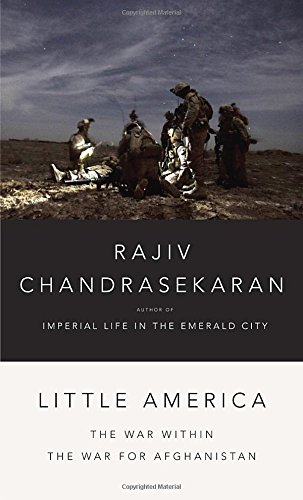
From the award-winning author of Imperial Life in the Emerald City, a riveting, intimate account of America’s troubled war in Afghanistan.
When President Barack Obama ordered the surge of troops and aid to Afghanistan, Washington Post correspondent Rajiv Chandrasekaran followed. He found the effort sabotaged not only by Afghan and Pakistani malfeasance but by infighting and incompetence within the American government: a war cabinet arrested by vicious bickering among top national security aides; diplomats and aid workers who failed to deliver on their grand promises; generals who dispatched troops to the wrong places; and headstrong military leaders who sought a far more expansive campaign than the White House wanted. Through their bungling and quarreling, they wound up squandering the first year of the surge.
Chandrasekaran explains how the United States has never understood Afghanistan—and probably never will. During the Cold War, American engineers undertook a massive development project across southern Afghanistan in an attempt to woo the country from Soviet influence. They built dams and irrigation canals, and they established a comfortable residential community known as Little America, with a Western-style school, a coed community pool, and a plush clubhouse—all of which embodied American and Afghan hopes for a bright future and a close relationship. But in the late 1970s—after growing Afghan resistance and a Communist coup—the Americans abandoned the region to warlords and poppy farmers.
In one revelatory scene after another, Chandrasekaran follows American efforts to reclaim the very same territory from the Taliban. Along the way, we meet an Army general whose experience as the top military officer in charge of Iraq’s Green Zone couldn’t prepare him for the bureaucratic knots of Afghanistan, a Marine commander whose desire to charge into remote hamlets conflicted with civilian priorities, and a war-seasoned diplomat frustrated in his push for a scaled-down but long-term American commitment. Their struggles show how Obama’s hope of a good war, and the Pentagon’s desire for a resounding victory, shriveled on the arid plains of southern Afghanistan.
Meticulously reported, hugely revealing, Little America is an unprecedented examination of a failing war—and an eye-opening look at the complex relationship between America and Afghanistan.
Die Inhaltsangabe kann sich auf eine andere Ausgabe dieses Titels beziehen.
Über die Autorin bzw. den Autor
Rajiv Chandrasekaran is a senior correspondent and associate editor at The Washington Post, where he has worked since 1994. He has reported from more than three dozen countries and has served as the newspaper’s bureau chief in Baghdad, Cairo, and Southeast Asia. He is the author of Imperial Life in the Emerald City: Inside Iraq’s Green Zone, a finalist for the National Book Award and one ofThe New York Times’s 10 Best Books of 2007. He lives in Washington, D.C.
Auszug. © Genehmigter Nachdruck. Alle Rechte vorbehalten.
Little America
The War Within the War for AfghanistanBy Rajiv ChandrasekaranKnopf
Copyright © 2012 Rajiv ChandrasekaranAll right reserved.
ISBN: 9780307957146
Prologue
Set atop a dusty plain between two ridgelines, the orchards of Now Zad once yielded pomegranates as large as softballs, luring visitors from across southern Afghanistan during the harvest season. After they gorged on the juicy magenta fruit, most headed home. Others grew so intoxicated by the prospect of farming the fertile soil that they transplanted their lives. Waves of settlers in the 1960s and 1970s transformed Now Zad, which means “newborn” in Persian, into the fourth largest city in Helmand province.
By the fall of 2006, the city looked like old death. The pomegranate fields had been booby-trapped with makeshift mines. Homes and shops had been blown to rubble. Bullet holes pocked the few walls left standing.
The Taliban had invaded Now Zad with hundreds of fighters earlier that year. After desperate pleas from Afghan president Hamid Karzai, the British commanders who were responsible for Helmand under a NATO security agreement dispatched a platoon of Ghurkas to evict the insurgents. But the fearsome Nepalese warriors were outmanned by the Taliban. A tense standoff ensued as the insurgents roamed the city and the Ghurkas hunkered down inside the police station. Every few days, the Taliban would try to storm the compound, sometimes getting close enough to hurl grenades, but the Ghurkas, and subsequent contingents of British troops, managed to keep the enemy at bay with torrents of bullets and rockets. As the fight- ing escalated, most residents fled.
The Brits were bent on simple survival. Soldiers crouched in their guard towers, gazing at the city through rifle scopes. They named a once lush pomegranate grove just a few hundred yards away Sherwood Forest. A strip of walled compounds teeming with fighters from across the border—their shouts in Urdu revealed their provenance—became known as Pakistani Alley. If the soldiers could have left their Alamo, there would have been no Afghan policemen or soldiers to accompany them on patrol, at least none who were interested in anything more than self-enrichment. The portly police chief, who holed up in the same compound as the Brits, spent his days finding the last few residents to extort and the last few boys to molest.
U.S. Marine Brigadier General Larry Nicholson was appalled when he visited Now Zad on a February 2009 reconnais- sance trip. The first thing he saw when he landed was a wall at the police station that was scrawled with graffiti: welcome to hell. American Marines had relieved the British the year before, and they had expanded the patrol zone by a few blocks, but they were still surrounded on three sides by insurgents hiding in trenches and abandoned houses. A debris-strewn no-man’s-land lay in between, trod only by wild dogs. Injuries from IEDs—improvised explosive devices—were so common, and so dire, that the Marine company in Now Zad was the only one in the country to be assigned two trauma doctors and two armored vehicles with mobile operating theaters.
To Nicholson, a compact former infantryman whose ruddy complexion made his weathered face appear perpetually sun- burned, the opposing forces staring at each other reminded him of what it must have been like at Verdun during the epic trench battle between the French and Germans in World War I. He met a Marine at Now Zad who told him, “Sir, we patrol until we hit an IED, and then we call in a medevac and go back” to the base. “And then we do it again the next day.”
The first U.S. Marines had arrived in Now Zad in May 2008 on a mission to train Afghan security forces. The ninety-five-man reinforced platoon was led by Lieutenant Arthur Karell, a twenty-seven-year-old with degrees from Harvard and the University of Virginia who had postponed practicing law for the adventure of combat. When he landed at the NATO base in Kandahar, about a hundred miles to the southeast, he was given a satellite map of Now Zad marked with a small blue star that indicated where he was to build a police station to house newly trained Afghan policemen. But when he got to Now Zad, he discovered the blue star was four miles beyond the British perimeter. In between were Taliban bunkers and minefields. He crumpled up the map.
In his seven months in the city, the only civilians he saw were a few brave farmers from a nearby village who came looking for firewood. When he led his Marines on patrol, they were met with gunfire less than three hundred meters from the base. His platoon killed dozens of insurgents, but at a cost: One of his men was sent home in a casket, and 20 percent had to be evacuated because of injuries. At first, despite the danger, his Marines didn’t complain. There were plenty of bad guys to kill. But even the most trigger-happy eventually started to wonder why they were in a town that had been abandoned. “There’s nobody here,” they said to Karell. “Why are we here?”
When Nicholson became the top Marine commander in Afghanistan in April 2009, he resolved to save Now Zad. IEDs had blown off the legs of more than two dozen Americans in and around the city. Fighting a war of attrition with fixed posi- tions was not something Marines did, at least not in his book. “If we’re not showing progress, if we’re not showing move- ment towards stability, what the fuck are we doing?” he asked. The situation was emblematic to him of everything that was wrong with the war.
The officers working for him agreed, as did Helmand’s governor, but his bosses at the NATO regional headquarters in Kandahar felt differently, as did the American and British diplomats at the reconstruction office in the provincial capital. They maintained that Now Zad was a ghost town that lacked the strategic significance to merit more troops and dollars. They believed the stalemate was a good enough outcome in an imperfect war: A small unit of Marines had succeeded in tying down hundreds of insurgents who couldn’t launch attacks else- where. Nicholson was told not to worry about Now Zad.
But he would not let go. His job was to protect the people of Helmand, and that meant allowing the displaced to return home. He bristled when British and American officials told him that the former residents of Now Zad would not come back. That’s how people in the West might behave, but Afghans, he believed, would act differently. The only real assets most Helmandis had were their homes and their land. Nicholson felt they would reclaim them if they could.
It seemed as though every day he received word of another American double amputee in Now Zad. Each folded, handwrit- ten casualty notification his aide passed to him stopped his heart a beat longer. The losses of his brother Marines had to be worth something. Failing to act, he thought, would mean they had sacrificed lives and limbs in vain, and it would condemn more Marines to the same fate. He pondered what to do.
When Nicholson’s political adviser, John Kael Weston, the diplomat he trusted most, arrived in Helmand that June and asked the general which outpost he should visit first, Nichol- son did not mention the places where most of his troops were conducting counterinsurgency operations.
“Kael,” he said, “you’ve got to go to Now Zad.”
At first glance, the thirty-seven-year-old Weston seemed like a surfer who’d taken a wrong...
„Über diesen Titel“ kann sich auf eine andere Ausgabe dieses Titels beziehen.
Suchergebnisse für Little America: The War Within the War for Afghanistan

Beispielbild für diese ISBN
Little America: The War Within
Anbieter: World of Books (was SecondSale), Montgomery, IL, USA
Verkäuferbewertung 5 von 5 Sternen

Zustand: Very Good. Item in very good condition! Textbooks may not include supplemental items i.e. CDs, access codes etc. Artikel-Nr. 00102639780
Gebraucht kaufen
EUR 3,89
Versand gratis
Versand innerhalb von USA
Versand innerhalb von USA
Anzahl: 1 verfügbar
Beispielbild für diese ISBN
Little America: The War Within
Anbieter: World of Books (was SecondSale), Montgomery, IL, USA
Verkäuferbewertung 5 von 5 Sternen
Zustand: Good. Item in good condition. Textbooks may not include supplemental items i.e. CDs, access codes etc. Artikel-Nr. 00102290690
Gebraucht kaufen
EUR 3,89
Versand gratis
Versand innerhalb von USA
Versand innerhalb von USA
Anzahl: 1 verfügbar
Beispielbild für diese ISBN
Little America: The War Within the War for Afghanistan
Anbieter: BooksRun, Philadelphia, PA, USA
Verkäuferbewertung 5 von 5 Sternen
Hardcover. Zustand: Very Good. 1. With dust jacket. It's a well-cared-for item that has seen limited use. The item may show minor signs of wear. All the text is legible, with all pages included. It may have slight markings and/or highlighting. Artikel-Nr. 0307957144-8-1-29
Gebraucht kaufen
EUR 3,90
Versand gratis
Versand innerhalb von USA
Versand innerhalb von USA
Anzahl: 1 verfügbar
Beispielbild für diese ISBN
Little America: The War Within the War for Afghanistan
Anbieter: ThriftBooks-Atlanta, AUSTELL, GA, USA
Verkäuferbewertung 5 von 5 Sternen
Hardcover. Zustand: Very Good. No Jacket. May have limited writing in cover pages. Pages are unmarked. ~ ThriftBooks: Read More, Spend Less. Artikel-Nr. G0307957144I4N00
Gebraucht kaufen
EUR 5,78
Versand gratis
Versand innerhalb von USA
Versand innerhalb von USA
Anzahl: 1 verfügbar
Beispielbild für diese ISBN
Little America: The War Within the War for Afghanistan
Anbieter: ThriftBooks-Dallas, Dallas, TX, USA
Verkäuferbewertung 5 von 5 Sternen
Hardcover. Zustand: Very Good. No Jacket. May have limited writing in cover pages. Pages are unmarked. ~ ThriftBooks: Read More, Spend Less. Artikel-Nr. G0307957144I4N00
Gebraucht kaufen
EUR 5,78
Versand gratis
Versand innerhalb von USA
Versand innerhalb von USA
Anzahl: 1 verfügbar
Beispielbild für diese ISBN
Little America: The War Within the War for Afghanistan
Anbieter: ThriftBooks-Atlanta, AUSTELL, GA, USA
Verkäuferbewertung 5 von 5 Sternen
Hardcover. Zustand: Very Good. No Jacket. Missing dust jacket; May have limited writing in cover pages. Pages are unmarked. ~ ThriftBooks: Read More, Spend Less. Artikel-Nr. G0307957144I4N01
Gebraucht kaufen
EUR 5,78
Versand gratis
Versand innerhalb von USA
Versand innerhalb von USA
Anzahl: 1 verfügbar
Beispielbild für diese ISBN
Little America: The War Within the War for Afghanistan
Anbieter: Wonder Book, Frederick, MD, USA
Verkäuferbewertung 5 von 5 Sternen
Zustand: Very Good. Very Good condition. Very Good dust jacket. A copy that may have a few cosmetic defects. May also contain light spine creasing or a few markings such as an owner's name, short gifter's inscription or light stamp. Artikel-Nr. Y13A-02957
Gebraucht kaufen
EUR 6,19
Versand gratis
Versand innerhalb von USA
Versand innerhalb von USA
Anzahl: 3 verfügbar
Beispielbild für diese ISBN
Little America: The War Within the War for Afghanistan
Anbieter: Wonder Book, Frederick, MD, USA
Verkäuferbewertung 5 von 5 Sternen
Zustand: As New. Like New condition. Very Good dust jacket. A near perfect copy that may have very minor cosmetic defects. Artikel-Nr. L09C-04494
Gebraucht kaufen
EUR 6,19
Versand gratis
Versand innerhalb von USA
Versand innerhalb von USA
Anzahl: 1 verfügbar
Beispielbild für diese ISBN
Little America: The War Within the War for Afghanistan
Anbieter: Wonder Book, Frederick, MD, USA
Verkäuferbewertung 5 von 5 Sternen
Zustand: Good. Good condition. Very Good dust jacket. A copy that has been read but remains intact. May contain markings such as bookplates, stamps, limited notes and highlighting, or a few light stains. Bundled media such as CDs, DVDs, floppy disks or access codes may not be included. Artikel-Nr. Q08C-01002
Gebraucht kaufen
EUR 6,19
Versand gratis
Versand innerhalb von USA
Versand innerhalb von USA
Anzahl: 1 verfügbar
Beispielbild für diese ISBN
Little America : The War Within the War for Afghanistan
Verlag:
Knopf Doubleday Publishing Group, 2012
ISBN 10: 0307957144
ISBN 13: 9780307957146
Gebraucht
Hardcover
Erstausgabe
Anbieter: Better World Books, Mishawaka, IN, USA
Verkäuferbewertung 5 von 5 Sternen
Zustand: Good. First Edition. Former library copy. Pages intact with minimal writing/highlighting. The binding may be loose and creased. Dust jackets/supplements are not included. Includes library markings. Stock photo provided. Product includes identifying sticker. Better World Books: Buy Books. Do Good. Artikel-Nr. GRP95143666
Gebraucht kaufen
EUR 6,27
Versand gratis
Versand innerhalb von USA
Versand innerhalb von USA
Anzahl: 2 verfügbar