
Verwandte Artikel zu Full Body Burden: Growing Up in the Nuclear Shadow...
Inhaltsangabe
“An intimate and deeply human memoir that shows why we should all be concerned about nuclear safety, and the dangers of ignoring science in the name of national security.”—Rebecca Skloot, #1 New York Times bestselling author of The Immortal Life of Henrietta Lacks
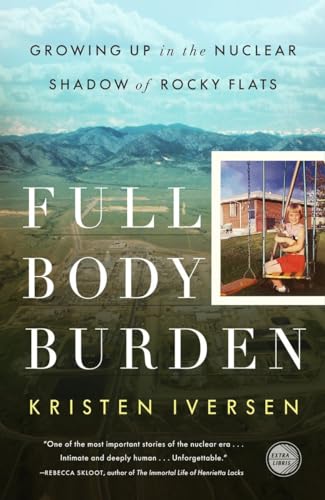
A shocking account of the government’s attempt to conceal the effects of the toxic waste released by a secret nuclear weapons plant in Colorado and a community’s vain search for justice—soon to be a feature documentary
Kristen Iversen grew up in a small Colorado town close to Rocky Flats, a secret nuclear weapons plant once designated "the most contaminated site in America." Full Body Burden is the story of a childhood and adolescence in the shadow of the Cold War, in a landscape at once startlingly beautiful and--unknown to those who lived there--tainted with invisible yet deadly particles of plutonium. It's also a book about the destructive power of secrets--both family and government. Her father's hidden liquor bottles, the strange cancers in children in the neighborhood, the truth about what was made at Rocky Flats--best not to inquire too deeply into any of it. But as Iversen grew older, she began to ask questions and discovered some disturbing realities.
Based on extensive interviews, FBI and EPA documents, and class-action testimony, this taut, beautifully written book is both captivating and unnerving.
Die Inhaltsangabe kann sich auf eine andere Ausgabe dieses Titels beziehen.
Über die Autorin bzw. den Autor
Kristen Iversen grew up in Arvada, Colorado, near the Rocky Flats nuclear weaponry facility and received a Ph.D. in English from the University of Denver. She is head of the PhD program in Literary Nonfiction at the University of Cincinnati. During the summers, she serves on the faculty of the MFA Low-Residency Program at the University of New Orleans, held in San Miguel de Allende, Mexico, and in Edinburgh, Scotland. She is also the author of Molly Brown: Unraveling the Myth, winner of the Colorado Book Award for Biography and the Barbara Sudler Award for Nonfiction. Iversen has two sons and lives in Cincinnati.
Auszug. © Genehmigter Nachdruck. Alle Rechte vorbehalten.
1
Mother’s Day
1963
It’s 1963 and I’m five. I lie across the backseat of the family car, sleeping with my cheek pressed against the vinyl. My mother sits in the front with baby Karin and my father drives, carefully holding his cigarette just at the window’s edge. This is how I remember my mother and father: smoking in a cool, elegant way that makes me want to grow up quick so I can smoke, too. It’s evening and I’m tired and cranky. The spring day has been spent on a long drive through the Colorado mountains, a Sunday ritual.
We turn the corner to our home on Johnson Court, the square little house my parents bought when my father left his job as an attorney for an insurance company and set up his own law practice. The neighborhood is made up of winding rows of houses that all look like ours: a front door and a picture window facing the street, two windows on each side, and a sliding door in the back that opens to a postage-stamp backyard. We have a view of the mountains and one tree.
“Uh-oh,” my mother says.
“Jesus.” My dad stops the car. I scramble to my knees to look.
Our house is smoldering. One side is gone. A fire truck and a police car with streaking red lights stand in the driveway.
My dad jumps out and my mom reaches over and pulls up the parking brake. “Dick,” she says, “I’m taking Kris to the neighbor’s.” My mother is always good in a crisis.
Mrs. Hauschild is waiting at her door. She takes a pair of pajamas from her daughter’s room--we’re almost the same age--and she beds me down in the basement in a sleeping bag. “She’ll be fine here,” Mrs. Hauschild says. “She doesn’t need to see all that commotion.” She suggests they both have a drink and a cigarette. My mother nods.
“Someone must have left the lamp on in Kris’s bedroom,” my mother says as they walk up the stairs. “The drapes caught on fire.”
I repeat these words in my head until I come to believe I set the fire myself. I can still picture my bedside lamp, the brass switch, the round orange globe always warm to the touch.
Years later--decades, in fact--my father laughs when I tell him this story. “You didn’t cause that fire, Kris,” he says. “Your mother and I did. We had been sitting and talking in the living room, having a drink together, and we left a burning cigarette in the ashtray. Neither of us noticed. The drapes in the living room caught fire first.” The flames never reached my room.
This is how I want to remember my parents: still talking to each other, even when the world was tumbling down around their ears.
We rent a basement apartment for a month and then move back to our rebuilt house. Nothing is ever said about the fire. Nothing is ever said about dark or sad or upsetting events, and anything that involves liquor is definitely not discussed. My parents are elegant drinkers. My mother can make a Manhattan with just the right splash of whiskey and vermouth. My father takes his bourbon straight on ice. After dinner, once my mother has tucked us into bed, my parents make cocktails and play cribbage to determine who has to do the dishes. From my bedroom I can hear my mother’s soft laugh. Sometimes there’s a stack of unwashed plates in the sink when we leave for school in the morning.
Soon another baby is born: my sister Karma. This is not a hippie name, despite the fact that we live close to Boulder. My mother insists on naming her daughters after her Norwegian heritage: Kristen, Karin, Karma.
At the top of the hill behind our house stands the Arvada cemetery. The year 1863 is etched in a stone marker at the entrance. The cemetery works like a magnet. As soon as our mother puts us out into the yard for the afternoon--just like the kids and grandkids on the family farm back in Iowa, who were expected to fend for themselves for the day--Karin and I scramble over the fence and head for the hill. We are our own secret club, and Karma joins us as soon as she is old enough to toddle along. Sometimes the other neighbor girls--Paula, Susie, and Kathy--are allowed into the club as temporary members. We trek across the field behind the row of backyards and through the old apple orchard and get up to the creek, where we balance a flat plank across the shallow, sluggish water and tiptoe across. Water spiders dance across the surface and tiny minnows scatter when we push our toes into the muddy bottom.
At the crest of the hill stand row after row of headstones. Some are tall, others flat against the ground. Some have the names of children or images of their faces etched in the stone, and we stay away from those. We run up and down the rows, shrieking and gathering up the plastic flowers. We pile all our flowers in the middle and sit in a circle around them. We look down the hill to our house and imagine our mother, big and round, lying on her bed and waiting for the next baby, a boy at last, she’s sure of it. A little farther, we can see the Arvada Villa Pizza Parlor and the Arvada Beauty Academy. Between our neighborhood and the long dark line of mountains stands a single white water tower, all by itself. The Rocky Flats water tower. There is a hidden factory there.
That hidden factory is the Rocky Flats Nuclear Weapons Plant, a foundry that smelts plutonium, purifies it, and shapes it into plutonium “triggers” for nuclear bombs. The plant also recycles fissionable material from outmoded bombs. A largely blue-collar link in the U.S. government’s nuclear bomb network, Rocky Flats is the only plant in the country that produces these triggers--small, spherical explosives that provide an atomic bomb’s chain reaction. The triggers form the heart of every nuclear weapon made in America. From 1952 to 1989, Rocky Flats manufactures more than seventy thousand plutonium triggers, at a cost of nearly $4 million apiece. Each one contains enough breathable particles of plutonium to kill every person on earth.
Rocky Flats’ largest output, however, is radioactive and toxic waste. In all the decades of nuclear weapons production, the nuclear weapons industry produces waste with too little thought to the future or the environment. The creation of each gram of plutonium produces radioactive waste, virtually all of which remains with us to the present day.
But no one in our community knows what goes on at Rocky Flats. This is a secret operation, not subject to any laws of the state.
The wind blows, as it always does. I imagine the bones of pioneers and cowboys beneath our feet. The chill of evening begins to creep up the hill; the air turns cold when the sun dips.
“Let’s go!” Karin yells, and we jump to our feet and roll and tumble down the hill. We bounce across the plank and race across the field, full speed, before the sun sets and the ghosts come out.
In the beginning, Rocky Flats is called Project Apple. In 1951, years before I’m born, a group of men from the Atomic Energy Commission (AEC) meet in an old hotel off the beaten track in Denver. No press, no publicity. Their job is to find a site to build a secret bomb factory that will carry out the work that first began with the Manhattan Project, the covert military endeavor that developed the first atomic bomb during World War II.
Until now, all nuclear bombs in the United States have been custom-built at the weapons research and design laboratory at Los Alamos, New Mexico, with materials supplied from the plutonium production facility at the Hanford site in eastern Washington State and the uranium enrichment facility at Oak Ridge, Tennessee. But with the heightening Cold War--a high state of...
„Über diesen Titel“ kann sich auf eine andere Ausgabe dieses Titels beziehen.
Suchergebnisse für Full Body Burden: Growing Up in the Nuclear Shadow...

Foto des Verkäufers
Full Body Burden: Growing Up in the Nuclear Shadow of Rocky Flats
Anbieter: Dream Books Co., Denver, CO, USA
Verkäuferbewertung 5 von 5 Sternen

Zustand: acceptable. This copy has clearly been enjoyedâ"expect noticeable shelf wear and some minor creases to the cover. Binding is strong, and all pages are legible. May contain previous library markings or stamps. Artikel-Nr. 4EKGY30070WT_ns
Gebraucht kaufen
EUR 3,71
Versand gratis
Versand innerhalb von USA
Versand innerhalb von USA
Anzahl: 5 verfügbar
Beispielbild für diese ISBN
Full Body Burden: Growing Up in the Nuclear Shadow of Rocky Flats
Anbieter: World of Books (was SecondSale), Montgomery, IL, USA
Verkäuferbewertung 5 von 5 Sternen
Zustand: Good. Item in good condition. Textbooks may not include supplemental items i.e. CDs, access codes etc. Artikel-Nr. 00103475161
Gebraucht kaufen
EUR 3,89
Versand gratis
Versand innerhalb von USA
Versand innerhalb von USA
Anzahl: 14 verfügbar
Beispielbild für diese ISBN
Full Body Burden: Growing Up in the Nuclear Shadow of Rocky Flats
Anbieter: World of Books (was SecondSale), Montgomery, IL, USA
Verkäuferbewertung 5 von 5 Sternen
Zustand: Very Good. Item in very good condition! Textbooks may not include supplemental items i.e. CDs, access codes etc. Artikel-Nr. 00109453644
Gebraucht kaufen
EUR 3,89
Versand gratis
Versand innerhalb von USA
Versand innerhalb von USA
Anzahl: 3 verfügbar
Beispielbild für diese ISBN
Full Body Burden: Growing Up in the Nuclear Shadow of Rocky Flats
Anbieter: World of Books (was SecondSale), Montgomery, IL, USA
Verkäuferbewertung 5 von 5 Sternen
Zustand: Acceptable. Item in acceptable condition! Textbooks may not include supplemental items i.e. CDs, access codes etc. Artikel-Nr. 00104405652
Gebraucht kaufen
EUR 3,89
Versand gratis
Versand innerhalb von USA
Versand innerhalb von USA
Anzahl: 1 verfügbar
Beispielbild für diese ISBN
Full Body Burden: Growing Up in the Nuclear Shadow of Rocky Flats
Verlag:
Crown (edition Reprint), 2013
ISBN 10: 0307955656
ISBN 13: 9780307955654
Gebraucht
Paperback
Anbieter: BooksRun, Philadelphia, PA, USA
Verkäuferbewertung 5 von 5 Sternen
Paperback. Zustand: Fair. Reprint. The item might be beaten up but readable. May contain markings or highlighting, as well as stains, bent corners, or any other major defect, but the text is not obscured in any way. Artikel-Nr. 0307955656-7-1
Gebraucht kaufen
EUR 4,68
Versand gratis
Versand innerhalb von USA
Versand innerhalb von USA
Anzahl: 1 verfügbar
Beispielbild für diese ISBN
Full Body Burden: Growing Up in the Nuclear Shadow of Rocky Flats
Anbieter: World of Books (was SecondSale), Montgomery, IL, USA
Verkäuferbewertung 5 von 5 Sternen
Zustand: Good. Item in good condition and has highlighting/writing on text. Used texts may not contain supplemental items such as CDs, info-trac etc. Artikel-Nr. 00101180467
Gebraucht kaufen
EUR 4,82
Versand gratis
Versand innerhalb von USA
Versand innerhalb von USA
Anzahl: 1 verfügbar
Foto des Verkäufers
Full Body Burden: Growing Up in the Nuclear Shadow of Rocky Flats
Anbieter: Dream Books Co., Denver, CO, USA
Verkäuferbewertung 5 von 5 Sternen
Zustand: good. Gently used with minimal wear on the corners and cover. A few pages may contain light highlighting or writing, but the text remains fully legible. Dust jacket may be missing, and supplemental materials like CDs or codes may not be included. May be ex-library with library markings. Ships promptly! Artikel-Nr. 4EKGY3008VVO_ns
Gebraucht kaufen
EUR 5,25
Versand gratis
Versand innerhalb von USA
Versand innerhalb von USA
Anzahl: 1 verfügbar
Beispielbild für diese ISBN
Full Body Burden: Growing Up in the Nuclear Shadow of Rocky Flats
Verlag:
Crown (edition Reprint), 2013
ISBN 10: 0307955656
ISBN 13: 9780307955654
Gebraucht
Paperback
Anbieter: BooksRun, Philadelphia, PA, USA
Verkäuferbewertung 5 von 5 Sternen
Paperback. Zustand: Very Good. Reprint. It's a well-cared-for item that has seen limited use. The item may show minor signs of wear. All the text is legible, with all pages included. It may have slight markings and/or highlighting. Artikel-Nr. 0307955656-11-18
Gebraucht kaufen
EUR 5,39
Versand gratis
Versand innerhalb von USA
Versand innerhalb von USA
Anzahl: 1 verfügbar
Beispielbild für diese ISBN
Full Body Burden: Growing Up in the Nuclear Shadow of Rocky Flats
Verlag:
Crown (edition Reprint), 2013
ISBN 10: 0307955656
ISBN 13: 9780307955654
Gebraucht
Paperback
Anbieter: BooksRun, Philadelphia, PA, USA
Verkäuferbewertung 5 von 5 Sternen
Paperback. Zustand: Very Good. Reprint. It's a well-cared-for item that has seen limited use. The item may show minor signs of wear. All the text is legible, with all pages included. It may have slight markings and/or highlighting. Artikel-Nr. 0307955656-11-1
Gebraucht kaufen
EUR 5,45
Versand gratis
Versand innerhalb von USA
Versand innerhalb von USA
Anzahl: 1 verfügbar
Beispielbild für diese ISBN
Full Body Burden : Growing up in the Nuclear Shadow of Rocky Flats
Verlag:
Crown Publishing Group, The, 2013
ISBN 10: 0307955656
ISBN 13: 9780307955654
Gebraucht
Softcover
Anbieter: Better World Books, Mishawaka, IN, USA
Verkäuferbewertung 5 von 5 Sternen
Zustand: Good. Reprint. Pages intact with minimal writing/highlighting. The binding may be loose and creased. Dust jackets/supplements are not included. Stock photo provided. Product includes identifying sticker. Better World Books: Buy Books. Do Good. Artikel-Nr. 4302767-6
Gebraucht kaufen
EUR 6,04
Versand gratis
Versand innerhalb von USA
Versand innerhalb von USA
Anzahl: 2 verfügbar