
Verwandte Artikel zu The Strange Order of Things: Life, Feeling, and the...
Inhaltsangabe
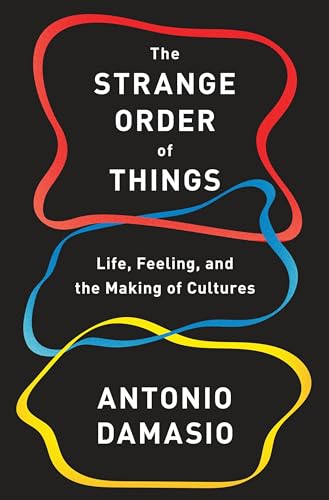
From one of our preeminent neuroscientists: a landmark reflection that spans the biological and social sciences, offering a new way of understanding the origins of life, feeling, and culture.
The Strange Order of Things is a pathbreaking investigation into homeostasis, the condition of that regulates human physiology within the range that makes possible not only the survival but also the flourishing of life. Antonio Damasio makes clear that we descend biologically, psychologically, and even socially from a long lineage that begins with single living cells; that our minds and cultures are linked by an invisible thread to the ways and means of ancient unicellular life and other primitive life-forms; and that inherent in our very chemistry is a powerful force, a striving toward life maintenance that governs life in all its guises, including the development of genes that help regulate and transmit life. In The Strange Order of Things, Damasio gives us a new way of comprehending the world and our place in it.
Die Inhaltsangabe kann sich auf eine andere Ausgabe dieses Titels beziehen.
Über die Autorin bzw. den Autor
ANTONIO DAMASIO is University Professor; David Dornsife Professor of Neuroscience, Psychology, and Philosophy; and director of the Brain and Creativity Institute at the University of Southern California. Awards he has received include the Prince of Asturias Prize in Science and Technology, the Grawemeyer Award, the Honda Prize, and the Pessoa and Signoret prizes. In 2017 he received the Freud Medal from the Royal Dutch Academy of Sciences. Damasio is a member of the National Academy of Medicine and a fellow of the American Academy of Arts and Sciences and the Bavarian Academy of Sciences. He is the author of Descartes’ Error, The Feeling of What Happens, Looking for Spinoza and Self Comes to Mind, all of which have been published in translation and are taught in universities throughout the world.
www.antoniodamasio.com
Auszug. © Genehmigter Nachdruck. Alle Rechte vorbehalten.
BEGINNINGS
1
This book is about one interest and one idea. I have long been intrigued in human affect—the world of emotions and feelings—and have spent many years investigating it: why and how we emote, feel, use feelings to construct our selves; how feelings assist or undermine our best intentions; why and how brains interact with the body to support such functions. I have new facts and interpretations to share on these matters.
As for the idea, it is very simple: feelings have not been given the credit they deserve as motives, monitors, and negotiators of human cultural endeavors. Humans have distinguished themselves from all other beings by creating a spectacular collection of objects, practices, and ideas, collectively known as cultures. The collection includes the arts, philosophical inquiry, moral systems and religious beliefs, justice, governance, economic institutions, and technology and science. Why and how did this process begin? A frequent answer to this question invokes an important faculty of the human mind—verbal language—along with distinctive features such as intense sociality and superior intellect. For those who are biologically inclined the answer also includes natural selection operating at the level of genes. I have no doubt that intellect, sociality, and language have played key roles in the process, and it goes without saying that the organisms capable of cultural invention, along with the specific faculties used in the invention, are present in humans by the grace of natural selection and genetic transmission. The idea is that something else was required to jump-start the saga of human cultures. That something else was a motive. I am referring specifically to feelings, from pain and suffering to well-being and pleasure.
Consider medicine, one of our most significant cultural enterprises. Medicine’s combination of technology and science began as a response to the pain and suffering caused by diseases of every sort, from physical trauma and infections to cancers, contrasted with the very opposite of pain and suffering: well-being, pleasures, the prospect of thriving. Medicine did not begin as an intellectual sport meant to exercise one’s wits over a diagnostic puzzle or a physiological mystery. It began as a consequence of specific feelings of patients and specific feelings of early physicians, including but not limited to the compassion that may be born of empathy. Those motives remain today. No reader will have failed to notice how visits to the dentist and surgical procedures have changed for the better in our own lifetime. The primary motive behind improvements such as efficient anesthetics and precise instrumentation is the management of feelings of discomfort. The activity of engineers and scientists plays a commendable role in this endeavor, but it is a motivated role. The profit motive of the drug and instrumentation industries also plays a significant part because the public does need to reduce its suffering and industries respond to that need. The pursuit of profit is fueled by varied yearnings, a desire for advancement, prestige, even greed, which are none other than feelings. It is not possible to comprehend the intense effort to develop cures for cancers or Alzheimer’s disease without considering feelings as motives, monitors, and negotiators of the process. Nor is it possible to comprehend, for example, the less intense effort with which Western cultures have pursued cures for malaria in Africa or the management of drug addictions most everywhere without considering the respective web of motivating and inhibiting feelings. Language, sociality, knowledge, and reason are the primary inventors and executors of these complicated processes. But feelings get to motivate them, stay on to check the results, and help negotiate the necessary adjustments.
The idea, in essence, is that cultural activity began and remains deeply embedded in feeling. The favorable and unfavorable interplay of feeling and reason must be acknowledged if we are to understand the conflicts and contradictions of the human condition
2
How did humans come to be at the same time sufferers, mendicants, celebrants of joy, philanthropists, artists and scientists, saints and criminals, benevolent masters of the earth and monsters intent on destroying it? The answer to this question requires the contributions of historians and sociologists, for certain, as well as those of artists, whose sensibilities often intuit the hidden patterns of the human drama, but the answer also requires the contributions of different branches of biology.
As I considered how feelings could not only drive the first flush of cultures but remain integral to their evolution, I searched for a way to connect human life, as we know it today—equipped with minds, feelings, consciousness, memory, language, complex sociality, and creative intelligence—with early life, as early as 3.8 billion years ago. To establish the connection, I needed to suggest an order and a time line for the development and appearance of these critical faculties in the long history of evolution.
The actual order of appearance of biological structures and faculties that I uncovered violates traditional expectations and is as strange as the book title implies. In the history of life, events did not comply with the conventional notions that we humans have formed for how to build the beautiful instrument I like to call a cultural mind.
Intending to tell a story about the substance and consequences of human feeling, I came to recognize that our ways of thinking about minds and cultures are out of tune with biological reality. When a living organism behaves intelligently and winningly in a social setting, we assume that the behavior results from foresight, deliberation, complexity, all with the help of a nervous system. It is now clear, however, that such behaviors could also have sprung from the bare and spare equipment of a single cell, namely, in a bacterium, at the dawn of the biosphere. “Strange” is too mild a word to describe this reality.
We can envision an explanation that begins to accommodate the counterintuitive findings. The explanation draws on the mechanisms of life itself and on the conditions of its regulation, a collection of phenomena that is generally designated by a single word: homeostasis. Feelings are the mental expressions of homeostasis, while homeostasis, acting under the cover of feeling, is the functional thread that links early life-forms to the extraordinary partnership of bodies and nervous systems. That partnership is responsible for the emergence of conscious, feeling minds that are, in turn, responsible for what is most distinctive about humanity: cultures and civilizations. Feelings are at the center of the book, but they draw their powers from homeostasis.
Connecting cultures to feeling and homeostasis strengthens their links to nature and deepens the humanization of the cultural process. Feelings and creative cultural minds were assembled by a long process in which genetic selection guided by homeostasis played a prominent role. Connecting cultures to feelings, homeostasis, and genetics counters the growing detachment of cultural ideas, practices, and objects from the process of life.
It should be evident that the connections I am establishing do not diminish the autonomy that cultural phenomena acquire historically. I am not reducing cultural phenomena to their biological roots or attempting to have science explain all aspects of the cultural process. The sciences alone cannot...
„Über diesen Titel“ kann sich auf eine andere Ausgabe dieses Titels beziehen.
Suchergebnisse für The Strange Order of Things: Life, Feeling, and the...

Foto des Verkäufers
The Strange Order of Things: Life, Feeling, and the Making of Cultures
Anbieter: Dream Books Co., Denver, CO, USA
Verkäuferbewertung 5 von 5 Sternen

Zustand: good. Gently used with minimal wear on the corners and cover. A few pages may contain light highlighting or writing, but the text remains fully legible. Dust jacket may be missing, and supplemental materials like CDs or codes may not be included. May be ex-library with library markings. Ships promptly! Artikel-Nr. 4EKGY300A6D1_ns
Gebraucht kaufen
EUR 8,39
Versand gratis
Versand innerhalb von USA
Versand innerhalb von USA
Anzahl: 1 verfügbar
Beispielbild für diese ISBN
The Strange Order of Things : Life, Feeling, and the Making of Cultures
Verlag:
Knopf Doubleday Publishing Group, 2018
ISBN 10: 0307908755
ISBN 13: 9780307908759
Gebraucht
Hardcover
Anbieter: Better World Books: West, Reno, NV, USA
Verkäuferbewertung 5 von 5 Sternen
Zustand: Very Good. Former library copy. Pages intact with possible writing/highlighting. Binding strong with minor wear. Dust jackets/supplements may not be included. Includes library markings. Stock photo provided. Product includes identifying sticker. Better World Books: Buy Books. Do Good. Artikel-Nr. 16281763-6
Gebraucht kaufen
EUR 8,79
Versand gratis
Versand innerhalb von USA
Versand innerhalb von USA
Anzahl: 2 verfügbar
Beispielbild für diese ISBN
The Strange Order of Things: Life, Feeling, and the Making of Cultures
Anbieter: World of Books (was SecondSale), Montgomery, IL, USA
Verkäuferbewertung 5 von 5 Sternen
Zustand: Good. Good condition ex-library book with usual library markings and stickers. Artikel-Nr. 00107226363
Gebraucht kaufen
EUR 8,84
Versand gratis
Versand innerhalb von USA
Versand innerhalb von USA
Anzahl: 1 verfügbar
Beispielbild für diese ISBN
The Strange Order of Things : Life, Feeling, and the Making of Cultures
Verlag:
Knopf Doubleday Publishing Group, 2018
ISBN 10: 0307908755
ISBN 13: 9780307908759
Gebraucht
Hardcover
Anbieter: Better World Books, Mishawaka, IN, USA
Verkäuferbewertung 5 von 5 Sternen
Zustand: Very Good. Former library copy. Pages intact with possible writing/highlighting. Binding strong with minor wear. Dust jackets/supplements may not be included. Includes library markings. Stock photo provided. Product includes identifying sticker. Better World Books: Buy Books. Do Good. Artikel-Nr. 16281763-6
Gebraucht kaufen
EUR 10,09
Versand gratis
Versand innerhalb von USA
Versand innerhalb von USA
Anzahl: 1 verfügbar
Beispielbild für diese ISBN
The Strange Order of Things: Life, Feeling and the Making of Cultures
Anbieter: WorldofBooks, Goring-By-Sea, WS, Vereinigtes Königreich
Verkäuferbewertung 5 von 5 Sternen
Paperback. Zustand: Very Good. The book has been read, but is in excellent condition. Pages are intact and not marred by notes or highlighting. The spine remains undamaged. Artikel-Nr. GOR009018600
Gebraucht kaufen
EUR 10,20
EUR 6,56 Versand
Versand von Vereinigtes Königreich nach USA
Versand von Vereinigtes Königreich nach USA
Anzahl: 1 verfügbar
Beispielbild für diese ISBN
The Strange Order of Things: Life, Feeling and the Making of Cultures
Anbieter: AwesomeBooks, Wallingford, Vereinigtes Königreich
Verkäuferbewertung 5 von 5 Sternen
hardcover. Zustand: Very Good. The Strange Order of Things: Life, Feeling and the Making of Cultures This book is in very good condition and will be shipped within 24 hours of ordering. The cover may have some limited signs of wear but the pages are clean, intact and the spine remains undamaged. This book has clearly been well maintained and looked after thus far. Money back guarantee if you are not satisfied. See all our books here, order more than 1 book and get discounted shipping. Artikel-Nr. 7719-9780307908759
Gebraucht kaufen
EUR 12,11
EUR 4,82 Versand
Versand von Vereinigtes Königreich nach USA
Versand von Vereinigtes Königreich nach USA
Anzahl: 2 verfügbar
Beispielbild für diese ISBN
The Strange Order of Things: Life, Feeling, and the Making of Cultures
Anbieter: These Old Books LLC, Isle, MN, USA
Verkäuferbewertung 5 von 5 Sternen
Hardcover. Zustand: Fine. Zustand des Schutzumschlags: Fine. 1st Edition. The dust jacket is clean and bright; the red cloth boards are clean; the front edge is deckled; the pages are clean; and the book is tight. Artikel-Nr. ABE-1790265664154
Gebraucht kaufen
EUR 9,09
EUR 10,59 Versand
Versand innerhalb von USA
Versand innerhalb von USA
Anzahl: 1 verfügbar
Beispielbild für diese ISBN
The Strange Order of Things: Life, Feeling and the Making of Cultures
Anbieter: Bahamut Media, Reading, Vereinigtes Königreich
Verkäuferbewertung 4 von 5 Sternen

hardcover. Zustand: Very Good. This book is in very good condition and will be shipped within 24 hours of ordering. The cover may have some limited signs of wear but the pages are clean, intact and the spine remains undamaged. This book has clearly been well maintained and looked after thus far. Money back guarantee if you are not satisfied. See all our books here, order more than 1 book and get discounted shipping. Artikel-Nr. 6545-9780307908759
Gebraucht kaufen
EUR 12,25
EUR 8,17 Versand
Versand von Vereinigtes Königreich nach USA
Versand von Vereinigtes Königreich nach USA
Anzahl: 2 verfügbar
Foto des Verkäufers
The Strange Order of Things: Life, Feeling, and the Making of Cultures
Anbieter: Southampton Books, Sag Harbor, NY, USA
Verkäuferbewertung 5 von 5 Sternen
Hardcover. Zustand: Like New. Artikel-Nr. 124273
Gebraucht kaufen
EUR 26,33
EUR 4,41 Versand
Versand innerhalb von USA
Versand innerhalb von USA
Anzahl: 2 verfügbar
Beispielbild für diese ISBN
The Strange Order of Things: Life, Feeling and the Making of Cultures
Anbieter: Cotswolds Rare Books, OXFORDSHIRE, Vereinigtes Königreich
Verkäuferbewertung 5 von 5 Sternen
Hardcover. Zustand: As New. Zustand des Schutzumschlags: As New. As brand new. Artikel-Nr. 3591r
Gebraucht kaufen
EUR 20,20
EUR 29,39 Versand
Versand von Vereinigtes Königreich nach USA
Versand von Vereinigtes Königreich nach USA
Anzahl: 1 verfügbar