
Verwandte Artikel zu The Forgiven
Inhaltsangabe
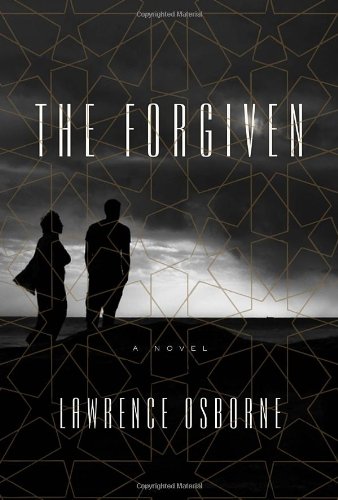
In this stylish, haunting novel, journalist and novelist Lawrence Osborne explores the reverberations of a random accident on the lives of Moroccan Muslims and Western visitors who converge on a luxurious desert villa for a decadent weekend-long party.
David and Jo Henniger, a doctor and children's book author, in search of an escape from their less than happy lives in London, accept the invitation of their old friends Richard and Dally to attend their annual bacchanal at their home deep in the Moroccan desert – a ksar they have acquired and renovated into a luxurious retreat. On the way, the Hennigers stop for lunch, and the bad-tempered David can't resist consuming most of a bottle of wine. Back on the road, darkness has descended, David is groggy, and the directions to the ksar are vague. Suddenly, two young men spring from the roadside, apparently attempting to interest passing drivers in the fossils they have for sale. Panicked, David swerves toward the two, leaving one dead on the road and the other running into the hills.
At the ksar, the festivities have begun: Richard and Dally’s international friends sit down to a lavish dinner prepared and served by a large staff of Moroccans. As the night progresses and the debauchery escalates, the Moroccans increasingly view the revelers as the godless "infidels" they are. When David and Jo show up late with the dead body of the young man in their car, word spreads among the locals that David has committed an unforgivable act.
Thus the stage is set for a weekend during which David and Jo must come to terms with David's misdeed, Jo's longings, and their own deteriorating relationship, and the flamboyant Richard and Dally must attempt to keep their revelers entertained despite growing tension from their staff and the Moroccan Berber father who comes to claim his son's body.
With spare, evocative prose, searing eroticism, and a gift for the unexpected, Osborne memorably portrays the privileged guests wrestling with their secrets amidst the remoteness and beauty of the desert landscape. He also gradually reveals the jolting back-story of the young man who was killed and leaves David’s fate in the balance as the novel builds to a shattering conclusion.
Die Inhaltsangabe kann sich auf eine andere Ausgabe dieses Titels beziehen.
Über die Autorin bzw. den Autor
Journalist, short story writer, and novelist, Lawrence Osborne is the author of one previous novel and six books of nonfiction. His short story “Volcano” was selected forBest American Short Stories 2012, and he has written for the New York Times Magazine, theNew Yorker, Forbes, Harper's, and other publications.
Auszug. © Genehmigter Nachdruck. Alle Rechte vorbehalten.
One
They didn’t see Africa until half past eleven. The mists broke apart and motorboats with European millionaires came swooping out of the blue with Sotogrande flags and a flash of tumblers. The migrants on the top deck began to shoulder their bags, revived by the idea of home, and the look of anxiety that hovered in their faces began to dispel. Perhaps it was just the sun. Their secondhand cars stored in the hull revved as their children scattered about with oranges in their hands, and an energy seemed to reach out from the edge of Africa to the Algeciras ferry, polarizing it. The Europeans stiffened.
Sunbathing in their deck chairs, the British couple were surprised by the height of the land. On the tops of the mountains stood white antenna masts like lighthouses made of wire, and the mountains had a feltlike greenness that made you want to reach out and touch them. The Pillars of Hercules had stood near here, where the Atlantic rushes into the Mediterranean. There are places that are destined to seem like gates. One can’t avoid the sensation of being sucked through a portal. The Englishman, a doctor of a certain age, shaded his eyes with a hand bristling with ginger hairs.
Even with the naked eye, they could make out the snaking outlines of roads that might have been there since Roman times. David Henniger thought, “Perhaps it’ll be easier than we think, this drive. Perhaps it’ll be a pleasure after all.” From a boom box near the flagpole came a few bars of rai, of Paris hip-hop. He watched his wife reading a Spanish paper, flicking the pages back and forth indifferently, then glanced down at his watch. People were waving from the approaching city, raising handkerchiefs and fingers, and Jo took off her shades for a moment to see where she was. He admired the frank confusion written all over her face. L’Afrique.
They went for a beer at the Hotel d’Angleterre. It was not hot. The air was wet with recently broken mist. Con men and pretty “guides” danced around them while the sun drenched the terrace with a smell of varnish and peppercorns and stale beer. A laughing mood dominated the seedy expats and their hangers-on nursing their plates of unshelled nuts and their cooled gins. We were once the most formidable bohemians, their faces said to the newcomers, and now we are delightful, playful shits because we have no choice.
The Hennigers had arranged for an agent to deal with the car rental, a man who would run back and forth with keys and contracts, and while they waited for him, they had a few beers with grenadine and some fried goat cheese cigares. He waited to form an impression. The streets seemed massively solid with their French facades, and there was a gritty shade at their bottom. The girls were swift and insolent, with adultery in their eyes. It wasn’t bad.
“I’m glad we aren’t staying,” she said, biting her lip.
“We’ll stay on the way back. It’ll be interesting.”
He took off his tie. His eyes felt intensely alive somehow and he wondered if she ever noticed these slight alterations of mood, of intention. “I like it,” he thought. “I like it better than she does. Maybe we’ll stay a little after the weekend.”
On the road to Chefchaouen, they didn’t speak. The car rented from Avis Tangier was an old Camry, its brakes soft and its red leather torn. He drove it nervously in his perforated driving gloves, warily avoiding the women in ribboned straw hats who infested the hard shoulder, pushing mules ahead of them with sticks. The sun grew fierce; it was a long road bordered by stones and orange trees, and above it rose the hillside slums, the gimcrack apartment blocks, the antennas that decorate every middle-income city. One couldn’t see the beginning or the end of it. There was just the taste of sea.
All was dust. He drove on doggedly, determined to get out of the city as fast as possible. The light all day had finally worn his eyes down; the road was reduced to a geometric glare alive with hostile movements: animals, children, trucks, broken-down thirty-year-old Mercedes.
The suburbs of Tangier were ruined, but the gardens were still there. And so were the crippled lemon trees and olives, the dogged disillusion and empty factories, the smell of seething young men.
The Hotel Salam in Chefchaouen looked over a river called the Oued el Kebir and a gorge; the road on which it stood, avenue Hassan II, was a steep lane of hotels, for the Marrakech and the Madrid were just next door, and along it the city walls loomed up, white and monkish. The tour buses were already there; the salon was full of Dutch couples feeding upon mountains of turmeric eggs. The Hennigers were not sure whether to enter the hotel lounge and participate in this buffet orgy or to stay aloof. The Dutch looked frantic and disturbed, as if they hadn’t eaten in days. David wondered if they were given sandwiches on their immense buses. They were faintly disgusting, with their big red faces and their beefy adolescent ruminants grazing around the buffet tables. He was hungry himself.
“Let’s eat straightaway,” he said excitedly, “but not here. Perhaps outside, away from the Continental wildebeest? I wonder if one can get a drink that isn’t Pellegrino Citrus?”
Fortunately the Salam had its own terrace and it was not too crowded. They took a table with views and ate their tagine citron with a bottle of cold Boullebemme. It was wine, at least, and he said a silent thank-you to it.
“Should you be drinking?” she asked quietly.
“Oh, it’s just a glass. A glass of fly pee. This stuff is fly pee. Look at it.”
“It’s not fly pee. It’s fourteen percent. You have to drive another five hours.”
She began to devour the salted olives at their table. David always took these sorts of remarks in his stride, and he settled down.
“It’ll make it easier. I know it’s the lame excuse of every alcoholic. But it will.”
“I shouldn’t let you, Stumblebum.”
“I would anyway. The roads are empty.”
“What about the trees?”
There had been eleven years of this sort of contest; the exact, fastidious Jo crossing lances with the bad-tempered David, who always felt that women were out to suppress the peccadilloes that made life half worth living. Why did they do this? Were they envious of life shimmering away with improvised masculine curiosities and pleasures without their consent? One had to ask the question. You could smile or not--it was up to you. Jo was ten years younger than him, a mere forty-one, but she acted like an ancient nanny. She enjoyed reproving him, pulling him back from tiny adventures that would have no consequences even if they were allowed to degenerate to their natural conclusions. “I’d never hit a tree anyway,” he thought. “Never in a thousand years. Not even in my sleep.” She swallowed half a glass of the raw Moroccan wine and he raised an arch eyebrow. She wiped her mouth defiantly. The blood rushed into her brow, into the corners of her mouth.
“You always get what you want, David. It’s our schema, isn’t it? You always do what you bloody want.”
“I’m not putting your life in danger.” His voice was a little pleading. “That’s absurd.”
We’ll see if it’s absurd, she thought.
“Also,” he went on coolly, “it’s patently not true. I very rarely, as you put it, get to do what I want. Most of the time, I am following orders.”
At the bottom of the gorge stood white...
„Über diesen Titel“ kann sich auf eine andere Ausgabe dieses Titels beziehen.
Suchergebnisse für The Forgiven

Beispielbild für diese ISBN
The Forgiven
Anbieter: World of Books (was SecondSale), Montgomery, IL, USA
Verkäuferbewertung 5 von 5 Sternen

Hardback. Zustand: Good. In this haunting novel, journalist and novelist Lawrence Osborne explores the reverberations of a random accident on the lives of Moroccan Muslims and Western visitors who converge on a luxurious desert villa for a decadent weekend-long party. David and Jo Henniger, a doctor and a children's book author, in search of an escape from their less than happy lives in London, accept an invitation to attend a bacchanal at their old friends' home, deep in the Moroccan desert. But as a groggy David navigates the dark desert roads, two young men spring from the roadside, the car swerves.and one boy is left dead. When David and Jo arrive at the party, the Moroccan staff, already disgusted by the rich, hedonistic foreigners in their midst, soon learn of David's unforgiveable act. Then the boy's irate Berber father appears, and events begin to spin beyond anyone's control. With spare, evocative prose, searing eroticism, and a gift for the unexpected, Osborne memorably portrays the privileged guests wrestling with their secrets amid the remoteness and beauty of the desert landscape. He gradually reveals the jolting backstory of the young man who was killed and leaves David's fate in the balance as the novel builds to a shattering conclusion. Now with Extra Libris material, including a Q&A and bonus content. Artikel-Nr. 00109733363
Gebraucht kaufen
EUR 4,06
Versand gratis
Versand innerhalb von USA
Versand innerhalb von USA
Anzahl: 4 verfügbar
Beispielbild für diese ISBN
The Forgiven
Verlag:
Crown Publishing Group, The, 2012
ISBN 10: 0307889033
ISBN 13: 9780307889034
Gebraucht
Hardcover
Anbieter: Better World Books, Mishawaka, IN, USA
Verkäuferbewertung 5 von 5 Sternen
Zustand: Very Good. 0th Edition. Former library copy. Pages intact with possible writing/highlighting. Binding strong with minor wear. Dust jackets/supplements may not be included. Includes library markings. Stock photo provided. Product includes identifying sticker. Better World Books: Buy Books. Do Good. Artikel-Nr. 3174589-6
Gebraucht kaufen
EUR 6,47
Versand gratis
Versand innerhalb von USA
Versand innerhalb von USA
Anzahl: 2 verfügbar
Beispielbild für diese ISBN
The Forgiven
Verlag:
Crown Publishing Group, The, 2012
ISBN 10: 0307889033
ISBN 13: 9780307889034
Gebraucht
Hardcover
Anbieter: Better World Books, Mishawaka, IN, USA
Verkäuferbewertung 5 von 5 Sternen
Zustand: Good. 0th Edition. Former library copy. Pages intact with minimal writing/highlighting. The binding may be loose and creased. Dust jackets/supplements are not included. Includes library markings. Stock photo provided. Product includes identifying sticker. Better World Books: Buy Books. Do Good. Artikel-Nr. 3174588-6
Gebraucht kaufen
EUR 6,47
Versand gratis
Versand innerhalb von USA
Versand innerhalb von USA
Anzahl: 1 verfügbar
Beispielbild für diese ISBN
The Forgiven
Verlag:
Crown Publishing Group, The, 2012
ISBN 10: 0307889033
ISBN 13: 9780307889034
Gebraucht
Hardcover
Anbieter: Better World Books: West, Reno, NV, USA
Verkäuferbewertung 5 von 5 Sternen
Zustand: Good. 0th Edition. Former library copy. Pages intact with minimal writing/highlighting. The binding may be loose and creased. Dust jackets/supplements are not included. Includes library markings. Stock photo provided. Product includes identifying sticker. Better World Books: Buy Books. Do Good. Artikel-Nr. 3174588-6
Gebraucht kaufen
EUR 6,47
Versand gratis
Versand innerhalb von USA
Versand innerhalb von USA
Anzahl: 1 verfügbar
Beispielbild für diese ISBN
The Forgiven: A Novel
Anbieter: ThriftBooks-Reno, Reno, NV, USA
Verkäuferbewertung 5 von 5 Sternen
Hardcover. Zustand: Good. No Jacket. Former library book; Pages can have notes/highlighting. Spine may show signs of wear. ~ ThriftBooks: Read More, Spend Less. Artikel-Nr. G0307889033I3N10
Gebraucht kaufen
EUR 7,48
Versand gratis
Versand innerhalb von USA
Versand innerhalb von USA
Anzahl: 1 verfügbar
Beispielbild für diese ISBN
The Forgiven: A Novel
Anbieter: ThriftBooks-Phoenix, Phoenix, AZ, USA
Verkäuferbewertung 5 von 5 Sternen
Hardcover. Zustand: Good. No Jacket. Former library book; Pages can have notes/highlighting. Spine may show signs of wear. ~ ThriftBooks: Read More, Spend Less. Artikel-Nr. G0307889033I3N10
Gebraucht kaufen
EUR 7,48
Versand gratis
Versand innerhalb von USA
Versand innerhalb von USA
Anzahl: 1 verfügbar
Beispielbild für diese ISBN
The Forgiven: A Novel
Anbieter: ThriftBooks-Dallas, Dallas, TX, USA
Verkäuferbewertung 5 von 5 Sternen
Hardcover. Zustand: Good. No Jacket. Former library book; Pages can have notes/highlighting. Spine may show signs of wear. ~ ThriftBooks: Read More, Spend Less. Artikel-Nr. G0307889033I3N10
Gebraucht kaufen
EUR 7,50
Versand gratis
Versand innerhalb von USA
Versand innerhalb von USA
Anzahl: 1 verfügbar
Beispielbild für diese ISBN
The Forgiven: A Novel
Anbieter: ThriftBooks-Atlanta, AUSTELL, GA, USA
Verkäuferbewertung 5 von 5 Sternen
Hardcover. Zustand: Good. No Jacket. Former library book; Pages can have notes/highlighting. Spine may show signs of wear. ~ ThriftBooks: Read More, Spend Less. Artikel-Nr. G0307889033I3N10
Gebraucht kaufen
EUR 7,50
Versand gratis
Versand innerhalb von USA
Versand innerhalb von USA
Anzahl: 1 verfügbar
Beispielbild für diese ISBN
The Forgiven
Anbieter: WorldofBooks, Goring-By-Sea, WS, Vereinigtes Königreich
Verkäuferbewertung 5 von 5 Sternen
Paperback. Zustand: Very Good. The book has been read, but is in excellent condition. Pages are intact and not marred by notes or highlighting. The spine remains undamaged. Artikel-Nr. GOR006019648
Gebraucht kaufen
EUR 24,01
EUR 6,53 Versand
Versand von Vereinigtes Königreich nach USA
Versand von Vereinigtes Königreich nach USA
Anzahl: 2 verfügbar
Beispielbild für diese ISBN
The Forgiven
Anbieter: Revaluation Books, Exeter, Vereinigtes Königreich
Verkäuferbewertung 5 von 5 Sternen
Hardcover. Zustand: Brand New. 288 pages. 8.00x5.00x1.00 inches. In Stock. Artikel-Nr. 0307889033
Neu kaufen
EUR 44,04
EUR 11,66 Versand
Versand von Vereinigtes Königreich nach USA
Versand von Vereinigtes Königreich nach USA
Anzahl: 1 verfügbar