
Verwandte Artikel zu A Light That Never Goes Out: The Enduring Saga of The...
Inhaltsangabe
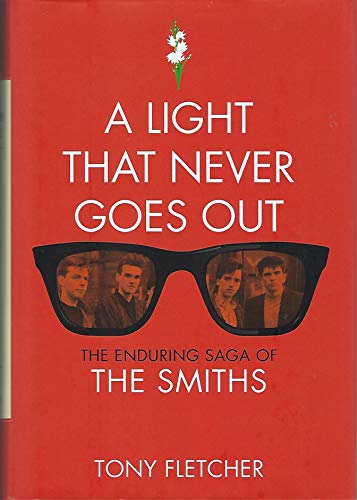
This authoritative, behind-the-scenes book about The Smiths, one of the most respected and storied indie rock bands in music history, vibrantly recreates the story of four working-class kids from a northern English city who changed the music world and the lives of their fans. (This book was previously listed in Forecast.) 40,000 first printing.
Die Inhaltsangabe kann sich auf eine andere Ausgabe dieses Titels beziehen.
Über die Autorin bzw. den Autor
TONY FLETCHER is the author of six books, including Moon, the bestselling biography of Keith Moon, and Remarks Remade, the definitive biography of R.E.M. He has contributed to many publications and television shows on both sides of the Atlantic, including Newsday, Spin, Mojo, Behind the Music, and more. He lives in New York’s Catskill Mountains. He can be found at www.ijamming.net.
Auszug. © Genehmigter Nachdruck. Alle Rechte vorbehalten.
CHAPTER
ONE
I don’t really feel any kinship with the place. It’s just somewhere that I just so happen to live. It doesn’t mean a great deal to me. And I’m sure I’ll leave very soon—when I’m rich.
—Morrissey, The David Jensen Show, July 1983
We felt like every little town was our hometown. And I think that the people in Inverness and Brighton and St. Austell and Norwich all felt that way when they came out to see us.
—Johnny Marr, May 2011
The story of the Smiths is intrinsically entwined with that of Manchester. And yet the group proved curiously conflicted in their loyalties to the city that birthed them—and which has subsequently claimed them as one of its most successful exports and biggest tourist attractions. It’s not just that the Smiths concluded their first album with the disparaging refrain, “Manchester, so much to answer for,” or opened their second one with the equally negative line, “Belligerent ghouls run Manchester schools.” It’s not only that they packed their bags and moved to the British capital at more or less the first sign of success (though the fact that they returned to Manchester a year later suggests that they may have gained a new appreciation for their hometown in their absence). It’s also that the Smiths played in Manchester less often in the entire four years of their performing career than they played in London during their first twelve months alone.
Such ambivalence can partly be excused and justified as ambition, a determination to escape the relative confines of their semidetached, semiurban surroundings and spread their musical wings across a national, and then an international, stage. From the beginning, the Smiths sensed greatness, and to realize that greatness meant a refusal to accept confinement to the margins. They were never going to content themselves with being anything as trifling as a mere Manchester band.
And yet, more deeply conflicted feelings about their origins are readily understandable. As children, Steven Morrissey and Johnny Marr were ejected from their inner-city childhood homes, in the overlapping neighborhoods of Hulme and Moss Side, and Ardwick, respectively, as part of a sweeping program of “slum clearance” that provided them with better housing, but at the cost of community upheaval. All four members of the band were subject to the city’s arcane and draconian (in their case, Catholic) school system, which failed miserably to provide them with a quality education, let alone a means to pursue their artistic talents. And they came together at a time when Manchester was declining more precipitously than any other British city under the weight of poverty, unemployment, and attendant social ills—and yet, during the early days of the Smiths’ unanimous acclaim from the London music media, it often seemed as if they had to fight for every last drop of local civic respect. What, in a sense, was there to be loyal toward?
This, in a more general sense, has long been Manchester’s dilemma. A city that launched the Industrial Revolution, that contributed so enormously to Britain’s wealth, that to a large extent financed and furnished the Victorian empire, did so on the backs of its underpaid, malnourished, mistreated workers. Its inhabitants therefore mix an instinctive pride for their city’s copious achievements (including its ongoing sporting and cultural successes) with a necessary prejudice against their own bosses and municipal leaders who have often sold them out without a second thought. The result is a somewhat cheerful cynicism; Mancunians remain among Britain’s most outgoing and welcoming people despite their history of hardships. The occasional good-natured ribbing aside, there is rarely any genuine antagonism exhibited toward residents of the “soft south.”
As for the Smiths, however, perhaps the main reason they never waved a Manchester flag was because, for three of them at least, their recent family histories lay not in Lancashire but in Ireland. “With so much Irishness around us, my sister and I growing up, never really felt we were Mancunians,” said Morrissey in 1999, five years before he released a solo song stating his composition as one of “Irish Blood, English Heart.” Johnny Marr put it another way: “I don’t think of myself as being English and I don’t think of myself as being Irish. I think of myself as being Mancunian Irish.” If one or both of these viewpoints was true too of the other Smiths, so it was of so many Mancunians down the course of history, because a significant part of Manchester’s wealth—or at least the wealth of its industrialists, who were not readily predisposed to share it—was built upon Irish blood.
Before its transformation in the eighteenth century, Manchester served as but a respectable agricultural center, with an additional reputation for textile production thanks to an influx of Flemish weavers exiled there in the 1300s; it was Liverpool, thirty miles west along the River Mersey, that stood radiant as the “Gateway to the British Empire.” Liverpool’s fortunes were built in part on the export of Manchester textiles, and on guns made in Birmingham, but they were especially enhanced by the exchange of such goods on the west coast of Africa for human cargo, which was then transported for sale into slavery in the West Indies or along the American Atlantic coast before returning from the New World laden with raw goods. Come the year 1800, and Liverpool was considered the second wealthiest city in all of Europe.
By then, however, the harnessing of steam power, and the successive inventions, mostly in the British Midlands and northwest, of a series of jennies, looms, frames, and mules that exponentially increased the production capabilities in the cotton industry, were already serving to shift that balance of regional power. Manchester benefited from these inventions in part due to its existent foothold in textiles, but also because it had the attributes required by the new large-scale industries—natural high humidity, heavy rainfall, a copious supply of soft water, and, thanks to the pioneering Bridgewater Canal that connected a private regional coal mine to the owner’s warehouse in Manchester, easy access to coal and a burgeoning system of further arterial canals. The world’s first water-powered mill was built in Royton, in the east of modern Manchester, in 1764; the city’s first steam-driven mill opened in Shudehill, in the heart of modern Manchester, in 1782. From there, the mills expanded by the dozen, many of them built on the banks of the Rochdale Canal in Ancoats, the border of modern Manchester’s fashionable Northern Quarter. Mills were also constructed on the northern edges of Chorlton-on-Medlock, through which ran the Oxford Road south from the city, and on which was later built the University of Manchester, the city’s most populous seat of higher learning and one that, studies have frequently shown, now attracts students as much for Manchester’s musical reputation as any educational one.
Britain abolished slavery in 1807, and Liverpool’s position at the core of its global trade suffered accordingly; the “Middle Passage” having been eliminated, ships arrived at the Mersey port increasingly laden with raw cotton from India or the Americas, and departed with finished cotton textiles from Manchester for sale around the globe. In 1830, when the world’s first passenger railway line opened, connecting the two great northwestern English cities, there was little doubt which of them held the key to Britain’s future prosperity:...
„Über diesen Titel“ kann sich auf eine andere Ausgabe dieses Titels beziehen.
Suchergebnisse für A Light That Never Goes Out: The Enduring Saga of The...

Beispielbild für diese ISBN
A Light That Never Goes Out: The Enduring Saga of the Smiths
Anbieter: World of Books (was SecondSale), Montgomery, IL, USA
Verkäuferbewertung 5 von 5 Sternen

Zustand: Good. Good condition ex-library book with usual library markings and stickers. Artikel-Nr. 00110230056
Gebraucht kaufen
EUR 6,24
Versand gratis
Versand innerhalb von USA
Versand innerhalb von USA
Anzahl: 1 verfügbar
Beispielbild für diese ISBN
A Light That Never Goes Out: The Enduring Saga of the Smiths
Anbieter: ThriftBooks-Atlanta, AUSTELL, GA, USA
Verkäuferbewertung 5 von 5 Sternen
Hardcover. Zustand: Very Good. No Jacket. May have limited writing in cover pages. Pages are unmarked. ~ ThriftBooks: Read More, Spend Less. Artikel-Nr. G0307715957I4N00
Gebraucht kaufen
EUR 9,84
Versand gratis
Versand innerhalb von USA
Versand innerhalb von USA
Anzahl: 1 verfügbar
Beispielbild für diese ISBN
A Light That Never Goes Out: The Enduring Saga of the Smiths
Verlag:
Crown Archetype, New York, 2012
ISBN 10: 0307715957
ISBN 13: 9780307715951
Gebraucht
Hardcover
Erstausgabe
Anbieter: Abacus Bookshop, Pittsford, NY, USA
Verkäuferbewertung 5 von 5 Sternen
hardcover. Zustand: Fine. Illus. with photos (illustrator). 1st. 8vo, 698 pp. Fine copy in nearly fine dust jacket. Artikel-Nr. 118632
Gebraucht kaufen
EUR 26,94
EUR 3,49 Versand
Versand innerhalb von USA
Versand innerhalb von USA
Anzahl: 1 verfügbar
Beispielbild für diese ISBN
A Light That Never Goes Out: The Enduring Saga of the Smiths
Anbieter: Revaluation Books, Exeter, Vereinigtes Königreich
Verkäuferbewertung 5 von 5 Sternen
Hardcover. Zustand: Brand New. 704 pages. 9.50x6.75x2.00 inches. In Stock. Artikel-Nr. 0307715957
Neu kaufen
EUR 83,60
EUR 14,59 Versand
Versand von Vereinigtes Königreich nach USA
Versand von Vereinigtes Königreich nach USA
Anzahl: 1 verfügbar