Inhaltsangabe
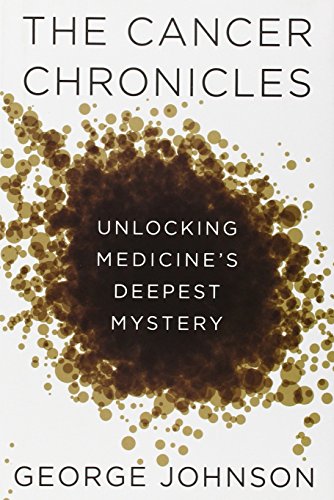
When the woman he loved was diagnosed with a metastatic cancer, science writer George Johnson embarked on a journey to learn everything he could about the disease and the people who dedicate their lives to understanding and combating it. What he discovered is a revolution under way—an explosion of new ideas about what cancer really is and where it comes from. In a provocative and intellectually vibrant exploration, he takes us on an adventure through the history and recent advances of cancer research that will challenge everything you thought you knew about the disease.
Deftly excavating and illuminating decades of investigation and analysis, he reveals what we know and don’t know about cancer, showing why a cure remains such a slippery concept. We follow him as he combs through the realms of epidemiology, clinical trials, laboratory experiments, and scientific hypotheses—rooted in every discipline from evolutionary biology to game theory and physics. Cogently extracting fact from a towering canon of myth and hype, he describes tumors that evolve like alien creatures inside the body, paleo-oncologists who uncover petrified tumors clinging to the skeletons of dinosaurs and ancient human ancestors, and the surprising reversals in science’s comprehension of the causes of cancer, with the foods we eat and environmental toxins playing a lesser role. Perhaps most fascinating of all is how cancer borrows natural processes involved in the healing of a wound or the unfolding of a human embryo and turns them, jujitsu-like, against the body.
Throughout his pursuit, Johnson clarifies the human experience of cancer with elegiac grace, bearing witness to the punishing gauntlet of consultations, surgeries, targeted therapies, and other treatments. He finds compassion, solace, and community among a vast network of patients and professionals committed to the fight and wrestles to comprehend the cruel randomness cancer metes out in his own family. For anyone whose life has been affected by cancer and has found themselves asking why?, this book provides a new understanding. In good company with the works of Atul Gawande, Siddhartha Mukherjee, and Abraham Verghese,The Cancer Chronicles is endlessly surprising and as radiant in its prose as it is authoritative in its eye-opening science.
Die Inhaltsangabe kann sich auf eine andere Ausgabe dieses Titels beziehen.
Über die Autorin bzw. den Autor
GEORGE JOHNSON writes regularly about science for The New York Times. He has also written forNational Geographic, Slate, Discover, Scientific American,Wired, and The Atlantic, and his work has been included in The Best American Science Writing. A former Alicia Patterson fellow, he has received awards from PEN and the American Association for the Advancement of Science, and his books were twice finalists for the Royal Society's book prize. He is a cohost of Science Faction on bloggingheads.tv and writes the blogFire in the Mind for Discover. He lives in Santa Fe, New Mexico.
Auszug. © Genehmigter Nachdruck. Alle Rechte vorbehalten.
Chapter 1
Jurassic Cancer
As I crossed a dry, lonesome stretch of the Dinosaur Diamond Prehistoric Highway, I tried to picture what western Colorado—a wilderness of sage-covered mesas and rocky canyons—looked like 150 million years ago, in Late Jurassic time. North America was breaking away from Europe and Asia—all three had formed a primordial supercontinent called Laurasia. The huge land mass, flatter than it is today, was drifting northward a few centimeters per year and was passing like a ship through the waters of what geographers would come to call the Tropic of Cancer. Mile-high Denver was near sea level and lay about as far south as where the Bahamas are today. Though the climate was fairly dry, webs of rivulets connecting shallow lakes and swamps covered part of the land, and vegetation abounded. There were no grasses or flowers—they had yet to evolve—just a weird mix of conifers commingling with ginkgos, tree ferns, cycads, and horsetails. Giant termite nests soared as much as thirty feet high. Splashing and stomping through this Seuss-like world were Stegosaurus, Allosaurus, Brachiosaurus, Barosaurus, Seismosaurus—their bones buried far below me as I made my way from Grand Junction to a town called Dinosaur.
Occasionally one can glimpse outcroppings of the Jurassic past, exposed by erosion, seismological uplift, or a highway department road cut—colorful bands of sediment that form a paleontological treasure house called the Morrison Formation. I knew what to look for from photographs: crumbling layers of reddish, grayish, purplish, sometimes greenish sediment—geological debris piled up over some 7 million years.
Just south of the town of Fruita on the Colorado River, I hiked to the top of Dinosaur Hill, stopping for a moment to pick up a pinch of purplish Morrison mudstone that had fallen near the trail. As I rolled it in my fingers it crumbled like dry cookie dough. On the far side of the hill, I came to a shaft where in 1901 a paleontologist named Elmer Riggs extracted 6 tons of bones that had belonged to an Apatosaurus (the proper name for what most of us call a Brontosaurus). Alive and fully hydrated, the 70-foot-long reptile would have weighed 30 tons. Riggs encased the bones in plaster of paris for protection, ferried them across the Colorado on a flat-bottom boat, and then shipped them by train to the Field Museum in Chicago, where they were reassembled and put on display.
After making my way north to Dinosaur (population 339), where Brontosaurus Boulevard intersects Stegosaurus Freeway, I stood at an overlook and watched Morrison stripes in a canyon reddening with the setting sun. But it was a little farther west, along the Green River in the western reaches of Dinosaur National Monument, that I saw the most beautiful example: a cliffside of greenish grays slumping into purples slumping into browns. It indeed resembled, as the woman at the park headquarters had told me, melted Neapolitan ice cream.
It was somewhere in these parts that a dinosaur bone was discovered that displays what may be the oldest known case of cancer. After the dinosaur died, whether from the tumor or something else, its organs were eaten by predators or rapidly decomposed. But the skeleton—at least a piece of it—gradually became buried by windblown dirt and sand. Later on, an expanding lake or a meandering stream flowed over the debris, and the stage was set for fossilization. Molecule by molecule minerals in the bones were slowly replaced by minerals dissolved from the water. Tiny cavities were filled and petrified. Several epochs later dinosaurs were long extinct, their world overlaid by lakes and deserts and oceans, but this fossilized bone, encased in sedimentary rock, was preserved and carried through time.
That hardly ever happened. Most bones disintegrated before they could become fossilized. And of the fraction that survived long enough to petrify, all but a few remain buried. The specimen, now labeled CM 72656 and housed at the Carnegie Museum of Natural History in Pittsburgh, was a survivor. Unearthed by a rushing river or exposed by tectonic forces—somehow it was delivered to the surface of our world where, 150 million years after the animal died, it was discovered by some forgotten rockhound. A cross-section was cut with a rock saw, polished, and after passing through who knows how many human hands, the fossil found its way to a Colorado rock shop where it caught the eye of a doctor who thought he knew a case of bone cancer when he saw one.
His name was Raymond G. Bunge, a professor of urology at the University of Iowa College of Medicine. In the early 1990s, he telephoned the school’s geology department to ask if someone would come evaluate a few prize specimens in his collection. The call made its way through the switchboard to Brian Witzke, who on a cold autumn day bicycled to the doctor’s house and was presented with an attractive chunk, 5 inches thick, of mineralized dinosaur bone. Viewed head-on, the fossil measured 6.5 by 9.5 inches. Lodged inside its core was an intrusion, now crystallized, that had grown so large it had encroached into the outer bone. Bunge suspected osteosarcoma—he had seen the damage the cancer can do to human skeletons, particularly those of children. Oval in shape and the size of a slightly squashed softball, the tumor had been converted over the millennia into agate.
The fragment was too small for Witzke to identify the bone type or the species of dinosaur, but he was able to provide a geological diagnosis: The reddish-brown color and the agatized center were clues that it came from the Morrison Formation. Bunge remembered buying the souvenir somewhere in western Colorado—burnished pieces of petrified dinosaur bone were a favorite among collectors—but he couldn’t remember the precise location. He gave the rock to the geologist, asking that he seek an expert opinion.
Other projects intervened, and so the fossil sat almost forgotten atop a filing cabinet in Witzke’s office, until the day he sent it to Bruce Rothschild, a rheumatologist at the Arthritis Center of Northeast Ohio who had expanded his practice to include dinosaur bone disease. He had never seen a clearer or more ancient example of prehistoric cancer. His next step was to determine just what kind of cancer it was.
The tumor, it turned out, didn’t exhibit the ill-defined margins or the layered, onion-skin look of an osteosarcoma, the cancer Bunge had suspected, or of another malignancy called Ewing’s sarcoma. Rothschild also felt confident in ruling out myeloma, a cancer of plasma cells that leaves bone with a “punched out” appearance. The fact that the tumor, gnawing its way outward, had left intact a thin shell of bone was reason to exclude the more invasive multiple myeloma. Every skeletal disease leaves a distinct engraving and, one by one, Rothschild eliminated the possibilities: “the superficial solitary and coalescing pits of leukaemia,” “the expansile, soap bubble appearance of aneurysmal bone cysts,” “the epiphyseal ‘popcorn’ calcifications characteristic of chrondroblastomas,” “the ‘ground glass’ appearance of fibrous dysplasia.”
For an outsider reading Rothschild’s observations, the medical jargon might be somewhere between translucent and opaque, words that gain a grim familiarity only as one strives to understand the sudden disruption of cancer. What is clear from the beginning is the confidence with which a specialist in the obscure discipline of dinosaur pathology can provide a likely diagnosis for a...
„Über diesen Titel“ kann sich auf eine andere Ausgabe dieses Titels beziehen.
Weitere beliebte Ausgaben desselben Titels

Suchergebnisse für The Cancer Chronicles: Unlocking Medicine's Deepest...

Beispielbild für diese ISBN
The Cancer Chronicles: Unlocking Medicine's Deepest Mystery
Anbieter: Wonder Book, Frederick, MD, USA
Verkäuferbewertung 5 von 5 Sternen

Zustand: Very Good. Very Good condition. Very Good dust jacket. A copy that may have a few cosmetic defects. May also contain light spine creasing or a few markings such as an owner's name, short gifter's inscription or light stamp. Artikel-Nr. Q08G-01868
Gebraucht kaufen
EUR 5,35
Versand gratis
Versand innerhalb von USA
Versand innerhalb von USA
Anzahl: 1 verfügbar
Beispielbild für diese ISBN
The Cancer Chronicles: Unlocking Medicine's Deepest Mystery
Anbieter: BooksRun, Philadelphia, PA, USA
Verkäuferbewertung 5 von 5 Sternen
Hardcover. Zustand: Good. 1. It's a preowned item in good condition and includes all the pages. It may have some general signs of wear and tear, such as markings, highlighting, slight damage to the cover, minimal wear to the binding, etc., but they will not affect the overall reading experience. Artikel-Nr. 0307595145-11-1
Gebraucht kaufen
EUR 5,69
Versand gratis
Versand innerhalb von USA
Versand innerhalb von USA
Anzahl: 1 verfügbar
Beispielbild für diese ISBN
The Cancer Chronicles : Unlocking Medicine's Deepest Mystery
Verlag:
Knopf Doubleday Publishing Group, 2013
ISBN 10: 0307595145
ISBN 13: 9780307595140
Gebraucht
Hardcover
Erstausgabe
Anbieter: Better World Books, Mishawaka, IN, USA
Verkäuferbewertung 5 von 5 Sternen
Zustand: Good. 1st Edition. Former library book; may include library markings. Used book that is in clean, average condition without any missing pages. Artikel-Nr. GRP104775986
Gebraucht kaufen
EUR 6,20
Versand gratis
Versand innerhalb von USA
Versand innerhalb von USA
Anzahl: 1 verfügbar
Beispielbild für diese ISBN
The Cancer Chronicles : Unlocking Medicine's Deepest Mystery
Verlag:
Knopf Doubleday Publishing Group, 2013
ISBN 10: 0307595145
ISBN 13: 9780307595140
Gebraucht
Hardcover
Erstausgabe
Anbieter: Better World Books, Mishawaka, IN, USA
Verkäuferbewertung 5 von 5 Sternen
Zustand: Very Good. 1st Edition. Former library book; may include library markings. Used book that is in excellent condition. May show signs of wear or have minor defects. Artikel-Nr. 389131-75
Gebraucht kaufen
EUR 6,20
Versand gratis
Versand innerhalb von USA
Versand innerhalb von USA
Anzahl: 1 verfügbar
Beispielbild für diese ISBN
The Cancer Chronicles: Unlocking Medicine's Deepest Mystery
Anbieter: ThriftBooks-Dallas, Dallas, TX, USA
Verkäuferbewertung 5 von 5 Sternen
Hardcover. Zustand: As New. No Jacket. Pages are clean and are not marred by notes or folds of any kind. ~ ThriftBooks: Read More, Spend Less. Artikel-Nr. G0307595145I2N00
Gebraucht kaufen
EUR 6,66
Versand gratis
Versand innerhalb von USA
Versand innerhalb von USA
Anzahl: 1 verfügbar
Beispielbild für diese ISBN
The Cancer Chronicles: Unlocking Medicine's Deepest Mystery
Anbieter: ThriftBooks-Atlanta, AUSTELL, GA, USA
Verkäuferbewertung 5 von 5 Sternen
Hardcover. Zustand: Very Good. No Jacket. May have limited writing in cover pages. Pages are unmarked. ~ ThriftBooks: Read More, Spend Less. Artikel-Nr. G0307595145I4N00
Gebraucht kaufen
EUR 6,66
Versand gratis
Versand innerhalb von USA
Versand innerhalb von USA
Anzahl: 1 verfügbar
Beispielbild für diese ISBN
The Cancer Chronicles: Unlocking Medicine's Deepest Mystery
Anbieter: ThriftBooks-Phoenix, Phoenix, AZ, USA
Verkäuferbewertung 5 von 5 Sternen
Hardcover. Zustand: Very Good. No Jacket. May have limited writing in cover pages. Pages are unmarked. ~ ThriftBooks: Read More, Spend Less. Artikel-Nr. G0307595145I4N00
Gebraucht kaufen
EUR 6,66
Versand gratis
Versand innerhalb von USA
Versand innerhalb von USA
Anzahl: 1 verfügbar
Beispielbild für diese ISBN
The Cancer Chronicles: Unlocking Medicine's Deepest Mystery
Anbieter: Ammareal, Morangis, Frankreich
Verkäuferbewertung 5 von 5 Sternen
Hardcover. Zustand: Très bon. Edition 2013. Ammareal reverse jusqu'à 15% du prix net de cet article à des organisations caritatives. ENGLISH DESCRIPTION Book Condition: Used, Very good. Edition 2013. Ammareal gives back up to 15% of this item's net price to charity organizations. Artikel-Nr. F-863-344
Gebraucht kaufen
EUR 8,99
EUR 20,50 shipping
Versand von Frankreich nach USA
Versand von Frankreich nach USA
Anzahl: 1 verfügbar
Beispielbild für diese ISBN
The Cancer Chronicles: Unlocking Medicine's Deepest Mystery
Anbieter: Revaluation Books, Exeter, Vereinigtes Königreich
Verkäuferbewertung 5 von 5 Sternen
Hardcover. Zustand: Brand New. 1st edition. 284 pages. 8.50x5.75x1.25 inches. In Stock. Artikel-Nr. 0307595145
Neu kaufen
EUR 32,93
EUR 11,55 shipping
Versand von Vereinigtes Königreich nach USA
Versand von Vereinigtes Königreich nach USA
Anzahl: 1 verfügbar