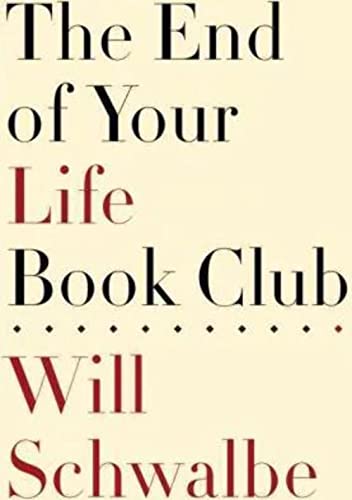
Inhaltsangabe
“What are you reading?”
That’s the question Will Schwalbe asks his mother, Mary Anne, as they sit in the waiting room of the Memorial Sloan-Kettering Cancer Center. In 2007, Mary Anne returned from a humanitarian trip to Pakistan and Afghanistan suffering from what her doctors believed was a rare type of hepatitis. Months later she was diagnosed with a form of advanced pancreatic cancer, which is almost always fatal, often in six months or less.
This is the inspiring true story of a son and his mother, who start a “book club” that brings them together as her life comes to a close. Over the next two years, Will and Mary Anne carry on conversations that are both wide-ranging and deeply personal, prompted by an eclectic array of books and a shared passion for reading. Their list jumps from classic to popular, from poetry to mysteries, from fantastic to spiritual. The issues they discuss include questions of faith and courage as well as everyday topics such as expressing gratitude and learning to listen. Throughout, they are constantly reminded of the power of books to comfort us, astonish us, teach us, and tell us what we need to do with our lives and in the world. Reading isn’t the opposite of doing; it’s the opposite of dying.
Will and Mary Anne share their hopes and concerns with each other—and rediscover their lives—through their favorite books. When they read, they aren’t a sick person and a well person, but a mother and a son taking a journey together. The result is a profoundly moving tale of loss that is also a joyful, and often humorous, celebration of life: Will’s love letter to his mother, and theirs to the printed page.
Die Inhaltsangabe kann sich auf eine andere Ausgabe dieses Titels beziehen.
Über die Autorin bzw. den Autor
Will Schwalbe has worked in publishing (most recently as senior vice president and editor in chief of Hyperion Books); digital media, as the founder and CEO of Cookstr.com; and as a journalist, writing for various publications including The New York Times and the South China Morning Post. He is on the boards of Yale University Press and the Kingsborough Community College Foundation. He is the coauthor, with David Shipley, of Send: Why People Email So Badly and How to Do It Better.
Auszug. © Genehmigter Nachdruck. Alle Rechte vorbehalten.
Crossing to Safety
We were nuts about the mocha in the waiting room at Memorial Sloan-Kettering’s outpatient care center. The coffee isn’t so good, and the hot chocolate is worse. But if, as Mom and I discovered, you push the “mocha” button, you see how two not-very-good things can come together to make something quite delicious. The graham crackers aren’t bad either.
The outpatient care center is housed on the very pleasant fourth floor of a handsome black steel and glass office building in Manhattan on the corner of 53rd Street and Third Avenue. Its visitors are fortunate that it’s so pleasant, because they spend many hours there. This is where people with cancer wait to see their doctors and to be hooked up to a drip for doses of the life-prolonging poison that is one of the wonders of the modern medical world. By the late autumn of 2007, my mother and I began meeting there regularly.
Our book club got its formal start with the mocha and one of the most casual questions two people can ask each other: “What are you reading?” It’s something of a quaint question these days. More often in lulls of conversation people ask, “What movies have you seen?” or “Where are you going on vacation?” You can no longer assume, the way you could when I was growing up, that anyone is reading anything. But it’s a question my mother and I asked each other for as long as I can remember. So one November day, while passing the time between when they took Mom’s blood and when she saw the doctor (which preceded the chemo), I threw out that question. Mom answered that she was reading an extraordinary book, Crossing to Safety by Wallace Stegner.
Crossing to Safety, which was first published in 1987, is one of those books I’d always so intended to read that I spent years pretending not only that I’d actually read it but also that I knew more about its author than that he’d been born in the early years of the twentieth century and wrote mostly about the American West. I worked in book publishing for twenty-one years and, in various conversation lulls, got into the habit of asking people, especially booksellers, the name of their favorite book and why they loved it so much. One of the most frequently named books was and is always Crossing to Safety.
Raving about books I hadn’t read yet was part of my job. But there’s a difference between casually fibbing to a bookseller and lying to your seventy-three-year-old mother when you are accompanying her for treatments to slow the growth of a cancer that had already spread from her pancreas to her liver by the time it was diagnosed.
I confessed that I had not, in fact, read this book.
“I’ll give you my copy when I’m finished,” said my mother, who was always much thriftier than I am.
“That’s okay, I have a copy,” I told her, which was, in fact, true. There are certain books that I mean to read and keep stacked by my bedside. I even take them on trips. Some of my books should be awarded their own frequent-flier miles, they’ve traveled so much. I take these volumes on flight after flight with the best of intentions and then wind up reading anything and everything else (SkyMall! Golf Digest!). I’d brought Crossing to Safety on so many trips and returned it to my bedside unread so many times that it could have earned at least one first-class ticket to Tokyo on Japan Airlines.
But this time it would be different. That weekend I started it, and then, at about page twenty or so, the magical thing occurred that happens only with the very best books: I became absorbed and obsessed and entered the “Can’t you see I’m reading?” mode. For those of you who haven’t read Crossing to Safety (or are still pretending to have read it), it’s a story about the lifelong friendship of two couples: Sid and Charity, and Larry and Sally. At the start of the novel, Charity is dying of cancer. So once I read it, it was natural that I would want to talk about it with Mom. The novel gave us a way to discuss some of the things she was facing and some of the things I was facing.
“Do you think he’ll be all right?” I would ask her, referring to Sid, who is very much alone at the end.
“Of course it’ll be tough on him, but I think he’ll be fine. I’m quite sure of it. Maybe not right away. But he’ll be fine,” she would answer, also referring to Sid but perhaps to my father as well.
Books had always been a way for my mother and me to introduce and explore topics that concerned us but made us uneasy, and they had also always given us something to talk about when we were stressed or anxious. In the months since her diagnosis, we’d started talking more and more about books. But it was with Crossing to Safety that we both began to realize that our discussions were more than casual—that we had created, without knowing it, a very unusual book club, one with only two members. As in many book clubs, our conversations bounced around between the characters’ lives and our own. Sometimes we discussed a book in depth; other times we found ourselves in a conversation that had little to do with the book or the author who had sparked it.
I wanted to learn more about my mother’s life and the choices she’d made, so I often steered the conversation there. She had an agenda of her own, as she almost always did. It took me some time, and some help, to figure it out.
Over the course of Mom’s illness, before and after Crossing to Safety, Mom and I read dozens of books of all different kinds. We didn’t read only “great books,” we read casually and promiscuously and whimsically. (As I said, my mother was thrifty; if you gave her a book, she would read it.) We didn’t always read the same books at the same time; nor did we meet over meals, nor on specific days, nor a set number of times per month. But we were forced to keep coming back to that waiting room as Mom’s health got worse and worse. And we talked about books just as often as we talked about anything.
My mother was a fast reader. Oh, and one other thing I should mention. She always read the end of a book first because she couldn’t wait to find out how things would turn out. I realized, when I started writing this book, that, in a way, she’d already read the end of it—when you have pancreatic cancer that’s diagnosed after it’s spread, there isn’t likely to be a surprise ending. You can be fairly certain of what fate has in store.
You could say that the book club became our life, but it would be more accurate to say that our life became a book club. Maybe it had always been one—and it took Mom’s illness to make us realize that. We didn’t talk much about the club. We talked about the books, and we talked about our lives.
We all have a lot more to read than we can read and a lot more to do than we can do. Still, one of the things I learned from Mom is this: Reading isn’t the opposite of doing; it’s the opposite of dying. I will never be able to read my mother’s favorite books without thinking of her—and when I pass them on and recommend them, I’ll know that some of what made her goes with them; that...
„Über diesen Titel“ kann sich auf eine andere Ausgabe dieses Titels beziehen.
Weitere beliebte Ausgaben desselben Titels

Suchergebnisse für The End of Your Life Book Club

Beispielbild für diese ISBN
The End of Your Life Book Club
Anbieter: BooksRun, Philadelphia, PA, USA
Verkäuferbewertung 5 von 5 Sternen

Hardcover. Zustand: Good. 1. It's a preowned item in good condition and includes all the pages. It may have some general signs of wear and tear, such as markings, highlighting, slight damage to the cover, minimal wear to the binding, etc., but they will not affect the overall reading experience. Artikel-Nr. 0307594033-11-1
Gebraucht kaufen
EUR 3,49
Versand gratis
Versand innerhalb von USA
Versand innerhalb von USA
Anzahl: 1 verfügbar
Beispielbild für diese ISBN
The End of Your Life Book Club
Anbieter: Wonder Book, Frederick, MD, USA
Verkäuferbewertung 5 von 5 Sternen
Zustand: Very Good. Very Good condition. Good dust jacket. A copy that may have a few cosmetic defects. May also contain light spine creasing or a few markings such as an owner's name, short gifter's inscription or light stamp. Artikel-Nr. J04H-00925
Gebraucht kaufen
EUR 5,35
Versand gratis
Versand innerhalb von USA
Versand innerhalb von USA
Anzahl: 2 verfügbar
Beispielbild für diese ISBN
The End of Your Life Book Club
Anbieter: ThriftBooks-Dallas, Dallas, TX, USA
Verkäuferbewertung 5 von 5 Sternen
Hardcover. Zustand: As New. No Jacket. Pages are clean and are not marred by notes or folds of any kind. ~ ThriftBooks: Read More, Spend Less. Artikel-Nr. G0307594033I2N00
Gebraucht kaufen
EUR 5,62
Versand gratis
Versand innerhalb von USA
Versand innerhalb von USA
Anzahl: 1 verfügbar
Beispielbild für diese ISBN
The End of Your Life Book Club
Anbieter: ThriftBooks-Dallas, Dallas, TX, USA
Verkäuferbewertung 5 von 5 Sternen
Hardcover. Zustand: Very Good. No Jacket. May have limited writing in cover pages. Pages are unmarked. ~ ThriftBooks: Read More, Spend Less. Artikel-Nr. G0307594033I4N00
Gebraucht kaufen
EUR 5,62
Versand gratis
Versand innerhalb von USA
Versand innerhalb von USA
Anzahl: 1 verfügbar
Beispielbild für diese ISBN
The End of Your Life Book Club
Anbieter: ThriftBooks-Atlanta, AUSTELL, GA, USA
Verkäuferbewertung 5 von 5 Sternen
Hardcover. Zustand: As New. No Jacket. Pages are clean and are not marred by notes or folds of any kind. ~ ThriftBooks: Read More, Spend Less. Artikel-Nr. G0307594033I2N00
Gebraucht kaufen
EUR 5,62
Versand gratis
Versand innerhalb von USA
Versand innerhalb von USA
Anzahl: 1 verfügbar
Beispielbild für diese ISBN
The End of Your Life Book Club
Anbieter: ThriftBooks-Reno, Reno, NV, USA
Verkäuferbewertung 5 von 5 Sternen
Hardcover. Zustand: Very Good. No Jacket. May have limited writing in cover pages. Pages are unmarked. ~ ThriftBooks: Read More, Spend Less. Artikel-Nr. G0307594033I4N00
Gebraucht kaufen
EUR 5,62
Versand gratis
Versand innerhalb von USA
Versand innerhalb von USA
Anzahl: 1 verfügbar
Beispielbild für diese ISBN
The End of Your Life Book Club
Anbieter: ThriftBooks-Atlanta, AUSTELL, GA, USA
Verkäuferbewertung 5 von 5 Sternen
Hardcover. Zustand: Very Good. No Jacket. May have limited writing in cover pages. Pages are unmarked. ~ ThriftBooks: Read More, Spend Less. Artikel-Nr. G0307594033I4N00
Gebraucht kaufen
EUR 5,62
Versand gratis
Versand innerhalb von USA
Versand innerhalb von USA
Anzahl: 1 verfügbar
Beispielbild für diese ISBN
The End of Your Life Book Club
Verlag:
Knopf Doubleday Publishing Group, 2012
ISBN 10: 0307594033
ISBN 13: 9780307594037
Gebraucht
Hardcover
Erstausgabe
Anbieter: Better World Books: West, Reno, NV, USA
Verkäuferbewertung 5 von 5 Sternen
Zustand: Good. 1st Edition. Used book that is in clean, average condition without any missing pages. Artikel-Nr. GRP102291936
Gebraucht kaufen
EUR 5,84
Versand gratis
Versand innerhalb von USA
Versand innerhalb von USA
Anzahl: 1 verfügbar
Beispielbild für diese ISBN
The End of Your Life Book Club
Verlag:
Knopf Doubleday Publishing Group, 2012
ISBN 10: 0307594033
ISBN 13: 9780307594037
Gebraucht
Hardcover
Erstausgabe
Anbieter: Better World Books: West, Reno, NV, USA
Verkäuferbewertung 5 von 5 Sternen
Zustand: Very Good. 1st Edition. Former library book; may include library markings. Used book that is in excellent condition. May show signs of wear or have minor defects. Artikel-Nr. GRP102290003
Gebraucht kaufen
EUR 5,84
Versand gratis
Versand innerhalb von USA
Versand innerhalb von USA
Anzahl: 1 verfügbar
Beispielbild für diese ISBN
The End of Your Life Book Club
Verlag:
Knopf Doubleday Publishing Group, 2012
ISBN 10: 0307594033
ISBN 13: 9780307594037
Gebraucht
Hardcover
Erstausgabe
Anbieter: Better World Books: West, Reno, NV, USA
Verkäuferbewertung 5 von 5 Sternen
Zustand: Good. 1st Edition. Former library book; may include library markings. Used book that is in clean, average condition without any missing pages. Artikel-Nr. GRP85612360
Gebraucht kaufen
EUR 5,84
Versand gratis
Versand innerhalb von USA
Versand innerhalb von USA
Anzahl: 3 verfügbar