
Verwandte Artikel zu To the End of the Land
Inhaltsangabe
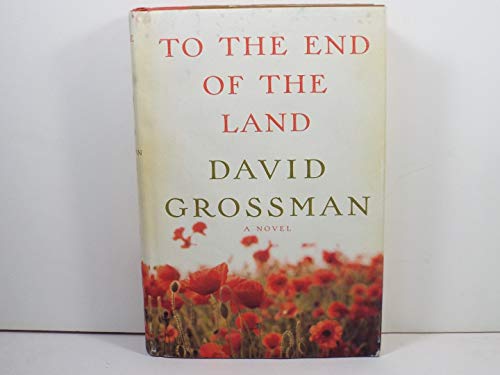
From one of Israel’s most acclaimed writers comes a novel of extraordinary power about family life—the greatest human drama—and the cost of war.
Ora, a middle-aged Israeli mother, is on the verge of celebrating her son Ofer’s release from army service when he returns to the front for a major offensive. In a fit of preemptive grief and magical thinking, she sets out for a hike in the Galilee, leaving no forwarding information for the “notifiers” who might darken her door with the worst possible news. Recently estranged from her husband, Ilan, she drags along an unlikely companion: their former best friend and her former lover Avram, once a brilliant artistic spirit. Avram served in the army alongside Ilan when they were young, but their lives were forever changed one weekend when the two jokingly had Ora draw lots to see which of them would get the few days’ leave being offered by their commander—a chance act that sent Avram into Egpyt and the Yom Kippur War, where he was brutally tortured as POW. In the aftermath, a virtual hermit, he refused to keep in touch with the family and has never met the boy. Now, as Ora and Avram sleep out in the hills, ford rivers, and cross valleys, avoiding all news from the front, she gives him the gift of Ofer, word by word; she supplies the whole story of her motherhood, a retelling that keeps Ofer very much alive for Ora and for the reader, and opens Avram to human bonds undreamed of in his broken world. Their walk has a “war and peace” rhythm, as their conversation places the most hideous trials of war next to the joys and anguish of raising children. Never have we seen so clearly the reality and surreality of daily life in Israel, the currents of ambivalence about war within one household, and the burdens that fall on each generation anew.
Grossman’s rich imagining of a family in love and crisis makes for one of the great antiwar novels of our time.
Die Inhaltsangabe kann sich auf eine andere Ausgabe dieses Titels beziehen.
Über die Autorinnen und Autoren
David Grossman was born in Jerusalem. He is the author of numerous works of fiction, nonfiction, and children's literature. His work has appeared in The New Yorker and has been translated into thirty languages around the world. He is the recipient of many prizes, including the French Chevalier de l'Ordre des Arts et des Lettres, the Buxtehuder Bulle in Germany, Rome's Premio per la Pace e l'Azione Umitaria, the Premio Ischia---International Award for Journalism, Israel's Emet Prize, and the Albatross Prize given by the Gunter Grass Foundation.
David Grossman was born in Jerusalem. He is the author of numerous works of fiction, nonfiction, and children’s literature. His work has appeared in The New Yorker and has been translated into thirty languages around the world. He is the recipient of many prizes, including the French Chevalier de l’Ordre des Arts et des Lettres, the Buxtehuder Bulle in Germany, Rome’s Premio per la Pace e l’Azione Umitaria, the Premio Ischia— International Award for Journalism, Israel’s Emet Prize, and the Albatross Prize given by the Günter Grass Foundation.
Auszug. © Genehmigter Nachdruck. Alle Rechte vorbehalten.
The Walk, 2000
The convoy twists along, a stammering band of civilian cars, jeeps, military ambulances, tanks, and huge bulldozers on the backs of transporters. Her taxi driver is quiet and gloomy. His hand rests on the Mercedes’s gear shift and his thick neck does not move. For several long minutes he has looked neither at her nor at Ofer.
As soon as Ofer sat down in the cab, he let out an angry breath and flashed a look that said: Not the smartest idea, Mom, asking this particular driver to come along on a trip like this. Only then did she realize what she’d done. At seven that morning she had called Sami and asked him to come pick her up for a long drive to the Gilboa region. Now she remembers that for some reason she hadn’t given him any details or explained the purpose of the trip, the way she usually did. Sami had asked when she wanted him, and she’d hesitated and then said, “Come at three.” “Ora,” he’d said, “maybe we should leave earlier, ’cause traffic will be a mess.” That was his only acknowledgment of the day’s madness, but even then she didn’t get it and just said there was no way she could leave before three. She wanted to spend these hours with Ofer, and although Ofer agreed, she could tell how much effort his concession took. Seven or eight hours were all that was left of the weeklong trip she’d planned for the two of them, and now she realizes she hadn’t even told Sami on the phone that Ofer was part of the ride. Had she told him, he might have asked her to let him off today, just this one time, or he might have sent one of the Jewish drivers who worked for him—“my Jewish sector,” he called them. But when she’d called him she’d been in a state of complete frenzy, and it simply had not occurred to her—the unease slowly rises in her chest—that for this sort of drive, on a day like this, it was better not to call an Arab driver.
Even if he is an Arab from here, one of ours, Ilan prods at her brain as she tries to justify her own behavior. Even if it’s Sami, who’s almost one of the family, who’s been driving everyone—the people who work for Ilan, her estranged husband, and the whole family—for more than twenty years. They are his main livelihood, his regular monthly income, and he, in return, is obliged to be at their service around the clock, whenever they need him. They have been to his home in Abu Ghosh for family celebrations, they know his wife, Inaam, and they helped out with connections and money when his two older sons wanted to emigrate to Argentina. They’ve racked up hundreds of driving hours together, and she cannot recall his ever being this silent. With him, every drive is a stand-up show. He’s witty and sly, a political dodger who shoots in all directions with decoys and double-edged swords, and besides, she cannot imagine calling another driver. Driving herself is out of the question for the next year: she’s had three accidents and six moving violations in the past twelve months, an excessive crop even by her standards, and the loathsome judge who revoked her license had hissed that he was doing her a favor and that she really owed him her life. It would have all been so easy if she herself were driving Ofer. At least she’d have had another ninety minutes alone with him, and maybe she’d even have tempted him to stop on the way—there are some good restaurants in Wadi Ara. After all, one hour more, one hour less, what’s the rush? Why are you in such a hurry? Tell me, what is it that’s waiting for you there?
A trip alone with him will not happen anytime soon, nor alone with herself, and she has to get used to this constraint. She has to let it go, stop grieving every day for her robbed independence. She should be happy that at least she has Sami, who kept driving her even after the separation from Ilan. She hadn’t been capable of thinking about those kinds of details at the time, but Ilan had put his foot down. Sami was an explicit clause in their separation agreement, and he himself said he was divvied up between them like the furniture and the rugs and the silverware. “Us Arabs,” he would laugh, revealing a mouth full of huge teeth, “ever since the partition plan we’re used to you dividing us up.” The memory of his joke makes her cringe with the shame of what has happened today, of having somehow, in the general commotion, completely erased that part of him, his Arabness.
Since seeing Ofer this morning with the phone in his hand and the guilty look on his face, someone had come along and gently but firmly taken the management of her own affairs out of her hands. She had been dismissed, relegated to observer status, a gawking witness. Her thoughts were no more than flashes of emotion. She hovered through the rooms of the house with angular, truncated motions. Later they went to the mall to buy clothes and candy and CDs—there was a new Johnny Cash collection out—and all morning she walked beside him in a daze and giggled like a girl at everything he said. She devoured him with gaping wide looks, stocking up unabashedly for the endless years of hunger to come—of course they would come. From the moment he told her he was going, she had no doubt. Three times that morning she excused herself and went to the public restrooms, where she had diarrhea. Ofer laughed: “What’s up with you? What did you eat?” She stared at him and smiled feebly, engraving in her mind the sound of his laughter, the slight tilt of his head when he laughed.
The young cashier at the clothing store blushed as she watched him try on a shirt, and Ora thought proudly, My beloved is like a young hart. The girl working at the music store was one year behind him at school, and when she heard where he was going in three hours, she went over and hugged him, held him close with her tall, ample body, and insisted that he call her as soon as he got back. Seeing how blind her son was to these displays of emotion, it occurred to Ora that his heart was still bound to Talia. It had been a year since she’d left him, and she was still all he could see. She thought sadly that he was a loyal person, like her, and far more monogamous than she, and who knew how many years would pass before he got over Talia—if he even had any years left, she thought. She quickly erased the notion, scrubbing it furiously from her brain with both hands, but still a picture slipped through: Talia coming to visit them, to condole, perhaps to seek a sort of retroactive forgiveness from Ora, and she felt her face strain with anger. How could you hurt him like that? she thought, and she must have mumbled something out loud, because Ofer leaned down and asked softly, “What is it, Mom?” For a moment she did not see his face before her eyes—he had no face, her eyes stared into a void, pure terror. “Nothing. I was thinking about Talia. Have you talked to her recently?” Ofer waved his hand and said, “Forget that, it’s over.”
She kept checking the time. On her watch, on his, on the big clocks in the mall, on the television screens in appliance stores. Time was behaving strangely, sometimes flying, at other times crawling or coming to a complete standstill. It seemed to her that it might not even require much effort to roll it back, not too far, just thirty minutes or an hour at a time would be fine. The big things—time, destiny, God—could sometimes be worn down by petty haggling. They drove downtown to have lunch at a restaurant in the shuk, where they ordered lots of dishes although neither of them had an appetite. He tried to amuse her with stories from the checkpoint near...
„Über diesen Titel“ kann sich auf eine andere Ausgabe dieses Titels beziehen.
Suchergebnisse für To the End of the Land

Beispielbild für diese ISBN
To the End of the Land
Anbieter: World of Books (was SecondSale), Montgomery, IL, USA
Verkäuferbewertung 5 von 5 Sternen

Hardback. Zustand: Very Good. In this stunning, bestselling novel--and an NBC Award finalist--David Grossman tells the powerful story of a mother's love for her son. Just before his release from service in the Israeli army, Ora's son Ofer is sent back to the front for a major offensive. In a fit of preemptive grief and magical thinking, so that no bad news can reach her, Ora sets out on an epic hike in the Galilee. She is joined by an unlikely companion--Avram, a former friend and lover with a troubled past--and as they sleep out in the hills, Ora begins to conjure her son. Ofer's story, as told by Ora, becomes a surprising balm both for her and for Avram--and a mother's haunting meditation on war and family. ONE OF THE BEST BOKS OF THE YEAR: The Christian Science Monitor, The Economist, The New Republic, The New Yorker, The Washington Post, and The Pittsburgh Post Gazette A NEW YORK TIMES NOTABLE BOK. Artikel-Nr. 00108326200
Gebraucht kaufen
EUR 4,23
Versand gratis
Versand innerhalb von USA
Versand innerhalb von USA
Anzahl: 3 verfügbar
Beispielbild für diese ISBN
To the End of the Land
Anbieter: World of Books (was SecondSale), Montgomery, IL, USA
Verkäuferbewertung 5 von 5 Sternen
Zustand: Acceptable. Item in acceptable condition! Textbooks may not include supplemental items i.e. CDs, access codes etc. Artikel-Nr. 00106345358
Gebraucht kaufen
EUR 4,23
Versand gratis
Versand innerhalb von USA
Versand innerhalb von USA
Anzahl: 2 verfügbar
Beispielbild für diese ISBN
To the End of the Land
Anbieter: World of Books (was SecondSale), Montgomery, IL, USA
Verkäuferbewertung 5 von 5 Sternen
Zustand: Good. Item in good condition. Textbooks may not include supplemental items i.e. CDs, access codes etc. Artikel-Nr. 00085732804
Gebraucht kaufen
EUR 4,23
Versand gratis
Versand innerhalb von USA
Versand innerhalb von USA
Anzahl: 12 verfügbar
Beispielbild für diese ISBN
To the End of the Land
Anbieter: ThriftBooks-Dallas, Dallas, TX, USA
Verkäuferbewertung 5 von 5 Sternen
Hardcover. Zustand: Fair. No Jacket. Readable copy. Pages may have considerable notes/highlighting. ~ ThriftBooks: Read More, Spend Less. Artikel-Nr. G0307592979I5N00
Gebraucht kaufen
EUR 6,13
Versand gratis
Versand innerhalb von USA
Versand innerhalb von USA
Anzahl: 1 verfügbar
Beispielbild für diese ISBN
To the End of the Land
Verlag:
Knopf (edition First Edition), 2010
ISBN 10: 0307592979
ISBN 13: 9780307592972
Gebraucht
Hardcover
Erstausgabe
Anbieter: BooksRun, Philadelphia, PA, USA
Verkäuferbewertung 5 von 5 Sternen
Hardcover. Zustand: Very Good. First Edition. With dust jacket. It's a well-cared-for item that has seen limited use. The item may show minor signs of wear. All the text is legible, with all pages included. It may have slight markings and/or highlighting. Artikel-Nr. 0307592979-11-1-29
Gebraucht kaufen
EUR 6,49
Versand gratis
Versand innerhalb von USA
Versand innerhalb von USA
Anzahl: 1 verfügbar
Beispielbild für diese ISBN
To the End of the Land
Verlag:
Knopf Doubleday Publishing Group, 2010
ISBN 10: 0307592979
ISBN 13: 9780307592972
Gebraucht
Hardcover
Anbieter: Better World Books, Mishawaka, IN, USA
Verkäuferbewertung 5 von 5 Sternen
Zustand: Very Good. Former library copy. Pages intact with possible writing/highlighting. Binding strong with minor wear. Dust jackets/supplements may not be included. Includes library markings. Stock photo provided. Product includes identifying sticker. Better World Books: Buy Books. Do Good. Artikel-Nr. GRP102273979
Gebraucht kaufen
EUR 6,58
Versand gratis
Versand innerhalb von USA
Versand innerhalb von USA
Anzahl: 1 verfügbar
Beispielbild für diese ISBN
To the End of the Land
Verlag:
Knopf Doubleday Publishing Group, 2010
ISBN 10: 0307592979
ISBN 13: 9780307592972
Gebraucht
Hardcover
Anbieter: Better World Books, Mishawaka, IN, USA
Verkäuferbewertung 5 von 5 Sternen
Zustand: Good. Pages intact with minimal writing/highlighting. The binding may be loose and creased. Dust jackets/supplements are not included. Stock photo provided. Product includes identifying sticker. Better World Books: Buy Books. Do Good. Artikel-Nr. 2877220-20
Gebraucht kaufen
EUR 6,58
Versand gratis
Versand innerhalb von USA
Versand innerhalb von USA
Anzahl: 1 verfügbar
Beispielbild für diese ISBN
To the End of the Land
Verlag:
Knopf Doubleday Publishing Group, 2010
ISBN 10: 0307592979
ISBN 13: 9780307592972
Gebraucht
Hardcover
Anbieter: Better World Books: West, Reno, NV, USA
Verkäuferbewertung 5 von 5 Sternen
Zustand: Very Good. Pages intact with possible writing/highlighting. Binding strong with minor wear. Dust jackets/supplements may not be included. Stock photo provided. Product includes identifying sticker. Better World Books: Buy Books. Do Good. Artikel-Nr. 6369856-6
Gebraucht kaufen
EUR 6,58
Versand gratis
Versand innerhalb von USA
Versand innerhalb von USA
Anzahl: 1 verfügbar
Beispielbild für diese ISBN
To the End of the Land
Anbieter: Wonder Book, Frederick, MD, USA
Verkäuferbewertung 5 von 5 Sternen
Zustand: Very Good. Very Good condition. Very Good dust jacket. A copy that may have a few cosmetic defects. May also contain light spine creasing or a few markings such as an owner's name, short gifter's inscription or light stamp. Artikel-Nr. J12A-03623
Gebraucht kaufen
EUR 6,74
Versand gratis
Versand innerhalb von USA
Versand innerhalb von USA
Anzahl: 2 verfügbar
Beispielbild für diese ISBN
To the End of the Land
Anbieter: Wonder Book, Frederick, MD, USA
Verkäuferbewertung 5 von 5 Sternen
Zustand: Good. Good condition. Acceptable dust jacket. A copy that has been read but remains intact. May contain markings such as bookplates, stamps, limited notes and highlighting, or a few light stains. Artikel-Nr. V04A-05362
Gebraucht kaufen
EUR 6,74
Versand gratis
Versand innerhalb von USA
Versand innerhalb von USA
Anzahl: 1 verfügbar