
Verwandte Artikel zu The XX Factor: How the Rise of Working Women Has Created...
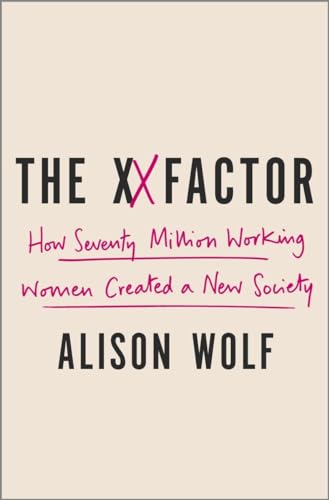
Inhaltsangabe
Noted British academic and journalist Alison Wolf offers a surprising and thoughtful study of the professional elite, and examines the causes—and limits—of women’s rise and the consequences of their difficult choices.
The gender gap is closing. Today, for the first time in history, tens of millions of women are spending more time at the boardroom table than the kitchen table. These professional women are highly ambitious and highly educated, enjoying the same lifestyle prerogatives as their male counterparts. They are working longer and marrying later—if they marry at all. They are heading Fortune 500 companies and appearing on the covers of Forbes and Businessweek. They represent a special type of working woman—the kind who doesn’t just punch a clock for a paycheck, but derives self-worth and pleasure from wielding professional power.
At the same time that the gender gap is narrowing, the gulf is widening among women themselves. While blockbuster books such as Lean In focus only on women in high pressure jobs, in reality there are four women in traditionally female roles for every Sheryl Sandberg. In this revealing and deeply intelligent book, Alison Wolf examines why more educated women work longer hours, why having children early is a good idea, and how feminism created a less equal world. Her ideas are sure to provoke and surprise, as she challenges much of what the liberal and conservative media consider to be women’s best interests.
Die Inhaltsangabe kann sich auf eine andere Ausgabe dieses Titels beziehen.
Über die Autorin bzw. den Autor
ALISON WOLF is an academic and writer living in London. She is currently the Sir Roy Griffiths Professor of Public Sector Management at King’s College, London. She also advises the UK government on education policy.
Auszug. © Genehmigter Nachdruck. Alle Rechte vorbehalten.
The XX Factor
How the Rise of Working Women Has Created a Far Less Equal World
By Alison WolfRandom House LLC
Copyright © 2013 Alison Wolf
All rights reserved.
ISBN: 978-0-307-59040-4All rights reserved.
CHAPTER 1
Goodbye to All That: The Fracturing of Sisterhood
Nancy Astor became a political superstar at the twentieth century's beginning.Margaret Thatcher, the Iron Lady, was the UK's first female prime minister andan icon of the century's later decades. And as a new century got under way,Barack Obama beat Hillary Clinton to win the Democratic primaries and hisparty's presidential nomination.
Three women. Three careers. They frame this book, and frame a century in whicheducated women's lives were transformed. Astor, Thatcher and Clinton take usfrom an old world to a world that is still very new; and Clinton's defeat is ascentral to the story as Astor's or Thatcher's victory.
Nancy Astor was an American, born in Virginia in 1879 and married to one of theworld's richest men, Waldorf Astor. She was famous as the first woman to enterBritain's Parliament, a society hostess and an agitator for social reform. Shebecame an MP in 1919, just twelve years after Finland elected the world'sfirst-ever female legislators, and held a tough urban seat for twenty-five yearsthrough the Great Depression and eight general elections. She died with theVietnam War raging and Swinging London already a cliché. And yet none of thiswould have happened if her older sister had not been stunningly beautiful.
Nancy's father, Chillie Langhorne, was a Southerner. He made his money after theCivil War, as a contractor providing labor for the railroads, and his beautifulsecond daughter, Irene, became a "Belle of the Ball." For that reason, and thatreason alone, his family were launched into first New York and then Europeansociety.
White Sulphur Springs is a hot-water spa in the Blue Ridge Mountains ofVirginia, and was a center of the Southern marriage market before and after theCivil War. "To get to the Springs, to lead a masked ball ... to be a reigningBelle, was the only ideal in life worth pursuing for a southern debutante ...Your life could be transformed by one appearance at a ball," explains Irene'sgreat-nephew. Irene Langhorne's beauty made her not only the Belle of Virginiaballs, but one of America's "top four Belles"; she was selected to lead theGrand March at New York's Patriarchs' Ball, the "great annual event of theGilded Age." That meant, in 1893, instant stardom. And it was that stardom,based entirely on Irene's looks, that ushered her younger sisters, includingNancy, into New York and European top society, with a far larger and richerrange of potential husbands.
Yet by 1964, the year that Nancy died, a very different Member of Parliament wasjust eleven years short of capturing the leadership of Britain's ConservativeParty. Margaret Thatcher was a graduate research chemist turned lawyer. She hadalready been in Parliament for five years; she would become both the UK's firstfemale prime minister and the longest-serving British prime minister of thetwentieth century. Her father owned a small shop in a nondescript provincialtown. Her only sibling became a shy farmer's wife. And her life changed notbecause of a ball but through an academic scholarship to the Universityof Oxford.
And why is Hillary Clinton a third key figure? Why were the 2008 Democraticprimaries so important? Because of why a woman lost.
Hillary Clinton entered the primaries as the front-runner. She had strongsupport among the female working class and she and Obama were level-peggingamong the non-college young. But what mattered was the college vote, where womenare the clear majority. That vote turned out in force, unlike young non-collegevoters. As Elizabeth Cline, in The New Republic, noted, "girl-power momentum"told. But it wasn't behind Clinton. It was behind Obama.
Hillary Clinton's defeat by Barack Obama was a defining moment in the story oftoday's successful women. Not because a woman could well have taken the USpresidential nomination but, on the contrary, because what ultimately decidedthose primaries were the votes of a certain sort of woman. And those womendidn't think that the candidate's gender mattered.
For many of today's young women, being female is not the most important thingabout their lives. It does not define their fate in the way it did for allfemales in previous human history, including women born as recently as NancyAstor and her sisters. In those 2008 primaries, college-based voters, both womenand men, signed up to Obama's promise of change. Which is just another way ofsaying that contemporary college women do not think there is any strong reasonto vote for a woman candidate just because she is a woman.
For today's graduate women, education opens up the world, as it did for Mrs.Thatcher. These women are successful. They increasingly hold postgraduate aswell as full bachelor's degrees, they do professional and managerial jobs in aworld where women can hold almost any position and they earn at levels that wereinconceivable a short while ago.
These women are also a minority. At most, around a fifth of the adult femalepopulation falls clearly into this group, which combines higher education, goodincomes and prestigious occupations. But then, highly educated, high-earningprofessional men also number only about 15 to 20 percent of males in thedeveloped world, and far fewer in developing countries.
Feminists once talked of "the sisterhood," but educated successful women todayhave fewer interests in common with other women than ever before. As we willsee, they are increasingly distinctive in their patterns of dating, marriage,child-bearing and child-rearing. But above all, women have parted company fromeach other in their working lives. The highly educated professional minority nowhave careers that are increasingly like those of the successful men they workalongside. In this shared work environment, it is entirely normal thatprofessional women should be ambitious, and that men can and do work forwomen, and not just the other way round. And this drives wholesale socialchange.
Surplus sisters
The workplace is newly central to women's lives, but of course women have alwaysworked. They worked in fields, gardens and homes; they looked after children,nursed the sick at home, prepared food from scratch, sewed and mended clothes."They worked their fingers to the bone," as the saying went. It was not only thepoor who worked hard. Through most of history, middle-class and affluent womenalso worked long hours on domestic tasks and caring for their families.
Until recently, though, only poorer women worked for wages, and they, even afterthe Industrial Revolution, worked overwhelmingly in other people's houses. Theywere paid, in other words, to do the domestic jobs they would also carry out intheir own homes as daughters and, hopefully, as wives.
For all classes, marriage was women's desired near-universal goal. There's amoment in the first episode of the hit TV series Mad Men that encapsulates notjust the 1950s but all of previous history. Joan Holloway, the office manager ofa Madison Avenue advertising agency, features. She is "mid-twenties, incrediblyput together," says the script, and she has advice for a newsecretary—female, of course—who is commuting into the city.
In a couple of years, with the right moves, you'll be in the city with the restof us.
Of course, if you really make the right moves, you'll be out in the country andyou won't be going to work at all.
It is the 1950s version of long-standing advice. In 1800 or...
„Über diesen Titel“ kann sich auf eine andere Ausgabe dieses Titels beziehen.
Suchergebnisse für The XX Factor: How the Rise of Working Women Has Created...

Beispielbild für diese ISBN
The XX Factor: How the Rise of Working Women Has Created a Far Less Equal World
Anbieter: World of Books (was SecondSale), Montgomery, IL, USA
Verkäuferbewertung 5 von 5 Sternen

Zustand: Good. Item in good condition. Textbooks may not include supplemental items i.e. CDs, access codes etc. Artikel-Nr. 00096836488
Gebraucht kaufen
EUR 3,77
Versand gratis
Versand innerhalb von USA
Versand innerhalb von USA
Anzahl: 2 verfügbar
Beispielbild für diese ISBN
The XX Factor: How the Rise of Working Women Has Created a Far Less Equal World
Verlag:
Crown (edition First Edition), 2013
ISBN 10: 0307590402
ISBN 13: 9780307590404
Gebraucht
Hardcover
Erstausgabe
Anbieter: BooksRun, Philadelphia, PA, USA
Verkäuferbewertung 5 von 5 Sternen
Hardcover. Zustand: Very Good. First Edition. With dust jacket. It's a well-cared-for item that has seen limited use. The item may show minor signs of wear. All the text is legible, with all pages included. It may have slight markings and/or highlighting. Artikel-Nr. 0307590402-11-1-29
Gebraucht kaufen
EUR 5,06
Versand gratis
Versand innerhalb von USA
Versand innerhalb von USA
Anzahl: 1 verfügbar
Beispielbild für diese ISBN
The XX Factor: How the Rise of Working Women Has Created a Far Less Equal World
Anbieter: Wonder Book, Frederick, MD, USA
Verkäuferbewertung 5 von 5 Sternen
Zustand: Very Good. Very Good condition. Very Good dust jacket. A copy that may have a few cosmetic defects. May also contain light spine creasing or a few markings such as an owner's name, short gifter's inscription or light stamp. Artikel-Nr. B15A-02522
Gebraucht kaufen
EUR 6,32
Versand gratis
Versand innerhalb von USA
Versand innerhalb von USA
Anzahl: 1 verfügbar
Beispielbild für diese ISBN
The XX Factor: How the Rise of Working Women Has Created a Far Less Equal World
Verlag:
Crown Publishing Group (NY), 2013
ISBN 10: 0307590402
ISBN 13: 9780307590404
Gebraucht
Hardcover
Anbieter: ThriftBooks-Dallas, Dallas, TX, USA
Verkäuferbewertung 5 von 5 Sternen
Hardcover. Zustand: Very Good. No Jacket. May have limited writing in cover pages. Pages are unmarked. ~ ThriftBooks: Read More, Spend Less. Artikel-Nr. G0307590402I4N00
Gebraucht kaufen
EUR 6,95
Versand gratis
Versand innerhalb von USA
Versand innerhalb von USA
Anzahl: 1 verfügbar
Beispielbild für diese ISBN
The XX Factor: How the Rise of Working Women Has Created a Far Less Equal World
Verlag:
Crown Publishing Group (NY), 2013
ISBN 10: 0307590402
ISBN 13: 9780307590404
Gebraucht
Hardcover
Anbieter: ThriftBooks-Atlanta, AUSTELL, GA, USA
Verkäuferbewertung 5 von 5 Sternen
Hardcover. Zustand: Very Good. No Jacket. May have limited writing in cover pages. Pages are unmarked. ~ ThriftBooks: Read More, Spend Less. Artikel-Nr. G0307590402I4N00
Gebraucht kaufen
EUR 6,95
Versand gratis
Versand innerhalb von USA
Versand innerhalb von USA
Anzahl: 1 verfügbar
Beispielbild für diese ISBN
The XX Factor: How the Rise of Working Women Has Created a Far Less Equal World
Verlag:
Crown Publishing Group (NY), 2013
ISBN 10: 0307590402
ISBN 13: 9780307590404
Gebraucht
Hardcover
Anbieter: ThriftBooks-Dallas, Dallas, TX, USA
Verkäuferbewertung 5 von 5 Sternen
Hardcover. Zustand: Very Good. No Jacket. Former library book; May have limited writing in cover pages. Pages are unmarked. ~ ThriftBooks: Read More, Spend Less. Artikel-Nr. G0307590402I4N10
Gebraucht kaufen
EUR 6,95
Versand gratis
Versand innerhalb von USA
Versand innerhalb von USA
Anzahl: 1 verfügbar
Beispielbild für diese ISBN
The XX Factor : How the Rise of Working Women Has Created a Far Less Equal World
Verlag:
Crown Publishing Group, The, 2013
ISBN 10: 0307590402
ISBN 13: 9780307590404
Gebraucht
Hardcover
Anbieter: Better World Books: West, Reno, NV, USA
Verkäuferbewertung 5 von 5 Sternen
Zustand: Very Good. Former library copy. Pages intact with possible writing/highlighting. Binding strong with minor wear. Dust jackets/supplements may not be included. Includes library markings. Stock photo provided. Product includes identifying sticker. Better World Books: Buy Books. Do Good. Artikel-Nr. GRP104734008
Gebraucht kaufen
EUR 8,43
Versand gratis
Versand innerhalb von USA
Versand innerhalb von USA
Anzahl: 1 verfügbar
Beispielbild für diese ISBN
The XX Factor : How the Rise of Working Women Has Created a Far Less Equal World
Verlag:
Crown Publishing Group, The, 2013
ISBN 10: 0307590402
ISBN 13: 9780307590404
Gebraucht
Hardcover
Anbieter: Better World Books, Mishawaka, IN, USA
Verkäuferbewertung 5 von 5 Sternen
Zustand: Very Good. Former library copy. Pages intact with possible writing/highlighting. Binding strong with minor wear. Dust jackets/supplements may not be included. Includes library markings. Stock photo provided. Product includes identifying sticker. Better World Books: Buy Books. Do Good. Artikel-Nr. GRP104734008
Gebraucht kaufen
EUR 8,43
Versand gratis
Versand innerhalb von USA
Versand innerhalb von USA
Anzahl: 1 verfügbar
Foto des Verkäufers
The XX Factor: How the Rise of Working Women Has Created a Far Less Equal World
Anbieter: WeBuyBooks, Rossendale, LANCS, Vereinigtes Königreich
Verkäuferbewertung 5 von 5 Sternen
hardcover. Zustand: Good. Most items will be dispatched the same or the next working day. A copy that has been read but remains in clean condition. All of the pages are intact and the cover is intact and the spine may show signs of wear. The book may have minor markings which are not specifically mentioned. Artikel-Nr. rev8812823986
Gebraucht kaufen
EUR 13,33
EUR 11,76 Versand
Versand von Vereinigtes Königreich nach USA
Versand von Vereinigtes Königreich nach USA
Anzahl: 1 verfügbar