
Verwandte Artikel zu The Tree: A Natural History of What Trees Are, How...
Inhaltsangabe
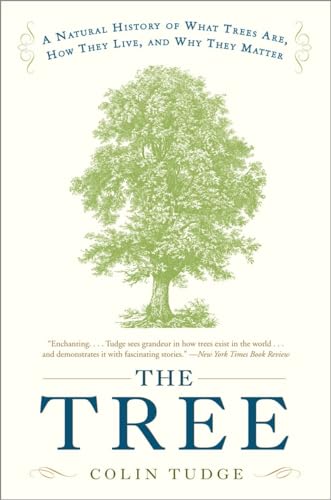
A blend of history, science, philosophy, and environmentalism, The Tree is an engaging and elegant look at the life of the tree and what modern research tells us about their future.
There are redwoods in California that were ancient by the time Columbus first landed, and pines still alive that germinated around the time humans invented writing. There are Douglas firs as tall as skyscrapers, and a banyan tree in Calcutta as big as a football field.
From the tallest to the smallest, trees inspire wonder in all of us, and in The Tree, Colin Tudge travels around the world—throughout the United States, the Costa Rican rain forest, Panama and Brazil, India, New Zealand, China, and most of Europe—bringing to life stories and facts about the trees around us: how they grow old, how they eat and reproduce, how they talk to one another (and they do), and why they came to exist in the first place. He considers the pitfalls of being tall; the things that trees produce, from nuts and rubber to wood; and even the complicated debt that we as humans owe them.
Tudge takes us to the Amazon in flood, when the water is deep enough to submerge the forest entirely and fish feed on fruit while river dolphins race through the canopy. He explains the “memory” of a tree: how those that have been shaken by wind grow thicker and sturdier, while those attacked by pests grow smaller leaves the following year; and reveals how it is that the same trees found in the United States are also native to China (but not Europe).
From tiny saplings to centuries-old redwoods and desert palms, from the backyards of the American heartland to the rain forests of the Amazon and the bamboo forests, Colin Tudge takes the reader on a journey through history and illuminates our ever-present but often ignored companions.
Die Inhaltsangabe kann sich auf eine andere Ausgabe dieses Titels beziehen.
Über die Autorin bzw. den Autor
COLIN TUDGE started his first tree nursery in his garden at the age of eleven. Always interested in plants and animals, he studied zoology at Cambridge and then began writing about science, first as features editor at the New Scientist and then as a documentary filmmaker for the BBC. He is a Fellow of the Linnean Society of London and advisor to several farming and environmental groups. Tudge’s books include The Variety of Life and So Shall We Reap. After traveling the world in search of a deeper understanding of the tree, Tudge is unable to choose a favorite, believing that variety’s the thing. He lives in Oxford, England.
Auszug. © Genehmigter Nachdruck. Alle Rechte vorbehalten.
Chapter 1
Trees in Mind: Simple Questions with Complicated Answers
I never stopped thinking like a child,” said Einstein. Neither should any of us. It’s the way to get to the heart of things. Children ask ridiculously simple questions—like “Who made God?”—that have kept theologians busy for many a century. In such a vein we might innocently inquire, “And what, pray, are trees, that anyone should presume to write a book about them?” And “Why do plants grow into trees?” And “How many kinds are there?” Childish stuff, but it will serve to mark out the ground.
What Is a Tree?
A tree is a big plant with a stick up the middle.
Everybody knows that. But that statement as it stands requires what modern philosophers would call a little “deconstruction.”
What, for a start, is meant by “big”? It’s a relative term, of course, although if we choose we can put a figure on it—say, a minimum height of five or six meters. There is a case for doing this: if you are a forester, or are running a nursery, you need some guidelines. But guidelines are not definitions. They are ways of helping practical people do practical things. They do not—and are not intended to—capture what Aristotle would have called the essence of nature.
For many trees grow big when conditions are favorable, and stay small when they are not. An oak is a noble tree in a forest or a park, but an acorn that falls in a fissure in some Scottish crag may spend a couple of centuries in bonsai mode, never more than a twisted stick. Yet it may turn out acorns that, if they should be carried to some fertile field, could again produce magnificence. Is the twisted stick less of an oak because it fell on stony ground? And if it remains an oak, is it not still a tree? Then again—a different kind of case—the world’s many kinds of birches form the genus Betula. None are as huge as an oak may often be, but most are perfectly respectable trees. Yet there is one, Betula nana, that is adapted to the tundra of the north of Scotland and mainland Europe and is very small indeed. Do we say that all birches are trees except for the tough little Betula nana? Or do we say it’s a dwarf tree?
What of the stick that runs up the middle, the “trunk,” which holds the “crown” of the tree aloft? Should there be just one, a solitary pillar, or are several allowed? Many a gardener and forester has insisted that plants with a lot of supporting sticks should be called shrubs. Again, for practical purposes such distinctions can be useful. If Alice’s Queen of Hearts had instructed her long-suffering gardeners to plant her an arboretum and they’d come up with a shrubbery, their heads would surely have come off. But wild nature is not so easily pinned down. In the Cerrado of Brazil—the vast, dry forest, about the size of France, in the middle of the country to the south and east of Amazonia’s rain forest—there are trees that form bona fide, big, one-trunked trees when they grow along the banks of the occasional rivers but become multistemmed, short shrubs where it’s drier. The shrub is not merely stunted, like the oak in the rock. It is a discrete life-form. Many organisms exhibit what biologists call “polymorphism,” meaning “many forms.” Many kinds of fish, for example, have dwarf forms and full-size forms; some butterflies and snails are highly variable. Here we see a polymorphic tree—one form for the forest, another for the open ground.
Then again, many big trees, including some cedars, many a mulberry, and the beautiful blue-flowered jacaranda, may grow from ground level with several solid trunks of equal magnitude. Each may be as big as a respectable oak. Are they trees or big shrubs? The family of the heathers, Ericaceae, also includes the rhododendrons from the Himalayas and the madrone trees of the United States, with their beautiful flaky, yellow, pink, and gray trunks (which add yet more color to the already wondrous hills of California). Rhododendrons tend to have many stems, while madrones are commonly content with one. But the rhododendrons can be just as big and solidly wooden as the madrones. In nature, in short, trees and shrubs are not distinct. Why should they be? Nature was not designed to make life easy for biologists.
Must the central stick be of wood? That, after all, is what we generally mean by “stick.” How, then, should we categorize banana plants? In general shape they resemble palm trees, with a thick central stem and a whorl of huge leaves at the top. But the stem of the banana plant is not made of wood. Its stem is formed largely from the stalks of the leaves, and its strength comes from fibers that are not bound together, as in pines or oaks or eucalypts, to form true timber; its hardness is reinforced, as in a cabbage stalk, by the pressure of water in the stem. So botanically the banana plant is a giant herb. But it looks like a tree and competes with trees on their own terms, as a big plant seeking the light (although, like the trees of cacao and tea and coffee, the banana prefers a little shade).
In fact, there are many lineages of trees—quite separate evolutionary lines that have nothing to do with one another except that they are all plants. Many plants, in many of those lineages, have independently essayed the form of the tree. Each achieves treedom in its own way. “Tree” is not a distinct category, like “dog” or “horse.” It is just a way of being a plant. The different kinds have much in common, and it is good and necessary to have some feel for what is essential. But the essences of nature will not be pinned down easily. In the end, all definitions of nature are simply for convenience, helping us focus on the particular aspect that we happen to be thinking about at the time. There is no phenomenon in all of nature—whether it’s as simple as “leg” or “stomach” or “leaf” or more obviously conceptual like “gene” or “species”—that does not take a variety of forms, and that cannot be looked at from an infinite number of angles; and each angle gives rise to its own definition. A horse cannot be encapsulated, as Charles Dickens’s Thomas Gradgrind insisted in Hard Times, as “a graminivorous quadruped.” There is more to horses than that. The way we define natural things influences the way we treat them—whether we speak of wildflowers or of weeds, of Mrs. Tittlemouse or of vermin. But in the end nature is as nature is, and we must just try with different degrees of feebleness, and for our own purposes, to make what sense of it we can.
For the purposes of this book, the child’s definition of “tree” will serve—albeit with slight elaboration: “A tree is a big plant with a stick up the middle—or could be, if it grew in the right circumstances; or is very closely related to other plants that are big and have a stick up the middle; or resembles a big plant with a stick up the middle.” It is clumsy, but it will have to do. So to the next childish question.
Why Be a Tree?
A nonliving thing is passive. The atoms of which a stone is composed sit there for as long as it endures—until it is melted in some volcano, or dissolved by acid rain. But living things are restless, through and through. As soon as some living cell has constructed some protein, as part of its own fabric, it starts to dismantle it again. This constant self-renewal, powered by an endless intake of energy, is called metabolism.
Metabolism—the basic business of staying...
„Über diesen Titel“ kann sich auf eine andere Ausgabe dieses Titels beziehen.
Suchergebnisse für The Tree: A Natural History of What Trees Are, How...

Beispielbild für diese ISBN
The Tree: A Natural History of What Trees Are, How They Live, and Why They Matter
Anbieter: World of Books (was SecondSale), Montgomery, IL, USA
Verkäuferbewertung 5 von 5 Sternen

Paperback. Zustand: Fair. A blend of history, science, philosophy, and environmentalism, The Tree is an engaging and elegant look at the life of the tree and what modern research tells us about their future. There are redwoods in California that were ancient by the time Columbus first landed, and pines still alive that germinated around the time humans invented writing. There are Douglas firs as tall as skyscrapers, and a banyan tree in Calcutta as big as a football field. From the tallest to the smallest, trees inspire wonder in all of us, and in The Tree, Colin Tudge travels around the world--throughout the United States, the Costa Rican rain forest, Panama and Brazil, India, New Zealand, China, and most of Europe--bringing to life stories and facts about the trees around us: how they grow old, how they eat and reproduce, how they talk to one another (and they do), and why they came to exist in the first place. He considers the pitfalls of being tall; the things that trees produce, from nuts and rubber to wood; and even the complicated debt that we as humans owe them. Tudge takes us to the Amazon in flood, when the water is deep enough to submerge the forest entirely and fish feed on fruit while river dolphins race through the canopy. He explains the "memory" of a tree: how those that have been shaken by wind grow thicker and sturdier, while those attacked by pests grow smaller leaves the following year; and reveals how it is that the same trees found in the United States are also native to China (but not Europe). From tiny saplings to centuries-old redwoods and desert palms, from the backyards of the American heartland to the rain forests of the Amazon and the bamboo forests, Colin Tudge takes the reader on a journey through history and illuminates our ever-present but often ignored companions. Artikel-Nr. 00110698632
Gebraucht kaufen
EUR 3,88
Versand gratis
Versand innerhalb von USA
Versand innerhalb von USA
Anzahl: 1 verfügbar
Foto des Verkäufers
The Tree: A Natural History of What Trees Are, How They Live, and Why They Matter
Anbieter: Dream Books Co., Denver, CO, USA
Verkäuferbewertung 5 von 5 Sternen
Zustand: acceptable. This copy has clearly been enjoyedâ"expect noticeable shelf wear and some minor creases to the cover. Binding is strong, and all pages are legible. May contain previous library markings or stamps. Artikel-Nr. DBV.0307395391.A
Gebraucht kaufen
EUR 3,89
Versand gratis
Versand innerhalb von USA
Versand innerhalb von USA
Anzahl: 2 verfügbar
Beispielbild für diese ISBN
The Tree: A Natural History of What Trees Are, How They Live, and Why They Matter
Verlag:
Crown (edition Reprint), 2007
ISBN 10: 0307395391
ISBN 13: 9780307395399
Gebraucht
Paperback
Anbieter: BooksRun, Philadelphia, PA, USA
Verkäuferbewertung 5 von 5 Sternen
Paperback. Zustand: Fair. Reprint. The item might be beaten up but readable. May contain markings or highlighting, as well as stains, bent corners, or any other major defect, but the text is not obscured in any way. Artikel-Nr. 0307395391-7-1
Gebraucht kaufen
EUR 5,39
Versand gratis
Versand innerhalb von USA
Versand innerhalb von USA
Anzahl: 2 verfügbar
Beispielbild für diese ISBN
The Tree: A Natural History of What Trees Are, How They Live, and Why They Matter
Verlag:
Crown Publishing Group (NY), 2007
ISBN 10: 0307395391
ISBN 13: 9780307395399
Gebraucht
Paperback
Anbieter: ThriftBooks-Dallas, Dallas, TX, USA
Verkäuferbewertung 5 von 5 Sternen
Paperback. Zustand: Fair. No Jacket. Readable copy. Pages may have considerable notes/highlighting. ~ ThriftBooks: Read More, Spend Less. Artikel-Nr. G0307395391I5N00
Gebraucht kaufen
EUR 5,95
Versand gratis
Versand innerhalb von USA
Versand innerhalb von USA
Anzahl: 2 verfügbar
Beispielbild für diese ISBN
The Tree: A Natural History of What Trees Are, How They Live, and Why They Matter
Verlag:
Crown Publishing Group (NY), 2007
ISBN 10: 0307395391
ISBN 13: 9780307395399
Gebraucht
Paperback
Anbieter: ThriftBooks-Phoenix, Phoenix, AZ, USA
Verkäuferbewertung 5 von 5 Sternen
Paperback. Zustand: Fair. No Jacket. Readable copy. Pages may have considerable notes/highlighting. ~ ThriftBooks: Read More, Spend Less. Artikel-Nr. G0307395391I5N00
Gebraucht kaufen
EUR 5,95
Versand gratis
Versand innerhalb von USA
Versand innerhalb von USA
Anzahl: 1 verfügbar
Beispielbild für diese ISBN
The Tree: A Natural History of What Trees Are, How They Live, and Why They Matter
Verlag:
Crown Publishing Group (NY), 2007
ISBN 10: 0307395391
ISBN 13: 9780307395399
Gebraucht
Paperback
Anbieter: ThriftBooks-Atlanta, AUSTELL, GA, USA
Verkäuferbewertung 5 von 5 Sternen
Paperback. Zustand: Fair. No Jacket. Readable copy. Pages may have considerable notes/highlighting. ~ ThriftBooks: Read More, Spend Less. Artikel-Nr. G0307395391I5N00
Gebraucht kaufen
EUR 5,95
Versand gratis
Versand innerhalb von USA
Versand innerhalb von USA
Anzahl: 2 verfügbar
Beispielbild für diese ISBN
The Tree: A Natural History of What Trees Are, How They Live, and Why They Matter
Verlag:
Crown Publishing Group (NY), 2007
ISBN 10: 0307395391
ISBN 13: 9780307395399
Gebraucht
Paperback
Anbieter: ThriftBooks-Reno, Reno, NV, USA
Verkäuferbewertung 5 von 5 Sternen
Paperback. Zustand: Fair. No Jacket. Readable copy. Pages may have considerable notes/highlighting. ~ ThriftBooks: Read More, Spend Less. Artikel-Nr. G0307395391I5N00
Gebraucht kaufen
EUR 5,95
Versand gratis
Versand innerhalb von USA
Versand innerhalb von USA
Anzahl: 1 verfügbar
Beispielbild für diese ISBN
The Tree: A Natural History of what trees are, how
Anbieter: N. Fagin Books, Chicago, IL, USA
Verkäuferbewertung 5 von 5 Sternen
2005, first paperback edition. Botany, Natural History. Three Rivers Press. Very good paperback, very slight curl to lower front corner of cover. 459p. Artikel-Nr. 1465906344
Gebraucht kaufen
EUR 9,17
EUR 5,34 Versand
Versand innerhalb von USA
Versand innerhalb von USA
Anzahl: 1 verfügbar
Beispielbild für diese ISBN
The Tree: A Natural History of What Trees Are, How They Live, and Why They Matter
Anbieter: Revaluation Books, Exeter, Vereinigtes Königreich
Verkäuferbewertung 5 von 5 Sternen
Paperback. Zustand: Brand New. reprint edition. 459 pages. 9.50x6.25x1.00 inches. In Stock. Artikel-Nr. x-0307395391
Neu kaufen
EUR 29,00
EUR 14,90 Versand
Versand von Vereinigtes Königreich nach USA
Versand von Vereinigtes Königreich nach USA
Anzahl: 2 verfügbar
Foto des Verkäufers
The Tree: A Natural History of What Trees Are, How They Live, and Why They Matter
Anbieter: buchversandmimpf2000, Emtmannsberg, BAYE, Deutschland
Verkäuferbewertung 5 von 5 Sternen
paperback. Zustand: Gut. Gebraucht - Gut - ungelesen,als Mängelexemplar gekennzeichnet, mit leichten Mängeln an Schnitt oder Einband durch Lager- oder Transportschaden,Knick im Cover. -A blend of history, science, philosophy, and environmentalism, The Tree is an engaging and elegant look at the life of the tree and what modern research tells us about their future.There are redwoods in California that were ancient by the time Columbus first landed, and pines still alive that germinated around the time humans invented writing. There are Douglas firs as tall as skyscrapers, and a banyan tree in Calcutta as big as a football field. From the tallest to the smallest, trees inspire wonder in all of us, and in The Tree, Colin Tudge travels around the world throughout the United States, the Costa Rican rain forest, Panama and Brazil, India, New Zealand, China, and most of Europe bringing to life stories and facts about the trees around us: how they grow old, how they eat and reproduce, how they talk to one another (and they do), and why they came to exist in the first place. He considers the pitfalls of being tall; the things that trees produce, from nuts and rubber to wood; and even the complicated debt that we as humans owe them. Tudge takes us to the Amazon in flood, when the water is deep enough to submerge the forest entirely and fish feed on fruit while river dolphins race through the canopy. He explains the memory of a tree: how those that have been shaken by wind grow thicker and sturdier, while those attacked by pests grow smaller leaves the following year; and reveals how it is that the same trees found in the United States are also native to China (but not Europe). From tiny saplings to centuries-old redwoods and desert palms, from the backyards of the American heartland to the rain forests of the Amazon and the bamboo forests, Colin Tudge takes the reader on a journey through history and illuminates our ever-present but often ignored companions.Libri GmbH, Europaallee 1, 36244 Bad Hersfeld 480 pp. Englisch. Artikel-Nr. INF1000349872
Gebraucht kaufen
EUR 12,90
EUR 60,00 Versand
Versand von Deutschland nach USA
Versand von Deutschland nach USA
Anzahl: 1 verfügbar