
Verwandte Artikel zu Get the Sugar Out, Revised and Updated 2nd Edition:...
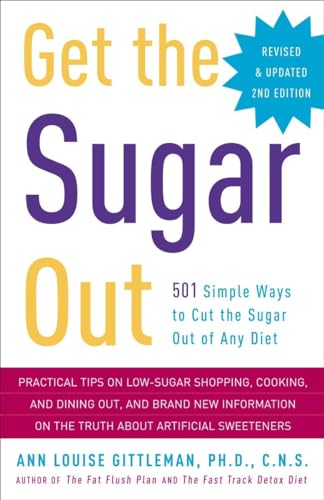
Get the Sugar Out, Revised and Updated 2nd Edition: 501 Simple Ways to Cut the Sugar Out of Any Diet - Softcover
Inhaltsangabe
In this new edition of the bestselling Get the Sugar Out, nationally renowned nutritionist and well-known author Ann Louise Gittleman explains that sugar not only contributes to weight gain but also to mood swings, weakened immunity, diabetes, some cancers, and cardiovascular disease. Here she offers 501 simple, resourceful, and practical tips for cutting sugar from your diet, giving you the knowledge and inspiration you need to live a healthier life. A few of Gittleman’s basic ways to cut sugar include:
• Eat more meals at home, so you can oversee the ingredients and avoid hidden sugars
• If you have a sweet tooth, try tricking it by chewing on a cinnamon stick
• Be a food detective; don’t trust “sugar free” or “fat free” labels
• Cut down on salt not only to be healthier but because it helps cut out sugar cravings
• Don’t exchange sugar for artificial sweeteners; as you’ll find out here, many are harmful
With type II diabetes at an all-time high, cutting sugar from your diet is imperative. Get the Sugar Out is your solution for treatment and prevention: a unique, practical guide to a healthy and happy low-sugar lifestyle.
Die Inhaltsangabe kann sich auf eine andere Ausgabe dieses Titels beziehen.
Über die Autorin bzw. den Autor
ANN LOUISE GITTLEMAN, PH.D., C.N.S., is a respected, visionary health pioneer, weight-loss expert, and award-winning author of twenty-five books, including the New York Times bestseller The Fat Flush Plan.
Auszug. © Genehmigter Nachdruck. Alle Rechte vorbehalten.
Chapter 1
Get the sugar out of your kitchen
Many sugar-cutting tips have multiple uses. Once you learn them, you can use them when making breakfast, lunch, dinner, snacks, and yes, even healthful desserts. They can be utilized time and again until they become habits and maybe even family traditions.
The tips in this chapter are the ones you should begin with. They are fundamental sugar-busters--basic concepts to help you identify sugar in all its various forms and to teach you to limit, substitute for, or eliminate it in the foods you put in your grocery cart, the foods you have in your kitchen, and the way you prepare food.
Start the way that suits you best. Most people like to ease into changes, so begin by remembering the concepts and using the tips that seem the simplest and most appealing to you. Once those become second nature, you'll be more apt to try some of the others.
Lifestyle changes such as cutting the sugar out of your diet have a much better chance of taking root when you know exactly how and why you should make those changes. The tips in this chapter cover those hows and whys and serve as the foundation for all of the other tips in this book. Get to know this chapter well, and remember that the efforts you are putting in today will pay off in rewards to your health tomorrow.
top ten tips
1.The very easiest way to cut sugar is to stop adding it to foods such as cereal and fruits and to drinks such as herbal tea, coffee, and coffee substitutes. Simply eliminating nutrient-empty processed sugars from your kitchen is a good way to start. This means not only table sugar but dextrose, raw sugar, turbinado sugar, brown sugar, and powdered sugar as well.
2.Eliminate processed carbohydrates from your kitchen. Although many people don't realize it, refined carbohydrates such as white rice, white bread, and white pasta are quickly converted to sugars in the body and disrupt the body's blood sugar and fat control systems. Keeping these common products out of your home is a simple yet effective way to maintain a better-balanced blood sugar level.
3.Stick with unprocessed whole foods. That's the only way to be sure you're greatly reducing your sugar intake. Poultry, meat, fish, and eggs are, of course, sugar-free, and legumes, grains, nuts, vegetables, and fruits, which may have some naturally occurring sugars, are full of nutrients and fiber, two ingredients that help balance blood sugar.
4.Thin out sweeteners or sweet foods, even natural ones, whenever you can. The idea isn't to substitute one sugar addiction for another one, but rather to gradually and permanently cut down on all forms of sugar in your diet. Dilute concentrated sweeteners such as honey with water and mix sweet foods like granola with unsweet foods such as plain cereal and nuts to reduce the total amount of sugar consumed.
5.Just as with sugar-free foods, beware of fat-free foods. The fat-free trend of the early 1990s predated the low-carb craze from which we are now emerging. "Fat-free" may be in bold letters on the label, but what the manufacturers don't tell you is that the products are sugar-rich, sometimes containing two or more times the sugar found in the regular version of that product that naturally contains a little fat. High amounts of sugar not balanced with protein and fat cause the pancreas to release insulin, the body's main fat-storage hormone. Fat-free products may sound good on paper, but in the ultimate irony, fat-free products helped to make Americans fatter and can still do so if you eat them excessively.
6.The more natural the food, the better. It's well established now that the more processed a food is, the more it will tend to raise your blood sugar. Since balanced blood sugar levels are the goal, opt for foods as close to their natural state as possible. Choose an orange in place of orange juice, an apple over applesauce, and brown rice instead of white rice.
7.Become a food detective. To reduce sugar, you have to know where it is first. To do that, you have to be alert, ask questions, and pay attention to the information you receive about food. Learn to recognize important clues--such as how many grams of sugar are listed on a food label, the ingredients in a food, and how sweet a food tastes to you. Once you identify those foods with a high or hidden sugar content, you know them for what they really are: nutrient robbers and troublemakers for your body.
8.Eat for taste and good nutrition, not just taste alone. Your tastes can change, after all, but your fundamental nutrient requirements have to be met each and every day. It's far better to have your taste buds rebel for a short while than to have your body break down from nutrient deficiencies. Keep this in mind when you're asked to change long-standing habits for new, healthier, sugar-reducing ways of eating.
9.Listen to your body. One of my earlier books, Your Body Knows Best, goes into this subject in more depth, but for now, know that your body gives powerful signals about what's right for you even when your taste buds don't want to listen. For example, if you get an initial high after eating a piece of chocolate but two hours later feel lethargic, irritable, and depressed, your body is going to great lengths to tell you something. Try to pick out those foods that make you feel good over the long term--mentally, emotionally, and physically--and you'll make great strides toward stabilizing your blood sugar.
10.Eat regular, balanced meals. This may sound like old-fashioned advice, something your mother might have told you, but scientific research is proving its inherent wisdom. Some research indicates that the body operates more efficiently when each meal or snack that you eat contains approximately 40 percent carbohydrates, 30 percent protein, and 30 percent fat. This formula keeps your blood sugar in the optimal zone for as long as four or five hours. Balanced blood sugar levels mean better concentration, better mood, and greater energy and stamina (and therefore less need or temptation to grab something sweet for quick energy).
tricks of the trade
11.Try an elimination diet, cutting out sugar in all forms (even natural sweeteners such as fruit and fruit juice) for two weeks. This is important as a gauge to help you determine your relationship with sugar. During the two-week period, stick to just poultry, fish, lean meat, whole-grain products, legumes, nuts, and lots of vegetables, and take note of how you feel. If you run into problems, look over the tips in this section and in the "Nutrient Necessities" section in chapter 9.
12.If you complete the two-week elimination diet and don't notice any adverse symptoms, try adding a naturally sweetened food back into your diet and see how you respond. If the food doesn't bother you, congratulations! Your sugar metabolism is good; you just need to keep it that way. Use this book to learn creative ways to gradually lower your sugar intake without sacrificing taste so you don't run into blood sugar problems later.
13.If you can't complete the elimination diet, don't feel bad. Most Americans have an unhealthy relationship with sugar because they have overindulged in it for so long. Pay special attention to any symptoms you may experience on the elimination diet.
14.If you experience withdrawal symptoms such as headaches, moodiness, depression, irritability, and fatigue, you most certainly are addicted to sugar, just as others are addicted to coffee or alcohol. Like alcoholics, who need to avoid alcohol, you also need to eliminate all forms of sugar in your diet, at least until your body chemistry improves.
15.If you can't go long without eating sugary foods, you probably have a physical dependence on sugar to give you the quick energy your body is lacking. Switch to eating five or...
„Über diesen Titel“ kann sich auf eine andere Ausgabe dieses Titels beziehen.
Suchergebnisse für Get the Sugar Out, Revised and Updated 2nd Edition:...

Foto des Verkäufers
Get the Sugar Out, Revised and Updated 2nd Edition: 501 Simple Ways to Cut the Sugar Out of Any Diet
Verlag:
Harmony/Rodale/Convergent, 2008
ISBN 10: 0307394859
ISBN 13: 9780307394859
Gebraucht
Softcover
Anbieter: Dream Books Co., Denver, CO, USA
Verkäuferbewertung 5 von 5 Sternen

Zustand: acceptable. This copy has clearly been enjoyedâ"expect noticeable shelf wear and some minor creases to the cover. Binding is strong, and all pages are legible. May contain previous library markings or stamps. Artikel-Nr. DBV.0307394859.A
Gebraucht kaufen
EUR 3,78
Versand gratis
Versand innerhalb von USA
Versand innerhalb von USA
Anzahl: 1 verfügbar
Foto des Verkäufers
Get the Sugar Out, Revised and Updated 2nd Edition: 501 Simple Ways to Cut the Sugar Out of Any Diet
Verlag:
Harmony/Rodale/Convergent, 2008
ISBN 10: 0307394859
ISBN 13: 9780307394859
Gebraucht
Softcover
Anbieter: Dream Books Co., Denver, CO, USA
Verkäuferbewertung 5 von 5 Sternen
Zustand: good. Gently used with minimal wear on the corners and cover. A few pages may contain light highlighting or writing, but the text remains fully legible. Dust jacket may be missing, and supplemental materials like CDs or codes may not be included. May be ex-library with library markings. Ships promptly! Artikel-Nr. DBV.0307394859.G
Gebraucht kaufen
EUR 3,78
Versand gratis
Versand innerhalb von USA
Versand innerhalb von USA
Anzahl: 1 verfügbar
Beispielbild für diese ISBN
Get the Sugar Out, Revised and Updated 2nd Edition: 501 Simple Ways to Cut the Sugar Out of Any Diet
Anbieter: World of Books (was SecondSale), Montgomery, IL, USA
Verkäuferbewertung 5 von 5 Sternen
Paperback. Zustand: Good. In this new edition of the bestselling Get the Sugar Out, nationally renowned nutritionist and well-known author Ann Louise Gittleman explains that sugar not only contributes to weight gain but also to mood swings, weakened immunity, diabetes, some cancers, and cardiovascular disease. Here she offers 501 simple, resourceful, and practical tips for cutting sugar from your diet, giving you the knowledge and inspiration you need to live a healthier life. A few of Gittleman's basic ways to cut sugar include: . Eat more meals at home, so you can oversee the ingredients and avoid hidden sugars . If you have a sweet tooth, try tricking it by chewing on a cinnamon stick . Be a food detective; don't trust "sugar free" or "fat free" labels . Cut down on salt not only to be healthier but because it helps cut out sugar cravings . Don't exchange sugar for artificial sweeteners; as you'll find out here, many are harmful With type II diabetes at an all-time high, cutting sugar from your diet is imperative. Get the Sugar Out is your solution for treatment and prevention: a unique, practical guide to a healthy and happy low-sugar lifestyle. Artikel-Nr. 00068030087
Gebraucht kaufen
EUR 3,95
Versand gratis
Versand innerhalb von USA
Versand innerhalb von USA
Anzahl: 6 verfügbar
Beispielbild für diese ISBN
Get the Sugar Out, Revised and Updated 2nd Edition: 501 Simple Ways to Cut the Sugar Out of Any Diet
Anbieter: World of Books (was SecondSale), Montgomery, IL, USA
Verkäuferbewertung 5 von 5 Sternen
Paperback. Zustand: Fair. In this new edition of the bestselling Get the Sugar Out, nationally renowned nutritionist and well-known author Ann Louise Gittleman explains that sugar not only contributes to weight gain but also to mood swings, weakened immunity, diabetes, some cancers, and cardiovascular disease. Here she offers 501 simple, resourceful, and practical tips for cutting sugar from your diet, giving you the knowledge and inspiration you need to live a healthier life. A few of Gittleman's basic ways to cut sugar include: . Eat more meals at home, so you can oversee the ingredients and avoid hidden sugars . If you have a sweet tooth, try tricking it by chewing on a cinnamon stick . Be a food detective; don't trust "sugar free" or "fat free" labels . Cut down on salt not only to be healthier but because it helps cut out sugar cravings . Don't exchange sugar for artificial sweeteners; as you'll find out here, many are harmful With type II diabetes at an all-time high, cutting sugar from your diet is imperative. Get the Sugar Out is your solution for treatment and prevention: a unique, practical guide to a healthy and happy low-sugar lifestyle. Artikel-Nr. 00102439815
Gebraucht kaufen
EUR 3,95
Versand gratis
Versand innerhalb von USA
Versand innerhalb von USA
Anzahl: 1 verfügbar
Beispielbild für diese ISBN
Get the Sugar Out, Revised and Updated 2nd Edition: 501 Simple Ways to Cut the Sugar Out of Any Diet
Verlag:
Harmony/Rodale/Convergent, 2008
ISBN 10: 0307394859
ISBN 13: 9780307394859
Gebraucht
Softcover
Anbieter: Wonder Book, Frederick, MD, USA
Verkäuferbewertung 5 von 5 Sternen
Zustand: Good. Good condition. 2nd edition. A copy that has been read but remains intact. May contain markings such as bookplates, stamps, limited notes and highlighting, or a few light stains. Bundled media such as CDs, DVDs, floppy disks or access codes may not be included. Artikel-Nr. P07O-00068
Gebraucht kaufen
EUR 6,43
Versand gratis
Versand innerhalb von USA
Versand innerhalb von USA
Anzahl: 1 verfügbar
Beispielbild für diese ISBN
Get the Sugar Out, Revised and Updated 2nd Edition: 501 Simple Ways to Cut the Sugar Out of Any Diet
Verlag:
Harmony/Rodale/Convergent, 2008
ISBN 10: 0307394859
ISBN 13: 9780307394859
Gebraucht
Softcover
Anbieter: Wonder Book, Frederick, MD, USA
Verkäuferbewertung 5 von 5 Sternen
Zustand: Very Good. Very Good condition. 2nd edition. A copy that may have a few cosmetic defects. May also contain light spine creasing or a few markings such as an owner's name, short gifter's inscription or light stamp. Artikel-Nr. M02C-01801
Gebraucht kaufen
EUR 6,43
Versand gratis
Versand innerhalb von USA
Versand innerhalb von USA
Anzahl: 2 verfügbar
Beispielbild für diese ISBN
Get the Sugar Out: 501 Simple Ways to Cut the Sugar Out of Any Diet
Verlag:
Harmony/Rodale/Convergent, 2008
ISBN 10: 0307394859
ISBN 13: 9780307394859
Gebraucht
Paperback
Anbieter: ThriftBooks-Phoenix, Phoenix, AZ, USA
Verkäuferbewertung 5 von 5 Sternen
Paperback. Zustand: Very Good. No Jacket. May have limited writing in cover pages. Pages are unmarked. ~ ThriftBooks: Read More, Spend Less. Artikel-Nr. G0307394859I4N00
Gebraucht kaufen
EUR 6,54
Versand gratis
Versand innerhalb von USA
Versand innerhalb von USA
Anzahl: 1 verfügbar
Beispielbild für diese ISBN
Get the Sugar Out: 501 Simple Ways to Cut the Sugar Out of Any Diet
Verlag:
Harmony/Rodale/Convergent, 2008
ISBN 10: 0307394859
ISBN 13: 9780307394859
Gebraucht
Paperback
Anbieter: ThriftBooks-Atlanta, AUSTELL, GA, USA
Verkäuferbewertung 5 von 5 Sternen
Paperback. Zustand: Good. No Jacket. Pages can have notes/highlighting. Spine may show signs of wear. ~ ThriftBooks: Read More, Spend Less. Artikel-Nr. G0307394859I3N00
Gebraucht kaufen
EUR 6,54
Versand gratis
Versand innerhalb von USA
Versand innerhalb von USA
Anzahl: 1 verfügbar
Beispielbild für diese ISBN
Get the Sugar Out: 501 Simple Ways to Cut the Sugar Out of Any Diet
Verlag:
Harmony/Rodale/Convergent, 2008
ISBN 10: 0307394859
ISBN 13: 9780307394859
Gebraucht
Paperback
Anbieter: ThriftBooks-Atlanta, AUSTELL, GA, USA
Verkäuferbewertung 5 von 5 Sternen
Paperback. Zustand: Very Good. No Jacket. May have limited writing in cover pages. Pages are unmarked. ~ ThriftBooks: Read More, Spend Less. Artikel-Nr. G0307394859I4N00
Gebraucht kaufen
EUR 6,54
Versand gratis
Versand innerhalb von USA
Versand innerhalb von USA
Anzahl: 1 verfügbar
Beispielbild für diese ISBN
Get the Sugar Out, Revised and Updated 2nd Edition : 501 Simple Ways to Cut the Sugar Out of Any Diet
Verlag:
Potter/Ten Speed/Harmony/Rodale, 2008
ISBN 10: 0307394859
ISBN 13: 9780307394859
Gebraucht
Softcover
Anbieter: Better World Books: West, Reno, NV, USA
Verkäuferbewertung 5 von 5 Sternen
Zustand: Very Good. 2 Rev Upd. Pages intact with possible writing/highlighting. Binding strong with minor wear. Dust jackets/supplements may not be included. Stock photo provided. Product includes identifying sticker. Better World Books: Buy Books. Do Good. Artikel-Nr. 14127703-6
Gebraucht kaufen
EUR 6,57
Versand gratis
Versand innerhalb von USA
Versand innerhalb von USA
Anzahl: 1 verfügbar