
Verwandte Artikel zu Driving Home: An American Journey
Inhaltsangabe
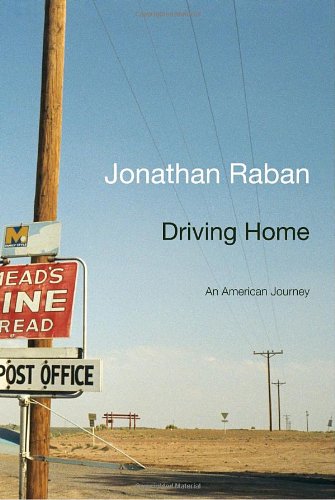
For more than thirty years, Jonathan Raban has written with infectious fascination about people and places in transition or on the margins, about journeys undertaken and destinations never quite reached, and, as an Englishman transplanted in Seattle, about what it means to feel rooted in America. Spanning two decades, Driving Home charts a course through the Pacific Northwest, American history, and current events as witnessed by “a super-sensitive, all-seeing eye. Raban spots things we might otherwise miss; he calls up the apt metaphors that transform things into phenomena. He is one of our most gifted observers” (Newsday).
Stops en route include a Missoula bar, a Tea Party convention in Nashville hosted by Sarah Palin, the Mississippi in full flood, a trip to Hawaii with his daughter, a steelhead river in the Cascades, and the hidden corners of his adopted hometown, Seattle. He deftly explores public and personal spaces, poetry and politics, geography and catastrophe, art and economy, and the shifts in various arenas that define our society. Whether the topic is Robert Lowell or Barack Obama, or how various painters, explorers, and homesteaders have engaged with our mythical and actual landscape, he has an outsider’s eye for the absurd, and his tone is intimate, never nostalgic, and always fresh.
Frank, witty, and provocative, Driving Home is part essay collection, part diary—and irresistibly insightful about America’s character, contradictions, and idiosyncrasies.
Die Inhaltsangabe kann sich auf eine andere Ausgabe dieses Titels beziehen.
Über die Autorin bzw. den Autor
Jonathan Raban is the author, most recently, of the novels Surveillance and Waxwings; his nonfiction includes Passage to Juneau and Bad Land. His honors include the National Book Critics Circle Award, the PEN/West Creative Nonfiction Award, the Pacific Northwest Booksellers’ Award, and the Governor’s Award of the State of Washington. He lives in Seattle.
Auszug. © Genehmigter Nachdruck. Alle Rechte vorbehalten.
Driving Home
In the spring of 1990 I packed up as much of my life in London as would fit into a suitcase and four large plywood boxes and flew to Seattle to set up house. It was a selfish and irregular move. I had “met someone” and liked what I’d seen of the Pacific Northwest during a two-month stay there the previous autumn. I liked the aquarium lighting, the sawtooth alps forested with black firs, the compact cities encrusted in dirty Romanesque stucco. Most of all, I liked the place’s wateriness. At forty-seven I felt cracked and dry. My new home territory was as rainy as Ireland, puddled with lakes and veined with big rivers. Seattle was built out on pilings over the sea, and at high tide the whole city seemed to come afloat like a ship lifting free from a mud berth and swaying in its chains.
We took a house on the wrong side of Queen Anne, the innermost of Seattle’s hilltop suburbs. The tall wooden house, built like a boat from massive scantlings of Douglas fir, carvel-planked with cedar, had been put up in 1906, in the wake of the Yukon gold rush, when the hill itself was logged. It had warped and settled through a string of minor earthquakes: the floors sloped, doors hung askew in their frames, and on a silent night it groaned and whiffled like a sleeping dog.
Barely a mile from the new banking and insurance skyscrapers of downtown, the house felt as if it were hidden away in the woods. Shaggy conifers, survivors of the original forest, darkened the views from every window. The study looked down over the Ship Canal, where trawlers stalked through an avenue of poplars on their start to the Alaskan fi shing grounds, eight hundred miles to the north. From the top-floor deck one could see out over the pale suburbs, like shell-middens, to the serrated line of the Cascade Mountains, still snow-capped in May.
For someone fresh off the plane from London, it was a vast prospect in which making oneself at home would not be easy. It had been fine to be a tourist in this landscape, when I had been enjoyably awed by its far-western heights and distances; but now that I’d signed up as a permanent resident, the view from the window seemed only to reflect my own displacement.
Even the very near-at-hand was strange. I kept Peterson’s Western Birds and the Audubon Guide to Western Forests by the typewriter. I made lists and pinned them to the wall. Cedar, cypress, dogwood, laurel, madrona maple, I wrote, trying to distinguish individual personalities in the jumble of damp and muddy greens framed by the window. I took the tree book down to the garden and, wary of attracting derisive looks from the neighbors, matched the real-life barks against their close-up color pictures; the peeling, fish-scale skin of the lodgepole pine, the frayed hemp rope of the western red cedar. It took a month, at least, to be able to see the black-crested Steller’s jay in the madrona with something like the comfortable indifference with which I’d used to notice a song thrush in the sycamore in Battersea. It took a good deal longer to adjust to how adeptly the rufous hummingbird, like a tiny thrashing autogyro, redisposed itself in space, zapping from point to point too fast for the eye to follow. Glancing up from the typewriter, stuck for a phrase, I’d catch sight of a bald eagle slowly circling on a thermal over the Ship Canal, its huge wings still and ragged, and lose the logic of the sentence to another half hour of involuntary ornithology.
The German word for “uncanny,” as in Freud’s famous essay on the Uncanny, is unheimlich—unhomely. The tourist thrives on the uncanny, moving happily through a phenomenal world of effects without causes. This world, in which he has no experience and no memory, is presented to him as a supernatural domain: the language of travel advertising hawks the uncanny as part of the deal. Experience the magic of Bali! The wonders of Hawaii! The enchantment of Bavaria!
But for the newly arrived immigrant, this magic stuff is like a curse. He’s faced at every turn with the unhomelikeness of things, in an uncanny realm where the familiar house sparrows have all fled, to be replaced by hummingbirds and eagles. The immigrant needs to grow a memory, and grow it fast. Somehow or other, he must learn to convert the uncanny into the homely, in order to find a stable footing in the new land.
Hunkered down in the second-floor study of the comfortingly old and memorious house on Queen Anne, I tried to read my way home. My best guides were fellow aliens in the Pacific Northwest, from the early explorers of the region to such relatively recent arrivals here as the poet Theodore Roethke and the novelist Bernard Malamud. From the late eighteenth century to the late twentieth, they kept striking the same note of shock at the stupendous unhomelikeness of this landscape.
##
It drove George Vancouver into a pit of what now appears to have been clinical depression. Between May and June of 1792, as he probed the inlets of Washington and British Columbia, he went from dizzy elation to sullen melancholy—and wrote his changing moods into the permanent nomenclature of the region. To begin with, he was high on his discoveries: this was “the most lovely country that can be imagined.” He saw the Pacific Northwest as a kind of unusually verdant Devonshire, and imagined orderly villages with churches and manors laid out between the wooded hills. At this stage of the voyage, the names he gave to the headlands, bays, and fiords were upbeat: Discovery Bay, Protection Island, Restoration Point (the most beautiful and useful features, like Mount Rainier and Port Townsend, were named by Vancouver after his relations, friends, and patrons).
May turned into June. As Vancouver sailed north, the mountains grew steeper, the inlets narrower, the woods more impenetrable. His lieutenant, Peter Puget, who kept a parallel journal, was increasingly excited by the romantic sublimity of what he saw: a few years younger than Vancouver, he was much more in tune with the rising generation’s taste for wild nature. For Puget, the unfolding landscape was “majestic” and full of “grandeur”; for Vancouver it was increasingly “dreary,” “unpleasant,” “desolate,” “gloomy,” “dismal,” and “awful”—the words pepper his descriptions, often being used twice in the same sentence. Five minutes north of the fi ftieth parallel, Vancouver brought his ship to a “dreary and unpleasant anchorage”: “Our residence here was truly forlorn; an awful silence pervaded the gloomy forests, whilst animated nature seemed to have deserted the neighbouring country . . . ” He called the place Desolation Sound.
Thirteen years after the Vancouver expedition, in the autumn of 1805, Lewis and Clark reached the Columbia River valley from the continental interior, after climbing to the headwaters of the Missouri and crossing the Rocky Mountains in what is now Montana. William Clark, with his botched spellings and childish exclamation marks, was a resoundingly lively presence on the page. He was an original vernacular narrator as he confi ded his discomforts, Dear Diary–style, to his journal. “O! how horriable is the day—” he wrote when the tidal Columbia cut up rough in a westerly gale and waves drenched the explorers’ camp. “We are all wet and disagreeable.” Clark had grown up in Virginia and Kentucky, and, like...
„Über diesen Titel“ kann sich auf eine andere Ausgabe dieses Titels beziehen.
Weitere beliebte Ausgaben desselben Titels

Suchergebnisse für Driving Home: An American Journey

Beispielbild für diese ISBN
Driving Home An American Journ
Anbieter: World of Books (was SecondSale), Montgomery, IL, USA
Verkäuferbewertung 5 von 5 Sternen

Zustand: Good. Item in good condition. Textbooks may not include supplemental items i.e. CDs, access codes etc. Artikel-Nr. 00102262813
Gebraucht kaufen
EUR 4,69
Versand gratis
Versand innerhalb von USA
Versand innerhalb von USA
Anzahl: 2 verfügbar
Beispielbild für diese ISBN
Driving Home: An American Journey
Verlag:
Pantheon (edition First Edition), 2011
ISBN 10: 0307379914
ISBN 13: 9780307379917
Gebraucht
Hardcover
Erstausgabe
Anbieter: BooksRun, Philadelphia, PA, USA
Verkäuferbewertung 5 von 5 Sternen
Hardcover. Zustand: Very Good. First Edition. With dust jacket. It's a well-cared-for item that has seen limited use. The item may show minor signs of wear. All the text is legible, with all pages included. It may have slight markings and/or highlighting. Artikel-Nr. 0307379914-11-6-29
Gebraucht kaufen
EUR 6,11
Versand gratis
Versand innerhalb von USA
Versand innerhalb von USA
Anzahl: 1 verfügbar
Beispielbild für diese ISBN
Driving Home : An American Journey
Verlag:
Knopf Doubleday Publishing Group, 2011
ISBN 10: 0307379914
ISBN 13: 9780307379917
Gebraucht
Hardcover
Erstausgabe
Anbieter: Better World Books, Mishawaka, IN, USA
Verkäuferbewertung 5 von 5 Sternen
Zustand: Good. First Edition. Former library copy. Pages intact with minimal writing/highlighting. The binding may be loose and creased. Dust jackets/supplements are not included. Includes library markings. Stock photo provided. Product includes identifying sticker. Better World Books: Buy Books. Do Good. Artikel-Nr. GRP92379856
Gebraucht kaufen
EUR 6,24
Versand gratis
Versand innerhalb von USA
Versand innerhalb von USA
Anzahl: 2 verfügbar
Beispielbild für diese ISBN
Driving Home : An American Journey
Verlag:
Knopf Doubleday Publishing Group, 2011
ISBN 10: 0307379914
ISBN 13: 9780307379917
Gebraucht
Hardcover
Erstausgabe
Anbieter: Better World Books, Mishawaka, IN, USA
Verkäuferbewertung 5 von 5 Sternen
Zustand: Very Good. First Edition. Former library copy. Pages intact with possible writing/highlighting. Binding strong with minor wear. Dust jackets/supplements may not be included. Includes library markings. Stock photo provided. Product includes identifying sticker. Better World Books: Buy Books. Do Good. Artikel-Nr. GRP102353512
Gebraucht kaufen
EUR 6,24
Versand gratis
Versand innerhalb von USA
Versand innerhalb von USA
Anzahl: 2 verfügbar
Beispielbild für diese ISBN
Driving Home: An American Journey
Anbieter: ThriftBooks-Atlanta, AUSTELL, GA, USA
Verkäuferbewertung 5 von 5 Sternen
Hardcover. Zustand: Good. No Jacket. Pages can have notes/highlighting. Spine may show signs of wear. ~ ThriftBooks: Read More, Spend Less. Artikel-Nr. G0307379914I3N00
Gebraucht kaufen
EUR 7,92
Versand gratis
Versand innerhalb von USA
Versand innerhalb von USA
Anzahl: 1 verfügbar
Foto des Verkäufers
Driving Home: An American Journey
Anbieter: Book Broker, Berlin, Deutschland
Verkäuferbewertung 5 von 5 Sternen
Zustand: Sehr gut. 512 S. Alle Bücher & Medienartikel von Book Broker sind stets in gutem & sehr gutem gebrauchsfähigen Zustand. Die Ausgabe des gelieferten Exemplars kann um bis zu 10 Jahre vom angegebenen Veröffentlichungsjahr abweichen und es kann sich um eine abweichende Auflage handeln. Unser Produktfoto entspricht dem hier angebotenen Artikel, dieser weist folgende Merkmale auf: Helle/saubere Seiten in fester Bindung. Leichte Gebrauchsspuren. Sprache: Englisch Gewicht in Gramm: 794 Gebundene Ausgabe, Maße: 16.74 cm x 4.04 cm x 24.41 cm. Artikel-Nr. 661432782
Gebraucht kaufen
EUR 14,65
EUR 36,68 Versand
Versand von Deutschland nach USA
Versand von Deutschland nach USA
Anzahl: 1 verfügbar
Beispielbild für diese ISBN
Driving Home: An American Journey
Anbieter: Revaluation Books, Exeter, Vereinigtes Königreich
Verkäuferbewertung 5 von 5 Sternen
Hardcover. Zustand: Brand New. 512 pages. 9.75x6.75x1.75 inches. In Stock. Artikel-Nr. 0307379914
Neu kaufen
EUR 68,53
EUR 14,56 Versand
Versand von Vereinigtes Königreich nach USA
Versand von Vereinigtes Königreich nach USA
Anzahl: 1 verfügbar