
Inhaltsangabe
**Kirkus Best Books of the Year (2013)**
If you really want to know a people, start by looking inside their bedrooms.
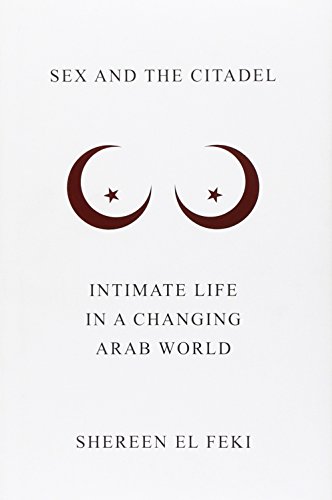
As political change sweeps the streets and squares, the parliaments and presidential palaces of the Arab world, Shereen El Feki has been looking at an upheaval a little closer to home—in the sexual lives of men and women in Egypt and across the region. The result is an informative, insightful, and engaging account of a highly sensitive and still largely secret aspect of Arab society.
Sex is entwined in religion, tradition, politics, economics, and culture, so it is the perfect lens through which to examine the complex social landscape of the Arab world. From pregnant virgins to desperate housewives, from fearless activists to religious firebrands, from sex work to same-sex relations, Sex and the Citadel takes a fresh look at the sexual history of the region and brings new voices to the debate over its future.
This is no peep show or academic treatise but a highly personal and often humorous account of one woman’s journey to better understand Arab society at its most intimate and, in the process, to better understand her own origins. Rich with five years of groundbreaking research, Sex and the Citadel gives us a unique and timely understanding of everyday lives in a part of the world that is changing before our eyes.
Die Inhaltsangabe kann sich auf eine andere Ausgabe dieses Titels beziehen.
Über die Autorin bzw. den Autor
SHEREEN EL FEKI is a writer, broadcaster, and academic who started her professional life in medical science before going on to become an award-winning journalist forThe Economist and a presenter at Al Jazeera English. She is former vice-chair of the U.N.’s Global Commission on HIV and Law, and a TED Global Fellow. She divides her time between London and Cairo.
Auszug. © Genehmigter Nachdruck. Alle Rechte vorbehalten.
Introduction
“What is it?”
Six pairs of dark eyes stared at me—or rather, at the small purple rod in my hand.
“It’s a vibrator,” I answered, in English, racking my brain for the right Arabic word. “A thing that makes fast movements” came to mind, but as that could equally apply to a hand mixer, I decided to stick with my mother tongue to minimize what I could sense was rising confusion in the room.
One of the women, curled up on a divan beside me, began to unpin her hijab, a cascade of black hair falling down her back as she carefully put her headscarf to one side. “What does it do?” she asked.
“Well, it vibrates,” I added, taking a sip of mint tea and biting into a piece of syrupy baklava to buy myself some time before the inevitable rejoinder.
“But why?”
How I came to be demonstrating sex toys to a coffee morning of Cairo housewives is a long story. I have spent the past five years traveling across the Arab region asking people about sex: what they do, what they don’t, what they think and why. Depending on your perspective, this might sound like a dream job or a highly dubious occupation. For me, it is something else altogether: sex is the lens through which I investigate the past and present of a part of the world about which so much is written and still so little is understood.
Now, I grant you, sex might seem an odd choice, given the spectacle of popular revolt playing out across the Arab world since the beginning of this decade, which has taken with it some of the region’s most entrenched regimes—in Egypt, Libya, Tunisia, and Yemen for starters—and is shaking up the rest. Some observers, however, have gone so far as to argue that it was youthful sexual energy that fueled the protests in the first place. I’m not so sure. While I’ve often heard Egyptians say their fellow countrymen spend 99.9 percent of their time thinking about sex, in the heady days of early 2011, making love appeared, for once, to be the last thing on people’s minds.
Yet I don’t believe it was entirely out of sight. Sexual attitudes and behaviors are intimately bound up in religion, tradition, culture, politics, and economics. They are part and parcel of sexuality—that is, the act and all that goes with it, including gender roles and identity, sexual orientation, pleasure, intimacy, eroticism, and reproduction. As such, sexuality is a mirror of the conditions that led to these uprisings, and it will be a measure of the progress of hard-won reforms in the years to come. In his reflections on the history of the West, the French philosopher Michel Foucault described sexuality as “an especially dense transfer point for relations of power: between men and women, young people and old people, parents and offspring, teachers and students, priests and laity, an administration and a population.” The same is true in the Arab world: if you really want to know a people, start by looking inside their bedrooms.
Had it not been for the events of September 11, 2001, I might never have opened that door. I was working at The Economist when the world turned. Having trained as an immunologist before becoming a journalist, I was on the health and science beat, far removed from the great political debates of the day. From these sidelines, I had a chance to sit back and watch my colleagues grapple with the complexities of the Arab region. I saw their confidence in Anglo-American might and exuberance in the early afterglow of the war in Iraq gradually turn to doubt, then bewilderment. Why weren’t Iraqis rushing to embrace this new world order? Why did they rarely follow the playbook written in Washington and London? Why did they behave in ways so contrary to Western expectations? In short, what makes them tick?
For me, these are not questions of geopolitics or anthropology; this is a matter of personal identity. The Arab world is in my blood: my father is Egyptian, and through him my family roots stretch from the concrete of Cairo to cotton fields deep in the Nile Delta. My mother comes from a distant green valley—a former mining village in South Wales. This makes me half Egyptian, though most people in the Arab region shake their heads when I tell them this. To them there is no “half” about it; because my father is wholly Egyptian, so am I. And because he is Muslim, I too was born Muslim. My mother’s family is Christian: her father was a Baptist lay preacher, and her brother, in a leap of Anglican upward mobility, became a vicar in the Church of Wales. But my mother converted to Islam on marrying my father. She was not obliged to; Muslim men are free to marry ahl al-kitab, or people of the Book—among them, Jews and Christians. For my mother, becoming Muslim was a matter of conviction, not coercion.
I was born in England and raised in Canada long before “Muslims in the West” was a talking point. There were a few of us at school (I grew up in a university town near Toronto), but I never thought much of it. Then again, I was brought up with an icing of Islam on an otherwise Western lifestyle: my only observances were steering clear of pork and alcohol and learning al-Fatiha—the opening chapter of the Qur’an—which my parents had me recite before our very British Sunday lunches. As the sole Muslims on the block, we were always the first to put up Christmas lights, and Easter never passed without a clutch of chocolate eggs.
As for Egypt, each year we would visit my grandmother Nuna Aziza and a vast circle of aunts, uncles, and cousins. We were the outliers: my mother was the only Western woman (khawagayya, in Egyptian Arabic) to have married into the family, and during my childhood, we were the only members living outside of Egypt. So between my father’s prestige as the eldest son and my own exotic pedigree, I basked in the spotlight. My nuna’s apartment was a shrine to our tiny branch of the family in exile; amid the plastic plants and the frolicking shepherds and coy maidens in petit point, our photos were crammed onto coffee tables and consoles, whose delicate gilded legs seemed unequal to the weight of so much grandmotherly affection. Growing up, I came to love Egypt and respect Islam, but I never thought to go beyond the surface.
Back in Canada, many of my father’s Egyptian friends questioned his decision not to raise his only child more strictly in the faith. I was not taught salat, the Muslim ritual of prayer, nor did I study Arabic. It was not for want of conviction on my father’s part. He is a devout Muslim who prays five times a day and recites the Qur’an every morning, from memory; he’s a hajji, having gone on pilgrimage to the holy cities of Mecca and Medina; he scrupulously observes the fast during Ramadan and never fails to pay zakat, or alms for the poor. But my father saw his friends push Islam and their own Arab upbringing on their children—particularly their daughters—like a vaccine against the perceived ills of the West. More often than not, however, what these parents saw as a danger, their children embraced as an opportunity, many turning away from a religious and cultural heritage that seemed to them like too much strong medicine. My parents, on the other hand, gave me the freedom to come to my religion and my roots on my own terms and in my own time.
That moment came after September 11. Like so many others who straddle East and West, I was impelled to take a closer look at my origins. That I chose sex as my lens is unusual—but understandable, given my background. Part of my job at The Economist...
„Über diesen Titel“ kann sich auf eine andere Ausgabe dieses Titels beziehen.
Weitere beliebte Ausgaben desselben Titels

Suchergebnisse für Sex and the Citadel: Intimate Life in a Changing Arab...

Beispielbild für diese ISBN
Sex and the Citadel: Intimate Life in a Changing Arab World
Anbieter: World of Books (was SecondSale), Montgomery, IL, USA
Verkäuferbewertung 5 von 5 Sternen

Zustand: Good. Item in good condition. Textbooks may not include supplemental items i.e. CDs, access codes etc. Artikel-Nr. 00097328541
Gebraucht kaufen
EUR 5,84
Versand gratis
Versand innerhalb von USA
Versand innerhalb von USA
Anzahl: 2 verfügbar
Beispielbild für diese ISBN
Sex and the Citadel: Intimate Life in a Changing Arab World
Anbieter: World of Books (was SecondSale), Montgomery, IL, USA
Verkäuferbewertung 5 von 5 Sternen
Zustand: Good. Item in good condition. Textbooks may not include supplemental items i.e. CDs, access codes etc. Artikel-Nr. 00070294285
Gebraucht kaufen
EUR 6,17
Versand gratis
Versand innerhalb von USA
Versand innerhalb von USA
Anzahl: 1 verfügbar
Beispielbild für diese ISBN
Sex and the Citadel : Intimate Life in a Changing Arab World
Verlag:
Knopf Doubleday Publishing Group, 2013
ISBN 10: 0307377393
ISBN 13: 9780307377395
Gebraucht
Hardcover
Erstausgabe
Anbieter: Better World Books, Mishawaka, IN, USA
Verkäuferbewertung 5 von 5 Sternen
Zustand: Very Good. First Edition. Former library copy. Pages intact with possible writing/highlighting. Binding strong with minor wear. Dust jackets/supplements may not be included. Includes library markings. Stock photo provided. Product includes identifying sticker. Better World Books: Buy Books. Do Good. Artikel-Nr. 4899761-6
Gebraucht kaufen
EUR 6,65
Versand gratis
Versand innerhalb von USA
Versand innerhalb von USA
Anzahl: 2 verfügbar
Beispielbild für diese ISBN
Sex and the Citadel: Intimate Life in a Changing Arab World
Anbieter: ThriftBooks-Dallas, Dallas, TX, USA
Verkäuferbewertung 5 von 5 Sternen
Hardcover. Zustand: Very Good. No Jacket. Former library book; May have limited writing in cover pages. Pages are unmarked. ~ ThriftBooks: Read More, Spend Less. Artikel-Nr. G0307377393I4N10
Gebraucht kaufen
EUR 6,79
Versand gratis
Versand innerhalb von USA
Versand innerhalb von USA
Anzahl: 1 verfügbar
Beispielbild für diese ISBN
Sex and the Citadel: Intimate Life in a Changing Arab World
Anbieter: ThriftBooks-Dallas, Dallas, TX, USA
Verkäuferbewertung 5 von 5 Sternen
Hardcover. Zustand: Very Good. No Jacket. May have limited writing in cover pages. Pages are unmarked. ~ ThriftBooks: Read More, Spend Less. Artikel-Nr. G0307377393I4N00
Gebraucht kaufen
EUR 6,79
Versand gratis
Versand innerhalb von USA
Versand innerhalb von USA
Anzahl: 1 verfügbar
Beispielbild für diese ISBN
Sex and the Citadel: Intimate Life in a Changing Arab World
Anbieter: ThriftBooks-Atlanta, AUSTELL, GA, USA
Verkäuferbewertung 5 von 5 Sternen
Hardcover. Zustand: Very Good. No Jacket. Former library book; May have limited writing in cover pages. Pages are unmarked. ~ ThriftBooks: Read More, Spend Less. Artikel-Nr. G0307377393I4N10
Gebraucht kaufen
EUR 6,79
Versand gratis
Versand innerhalb von USA
Versand innerhalb von USA
Anzahl: 1 verfügbar
Foto des Verkäufers
Sex and the Citadel: Intimate Life in a Changing Arab World
Verlag:
Pantheon Books, 2013
ISBN 10: 0307377393
ISBN 13: 9780307377395
Gebraucht
Hardcover
Erstausgabe
Anbieter: Southampton Books, Sag Harbor, NY, USA
Verkäuferbewertung 5 von 5 Sternen
Hardcover. Zustand: Like New. Zustand des Schutzumschlags: Like New. First Edition. First Edition, First Printing. Not price-clipped ($28.95 price intact). Published by Pantheon, 2013. Octavo. Book is like new with very light toning to the page ends. Dust jacket is like new with a very light creasing to the spine. 100% positive feedback. 30 day money back guarantee. NEXT DAY SHIPPING! Excellent customer service. Please email with any questions or if you would like a photo. All books packed carefully and ship with free delivery confirmation/tracking. All books come with free bookmarks. Ships from Sag Harbor, New York. Artikel-Nr. 179348
Gebraucht kaufen
EUR 18,11
EUR 4,39 Versand
Versand innerhalb von USA
Versand innerhalb von USA
Anzahl: 1 verfügbar
Beispielbild für diese ISBN
Sex and the Citadel: Intimate Life in a Changing Arab World
Anbieter: GridFreed, San Diego, CA, USA
Verkäuferbewertung 5 von 5 Sternen
Hardcover. Zustand: New. In shrink wrap. Artikel-Nr. 100-07385
Neu kaufen
EUR 17,16
EUR 6,11 Versand
Versand innerhalb von USA
Versand innerhalb von USA
Anzahl: 1 verfügbar
Beispielbild für diese ISBN
Sex and the Citadel: Intimate Life in a Changing Arab World
Anbieter: Sell Books, Elland, YORKS, Vereinigtes Königreich
Verkäuferbewertung 5 von 5 Sternen
hardcover. Zustand: Acceptable. Dustjacket missing; may have other wear and tear. Please see the condition note after this for details, if this is missing please consider Acceptable to mean poor quality that could include major staining, water damage, writing, missing dustjacket, etc etc. Our books are dispatched from a Yorkshire former cotton mill. We list via barcode/ISBN so please note that the images are stock images and may not be the exact copy you receive, furthermore the details about edition and year might not be accurate as many publishers reuse the same ISBN for multiple editions and as we simply scan a barcode or enter an ISBN we do not check the validity of the edition data when listing. If you're looking for an exact edition please don't order (at least not without checking with us first, although we don't always have time to check). We aim to dispatch prompty, the service used will depend on order value and book size. We can ship to most countries, see our shipping policies. Payment is via Abe only. Artikel-Nr. mon0000061794
Gebraucht kaufen
EUR 17,56
EUR 14,23 Versand
Versand von Vereinigtes Königreich nach USA
Versand von Vereinigtes Königreich nach USA
Anzahl: 1 verfügbar
Beispielbild für diese ISBN
Sex and the Citadel Intimate Life in a Changing Arab World
Anbieter: Versandantiquariat Ursula Ingenhoff, Bergisch Gladbach, Deutschland
Verkäuferbewertung 5 von 5 Sternen
Gebundene Ausgabe. Zustand: Gut. First Edition. 368 S. gebundene englische Ausgabe, First Edition, Lagerspuren, Originalschutzumschlag, dieser bestoßen, kleiner Farbfleck am Unterschnitt, innen jedoch absolut sauberes und eher unbenutztes Exemplar 1/0 Sprache: Englisch Gewicht in Gramm: 800. Artikel-Nr. 12580
Gebraucht kaufen
EUR 14,90
EUR 45,00 Versand
Versand von Deutschland nach USA
Versand von Deutschland nach USA
Anzahl: 1 verfügbar