
Verwandte Artikel zu Allah, Liberty & Love: The Courage to Reconcile...
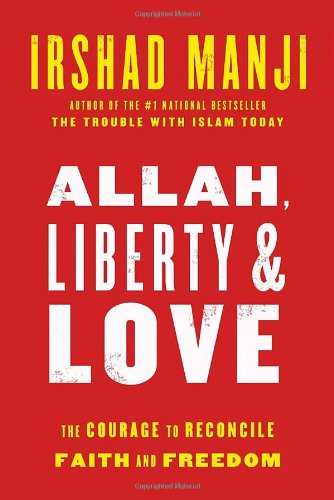
Inhaltsangabe
"Irshad Manji is the new voice of reform, not only for Islam, but for all religions."
— Deepak Chopra
The New York Times bestselling author to whom Oprah gave her first ever Chutzpah Award, Irshad Manji has written a book that equips all of us to develop moral courage.
Among the most visible Muslim reformers of our time, Irshad Manji reflects on the journey she has taken since her previous book catapulted her into the public spotlight, drawing on her real-life encounters with a world full of seekers who are struggling, as she has, to reconcile faith and freedom. Having engaged with politicians, activists, families, students, scholars and ordinary people of various religions and cultures, Manji tells stories that are deeply poignant, frequently funny and always revealing about the morally confused era in which we live. In doing so, she paves a path for Muslims and non-Muslims to defend the values of liberal democracy--and thus discover the Allah of liberty and love. Above all, Manji shows that by participating in this signature cause of the 21st century, individuals can embark on a journey of their own towards moral courage. Allah, Liberty & Love is ultimately a book about how to become a gutsy global citizen working for both personal and world peace. Manji has faith not just in Allah, but also in her fellow human beings. Prepare to be informed as well as inspired.
Die Inhaltsangabe kann sich auf eine andere Ausgabe dieses Titels beziehen.
Über die Autorin bzw. den Autor
IRSHAD MANJI teaches moral courage at NYU's Robert F. Wagner Graduate School of Public Service. A Globe and Mail columnist, she is also a scholar with the European Foundation for Democracy. Her #1 Canadian bestseller, The Trouble with Islam Today, earned international recognition and inspired Manji's Emmy-nominated PBS film, Faith Without Fear. The New York Times has called her "bin Laden's worst nightmare" while the Jakarta Post in Indonesia, the world's largest Muslim country, has identified Manji as one of 3 women creating positive change in contemporary Islam.
Auszug. © Genehmigter Nachdruck. Alle Rechte vorbehalten.
“Can you just imagine my life without you? Can you just imagine?”
Can you imagine hearing that from your own mother? Can you imagine watching her beg you to tone down your call for moderate Muslims to speak out against the destructive extremists? We’re at the dining room table, fl oral teacups before us but barely touched. Mum can’t swallow right now. “I live with my heart in my throat every day,” she gently reminds me. She looks as if she could vomit. Thank God for me that her heart is blocking her throat.
When she falls silent, her mouth remains slightly open, as if ready to refute whatever my head might marshal in feeble defense. And my defense does feel feeble, because the issue here isn’t winning a debate with my mother. It’s abiding by the universal law that children are supposed to bury their parents, not the other way around.
Years ago mum had advised me, “Whatever you do, don’t anger Allah.” Can you imagine having to wonder if a just and loving God is furious with you because violent ideologues might make you break the parents-must-die-first rule? Talk about a double whammy. I won’t lie to my mother, so when she asks about the latest death threats, I answer. “What about the new ones?” mum whispers. “What do they say?” I tell her that one of them ends, “This is your last warning.”
Can you imagine your mother developing any measure of calm when you insist that cowering in fear only hands the enemies of humanity more power than they already have? That they can give you their last warning but you refuse to give them the last word? I don’t expect my mother to agree. What I expect from her is faith—not so much that I’ll live another day, since longevity isn’t guaranteed to any of us; faith, instead, that if I’m offed tomorrow, I’ll go with my conscience fully and ferociously alive.
Lesson one: Some things are more important than fear.
It’s remarkable that Salman Rushdie has outlived the Ayatollah Khomeini. On February 14, 1989, Khomeini harnessed the murder machine of the Islamic Republic of Iran to promise death to Rushdie, author of The Satanic Verses. But the novelist ran afoul of more than the world’s most notorious cleric. During a public conversation in New York City to mark the twentieth anniversary of “the fatwa,” Rushdie told me about the reaction of one family member: “I had an uncle who was a general in the Pakistani army. I hated his guts, but there he was. He hated mine too.”
“Normal family dysfunction,” I interjected. “You get it everywhere.”
“Well, actually, not so normal,” Rushdie corrected me. “After the Khomeini fatwa, he took out an ad in the newspaper to say, essentially, we never liked [Salman] anyway.”
His story brings to mind something that an educated relative of mine had said to me a couple of years earlier. “Do you still live at the same place?” he asked.
“Yes,” I replied.
“So maybe the security threat isn’t that real. I mean, it looks like Muslims haven’t targeted you enough.”
I like this man—he’s been good to my mother when she’s most needed the support. But, as Rushdie would agree, Muslim uncles say the darnedest things.
Risking the disapproval of our families ranks among the biggest fears of Muslims. While that’s true for everybody, it’s even more so for Muslims. Our culture of honor, as I’ll soon explain, makes us believe that we must protect our families from shame before claiming dignity for ourselves. Put bluntly, individual dignity doesn’t exist without the acceptance of your community. No wonder I receive messages like these from Muslims who live in the East and the West:
I read your book on the Internet and you are right, we need a wake-up call. I was born in north Iraq. My family have become citizens of the United Arab Emirates. I am this century’s child and I will live the way life is now, not in ancient times . . . Muslims are locked in their rules. It will take more people like you and me to unlock the iron wall. I was going to tell the world my feeling, but I love my family and I don’t want to ruin their life. — Alya
I look at other Muslims and ask them if they have any doubts about Islam. They all reply “no” without any hesitation. Is there something wrong with me? Why is it that everyone else seems to accept what they were taught? I’m so frustrated at this point that I can’t help but cry about it. All I’d like is some time away from the religion so I can find myself without outside influences.
But to do that, I would have to forsake my family. They would never speak to me again if I were to take the path that I wish to take. Every time I even ask them questions, I get yelled at, get told not to question, or get an explanation that comes directly from the Qur’an. I can never tell them that in order for me to believe those explanations, I would need to have unquestioned belief in the Qur’an itself. After so many years, I’m at the breaking point. If you have any advice at all, it would be appreciated. — Yasmin
Many of the questions on your website address Muslim and non-Muslim couples. I was in a relationship of that sort. But it is ended now because I realize there is no hope. The only hope is if I leave my family, and family is too important to do that to . . . I’m the type of person who hides a lot of my own feelings for my family. How do I become the person I want to be? Or the person I am, but am too scared to let out? — Phirdhoz
I am a Muslim and am aspiring to be a writer. My mother is a Christian and my father is a Muslim. Therefore, I’ve grown up accustomed to nasty stares from other Muslims. As the days go by, however, I find myself torn between being an advocate for reform in Islam and completely dropping my religion. As if Muslims did not take enough crap from non-Muslims and it wasn’t a constant struggle to distinguish yourself from a terrorist, it seems we also have to face the judgments of our fellow Muslims. Sometimes, I have moments of weakness when I feel it’s just not worth it anymore; these people cannot be changed. But the soul-searching calls to prayer and soul-soothing surahs [chapters] of the Qur’an that I recite daily are a part of me that I love. Currently, I am dealing with adversity within my own family. All these older aunts and uncles always have something to criticize. They talk behind your back because they are sooo self-righteous. Is there any way, in your experience, to make them see things from a different perspective and maybe even show compassion? — Elizabeth
My hometown is Solo, Central Java. This is also the home of the Indonesian Mujahideen Council, a radical Islamist organization. Since 2005, I have been participating in a youth group to promote Islamic reform and pluralism. We do this by distributing publications to many universities. A couple of years ago, we tried to organize a seminar on pluralism and received phone calls saying they would send hundreds of Allah’s soldiers to stop us.
My family is also very conservative. They will send me threatening letters whenever I get my work published. Recently, I was highly disappointed by a relative who is a local imam. He became involved in one of the terrorist groups. He is now in jail, leaving a wife and son without proper care. What kind of jihad is that? But no matter how conservative they are, I love my family and I want them to love me for what I believe. I often find myself giving up when I face my father. Then I lie. I don’t speak my mind. I don’t want to hurt him and I don’t want him to hurt me because I don’t want to hate him. So how do I use my freedom of speech? — Sakdiyah
I responded to them all that before you decide you can’t upset your family, think about one of the most overlooked verses in the Qur’an: “Believers! Conduct yourselves with justice and bear true witness before God, even if it be against yourselves, your parents, or your relatives” (4:135). That’s a call for honesty, no matter who’s offended by it. How could traditional family members argue with the Qur’an? They wouldn’t go there. But they will always concoct excuses to belittle the point made by such a verse, which is why citing passages isn’t enough ballast for speaking truth to power within the Muslim family—or community. Suspicions about reform-minded Muslims will persist, so each of us has to grapple with Yasmin’s question: Is there something wrong with me?
In a way, there is. You care about Islam. You feel pain precisely because you pay attention to the integrity of your faith. Your conscience counts, and that’s an open invitation to hurt. If Alya, Yasmin, Phirdhoz, Elizabeth and Sakdiyah didn’t care, then by definition they’d lapse into apathy. That’s probably the case with many of their family and friends, as it is with more than a few of mine. The irony is, religious types pronounce reform-minded Muslims unfaithful, and yet we might be more consumed with faith—because of our haunting questions— than believers who have no questions at all.
That said, there is something we shouldn’t care so much about: the approval of other mortals. If they don’t tolerate our curiosity, why should closed minds enjoy the power to define our dignity? As I recall asking my own mother (for whom blood relations once meant everything), “If so-and-so wasn’t family, would I respect her enough to want her as a friend?” Sultan Abdulh...
„Über diesen Titel“ kann sich auf eine andere Ausgabe dieses Titels beziehen.
Suchergebnisse für Allah, Liberty & Love: The Courage to Reconcile...

Beispielbild für diese ISBN
Allah, Liberty and Love : The Courage to Reconcile Faith and Freedom
Anbieter: Better World Books, Mishawaka, IN, USA
Verkäuferbewertung 5 von 5 Sternen

Zustand: Good. First. Pages intact with minimal writing/highlighting. The binding may be loose and creased. Dust jackets/supplements are not included. Stock photo provided. Product includes identifying sticker. Better World Books: Buy Books. Do Good. Artikel-Nr. 9210097-6
Gebraucht kaufen
EUR 9,59
Versand gratis
Versand innerhalb von USA
Versand innerhalb von USA
Anzahl: 2 verfügbar
Beispielbild für diese ISBN
Allah, Liberty and Love : The Courage to Reconcile Faith and Freedom
Anbieter: Better World Books, Mishawaka, IN, USA
Verkäuferbewertung 5 von 5 Sternen
Zustand: Good. First. Former library copy. Pages intact with minimal writing/highlighting. The binding may be loose and creased. Dust jackets/supplements are not included. Includes library markings. Stock photo provided. Product includes identifying sticker. Better World Books: Buy Books. Do Good. Artikel-Nr. 3172927-6
Gebraucht kaufen
EUR 9,59
Versand gratis
Versand innerhalb von USA
Versand innerhalb von USA
Anzahl: 1 verfügbar
Beispielbild für diese ISBN
Allah, Liberty and Love : The Courage to Reconcile Faith and Freedom
Anbieter: World of Books (was SecondSale), Montgomery, IL, USA
Verkäuferbewertung 5 von 5 Sternen
Hardback. Zustand: Very Good. The New York Times bestselling author to whom Oprah gave her first ever Chutzpah Award, Irshad Manji writes a bridge-building book that is both a stirring reflection and a path to action. In Allah, Liberty and Love, Irshad Manji paves a path for Muslims and non-Muslims to transcend the fears that stop so many of us from living with honest-to- God integrity: the fear of offending others in a multicultural world as well as the fear of questioning our own communities. Since publishing her international bestseller, The Trouble with Islam Today, Manji has moved from anger to aspiration. She shows how any of us can reconcile faith with freedom and thus discover the Allah of liberty and love--the universal God that loves us enough to give us choices and the capacity to make them. Among the most visible Muslim reformers of our era, Manji draws on her experience in the trenches to share stories that are deeply poignant, frequently funny and always revealing about these morally confused times. What prevents young Muslims, even in the West, from expressing their need for religious reinterpretation? What scares non-Muslims about openly supporting liberal voices within Islam? How did we get into the mess of tolerating intolerable customs, such as honor killings, and how do we change that noxious status quo? How can people ditch dogma while keeping faith? Above all, how can each of us embark on a personal journey toward moral courage--the willingness to speak up when everybody else wants to shut you up? Allah, Liberty and Love is the ultimate guide to becoming a gutsy global citizen. Irshad Manji believes profoundly not just in Allah, but also in her fellow human beings. Artikel-Nr. 00079356999
Gebraucht kaufen
EUR 9,78
Versand gratis
Versand innerhalb von USA
Versand innerhalb von USA
Anzahl: 1 verfügbar
Beispielbild für diese ISBN
Allah, Liberty & Love: The Courage to Reconcile Faith and Freedom
Anbieter: ThriftBooks-Dallas, Dallas, TX, USA
Verkäuferbewertung 5 von 5 Sternen
Hardcover. Zustand: Good. No Jacket. Pages can have notes/highlighting. Spine may show signs of wear. ~ ThriftBooks: Read More, Spend Less. Artikel-Nr. G0307358089I3N00
Gebraucht kaufen
EUR 13,44
Versand gratis
Versand innerhalb von USA
Versand innerhalb von USA
Anzahl: 1 verfügbar
Beispielbild für diese ISBN
Allah, Liberty & Love: The Courage to Reconcile Faith and Freedom
Verlag:
Random House Canada June 2011, 2011
ISBN 10: 0307358089
ISBN 13: 9780307358080
Gebraucht
Hardcover
Anbieter: Old Goat Books, Waterloo, ON, Kanada
Verkäuferbewertung 3 von 5 Sternen

Hardcover. Zustand: Very Good. Zustand des Schutzumschlags: Very Good. Jacket Condition: 'Very Good' Condition: 'Very Good' Notes: Binding is square and solid. Pages are unmarked (besides inscription and name on first pages), clean and unbent. Artikel-Nr. 9862583
Gebraucht kaufen
EUR 11,03
EUR 14,28 Versand
Versand von Kanada nach USA
Versand von Kanada nach USA
Anzahl: 1 verfügbar