
Verwandte Artikel zu The Toss of a Lemon
Inhaltsangabe
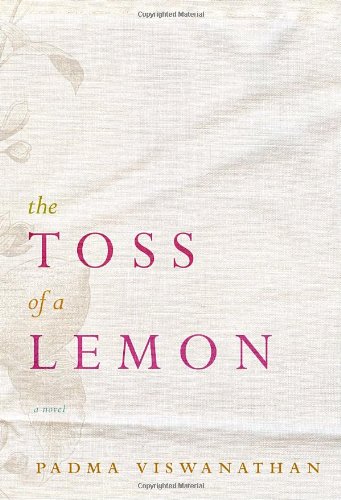
In south India in 1896, ten-year old Sivakami is about to embark on a new life. Hanumarathnam, a village healer with some renown as an astrologer, has approached her parents with a marriage proposal. In keeping with custom, he provides his prospective in-laws with his horoscope. The problem is that his includes a prediction, albeit a weak one, that he will die in his tenth year of marriage.
Despite the ominous horoscope, Sivakami’s parents hesitate only briefly, won over by the young man and his family’s reputation as good, upstanding Brahmins. Once married, Sivikami and Hanumarathnam grow to love one another and the bride, now in her teens, settles into a happy life. But the predictions of Hanumarathnam’s horoscope are never far from her new husband’s mind. When their first child is born, as a strategy for accurately determining his child’s astrological charts, Hanumarathnam insists the midwife toss a lemon from the window of the birthing room the moment his child appears. All is well with their first child, a daughter, Thangam, whose birth has a positive influence on her father’s astrological future. But this influence is fleeting: when a son, Vairum, is born, his horoscope confirms that his father will die within three years.
Resigned to his fate, Hanumarathnam sets himself to the unpleasant task of readying his household for his imminent death. Knowing the hardships and social restrictions Sivakami will face as a Brahmin widow, he hires and trains a servant boy called Muchami to help Sivakami manage the household and properties until Vairum is of age.
When Sivakami is eighteen, Hanumarathnam dies as predicted. Relentless in her adherence to the traditions that define her Brahmin caste, she shaves her head and dons the white sari of the widow. With some reluctance, she moves to her family home to raise her children under the protection of her brothers, but then realizes that they are not acting in the best interests of her children. With her daughter already married to an unreliable husband of her brothers’ choosing, and Vairum’s future also at risk, Sivakami leaves her brothers and returns to her marital home to raise her family.
With the freedom to make decisions for her son’s future, Sivakami defies tradition and chooses to give him a secular education. While her choice ensures that Vairum fulfills his promise, it also sets Sivakami on a collision course with him. Vairum, fatherless in childhood, childless as an adult, rejects the caste identity that is his mother’s mainstay, twisting their fates in fascinating and unbearable ways.
Die Inhaltsangabe kann sich auf eine andere Ausgabe dieses Titels beziehen.
Über die Autorin bzw. den Autor
Padma Viswanathan is a fiction writer, playwright and journalist from Edmonton, Alberta. Her writing awards include residencies at the MacDowell Colony and the Banff Playwrights’ Colony, and first place in the 2006 Boston Review Short Story Contest. She received her Creative Writing MA from Johns Hopkins and her MFA from the University of Arizona, and lives with her family in Fayetteville, Arkansas.
Auszug. © Genehmigter Nachdruck. Alle Rechte vorbehalten.
Thangam
1896
The year of the marriage proposal, Sivakami is ten. She is neither tall nor short for her age, but she will not grow much more. Her shoulders are narrow but appear solid, as though the blades are fused to protect her heart from the back. She carries herself with an attractive stiffness: her shoulders straight and always aligned. She looks capable of bearing great burdens, not as though born to a yoke but perhaps as though born with a yoke within her.
She and her family live in Samanthibakkam, some hours away by bullock cart from Cholapatti, which had been her mother’s place before marriage. Every year, they return to Cholapatti for a pilgrimage. They fill a pot at the Kaveri River and trudge it up to the hilltop temple to offer for the abhishekham. These are pleasant, responsible, God-fearing folk who seek the blessings of their gods on any undertaking and any lack thereof. They maintain awe toward those potentially wiser or richer than they — like the young man of Cholapatti, who is blessed with the ability to heal.
No one in their family is sick, but still they go to the healer. They may be less than totally healthy and simply not know. One can always use a preventative, and it never hurts to receive the blessings of a blessed person. This has always been the stated purpose of the trip, and Sivakami has no reason to think this one is any different.
Hanumarathnam, the healer, puts his palms together in a friendly namaskaram, asks how they have been and whether they need anything specific. They shyly shake their heads, and he queries, with a penetrating squint, “Nothing?” Sivakami is embarrassed by her parents, who are acting like impoverished peasants. They owe this man their respect, but they are Brahmins too, and literate, like him. They can hold up their heads. She’s smiling to herself at his strange name: a hybrid of “Hanuman,” the monkey god, and rathnam, gem. The suffix she understands; it’s attached to the name of every man in the region. But no one is named for the monkey!
Her mother and father cast glances at each other; then her father clears his throat. “Ah, our daughter here has just entered gurubalam. We are about to start searching for a groom.”
“Oh, well,” Hanumarathnam responds with a wink, “I deal in medicine, not charms.”
Sivakami’s parents giggle immoderately. Their daughter stares at the packed dust of the Brahmin-quarter street. Her three older brothers fidget.
“But you have my blessings,” Hanumarathnam continues, making a small package of some powder. “And this, dissolved in milk and drunk each day, this will give you strength. Just generally. It will help.”
Then he looks at Sivakami. She doesn’t look up. When he asks her parents, “Have you done the star chart yet?” his voice sounds different. They haven’t. “Come at dusk. I’ll do it for you.”
What could be better? The humble folk trip back to their relatives’, four doors down the street, for snacks and happy anticipation of their consultation with the auspicious young man, who also has some fame as an astrologer.
At that strange hour that gives the impression of light even though each figure is masked by darkness, Sivakami’s father, with two of the male relatives, finds Hanumarathnam on his veranda. He cannot make out the young man’s features, but the slant of his chest and head suggests wisdom and peace. So young and a widower, by a freak accident: his wife drowned in the Kaveri River before she ever came to live with him. His parents were already dead. He lives with relatives while his own house — his parents’ home, the second to last on the Brahmin-quarter — stays locked, dark and still.
Hanumarathnam stands to greet them; they take their seats; they make brief small talk as his aunt brings tumblers of yogourt churned with lemon water and salt.
He examines the chart by a kerosene lamp while the men finger their shoulder towels. He makes some calculations. He purses his lips and takes in a sharp breath before speaking. “I, well, I must say it. I have just entered gurubalam myself.”
Sivakami’s father hesitates. “Oh?”
“I will make more detailed calculations, but this is my reasoned guess . . . Your daughter’s horoscope is compatible with mine.”
The young man licks his lips, no longer the astrological authority but instead the nervous suitor. He speaks too quickly. “I am obliged to mention, of course, or perhaps you have already heard: the weakest quadrant of my horoscope has a small shadow . . . It . . . it faintly suggests I will die in my tenth year of marriage. But, as that prediction is contained in the weakest quadrant, it holds no weight, as you know, though ignorant people let it scare them.”
The men do not know but are not ignorant enough to say so, and anyway, Hanumarathnam has not paused in his speech.
“And most often, the birth of a son changes the configuration, as you know. I understand it must be difficult for you to consider giving your daughter as a second wife. My first wife, she drowned to death in her tenth year. Only three years after our marriage, you see, and it was not I who died, you see? It was her. Quite contrary to the negative quadrant of the horoscope. An, an unfortunate, accident. So I have no children, and I am still young. I have money and manage well. I am speaking on my own behalf only because I have no father and I know the horoscopes better than anyone.”
He blinks rapidly, the lamplight making him look younger than his twentyone years. He takes a breath and looks at Sivakami’s father.
“I have never looked at, nor ever proposed to any girl before now. Please . . . consider me.”
That night, Sivakami’s father relates his impressions to her mother. They are positively disposed toward the young man and feel they trust his astrology and his good intentions. They ask their relatives in the morning: have they heard anything against Hanumarathnam or his kin? The relatives assure them that they have heard only good things: fine, upstanding Brahmins all. The young man not only has special talents but has just come into his inheritance, some very good parcels of land. They think it could be a good match, more: a shame to waste the opportunity.
In the morning, Sivakami’s father bathes and prays. Then he picks up quill and ink and writes a gracious note, pretending they, the girl’s family, are taking the initiative, as is right and conventional, and inviting Hanumarathnam for a girlseeing as if his already having seen the girl had nothing to do with any of this.
Most Esteemed Sir, Village Healer and Knowing One,
The humble man who Writes this Missive to your Gracious Self invokes the Blessings of the Gods and Stars on his intentions. The writer would be Honoured above Reasonable Expectation, if he were to have the Pleasure of Welcoming Your Good Self to the Samanthibakkam home of his family, where his Revered Ancestors have Bestowed their Blessings Through the Ages. With the Wisdom and Learning You have acquired through Great Sacrifice and Effort, please Choose an Auspicious Time, and send word that Your good Relatives will Accompany you to Grace the Threshold of our Poor but Pious Dwelling. We will be Eagerly awaiting your Word. And the Opportunity to shower our Hospitality on Your Presence.
I remain, Yours humbly,
The note is in Tamil, a script without capital letters, but this is the idea — inconsistently the most flowery and archaic Sivakami’s father can muster.
The note is delivered by...
„Über diesen Titel“ kann sich auf eine andere Ausgabe dieses Titels beziehen.
Suchergebnisse für The Toss of a Lemon

Beispielbild für diese ISBN
The Toss of a Lemon
Verlag:
Random House Canada, 2008
ISBN 10: 0307356329
ISBN 13: 9780307356321
Gebraucht
Hardcover
Erstausgabe
Anbieter: Better World Books, Mishawaka, IN, USA
Verkäuferbewertung 5 von 5 Sternen

Zustand: Good. 1st. Pages intact with minimal writing/highlighting. The binding may be loose and creased. Dust jackets/supplements are not included. Stock photo provided. Product includes identifying sticker. Better World Books: Buy Books. Do Good. Artikel-Nr. 6370483-6
Gebraucht kaufen
EUR 10,67
Versand gratis
Versand innerhalb von USA
Versand innerhalb von USA
Anzahl: 1 verfügbar
Beispielbild für diese ISBN
The Toss of a Lemon
Verlag:
Random House Canada, 2008
ISBN 10: 0307356329
ISBN 13: 9780307356321
Gebraucht
Hardcover
Erstausgabe
Anbieter: Better World Books, Mishawaka, IN, USA
Verkäuferbewertung 5 von 5 Sternen
Zustand: Good. 1st. Former library copy. Pages intact with minimal writing/highlighting. The binding may be loose and creased. Dust jackets/supplements are not included. Includes library markings. Stock photo provided. Product includes identifying sticker. Better World Books: Buy Books. Do Good. Artikel-Nr. 7968408-6
Gebraucht kaufen
EUR 10,67
Versand gratis
Versand innerhalb von USA
Versand innerhalb von USA
Anzahl: 1 verfügbar
Beispielbild für diese ISBN
The Toss of a Lemon
Anbieter: ThriftBooks-Dallas, Dallas, TX, USA
Verkäuferbewertung 5 von 5 Sternen
Hardcover. Zustand: Very Good. No Jacket. May have limited writing in cover pages. Pages are unmarked. ~ ThriftBooks: Read More, Spend Less. Artikel-Nr. G0307356329I4N00
Gebraucht kaufen
EUR 17,99
Versand gratis
Versand innerhalb von USA
Versand innerhalb von USA
Anzahl: 1 verfügbar
Beispielbild für diese ISBN
The Toss of a Lemon
Anbieter: ThriftBooks-Atlanta, AUSTELL, GA, USA
Verkäuferbewertung 5 von 5 Sternen
Hardcover. Zustand: Very Good. No Jacket. May have limited writing in cover pages. Pages are unmarked. ~ ThriftBooks: Read More, Spend Less. Artikel-Nr. G0307356329I4N00
Gebraucht kaufen
EUR 17,99
Versand gratis
Versand innerhalb von USA
Versand innerhalb von USA
Anzahl: 1 verfügbar
Beispielbild für diese ISBN
Toss of a Lemon
Verlag:
Random House Canada April 2008, 2008
ISBN 10: 0307356329
ISBN 13: 9780307356321
Gebraucht
Hardcover
Anbieter: Old Goat Books, Waterloo, ON, Kanada
Verkäuferbewertung 3 von 5 Sternen

Hardcover. Zustand: Near Fine. Zustand des Schutzumschlags: Near Fine. Jacket Condition: 'Near Fine' Condition: 'Near Fine'. Artikel-Nr. 9870556
Gebraucht kaufen
EUR 14,37
EUR 15,69 Versand
Versand von Kanada nach USA
Versand von Kanada nach USA
Anzahl: 1 verfügbar
Beispielbild für diese ISBN
The Toss of a Lemon [Hardcover] Viswanathan, Padma
Anbieter: Hubert Colau, LA BAZOCHE GOUET, Frankreich
Verkäuferbewertung 4 von 5 Sternen

Zustand: 2. Jaquette est un peu abimà e. Artikel-Nr. BAZ3418
Gebraucht kaufen
EUR 13,00
EUR 45,00 Versand
Versand von Frankreich nach USA
Versand von Frankreich nach USA
Anzahl: 1 verfügbar