
Verwandte Artikel zu The Wall Street Journal. Complete Real-Estate Investing...
The Wall Street Journal. Complete Real-Estate Investing Guidebook (Wall Street Journal Guides) - Softcover
Buch 4 von 15: Wall Street Journal Guides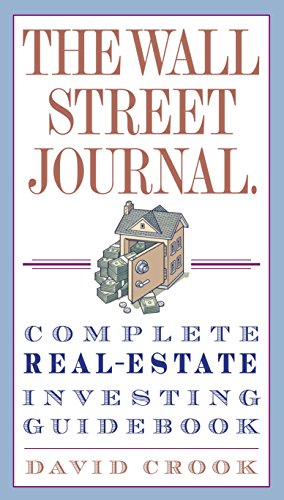
Inhaltsangabe
The conservative, thoughtful, thrifty investor’s guide to building a real-estate empire.
Profitable real-estate investing opportunities exist everywhere as long as you know what to look for and understand how to make prudent deals that transform property into profits. David Crook, of The Wall Street Journal, shows how to make safe and sane investments that ensure a good night’s sleep as your real-estate portfolio grows, your properties appreciate and your income increases. The Wall Street Journal Complete Real-Estate Investing Guidebook offers the most authoritative information on:
• Why real-estate investing is a great wealth-building alternative to stocks and bonds and why it’s crucial that you avoid get-rich schemes
• How to get the financing and make the contacts to get started
• How to start small and local, be hands-on and go step-by-step with a vacation home to rent out, a pure rental property or a small apartment building
• How to find and value great properties, do the numbers and ensure you have that beautiful thing called cash flow
• How the government blesses real-estate investors with tax breaks and loopholes, and how you can be one of the anointed
• How to deal with the nuts-and-bolts of being a landlord and have a strife-free relationship with your tenants
Die Inhaltsangabe kann sich auf eine andere Ausgabe dieses Titels beziehen.
Über die Autorin bzw. den Autor
DAVID CROOK is the editor of The Wall Street Journal Sunday, the personal finance section that appears in more than 75 papers around the country. He was part of the original team that developed and launched the highly successful “Weekend Journal” of Friday’s Wall Street Journal. He also developed the “Home Front” and “Property Report,” the Journal’s residential and commercial real-estate sections.
Auszug. © Genehmigter Nachdruck. Alle Rechte vorbehalten.
CHAPTER 1
Your Home Is an Investment Property
“Land is the only thing in the world that amounts to anything . . .
for ’tis the only thing in this world that lasts. . . . ’Tis the only
thing worth working for, worth fighting for—worth dying for.”
—Margaret Mitchell
Your home is a lot of things, most of them good. Your home is your castle, your refuge, your escape. It may be the physical manifestation of all your material hopes and aspirations, your piece of the American dream. It gives comfort and protection to you and your family. It may be an essential part of your retirement or college-savings plans. Your home is probably your biggest asset, and the price you could ask for it today is almost certainly higher than the price you paid for it back whenever.
But your home is not an investment property.
Investing in real estate isn’t the same as owning a house. If you don’t get anything else out of this book, you need to understand that—especially now that so many homeowners are trying to play the real-estate game with their homes. That’s dangerous—not because the value of your home is likely to decline (though it could), but because you are more likely to spend far more money living in your home than you will make when you sell it.
Investing is investing. It’s using your money to make more money. Anything else, including most home purchases, is spending.
To be considered investments, real-estate purchases must generate actual profits, either immediately in the form of income or long-term in the form of appreciation. In either case, the property must cover all its own costs and produce a reasonable return on the money you spent to buy it.
You will read and hear other terms for measuring investment income—rate of return, “cap rate,” net operating income, rental roll. Each is different, but one way or another, they all come down to the most basic concept of real-estate investing: “cash flow”—real in-your-pocket-put-it-in-the-bank money that’s left over after you have covered all your business expenses. That’s something you don’t get when you just own a home. Yes, your house is a huge asset. But without cash flow, you might as well be holding on to a very big, very expensive Beanie Baby.
You are thinking I’m nuts. You’re saying, “I bought my house in 1990 for $200,000. I put in a thousand-square foot addition, including a new bathroom. I redid the old bathroom and put in a new kitchen and a deck with a hot tub. I could get $650,000 for it today.”
That sure sounds like an investment. But if you run the numbers, you will see that it’s not much of an investment at all. How would you feel about a stock that cost you more to own than you make when you sell it?
Take a look at this spreadsheet, which represents 16 years of ownership of a house in the Los Angeles area. We’re sticking to simple concepts and round numbers here. But with a few assumptions—including the improvements, regular maintenance and a couple of big ticket repairs such as a paint job and a new roof—this typical homeowner actually loses more than $5,000 a year, even as the house “appreciates” at a steady and optimistic 5 percent annually. Put simply: At the end of the 17 years of ownership, this home seller will have spent $415,000 in order to pocket $328,000—a loss of $86,000.
How is that possible? When homeowners compute their returns, they rarely consider all the costs of owning a property. Generally, they don’t do much more than subtract their down payment—$40,000 in this case—from the proceeds of the sale ($328,000) and declare they made a huge “profit” ($288,000).
But it doesn’t really work that way. There are big problems with this typical homeowner’s investment plan.
Homeowners rarely consider maintenance or the declining value of improvements. Painting, roof repairs or new furnaces don’t pay for themselves, and remodeling is a huge loser. Entire industries have arisen to entice homeowners to spend thousands of dollars for new kitchen cabinets, granite countertops and stainless-steel appliances or his-and-hers master suite bathroom spas featuring multihead showers and Asian-inspired “soaking” tubs. Architects, builders, magazine editors and real-estate agents tout such improvements as if typical homeowners absolutely must take the remodeling plunge or forever risk the value of the house and suffer the ridicule of friends and neighbors.
Remodeling magazine publishes a widely quoted annual survey of the value of home improvements. In 2005, the magazine said that an upscale kitchen remodel like you see in the glossy shelter magazines would cost $82,000 and would return just 84 percent four years later. Absurd. This kind of project might get raves from your friends, but it’s a fool’s financial play. A new kitchen is certainly a nice thing to have, but it’s not an investment that’s going to make you any money. That 84 percent return means the homeowner will lose more than $3,000 a year on the kitchen. And if the owner borrows the money to remodel the kitchen—which most do—the losses could quickly triple.
That’s because long-term borrowing is the home investor’s nemesis. How ironic. The 30-year mortgage—which greatly reduced monthly payments and put home ownership within the grasp of nearly 70 percent of American households—locked those same households into Grand Canyons of debt. Mortgage interest, even after the government’s mortgage-interest tax-deduction subsidy, is the homeowner’s overwhelmingly largest expense, and it drives up the cost of a house so much that a true profit is all but impossible for most owners. In this scenario, the homeowners spent about $234,000 of after-tax money on interest—more than half the total appreciation—over the 16 years. And most Americans move after just 5 to 7 years!
Adding further insult: You can’t spend a home—or even a new kitchen. No matter that the increased value of the house is pushing up the owners’ net worth—they can only borrow against their house or sell it. If they borrow, they are digging themselves another debt hole. In order to make the debt worth taking on, they’d have to forgo the new kitchen and invest the proceeds of the loan in something that will return more than it costs to pay the interest and the principal. Just to break even, then, the homeowner who borrows for 30 years at 6.5 percent would need to invest that $82,000 in something that would return at least $6,200 a year. As you will learn from this book, a good place to invest might be a rental property. But certainly not in a new kitchen.
And if homeowners do choose to sell, they will still have to find a place to live. When home prices rise, they rise in the entire area. So if the homeowners stay in the same metropolitan region, they will most likely have to move to a much smaller house or to a less-desirable neighborhood or take out another mortgage and restart the debt clock.
Even if they move to a cheaper housing market (and just about any place is cheaper than the Los Angeles area), they are likely to spend most or all of their cash on their new house. Again, the return is pretty much an illusion. That $328,000 will buy a very nice place in Las Vegas, Phoenix, Boise or some of the other cities of the West overflowing with former Californians. But at what real cost?
Now in their 50s or 60s and living mortgage free, these Equity Ex-Pats will be leaving their heirs some property. But as...
„Über diesen Titel“ kann sich auf eine andere Ausgabe dieses Titels beziehen.
Suchergebnisse für The Wall Street Journal. Complete Real-Estate Investing...

Beispielbild für diese ISBN
The Wall Street Journal. Compl
Anbieter: World of Books (was SecondSale), Montgomery, IL, USA
Verkäuferbewertung 5 von 5 Sternen

Zustand: Good. Item in good condition. Textbooks may not include supplemental items i.e. CDs, access codes etc. Artikel-Nr. 00091217692
Gebraucht kaufen
EUR 3,66
Versand gratis
Versand innerhalb von USA
Versand innerhalb von USA
Anzahl: 15 verfügbar
Beispielbild für diese ISBN
The Wall Street Journal. Compl
Anbieter: World of Books (was SecondSale), Montgomery, IL, USA
Verkäuferbewertung 5 von 5 Sternen
Zustand: Acceptable. Item in acceptable condition! Textbooks may not include supplemental items i.e. CDs, access codes etc. Artikel-Nr. 00093258542
Gebraucht kaufen
EUR 3,66
Versand gratis
Versand innerhalb von USA
Versand innerhalb von USA
Anzahl: 1 verfügbar
Beispielbild für diese ISBN
The Wall Street Journal. Complete Real-Estate Investing Guidebook (Wall Street Journal Guides)
Anbieter: BooksRun, Philadelphia, PA, USA
Verkäuferbewertung 5 von 5 Sternen
Paperback. Zustand: Very Good. It's a well-cared-for item that has seen limited use. The item may show minor signs of wear. All the text is legible, with all pages included. It may have slight markings and/or highlighting. Artikel-Nr. 0307345629-8-1
Gebraucht kaufen
EUR 4,61
Versand gratis
Versand innerhalb von USA
Versand innerhalb von USA
Anzahl: 1 verfügbar
Beispielbild für diese ISBN
The Wall Street Journal. Complete Real-Estate Investing Guidebook
Verlag:
Crown Publishing Group (NY), 2006
ISBN 10: 0307345629
ISBN 13: 9780307345622
Gebraucht
Paperback
Anbieter: ThriftBooks-Atlanta, AUSTELL, GA, USA
Verkäuferbewertung 5 von 5 Sternen
Paperback. Zustand: Very Good. No Jacket. May have limited writing in cover pages. Pages are unmarked. ~ ThriftBooks: Read More, Spend Less. Artikel-Nr. G0307345629I4N00
Gebraucht kaufen
EUR 5,87
Versand gratis
Versand innerhalb von USA
Versand innerhalb von USA
Anzahl: 1 verfügbar
Beispielbild für diese ISBN
The Wall Street Journal. Complete Real-Estate Investing Guidebook
Verlag:
Crown Publishing Group (NY), 2006
ISBN 10: 0307345629
ISBN 13: 9780307345622
Gebraucht
Paperback
Anbieter: ThriftBooks-Reno, Reno, NV, USA
Verkäuferbewertung 5 von 5 Sternen
Paperback. Zustand: Very Good. No Jacket. May have limited writing in cover pages. Pages are unmarked. ~ ThriftBooks: Read More, Spend Less. Artikel-Nr. G0307345629I4N00
Gebraucht kaufen
EUR 5,87
Versand gratis
Versand innerhalb von USA
Versand innerhalb von USA
Anzahl: 1 verfügbar
Beispielbild für diese ISBN
The Wall Street Journal. Complete Real-Estate Investing Guidebook
Verlag:
Crown Publishing Group (NY), 2006
ISBN 10: 0307345629
ISBN 13: 9780307345622
Gebraucht
Paperback
Anbieter: ThriftBooks-Dallas, Dallas, TX, USA
Verkäuferbewertung 5 von 5 Sternen
Paperback. Zustand: Very Good. No Jacket. May have limited writing in cover pages. Pages are unmarked. ~ ThriftBooks: Read More, Spend Less. Artikel-Nr. G0307345629I4N00
Gebraucht kaufen
EUR 5,87
Versand gratis
Versand innerhalb von USA
Versand innerhalb von USA
Anzahl: 1 verfügbar
Beispielbild für diese ISBN
The Wall Street Journal. Complete Real-Estate Investing Guidebook
Verlag:
Crown Publishing Group, The, 2006
ISBN 10: 0307345629
ISBN 13: 9780307345622
Gebraucht
Softcover
Anbieter: Better World Books: West, Reno, NV, USA
Verkäuferbewertung 5 von 5 Sternen
Zustand: Good. Former library copy. Pages intact with minimal writing/highlighting. The binding may be loose and creased. Dust jackets/supplements are not included. Includes library markings. Stock photo provided. Product includes identifying sticker. Better World Books: Buy Books. Do Good. Artikel-Nr. 4743537-6
Gebraucht kaufen
EUR 6,09
Versand gratis
Versand innerhalb von USA
Versand innerhalb von USA
Anzahl: 1 verfügbar
Beispielbild für diese ISBN
The Wall Street Journal. Complete Real-Estate Investing Guidebook
Verlag:
Crown Publishing Group, The, 2006
ISBN 10: 0307345629
ISBN 13: 9780307345622
Gebraucht
Softcover
Anbieter: Better World Books, Mishawaka, IN, USA
Verkäuferbewertung 5 von 5 Sternen
Zustand: Good. Pages intact with minimal writing/highlighting. The binding may be loose and creased. Dust jackets/supplements are not included. Stock photo provided. Product includes identifying sticker. Better World Books: Buy Books. Do Good. Artikel-Nr. GRP95743202
Gebraucht kaufen
EUR 6,09
Versand gratis
Versand innerhalb von USA
Versand innerhalb von USA
Anzahl: 1 verfügbar
Beispielbild für diese ISBN
The Wall Street Journal. Complete Real-Estate Investing Guidebook
Verlag:
Crown Publishing Group, The, 2006
ISBN 10: 0307345629
ISBN 13: 9780307345622
Gebraucht
Softcover
Anbieter: Better World Books: West, Reno, NV, USA
Verkäuferbewertung 5 von 5 Sternen
Zustand: Good. Pages intact with minimal writing/highlighting. The binding may be loose and creased. Dust jackets/supplements are not included. Stock photo provided. Product includes identifying sticker. Better World Books: Buy Books. Do Good. Artikel-Nr. GRP95743202
Gebraucht kaufen
EUR 6,09
Versand gratis
Versand innerhalb von USA
Versand innerhalb von USA
Anzahl: 2 verfügbar
Beispielbild für diese ISBN
The Wall Street Journal. Complete Real-Estate Investing Guidebook (Wall Street Journal Guides)
Anbieter: Wonder Book, Frederick, MD, USA
Verkäuferbewertung 5 von 5 Sternen
Zustand: Good. Good condition. A copy that has been read but remains intact. May contain markings such as bookplates, stamps, limited notes and highlighting, or a few light stains. Bundled media such as CDs, DVDs, floppy disks or access codes may not be included. Artikel-Nr. S23A-03288
Gebraucht kaufen
EUR 6,33
Versand gratis
Versand innerhalb von USA
Versand innerhalb von USA
Anzahl: 1 verfügbar