
Verwandte Artikel zu My Hollywood
Inhaltsangabe
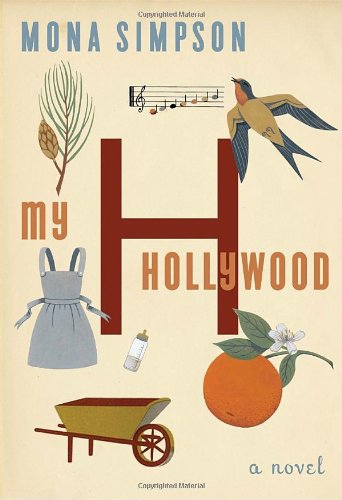
Struggling with her television writer husband's long hours and her own lack of childcare experience, composer Claire hires Lola, a Filipino mother of five who would finance her children's educations and who becomes privately devoted to her employers. By the award-winning author of Anywhere but Here.
Die Inhaltsangabe kann sich auf eine andere Ausgabe dieses Titels beziehen.
Über die Autorinnen und Autoren
Mona Simpson is the author of Anywhere But Here, The Lost Father, A Regular Guy, and Off Keck Road, which was a finalist for the PEN/Faulkner Award and won the Heartland Prize of the Chicago Tribune. She has received a Whiting Writers' Award, a Guggenheim grant, a Lila WallaceûReader's Digest Writers' Award, and, recently, an Academy Award from the American Academy of Arts and Letters. She lives in Santa Monica, California.
Mona Simpson is the author of Anywhere But Here, The Lost Father, A Regular Guy, and Off Keck Road, which was a finalist for the PEN/Faulkner Award and won the Heartland Prize of the Chicago Tribune. She has received a Whiting Writers’ Award, a Guggenheim grant, a Lila Wallace–Reader’s Digest Writers’ Award, and, recently, an Academy Arts and Letters Award from the American Academy of Arts and Letters. She lives in Santa Monica, California.
Auszug. © Genehmigter Nachdruck. Alle Rechte vorbehalten.
“Come on comeon comeon comeon comeon. Come to Lola. I have something for you.” Because he is very angry.
Today it is the mother he was hitting. She has her hand over her eye and I dab ice, the way I do his boo-boos. She lets her face in my hands. Then I take him away. But Williamo, he is strong. I cannot so easily hold. And Lola told a lie. I do not have anything. So I make promises. “Some-a-day,” I whisper, “I will bring you home with me. And there we will make the ice candy.”
He lies still, not any longer fighting. His bones fall in a pattern, like the veins of a leaf.
“I will put you in my pocket and feed you one candy every day. You will be happy. Because the ocean at our place it is very blue. The sky higher than here. And the fruits that grow on trees, very sweet.” Jackfruit, durian, lanzones. Attis. Santol.
“In my pocket I will give you one lychee. You can bounce for a ball.”
“If you were a kangaroo you would have a pouch,” he grumbles, better now, slower the heart.
Through the window I see my employer. She looks like she has too much assigned to her; she cannot complete it all before she dies. She holds the ice and paces, talking long-distance to a woman who reads books about the raising of children. When my employer becomes upset she calls this friend. My employer has the American problem of guilt. But you should not be guilty to your children. It is for them that you are working! Then I remember that check for a thousand, long ago. I do not like to think that; it still opens a taste of confusion.
But Williamo, he is better now. Only the mouth smears. I promise him candy, not the ice candy, just candy we can buy here. “But-ah do not tell your mother.”
I call to her, “Excuse, we are going now.”
“Okay. Thanks, Lole.” My employer believes she cannot live without me. She is telling her friend who reads the books that he is better with me than with her. Lil will tell her that this is perfectly normal. My employer, she needs to be left alone. But that is not a quality for a mother. Children, they are dependent for their life. “Playdate,” my employer says. “I can’t even stand the word.”
“Do you have poo-poo?” I pull out the diaper. I am paid to smell that. But what she said to her friend is true. With me, Williamo is no problem.
My employer, she says when a baby comes home from the hospital, a Filipina should arrive with him. That, for her, would make a perfect world. “It’s the Asian thing,” I heard her say once. “They’re more gentle with kids than Hispanics.” She thinks it is all Filipinos. Maybe every single human being from Asia. I could introduce her to a few. Claire walks out carrying keys. With a child small small, it is like a ball and chain. You are never free. Not even sleeping. “Bye.” She slams her car door. An escape. She will stroll in the conservatory, thinking about old songs. Americans, for them the highest time is college: books in a bent arm, on the way to learning. Us, we go to school to get the degree.
I push Williamo in the stroller and he sits. That is the good of fighting; it makes them very tired. The sun is solid, like many small weights on our arms. This neighborhood is ours during the daytime. You do not observe mothers, only in and out of cars, carrying shopping bags. In my place, I was, at one time, one of these married ladies. Now when I watch from afar, it looks like a lot of work.
I put coconut oil and zinc powder on the nose because Williamo he is very white. My albino grandson. All the while, I talk to him. Ruth told me, You have always to talk, even a baby, it is important. And I talk to him, more than my own, because my kids I had one after the other, five in nine years. In the class of two thousand and ten, at Harvard University there will be two Santa Monica boys saying to cooks in the cafeteria, Excuse, where is my adobo? Lola by then will be swaying in a hammock, back in the Philippines.
“What for?” He is young. He does not yet understand the importance of rest.
When we pass the play store, I turn in and ask, “Where is Lola from?”
He points on the globe.
“Very good.”
Outside again, in the distance we see children, past tall trees, old in the glittering air. But Williamo says he does not want to play, not now, so we roll under the eucalyptus once upon a time from Australia until the eyes close. I knew from Ruth to work for a working mother. The women who stay home want their babies tucked in cribs for naps, so they can tiptoe in and peek. But Williamo, he can sleep on grass. Today he will nap in his stroller.
I told my employer already: When they go to Europe to celebrate their tenth anniversary, I will take Williamo to the Philippines. We are saving for the tickets. I cannot save much because every month I send home eighteen hundred. My kids, they are a little jealous, especially Dante and Lisa, because they have their own. And it is true. I am closer to Williamo than I am to my grandchildren. Because I see Williamo every day.
Tomorrow for the playclub, I will make tapioca. Williamo likes the big kind we have to soak overnight, so I walk to the grocery. For a long time, I worried this job. Then one day I was not trying anymore. Someone touches my arm in the aisle. “Hola!” she says. “Cómo estás?”
Here, they think I speak Spanish. “Hi,” I say.
“I know you. You’re the babysitter of the boy who says To be or not to be.”
I point to the stroller. Thumb in his mouth, eyes closed. “Not to be,” I say. My employer made an orchestra from a play by William Shakespeare. That is why Williamo. At the end of his speech, after ’tis a consummation / Devoutly to be wish’d, I told him, Then you bow. And he will bow.
“I’m Beth, Brookie and Kate’s mom,” she says. “You’re Lola, right?”
“I know Esperanza,” I say. Esperanza, she is the only one in the playclub not Filipina.
The woman stands writing on a small card. She puts the name and address and she scribbles Call me! We need help Saturday nights!
But I am not tempted. Esperanza says her employer leaves her exercise clothes, underwear and all, in damp lumps on the floor. The next time Beth Martin wants to see those things they will be clean and folded in her drawer.
I am a little popular. With my new weekend salary, I send home an extra hundred every week. In America, I am on the way up.
I push the stroller to the place of Mai-ling, where babysitters sit at a picnic table eating her fresh lumpia, light and porous, and savory adobo, with bay leaves planted by the landscaper. Mai-ling stands ironing, using an extension. Here, the man and the boy go out every day; it is only babysitters and children small small and sometimes a half-dressed woman upstairs, cataloging the possessions. Afternoons, they are not like this in Manila, even in the gated residential districts of Makati where outside you see only workers in uniform. In tea shops mothers gather with their children in an after-school world. Williamo still sleeps, so I park him facing the wall.
“My employers, they change when they move to the big house,” Lita says. “They really change.”
“For your salary, let them change!” Her employer is Alice, the doctor. The husband, he wakes up in the middle of the night when the stock market opens in New York. And Lita gets one hundred dollars a day. They live in a Beverly Hills mansion.
We compare jobs, the way women compare...
„Über diesen Titel“ kann sich auf eine andere Ausgabe dieses Titels beziehen.
Suchergebnisse für My Hollywood

Beispielbild für diese ISBN
My Hollywood
Anbieter: World of Books (was SecondSale), Montgomery, IL, USA
Verkäuferbewertung 5 von 5 Sternen

Zustand: Very Good. Item in very good condition! Textbooks may not include supplemental items i.e. CDs, access codes etc. Artikel-Nr. 00084289630
Gebraucht kaufen
EUR 5,25
Versand gratis
Versand innerhalb von USA
Versand innerhalb von USA
Anzahl: 4 verfügbar
Beispielbild für diese ISBN
My Hollywood
Anbieter: World of Books (was SecondSale), Montgomery, IL, USA
Verkäuferbewertung 5 von 5 Sternen
Hardback. Zustand: Good. Claire, a composer and a new mother, has moved to Los Angeles so that her husband can follow his passion for writing television comedy. Suddenly the marriage--once a genuine 50/50 arrangement--changes, with Paul working late and Claire left at home with baby William, whom she adores but has no idea how to care for. She hires Lola, a fifty-two-year-old mother of five, who is working in America to pay for her own children's higher education back in the Philippines. Lola stabilizes the rocky household, and soon other parents try to lure her away. But what she sacrifices to stay with Claire and Williamo remains her own closely guarded secret. Artikel-Nr. 00085709973
Gebraucht kaufen
EUR 5,25
Versand gratis
Versand innerhalb von USA
Versand innerhalb von USA
Anzahl: 4 verfügbar
Beispielbild für diese ISBN
My Hollywood
Anbieter: BooksRun, Philadelphia, PA, USA
Verkäuferbewertung 5 von 5 Sternen
Hardcover. Zustand: Very Good. 1. With dust jacket. It's a well-cared-for item that has seen limited use. The item may show minor signs of wear. All the text is legible, with all pages included. It may have slight markings and/or highlighting. Artikel-Nr. 0307273520-11-1-29
Gebraucht kaufen
EUR 5,26
Versand gratis
Versand innerhalb von USA
Versand innerhalb von USA
Anzahl: 1 verfügbar
Beispielbild für diese ISBN
My Hollywood
Anbieter: ThriftBooks-Atlanta, AUSTELL, GA, USA
Verkäuferbewertung 5 von 5 Sternen
Hardcover. Zustand: Good. No Jacket. Former library book; Pages can have notes/highlighting. Spine may show signs of wear. ~ ThriftBooks: Read More, Spend Less. Artikel-Nr. G0307273520I3N10
Gebraucht kaufen
EUR 5,90
Versand gratis
Versand innerhalb von USA
Versand innerhalb von USA
Anzahl: 1 verfügbar
Beispielbild für diese ISBN
My Hollywood
Anbieter: Wonder Book, Frederick, MD, USA
Verkäuferbewertung 5 von 5 Sternen
Zustand: Very Good. Very Good condition. Very Good dust jacket. A copy that may have a few cosmetic defects. May also contain light spine creasing or a few markings such as an owner's name, short gifter's inscription or light stamp. Artikel-Nr. J07B-02823
Gebraucht kaufen
EUR 6,36
Versand gratis
Versand innerhalb von USA
Versand innerhalb von USA
Anzahl: 2 verfügbar
Beispielbild für diese ISBN
My Hollywood
Verlag:
Knopf Doubleday Publishing Group, 2010
ISBN 10: 0307273520
ISBN 13: 9780307273529
Gebraucht
Hardcover
Erstausgabe
Anbieter: Better World Books: West, Reno, NV, USA
Verkäuferbewertung 5 von 5 Sternen
Zustand: Good. 1st Edition. Former library copy. Pages intact with minimal writing/highlighting. The binding may be loose and creased. Dust jackets/supplements are not included. Includes library markings. Stock photo provided. Product includes identifying sticker. Better World Books: Buy Books. Do Good. Artikel-Nr. 8220342-75
Gebraucht kaufen
EUR 6,85
Versand gratis
Versand innerhalb von USA
Versand innerhalb von USA
Anzahl: 1 verfügbar
Beispielbild für diese ISBN
My Hollywood
Verlag:
Knopf Doubleday Publishing Group, 2010
ISBN 10: 0307273520
ISBN 13: 9780307273529
Gebraucht
Hardcover
Erstausgabe
Anbieter: Better World Books, Mishawaka, IN, USA
Verkäuferbewertung 5 von 5 Sternen
Zustand: Very Good. 1st Edition. Pages intact with possible writing/highlighting. Binding strong with minor wear. Dust jackets/supplements may not be included. Stock photo provided. Product includes identifying sticker. Better World Books: Buy Books. Do Good. Artikel-Nr. 6311748-75
Gebraucht kaufen
EUR 6,85
Versand gratis
Versand innerhalb von USA
Versand innerhalb von USA
Anzahl: 1 verfügbar
Beispielbild für diese ISBN
My Hollywood
Verlag:
Alfred A. Knopf, New York, 2010
ISBN 10: 0307273520
ISBN 13: 9780307273529
Gebraucht
Hardcover
Erstausgabe
Anbieter: Abacus Bookshop, Pittsford, NY, USA
Verkäuferbewertung 5 von 5 Sternen
hardcover. Zustand: Fine copy in fine dust jacket. 1st. 8vo, 369 pp. Artikel-Nr. 120892
Gebraucht kaufen
EUR 9,09
EUR 3,53 Versand
Versand innerhalb von USA
Versand innerhalb von USA
Anzahl: 1 verfügbar
Beispielbild für diese ISBN
My Hollywood
Verlag:
Knopf Doubleday Publishing Group, 2010
ISBN 10: 0307273520
ISBN 13: 9780307273529
Gebraucht
Hardcover
Erstausgabe
Anbieter: Better World Books Ltd, Dunfermline, Vereinigtes Königreich
Verkäuferbewertung 5 von 5 Sternen
Zustand: Very Good. 1st Edition. Former library copy. Pages intact with possible writing/highlighting. Binding strong with minor wear. Dust jackets/supplements may not be included. Includes library markings. Stock photo provided. Product includes identifying sticker. Better World Books: Buy Books. Do Good. Artikel-Nr. GRP96856457
Gebraucht kaufen
EUR 7,94
EUR 5,86 Versand
Versand von Vereinigtes Königreich nach USA
Versand von Vereinigtes Königreich nach USA
Anzahl: 1 verfügbar
Beispielbild für diese ISBN
My Hollywood
Anbieter: Books From California, Simi Valley, CA, USA
Verkäuferbewertung 4 von 5 Sternen

Hardcover. Zustand: Fine. Signed. Signed by author!. Artikel-Nr. mon0003580001
Gebraucht kaufen
EUR 10,90
EUR 4,41 Versand
Versand innerhalb von USA
Versand innerhalb von USA
Anzahl: 1 verfügbar