
Verwandte Artikel zu Bone Fire
Inhaltsangabe
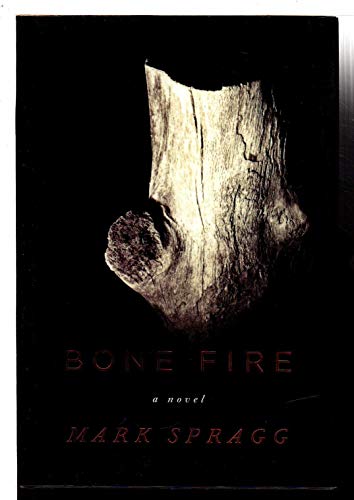
Ishawooa, Wyoming, is far from bucolic nowadays. The sheriff, Crane Carlson, needs no reminder of this but gets one anyway when he finds a kid not yet twenty murdered in a meth lab. His other troubles include a wife who’s going off the rails with bourbon and pot, and his own symptoms of the disease that killed his grandfather.
Einar Gilkyson, taking stock at eighty, counts among his dead a lifelong friend, a wife and—far too young—their only child; and his long-absent sister has lately returned home from Chicago after watching her soul mate die. His granddaughter, Griff, has dropped out of college to look after him, though Einar would rather she continue with her studies and her boyfriend, Paul. Completing this extended family are Barnum McEban and his ward, Kenneth, a ten-year-old whose mother—Paul’s sister—is off marketing spiritual enlightenment.
What these characters have to contend with on a daily basis is bracing enough, involving car accidents, runaway children, strokes and Lou Gehrig’s disease, not to mention the motorcycle rallies and rodeos that flood the tiny local jail. But as their lives become even more strained, hardship foments exceptional compassion and generosity, and those caught in their own sorrow alleviate the same in others, changing themselves as they do so. In this gripping story, along with harsh truths and difficult consolation come moments of hilarity and surprise and beauty. No one writes more compellingly about the modern West than Mark Spragg, and in Bone Fire he is at the very height of his powers.
Die Inhaltsangabe kann sich auf eine andere Ausgabe dieses Titels beziehen.
Über die Autorin bzw. den Autor
Mark Spragg is the author of Where Rivers Change Direction, a memoir that won the Mountains & Plains Booksellers Award, and the novels The Fruit of Stone and An Unfinished Life, which was chosen by the Rocky Mountain News as the Best Book of 2004. All three were top-ten Book Sense selections and have been translated into fifteen languages. He lives with his wife, Virginia, in Wyoming.
Auszug. © Genehmigter Nachdruck. Alle Rechte vorbehalten.
One
She lunged the horse forward because that was all that was left to them, the slope too sheer to turn him, the shale his hooves struck loose skidding away, wheeling downward. She felt him slip from under her, struggling to regain his feet, the air snapping with the sound of stones colliding, echoes rebounding against the headwall of the cirque. It was the second time he’d come close to falling, and now he stood bunched and quivering, his ears flattened against his skull. They were both breathing hard.
She glanced back over her shoulder. Below her the ridgeline rose up sharp-edged, spangling in the sunlight, seeming to beckon as madness is sometimes said to. The bands of muscle in her back and shoulders burned, and her mouth had gone dry.
She inched higher against the long run of his neck, careful not to unbalance them, whispering “Just this” to urge him forward again. She felt him gather his weight in his hindquarters, heard him groan. He still trembled. “Just this,” she whispered again, and there was the chopping of his iron shoes against the broken rim and they were over all at once, unexpectedly, the horse staggering, standing finally with his legs splayed, his head hung low, braced up against the suck of his own breathing.
She slipped to the ground, tried to walk and couldn’t, then squatted with her arms thrown over her knees. She smelled like the horse: salty, souring, indelicate. Her hands shook when she held them in front of her face. She’d acted like a goddamn tourist bringing them straight up out of the head of Owl Creek, ignoring the game trails. Sweat ran into her eyes, down the beaded course of her spine.
She shaded her eyes, looking southeast over Clear Creek, Crazy Woman Creek, across the Powder River Basin toward the Black Hills, the horizon a hundred miles away, faintly edging the dome of blue sky. This was the secret she’d kept from her East Coast classmates, the exhilaration of this perfect air, filtered clear—as she has believed since childhood—by the rising souls of the dead. In her early teens, she even imagined she could feel the press of them in their passing, those assemblages of spirits retracing the very same watercourses that flow east and west from this divide, much as salmon would climb them, single-minded in their desire for homecoming, lifting themselves toward the advantage of heaven.
She straightened her legs. The insides of her thighs prickled from the chafing of the climb. Her belly hummed and she pressed a hand against her abdomen, turning to check the horse where he stepped carefully through the lichen-covered stones bearing the imprints of Cretaceous fishes. His name is Royal, and except for days like this when they’re at work, she rides him bareback. Always. She trusts him that much. He nickered softly and she watched her reflections in the dark globes of his eyes. She smiled and her reflections smiled, and she thought there’s joy in a horse, laughter in its movement, even at this point of exhaustion. She stood, stomping her legs until they were just shaky.
Her grandfather had asked her only to check the new grasses before they pasture the cattle on these Forest Service leases, but she was concerned—as she has always been—not to disappoint him, not to waste his time with her carelessness. So she and Royal have weaved among the cows where they’ve found them collected in the timbered undergrowth, alert for signs of illness or accident. They’ve walked the fences where they could, and lastly, when the job was done, made this break for the toplands.
She knelt in the soggy cress that bordered a seep and bent to the water and drank. Then she peeled her shirt and bra over her head, splashing the water against her neck, shoulders and breasts, finally sitting back on her heels to stare at a contrail that halved the sky above her.
Her mother had asked, “Are you still stringing that Indian boy along?”
They were seated across from each other in the new café in Ishawooa. Salads, meatless soups, herbal teas. A sandwich board on the sidewalk out front, its legs sandbagged against the wind. It’s their habit to eat together once a week, as testimony that they truly are mother and daughter.
Griff scooted forward on her chair, against the table’s edge. “I get really sick of you pretending to be a racist.”
“Saying he’s an Indian is just a fact.”
“So is his name.”
Her mother cleared her throat. “Are you still fucking Paul Woodenlegs?” Louder this time, a woman turning at another table rearing back to stare through the bottom half of her bifocals.
The blood rose in Griff’s cheeks, her mother nodding conclusively, the gesture women commit in church in lieu of speaking amen.
“When your dad and I were your age,” Jean said, and smiled, unconsciously reaching inside the open throat of her blouse, straightening a bra strap, “it meant something then.”
“I love him.” She knew the statement was heard as excuse, and therefore feeble.
“Love must be different now.”
And there it was, just a hint of the sour, woody smell on her mother’s breath, and Griff wondered when she’d taken her first bourbon this morning.
“Your dad and I never wanted to be apart. Not for a single day.”
“I’m not like you.”
She watched her mother’s hands pick up a menu, holding it open. She hung her own weather-roughened hands out of sight, finding it impossible to admit that when she and Paul are making love it’s the grinding of their bones she hears, the clamor of one animal moving against another. Not always, but often enough to convince her that nothing remains unbroken forever.
“Is he the reason you’re not going back to school?”
“He won’t even be here this fall. He’s finishing graduate school in Chicago.”
“In what?” Jean held up her empty glass, trying to catch the waitress’s attention.
“Didn’t we already have this conversation?”
“Tell me again.”
“Public health.”
“Isn’t that something?” Her mother’s eyes remained calm. “Just think of the career opportunities he’ll have for scrubbing bathrooms in some reservation casino.”
“Yeah, Mom, I’m sure that’s what he’s shooting for.”
“I remember that we’ve talked about this now.” She dabbed at her mouth with a napkin, though they hadn’t yet ordered any food. She folded the white linen over the berry-colored smear of lip gloss, leaning forward on her elbows. “You know it’s what drop?outs always say. ‘Just this fall.’ ” She rested her chin on the heel of a hand. “But it always turns out to be for the rest of their lives.”
She spent the afternoon wandering through an acre of chert and obsidian chippings, in places half a foot thick, imagining the ancients squatting here so near the sun, raised above the worst of the summer heat and flies, fashioning their spear points and arrowheads. Twice she scooped up handfuls of the glittering spall, tossing it upward, watching it plume in bursts of refraction as crude fireworks would, then rattle back to earth.
In the late afternoon she found the butt of a broken Clovis point and, later, the skull of a bighorn ram. This she lifted out of the scatter of bones strewn by predators, wind and snowmelt, and carried it to where Royal grazed, securing it behind the cantle with the saddle strings.
She caught up the reins, and led the horse...
„Über diesen Titel“ kann sich auf eine andere Ausgabe dieses Titels beziehen.
Suchergebnisse für Bone Fire

Beispielbild für diese ISBN
Bone Fire: A novel
Anbieter: World of Books (was SecondSale), Montgomery, IL, USA
Verkäuferbewertung 5 von 5 Sternen

Zustand: Good. Item in good condition. Textbooks may not include supplemental items i.e. CDs, access codes etc. Artikel-Nr. 00106138958
Gebraucht kaufen
EUR 5,51
Versand gratis
Versand innerhalb von USA
Versand innerhalb von USA
Anzahl: 1 verfügbar
Beispielbild für diese ISBN
Bone Fire: A novel
Verlag:
Knopf (edition First Edition), 2010
ISBN 10: 0307272753
ISBN 13: 9780307272751
Gebraucht
Hardcover
Erstausgabe
Anbieter: BooksRun, Philadelphia, PA, USA
Verkäuferbewertung 5 von 5 Sternen
Hardcover. Zustand: Fair. First Edition. With dust jacket. The item might be beaten up but readable. May contain markings or highlighting, as well as stains, bent corners, or any other major defect, but the text is not obscured in any way. Artikel-Nr. 0307272753-7-1-13_29
Gebraucht kaufen
EUR 5,52
Versand gratis
Versand innerhalb von USA
Versand innerhalb von USA
Anzahl: 1 verfügbar
Beispielbild für diese ISBN
Bone Fire: A novel
Anbieter: ThriftBooks-Phoenix, Phoenix, AZ, USA
Verkäuferbewertung 5 von 5 Sternen
Hardcover. Zustand: Good. No Jacket. Former library book; Pages can have notes/highlighting. Spine may show signs of wear. ~ ThriftBooks: Read More, Spend Less. Artikel-Nr. G0307272753I3N10
Gebraucht kaufen
EUR 7,48
Versand gratis
Versand innerhalb von USA
Versand innerhalb von USA
Anzahl: 1 verfügbar
Beispielbild für diese ISBN
Bone Fire: A novel
Anbieter: ThriftBooks-Dallas, Dallas, TX, USA
Verkäuferbewertung 5 von 5 Sternen
Hardcover. Zustand: As New. No Jacket. Pages are clean and are not marred by notes or folds of any kind. ~ ThriftBooks: Read More, Spend Less. Artikel-Nr. G0307272753I2N00
Gebraucht kaufen
EUR 7,48
Versand gratis
Versand innerhalb von USA
Versand innerhalb von USA
Anzahl: 1 verfügbar
Beispielbild für diese ISBN
Bone Fire: A novel
Anbieter: ThriftBooks-Atlanta, AUSTELL, GA, USA
Verkäuferbewertung 5 von 5 Sternen
Hardcover. Zustand: Good. No Jacket. Former library book; Pages can have notes/highlighting. Spine may show signs of wear. ~ ThriftBooks: Read More, Spend Less. Artikel-Nr. G0307272753I3N10
Gebraucht kaufen
EUR 7,48
Versand gratis
Versand innerhalb von USA
Versand innerhalb von USA
Anzahl: 1 verfügbar
Beispielbild für diese ISBN
Bone Fire: A novel
Anbieter: ThriftBooks-Atlanta, AUSTELL, GA, USA
Verkäuferbewertung 5 von 5 Sternen
Hardcover. Zustand: Very Good. No Jacket. Former library book; May have limited writing in cover pages. Pages are unmarked. ~ ThriftBooks: Read More, Spend Less. Artikel-Nr. G0307272753I4N10
Gebraucht kaufen
EUR 7,48
Versand gratis
Versand innerhalb von USA
Versand innerhalb von USA
Anzahl: 1 verfügbar
Beispielbild für diese ISBN
Bone Fire : A Novel
Verlag:
Knopf Doubleday Publishing Group, 2010
ISBN 10: 0307272753
ISBN 13: 9780307272751
Gebraucht
Hardcover
Anbieter: Better World Books, Mishawaka, IN, USA
Verkäuferbewertung 5 von 5 Sternen
Zustand: Good. Pages intact with minimal writing/highlighting. The binding may be loose and creased. Dust jackets/supplements are not included. Stock photo provided. Product includes identifying sticker. Better World Books: Buy Books. Do Good. Artikel-Nr. 7475375-20
Gebraucht kaufen
EUR 8,36
Versand gratis
Versand innerhalb von USA
Versand innerhalb von USA
Anzahl: 1 verfügbar
Beispielbild für diese ISBN
Bone Fire : A Novel
Verlag:
Knopf Doubleday Publishing Group, 2010
ISBN 10: 0307272753
ISBN 13: 9780307272751
Gebraucht
Hardcover
Anbieter: Better World Books: West, Reno, NV, USA
Verkäuferbewertung 5 von 5 Sternen
Zustand: Good. Former library copy. Pages intact with minimal writing/highlighting. The binding may be loose and creased. Dust jackets/supplements are not included. Includes library markings. Stock photo provided. Product includes identifying sticker. Better World Books: Buy Books. Do Good. Artikel-Nr. 2256387-6
Gebraucht kaufen
EUR 8,36
Versand gratis
Versand innerhalb von USA
Versand innerhalb von USA
Anzahl: 1 verfügbar
Beispielbild für diese ISBN
Bone Fire : A Novel
Verlag:
Knopf Doubleday Publishing Group, 2010
ISBN 10: 0307272753
ISBN 13: 9780307272751
Gebraucht
Hardcover
Anbieter: Better World Books, Mishawaka, IN, USA
Verkäuferbewertung 5 von 5 Sternen
Zustand: Good. Former library copy. Pages intact with minimal writing/highlighting. The binding may be loose and creased. Dust jackets/supplements are not included. Includes library markings. Stock photo provided. Product includes identifying sticker. Better World Books: Buy Books. Do Good. Artikel-Nr. 2256387-6
Gebraucht kaufen
EUR 8,36
Versand gratis
Versand innerhalb von USA
Versand innerhalb von USA
Anzahl: 1 verfügbar
Beispielbild für diese ISBN
Bone Fire: A novel
Anbieter: Night Heron Books, Laramie, WY, USA
Verkäuferbewertung 5 von 5 Sternen
Hardcover. Zustand: Good. Binding tight.Hardcover.Dust Jacket Included and in fair conditionMinor wear to page edges and corners. No writing, highlighting, or marks in text.SIGNED by author. Artikel-Nr. 743573
Gebraucht kaufen
EUR 10,76
EUR 3,70 Versand
Versand innerhalb von USA
Versand innerhalb von USA
Anzahl: 1 verfügbar