
Inhaltsangabe
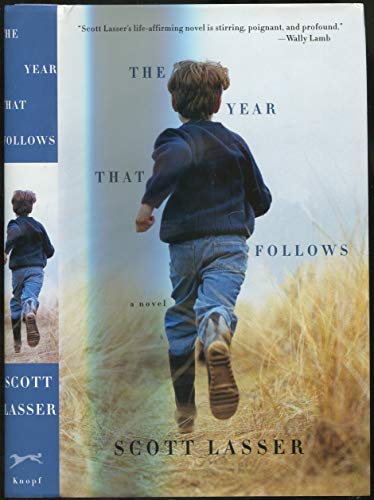
After her brother is killed in New York on September 11, single mother Cat embarks on a search for his orphaned son and reconnects with her father, Sam, as they struggle to come to terms with loss, relationships, and family secrets.
Die Inhaltsangabe kann sich auf eine andere Ausgabe dieses Titels beziehen.
Über die Autorin bzw. den Autor
\Scott Lasser is a graduate of Dartmouth College, the University of Michigan, and the Wharton School. His novels include Battle Creek and All I Could Get. A native of Detroit, he lives with his family in Aspen, Colorado.
Auszug. © Genehmigter Nachdruck. Alle Rechte vorbehalten.
I I’m dead, Sam thinks. Simple as that. For months they’d been warned of kamikaze attacks and, initially, nothing happened. Then one day he ran down from the bridge, heard the batteries open fire and the whine of an approaching plane. He saw it, recognized the charcoal silhouette against the milky sky. A Zero. It came in low, its wings toggling through the antiaircraft blasts till it veered and disappeared behind the starboard railing.He wakes and looks about, at the bare walls of his bedroom, then grabs a fistful of sheet and takes a moment to get his bearings. A dream. The dream. The same damn dream these fifty-seven years, the memory burned so deep that most nights his mind can’t avoid it. Always he wakes terrified, but comforted, too. There’s the terror, but it’s the same terror.Sam sits up, playing out the history, a memory now, a waking dream and just as real. He came to on a hospital ship. He learned that the Japanese pilot missed his destroyer but crashed into the sea close enough to shake the ship like a bath toy. Twelve men went overboard; five were rescued. Sam stayed on deck, but cracked two vertebrae. For eleven weeks he lay paralyzed. I’m dead, he thought again. Back home, in a VA hospital in Detroit, the doctors fused the two vertebrae together, and most of the rest. Six days after the operation, he regained feeling. In that moment, when he realized that the world would come back to him, he felt dizzy, weightless, not a person at all. Life now seemed a surprise, an unopened gift. Soon he could walk, but with limitations; his back was rigid as a two-by-four, his neck so stiff that he could only look straight ahead. For this the navy would send him a small monthly disability check. How odd, Sam thought. One moment you’re dead, the next you have income for life.He will see the rabbi in two hours, so he shaves, a two-part process, first with the cream and blade, then, once his face has had a chance to dry, with the electric razor, which makes that odd hum when it finds a patch of whiskers he missed with the blade. He’s seen old men who shave themselves badly, leaving sloppy patches of gray stubble, signs of incompetence or—even worse—apathy. It’s the little things that matter now, the small acts of defiance that bring dignity in the face of all the deterioration. He has decided that if there’s any meaning to life, it’s to be found in the daily struggles.Two squirrels are bickering outside his window, making a racket that could be mistaken for birds. Daily struggles. They know it, too.He dresses in a dark suit, funereal as fits the occasion, and slips his dog tags into his pants pocket. He likes the feeling of them there, like loose change; if he ever drops over dead, they’ll know exactly who he is.His son soon will have been dead for one year, and Sam wants to recognize this, as per the Jewish tradition. He has no others. That Kyle has been taken from him, that he simply disappeared—this is something that no father should endure. He understands now the look his own father gave him when Sam shipped off to war, and also why he looked away when Sam came back, paralyzed, weighing 126 pounds. The suffering of a child is horrible; of one’s own it is unthinkable. And so Sam has turned to his faith, though he doubts he has ever truly believed, even when he lay in that hospital bed and didn’t know if he would move again, or again almost fifty years later when they cut his chest open. Faith has always eluded him. The rituals of faith, though, may still prove useful.He drives to the temple, navigating his Lincoln down the bright streets, at one point catching a glimpse of the denim-colored Pacific. Midweek there are but a few cars in the temple’s lot, just the old sedans and econo-boxes of those who work in religion—at least the Jewish religion. Inside, the air is still, the lighting dim. There are pictures on the wall of an old temple in Brooklyn, displaced here to California, like the Dodgers. Down the hall he sees light and heads for it.The rabbi is a tall man with coarse black hair, thick dark eyebrows, glasses to match. Gauss. “Like the math- ematician,” Sam said on the phone, to which the rabbi replied, “Exactly.” Sam took it as a good sign. The real Gauss was perhaps the most brilliant man of his time, maybe of all time, and Sam respects anyone who has heard his name, unusual now in this era of good-looks idolatry and the worship of anyone who can shout into a microphone and call it music. Sam sits before Rabbi Gauss’s heavy wooden desk, looking at his bookshelves and photos. He is struck with the same thought he had the last time he met a rabbi: how is it that such a learned man can have faith? It’s a mystery to Sam, and yet here he is.“So, Mr. Miller,” says Rabbi Gauss. “You want to recognize your son’s yahrzeit.”“Exactly.”“Have you been to our temple before?”“No.”“How long have you lived in Santa Barbara?”“About fifteen years,” Sam says.“Have you been to any temple, or, should I say, when was the last time?”Sam thinks about this. “Nixon was president.”The rabbi, bless him, is amused. “Nixon? So at least thirty years,” he says.“My mother died back then, of heart failure. My father, too.” Sam’s eye catches a shaft of light coming in the window, dust dancing in its beam.“So now you have lost a son, and you are back.”“Guilty as charged, Rabbi. You know, I look at your books and think, I could love Judaism, were it not for the religion. I’ll be honest, I never feel less Jewish than when I’m in a temple. The Hebrew prayers, the responsive reading, even the idea of God. I struggle with it all. My father, who really only spoke Yiddish well, he used to take me to temple on Yom Kippur, when I was a boy, this was in the twenties, and when he’d had enough of the service, we’d go up the street to a coffee shop and have ham and cheese sandwiches. Ham and cheese: he thought this was one of the great things about America.”It occurs to Sam that his story might be offensive to a rabbi. This one doesn’t look offended; there’s something to be said for the young. “The point is,” Sam says, “he still went to temple. He found something of value there.”“Tell me about your son,” the rabbi says.“A fascinating young man. Very smart and, what do they say nowadays, intense. He worked on Wall Street. On the morning of September eleventh he had a meeting in the north tower. He went in and was never heard from again.”The rabbi takes off his glasses to rub his eyes, which are surprisingly blue.“For a time I hoped against hope. There was no body. I sat no shivah, held no funeral, but after a time I had to face the truth.”The rabbi nods, puts his glasses back on.“Most of the people who are important to me are dead,” Sam says. “And soon, I will be, too. Till then I want to remember the dead. I wish I’d done it all along; it’s as close as I can get to bringing them back. And I want to bring my daughter out to teach her how to do this. I’ve taught her nothing about death, but her mother is dead, her brother is dead. Soon, her father will be dead, and she will be alone. This may be the one thing left I can teach her that will do her some good.”“Your children’s mother?”“Dead, in 1975.”“She was Jewish?” asks the rabbi.“No.”“So your children are not really Jewish.”“Do they have to be?”“Not at all,” says Rabbi Gauss. “But you are. I will make you a deal. I will read your son’s name on the yahrzeit, a son who...
„Über diesen Titel“ kann sich auf eine andere Ausgabe dieses Titels beziehen.
Weitere beliebte Ausgaben desselben Titels

Suchergebnisse für The Year That Follows

Beispielbild für diese ISBN
The Year That Follows
Anbieter: Wonder Book, Frederick, MD, USA
Verkäuferbewertung 5 von 5 Sternen

Zustand: Very Good. . Good dust jacket. Artikel-Nr. F24C-01379
Gebraucht kaufen
EUR 4,68
Versand gratis
Versand innerhalb von USA
Versand innerhalb von USA
Anzahl: 1 verfügbar
Beispielbild für diese ISBN
The Year That Follows
Verlag:
Knopf (edition First Edition), 2009
ISBN 10: 0307271196
ISBN 13: 9780307271198
Gebraucht
Hardcover
Erstausgabe
Anbieter: BooksRun, Philadelphia, PA, USA
Verkäuferbewertung 5 von 5 Sternen
Hardcover. Zustand: Very Good. First Edition. It's a well-cared-for item that has seen limited use. The item may show minor signs of wear. All the text is legible, with all pages included. It may have slight markings and/or highlighting. Artikel-Nr. 0307271196-8-1
Gebraucht kaufen
EUR 4,76
Versand gratis
Versand innerhalb von USA
Versand innerhalb von USA
Anzahl: 1 verfügbar
Beispielbild für diese ISBN
The Year That Follows
Anbieter: World of Books (was SecondSale), Montgomery, IL, USA
Verkäuferbewertung 5 von 5 Sternen
Zustand: Good. Item in good condition. Textbooks may not include supplemental items i.e. CDs, access codes etc. Artikel-Nr. 00089644788
Gebraucht kaufen
EUR 5,82
Versand gratis
Versand innerhalb von USA
Versand innerhalb von USA
Anzahl: 2 verfügbar
Beispielbild für diese ISBN
The Year That Follows
Anbieter: World of Books (was SecondSale), Montgomery, IL, USA
Verkäuferbewertung 5 von 5 Sternen
Zustand: Very Good. Item in very good condition! Textbooks may not include supplemental items i.e. CDs, access codes etc. Artikel-Nr. 00077742468
Gebraucht kaufen
EUR 5,82
Versand gratis
Versand innerhalb von USA
Versand innerhalb von USA
Anzahl: 2 verfügbar
Beispielbild für diese ISBN
The Year That Follows
Anbieter: ThriftBooks-Dallas, Dallas, TX, USA
Verkäuferbewertung 5 von 5 Sternen
Hardcover. Zustand: Very Good. No Jacket. Former library book; May have limited writing in cover pages. Pages are unmarked. ~ ThriftBooks: Read More, Spend Less. Artikel-Nr. G0307271196I4N10
Gebraucht kaufen
EUR 6,07
Versand gratis
Versand innerhalb von USA
Versand innerhalb von USA
Anzahl: 1 verfügbar
Beispielbild für diese ISBN
The Year That Follows
Anbieter: ThriftBooks-Dallas, Dallas, TX, USA
Verkäuferbewertung 5 von 5 Sternen
Hardcover. Zustand: Good. No Jacket. Former library book; Pages can have notes/highlighting. Spine may show signs of wear. ~ ThriftBooks: Read More, Spend Less. Artikel-Nr. G0307271196I3N10
Gebraucht kaufen
EUR 6,07
Versand gratis
Versand innerhalb von USA
Versand innerhalb von USA
Anzahl: 1 verfügbar
Beispielbild für diese ISBN
The Year That Follows
Verlag:
Knopf Doubleday Publishing Group, 2009
ISBN 10: 0307271196
ISBN 13: 9780307271198
Gebraucht
Hardcover
Anbieter: Better World Books, Mishawaka, IN, USA
Verkäuferbewertung 5 von 5 Sternen
Zustand: Very Good. First. Pages intact with possible writing/highlighting. Binding strong with minor wear. Dust jackets/supplements may not be included. Stock photo provided. Product includes identifying sticker. Better World Books: Buy Books. Do Good. Artikel-Nr. 15260876-75
Gebraucht kaufen
EUR 6,09
Versand gratis
Versand innerhalb von USA
Versand innerhalb von USA
Anzahl: 1 verfügbar
Beispielbild für diese ISBN
The Year That Follows
Verlag:
Knopf Doubleday Publishing Group, 2009
ISBN 10: 0307271196
ISBN 13: 9780307271198
Gebraucht
Hardcover
Anbieter: Better World Books: West, Reno, NV, USA
Verkäuferbewertung 5 von 5 Sternen
Zustand: Very Good. First. Former library copy. Pages intact with possible writing/highlighting. Binding strong with minor wear. Dust jackets/supplements may not be included. Includes library markings. Stock photo provided. Product includes identifying sticker. Better World Books: Buy Books. Do Good. Artikel-Nr. 54959363-75
Gebraucht kaufen
EUR 6,14
Versand gratis
Versand innerhalb von USA
Versand innerhalb von USA
Anzahl: 1 verfügbar
Beispielbild für diese ISBN
The Year That Follows
Anbieter: Wonder Book, Frederick, MD, USA
Verkäuferbewertung 5 von 5 Sternen
Zustand: Very Good. Very Good condition. Like New dust jacket. A copy that may have a few cosmetic defects. May also contain light spine creasing or a few markings such as an owner's name, short gifter's inscription or light stamp. Artikel-Nr. S16D-02045
Gebraucht kaufen
EUR 6,71
Versand gratis
Versand innerhalb von USA
Versand innerhalb von USA
Anzahl: 1 verfügbar
Beispielbild für diese ISBN
The Year That Follows
Anbieter: AwesomeBooks, Wallingford, Vereinigtes Königreich
Verkäuferbewertung 5 von 5 Sternen
hardcover. Zustand: Very Good. The Year That Follows This book is in very good condition and will be shipped within 24 hours of ordering. The cover may have some limited signs of wear but the pages are clean, intact and the spine remains undamaged. This book has clearly been well maintained and looked after thus far. Money back guarantee if you are not satisfied. See all our books here, order more than 1 book and get discounted shipping. . Artikel-Nr. 7719-9780307271198
Gebraucht kaufen
EUR 14,36
EUR 4,76 Versand
Versand von Vereinigtes Königreich nach USA
Versand von Vereinigtes Königreich nach USA
Anzahl: 1 verfügbar