
Verwandte Artikel zu The Widows of Eastwick: A novel
Inhaltsangabe
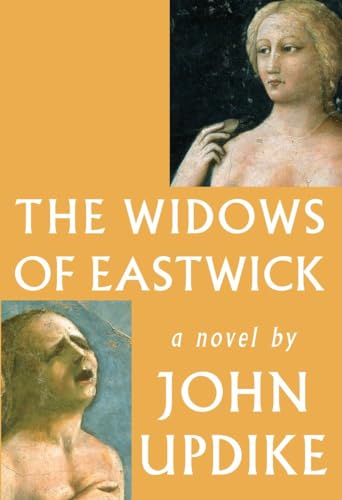
A master of American letters and the author of the acclaimed Rabbit series returns with a sequel to The Witches of Eastwick about the three much-loved divorcées—three decades later.
More than three decades have passed since the events described in John Updike’s The Witches of Eastwick. The three divorcées—Alexandra, Jane, and Sukie—have left town, remarried, and become widows. They cope with their grief and solitude as widows do: they travel the world, to such foreign lands as Canada, Egypt, and China, and renew old acquaintance. Why not, Sukie and Jane ask Alexandra, go back to Eastwick for the summer? The old Rhode Island seaside town, where they indulged in wicked mischief under the influence of the diabolical Darryl Van Horne, is still magical for them. Now Darryl is gone, and their lovers of the time have aged or died, but enchantment remains in the familiar streets and scenery of the village, where they enjoyed their lusty primes as free and empowered women. And, among the local citizenry, there are still those who remember them, and wish them ill. How they cope with the lingering traces of their evil deeds, the shocks of a mysterious counterspell, and the advancing inroads of old age, form the burden on Updike’s delightful, ominous sequel.
Die Inhaltsangabe kann sich auf eine andere Ausgabe dieses Titels beziehen.
Über die Autorin bzw. den Autor
JOHN UPDIKE was the author of more than sixty books, eight of them collections of poetry. His novels, including The Centaur, Rabbit Is Rich, and Rabbit at Rest, won the Pulitzer Prize, the National Book Award, the National Book Critics Circle Award, and the William Dean Howells Medal of the American Academy of Arts and Letters. He died in 2009.
Auszug. © Genehmigter Nachdruck. Alle Rechte vorbehalten.
i. The Coven ReconstitutedThose of us acquainted with their sordid and scandalous story were not surprised to hear, by way of rumors from the various localities where the sorceresses had settled after fleeing our venerable town of Eastwick, Rhode Island, that the husbands whom the three Godforsaken women had by their dark arts concocted for themselves did not prove durable. Wicked methods make weak products. Satan counterfeits Creation, yes, but with inferior goods.Alexandra, the oldest in age, the broadest in body, and the nearest in character to normal, generous-spirited humanity, was the first to become a widow. Her instinct, as with so many a wife suddenly liberated into solitude, was to travel—as if the world at large, by way of flimsy boarding cards and tedious airport delays and the faint but undeniable risk of flight in a time of rising fuel costs, airline bankruptcy, suicidal terrorists, and accumulating metal fatigue, could be compelled to yield the fruitful aggravation of having a mate. Jim Farlander, the husband she had conjured for herself from a hollowed pumpkin, a cowboy hat, and a pinch of Western soil scraped from inside the back fender of a pickup truck with Colorado plates that she had seen parked, looking eerily out of place, on Oak Street in the early 1970s, had, as their marriage settled and hardened, proved difficult to budge from his ceramics studio and little-frequented pottery shop on a side street in Taos, New Mexico.Jim’s idea of a trip had been the hour’s drive south to Santa Fe; his idea of a holiday was spending a day in one of the Indian reservations—Navajo, Zuni, Apache, Acoma, Isleta Pueblo—spying out what the Native American potters were offering in the reservation souvenir shops, and hoping to pick up cheap in some dusty Indian Bureau commissary an authentic old black-and-white geometric Pueblo jar or a red-on-buff Hohokam storage jar, with its spiral-and-maze pattern, which he could peddle for a small fortune to a newly endowed museum in one of the burgeoning resort cities of the Southwest. Jim liked where he was, and Alexandra liked that in him, since she as his wife was part of where he was. She liked his lean build (a flat stomach to the day he died, and never performed a sit-up in his life) and the saddle smell of his sweat and the scent of clay that clung, like a sepia aura, to his strong and knowing hands. They had met, on the natural plane, when she, for some time divorced, had taken a course at the Rhode Island School of Design, where he had been enlisted as a fill-in instructor. The four stepchildren—Marcy, Ben, Linda, Eric—that she saddled him with couldn’t have asked for a calmer, more soothingly taciturn father-substitute. He was easier for her children—half out of the nest in any case, Marcy being all of eighteen—to relate to than their own father, Oswald Spofford, a small manufacturer of kitchen fixtures from Norwich, Connecticut. Poor Ozzie had become so earnestly involved in Little League baseball and company bowling that no one, not even his children, could take him seriously.People had taken Jim Farlander seriously, women and children especially, giving him back his own coiled silence. His level gray eyes had the glint of a gun from within the shade of his wide-brimmed hat, its crown darkened where his thumb and fingers pinched it. When he was at the pottery wheel he tied a faded blue bandana around his head to keep his long hair—gray but still streaked with its original sun-bleached auburn and gathered behind into an eight-inch ponytail—out of the clay, wet and spinning on the foot-powered wheel. A fall in his teens from a horse had left him with a limp, and the wheel, which he refused to electrify, limped with him, while out of the spinning his masculine hands shaped blobs upward into graceful vessels with slender waists and swelling bottoms.It was in bed she first felt his death coming. His erections began to wilt just as she might have come if he had held on; instead, in his body upon hers, there was a palpable loosening in the knit of his sinews. There had been a challenging nicety in the taut way Jim dressed himself—pointy vanilla-colored boots, butt-hugging jeans with rivet-bordered pockets, and crisp checked shirts double-buttoned at the cuff. Once a dandy of his type, he began to wear the same shirt two and even three days in a row. His jaw showed shadows of white whisker underneath, from careless shaving or troubled eyesight. When the ominous blood counts began to arrive from the hospital, and the shadows in the X-rays were visible to even her untrained eyes, he greeted the news with stoic lassitude; Alexandra had to fight to get him out of his crusty work clothes into something decent. They had joined the legion of elderly couples who fill hospital waiting rooms, as quiet with nervousness as parents and children before a recital. She felt the other couples idly pawing at them with their eyes, trying to guess which of the two was the sick one, the doomed one; she didn’t want it to be obvious. She wanted to present Jim as a mother presents a child going to school for the first time, as a credit to her. They had lived, these thirty-plus years since she had lived in Eastwick, by their own rules, up in Taos; there the free spirits of the Lawrences and Mabel Dodge Luhan still cast a sheltering cachet over the remnant tribe of artistic wannabes, a hard-drinking, New Age–superstitious, artsy-craftsy crowd who aimed their artifacts, in their shop-window displays, more and more plaintively at scrimping, low-brow tourists rather than the well-heeled local collectors of Southwestern art. Alexandra for a time had revived her manufacture of little ceramic “bubbies”—faceless, footless little female figures, pleasant to hold in the hand and roughly painted in clothes worn as close to the skin as tattoos—but Jim, jealous and dictatorial in his art as true artists are, had been less than gracious about sharing his kiln. In any case, the miniature women, their vulval cleft boldly dented into the clay with a toothpick or nail file held sideways, belonged to an uncomfortable prior period of her life, when she had practiced, with two other Rhode Island divorcees, a half-baked suburban variety of witchcraft.Jim’s illness drove her and Jim down from safe, arty Taos into the wider society, the valleys of the ailing, a vast herd moving like stampeded bison toward the killing cliff. The socialization forced upon her—interviews with doctors, most of them unsettlingly young; encounters with nurses, demanding merciful attentions the hospitalized patient was too manly and depressed to ask for himself; commisera- tion with others in her condition, soon-to-be widows and widowers she would have shunned on the street but now, in these antiseptic hallways, embraced with shared tears—prepared her for travel in the company of strangers.She could not believe it—how totally Jim was gone, his morning absence as vivid as a rooster’s wake-up crow, his evening non-appearance a refusal bound, she felt, to be cancelled, any moment, by the scuffling sound of his boots limping across the entry hall or the squeak, two rooms away, of his potter’s wheel. Three months after his death, she signed up for a ten-day tour of the Canadian Rockies. Her old, married, cosseted self, a bohemian snob proud of her careless, mannish clothes and high-desert privacy, would have sneered at the feigned camaraderie of an organized group tour. She foresaw the daily duty to rise and gorge on cafeteria-style hotel breakfasts and submit to more marvels, and the resisted but irresistible naps in the swaying bus in clammy proximity to an alien body, usually that of another plucky widow, overweight and remorselessly talkative. Then there would be the sleepless hours, amid worrisome small noises and mysterious...
„Über diesen Titel“ kann sich auf eine andere Ausgabe dieses Titels beziehen.
Suchergebnisse für The Widows of Eastwick: A novel

Beispielbild für diese ISBN
The Widows of Eastwick
Anbieter: World of Books (was SecondSale), Montgomery, IL, USA
Verkäuferbewertung 5 von 5 Sternen

Hardback. Zustand: Fair. A master of American letters and the author of the acclaimed Rabbit series returns with a sequel to The Witches of Eastwick about the three much-loved divorcées--three decades later. More than three decades have passed since the events described in John Updike's The Witches of Eastwick. The three divorcées--Alexandra, Jane, and Sukie--have left town, remarried, and become widows. They cope with their grief and solitude as widows do: they travel the world, to such foreign lands as Canada, Egypt, and China, and renew old acquaintance. Why not, Sukie and Jane ask Alexandra, go back to Eastwick for the summer? The old Rhode Island seaside town, where they indulged in wicked mischief under the influence of the diabolical Darryl Van Horne, is still magical for them. Now Darryl is gone, and their lovers of the time have aged or died, but enchantment remains in the familiar streets and scenery of the village, where they enjoyed their lusty primes as free and empowered women. And, among the local citizenry, there are still those who remember them, and wish them ill. How they cope with the lingering traces of their evil deeds, the shocks of a mysterious counterspell, and the advancing inroads of old age, form the burden on Updike's delightful, ominous sequel. Artikel-Nr. 00067944015
Gebraucht kaufen
EUR 4,44
Versand gratis
Versand innerhalb von USA
Versand innerhalb von USA
Anzahl: 1 verfügbar
Beispielbild für diese ISBN
The Widows of Eastwick
Anbieter: World of Books (was SecondSale), Montgomery, IL, USA
Verkäuferbewertung 5 von 5 Sternen
Hardback. Zustand: Good. A master of American letters and the author of the acclaimed Rabbit series returns with a sequel to The Witches of Eastwick about the three much-loved divorcées--three decades later. More than three decades have passed since the events described in John Updike's The Witches of Eastwick. The three divorcées--Alexandra, Jane, and Sukie--have left town, remarried, and become widows. They cope with their grief and solitude as widows do: they travel the world, to such foreign lands as Canada, Egypt, and China, and renew old acquaintance. Why not, Sukie and Jane ask Alexandra, go back to Eastwick for the summer? The old Rhode Island seaside town, where they indulged in wicked mischief under the influence of the diabolical Darryl Van Horne, is still magical for them. Now Darryl is gone, and their lovers of the time have aged or died, but enchantment remains in the familiar streets and scenery of the village, where they enjoyed their lusty primes as free and empowered women. And, among the local citizenry, there are still those who remember them, and wish them ill. How they cope with the lingering traces of their evil deeds, the shocks of a mysterious counterspell, and the advancing inroads of old age, form the burden on Updike's delightful, ominous sequel. Artikel-Nr. 00094078562
Gebraucht kaufen
EUR 4,44
Versand gratis
Versand innerhalb von USA
Versand innerhalb von USA
Anzahl: 4 verfügbar
Beispielbild für diese ISBN
The Widows of Eastwick
Anbieter: ThriftBooks-Atlanta, AUSTELL, GA, USA
Verkäuferbewertung 5 von 5 Sternen
Hardcover. Zustand: Very Good. No Jacket. Former library book; Missing dust jacket; May have limited writing in cover pages. Pages are unmarked. ~ ThriftBooks: Read More, Spend Less. Artikel-Nr. G0307269604I4N11
Gebraucht kaufen
EUR 5,99
Versand gratis
Versand innerhalb von USA
Versand innerhalb von USA
Anzahl: 1 verfügbar
Beispielbild für diese ISBN
The Widows of Eastwick
Anbieter: BooksRun, Philadelphia, PA, USA
Verkäuferbewertung 5 von 5 Sternen
Hardcover. Zustand: Fair. With dust jacket. The item might be beaten up but readable. May contain markings or highlighting, as well as stains, bent corners, or any other major defect, but the text is not obscured in any way. Artikel-Nr. 0307269604-7-1-29
Gebraucht kaufen
EUR 6,03
Versand gratis
Versand innerhalb von USA
Versand innerhalb von USA
Anzahl: 1 verfügbar
Beispielbild für diese ISBN
The Widows of Eastwick
Verlag:
Knopf Doubleday Publishing Group, 2008
ISBN 10: 0307269604
ISBN 13: 9780307269607
Gebraucht
Hardcover
Anbieter: Better World Books, Mishawaka, IN, USA
Verkäuferbewertung 5 von 5 Sternen
Zustand: Good. 1 Edition. Pages intact with minimal writing/highlighting. The binding may be loose and creased. Dust jackets/supplements are not included. Stock photo provided. Product includes identifying sticker. Better World Books: Buy Books. Do Good. Artikel-Nr. 386657-75
Gebraucht kaufen
EUR 6,34
Versand gratis
Versand innerhalb von USA
Versand innerhalb von USA
Anzahl: 1 verfügbar
Beispielbild für diese ISBN
The Widows of Eastwick
Anbieter: Wonder Book, Frederick, MD, USA
Verkäuferbewertung 5 von 5 Sternen
Zustand: Very Good. Very Good condition. Good dust jacket. A copy that may have a few cosmetic defects. May also contain light spine creasing or a few markings such as an owner's name, short gifter's inscription or light stamp. Artikel-Nr. Q12H-01067
Gebraucht kaufen
EUR 6,41
Versand gratis
Versand innerhalb von USA
Versand innerhalb von USA
Anzahl: 2 verfügbar
Beispielbild für diese ISBN
The Widows of Eastwick
Anbieter: WorldofBooks, Goring-By-Sea, WS, Vereinigtes Königreich
Verkäuferbewertung 5 von 5 Sternen
Paperback. Zustand: Very Good. The book has been read, but is in excellent condition. Pages are intact and not marred by notes or highlighting. The spine remains undamaged. Artikel-Nr. GOR002716989
Gebraucht kaufen
EUR 6,39
EUR 6,65 Versand
Versand von Vereinigtes Königreich nach USA
Versand von Vereinigtes Königreich nach USA
Anzahl: 2 verfügbar
Foto des Verkäufers
The Widows of Eastwick
Anbieter: Hamelyn, Madrid, M, Spanien
Verkäuferbewertung 5 von 5 Sternen
Zustand: Good. : En esta secuela de 'Las brujas de Eastwick', John Updike nos presenta a Alexandra, Jane y Sukie, tres divorciadas que, tras enviudar, regresan al pueblo costero de Eastwick, Rhode Island. Después de haber viajado por el mundo, las tres mujeres buscan revivir la magia de su juventud y enfrentarse a los recuerdos de sus acciones pasadas. Sin embargo, Eastwick ya no es el mismo lugar de libertinaje y liberación que conocieron, sino un remanso de paz habitado por familias conservadoras. Con sus poderes menguantes, las tres brujas deberán enfrentarse a un nuevo hechizo de conformidad y a los habitantes del pueblo que aún guardan rencor por sus travesuras. Una novela ingeniosa y perspicaz sobre el paso del tiempo y la reconciliación con el pasado. EAN: 9780307269607 Tipo: Libros Categoría: Fantasía|Literatura y Ficción Título: The Widows of Eastwick Autor: John Updike Editorial: Knopf Idioma: en Páginas: 320 Formato: tapa dura. Artikel-Nr. Happ-2023-09-12-c7ded61a
Gebraucht kaufen
EUR 5,99
EUR 11,99 Versand
Versand von Spanien nach USA
Versand von Spanien nach USA
Anzahl: 1 verfügbar
Foto des Verkäufers
The Widows of Eastwick
Verlag:
Alfred A. Knopf, New York, 2008
ISBN 10: 0307269604
ISBN 13: 9780307269607
Gebraucht
Softcover
Erstausgabe
Anbieter: Jeff Hirsch Books, ABAA, Wadsworth, IL, USA
Verkäuferbewertung 5 von 5 Sternen
First Edition. First edition. Softcover. Advance Reading Copy. 303 pages. A sequel to his earlier novel "The Witches of Eastwick." A very near fine copy in glossy illustrated wrappers and with laid in slip. Artikel-Nr. 193866
Gebraucht kaufen
EUR 18,35
EUR 6,24 Versand
Versand innerhalb von USA
Versand innerhalb von USA
Anzahl: 1 verfügbar
Foto des Verkäufers
The Widows of Eastwick; - 1st Edition/1st Printing
Verlag:
Alfred A. Knopf, New York, 2008
ISBN 10: 0307269604
ISBN 13: 9780307269607
Gebraucht
Hardcover
Erstausgabe
Anbieter: Books Tell You Why - ABAA/ILAB, Summerville, SC, USA
Verkäuferbewertung 2 von 5 Sternen

Cloth. Zustand: Fine. Zustand des Schutzumschlags: Near Fine. First Edition; First Printing. A Fine first printing of the first edition in a Nearly Fine dust-jacket that is somewhat edgeworn; In this novel, John Updike tells the story of four women who are widows. Each woman is dealing with her own unique set of emotions and challenges. The novel explores the ways in which these widows cope with their loss and build new lives for themselves.; 8vo; 308 pages. Artikel-Nr. 53378
Gebraucht kaufen
EUR 32,11
Versand gratis
Versand innerhalb von USA
Versand innerhalb von USA
Anzahl: 1 verfügbar