
Verwandte Artikel zu God in the Qur'an: God in Three Classic Scriptures
Inhaltsangabe
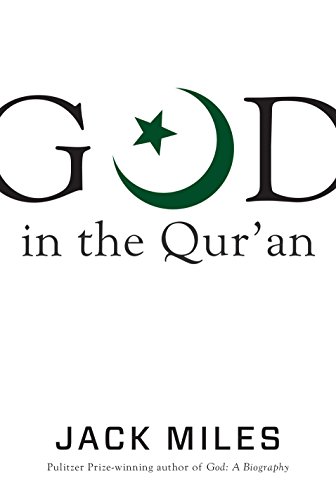
Who is Allah? What does He ask of those who submit to His teachings? Pulitzer Prize-winner Jacke Miles gives us a deeply probing, revelatory portrait of the world’s second largest, fastest-growing and perhaps most tragically misunderstood religion. In doing so, Miles illuminates what is unique about Allah, His teachings, and His resolutely merciful temperament, and he thereby reveals that which is false, distorted, or simply absent from the popular conception of the heart of Islam.
So, too, does Miles uncover the spiritual and scriptural continuity of the Islamic tradition with those of Judaism and Christianity, and the deep affinities among the three by setting passages from the Hebrew Bible, the New Testament, and the Qur’an side by side. In the spirit of his two previous books, God and Christ, and with his characteristic sensitivity, perspicacity and prodigious command of the subject, Miles calls for us all to read another’s scriptures with the same understanding and accommodating eye that we turn upon our own.
Die Inhaltsangabe kann sich auf eine andere Ausgabe dieses Titels beziehen.
Über die Autorin bzw. den Autor
JACK MILES pursued religious studies at Pontifical Gregorian University, Rome, and The Hebrew University of Jerusalem, and holds a doctorate in Near Eastern languages from Harvard University. In 2002, he was named a MacArthur Fellow, and he currently serves as Distinguished Professor Emeritus of English and Religious Studies at the University of California, Irvine, and Senior Fellow for Religion and International Affairs with the Pacific Council on International Policy. In the 2018-2019 academic year, he will serve as Corcoran Visiting Chair of Christian and Jewish Learning at Boston College. His book God: A Biography won a Pulitzer Prize. He served as editor for the Los Angeles Times Book Review and was a member of that newspaper's editorial board. His writing has appeared in The Atlantic, The New York Times, The Washington Post, and The Boston Globe, among many other publications.
Auszug. © Genehmigter Nachdruck. Alle Rechte vorbehalten.
Foreword
Of God, Religion, and the Violence of Sacred Scripture
Among all the books that have been written about God, I myself have written two: one about God in Jewish scripture and another about God in Christian scripture. The book before you—about God in Muslim scripture, the Qur’an—is the third in the series. I am a Christian, a practicing Episcopalian, but I approach God in all three of these books not directly but only through the respective scriptures of the three traditions. I write, moreover, not as a religious believer but only as a literary critic writing quite consciously for an audience crowded with unbelievers.
What this means is that I approach the scriptures not through belief but through a suspension of disbelief. Suspension of disbelief is a notion introduced into English literary criticism by the nineteenth-century poet and critic Samuel Taylor Coleridge. It is by the temporary suspension of disbelief that any of us is able to “let go” and enjoy a novel, a film, or a television series like Game of Thrones on its own terms. When we go to the movies on a summer night and see a romantic comedy, we do not object as the film goes along that the lovers on screen are not real lovers but only two actors pretending to be in love. We disbelieve in their ultimate reality, of course, but for the duration of the film, we “allow” them to be real. We play along.
You can play along in the same way even when a literary character is divine. Not long ago, for a course I taught, I had occasion to re-read Homer’s Iliad, this time in the wonderful Robert Fagles translation. The Greek god Zeus is a major character in that epic—the greatest of the Olympian gods. I do not belief that Zeus exists, but for the duration of my reading, I willingly played along with Homer, allowing Zeus to shape the course of the Iliad as powerfully as he does.
As a Christian, by a kind of reversal, I can temporarily suspend my belief that the God of the Bible is indeed much more than a literary character and take him as no more than that for the duration of an exercise in literary appreciation. Just as I can go to St. Peter’s Basilica in Rome on a Sunday to worship and then go back on a Monday to study its art and architecture, so I can hear Christ’s Sermon on the Mount on Sunday as a part of my worship and then study it on Monday as relevant data about Christ as a literary character. The two exercises are different, deeply so, but they are not mutually exclusive and can be mutually stimulating.
Literary criticism, beginning in this way with the aesthetic experience of a work of literature, is different from literary history or historical criticism. Historical criticism is concerned with such questions as: Who wrote this work? When did he write it? Why did he write it? For what audience did he write it? Or did she write it? Or they? Was it originally in the language in which we now read it? What sources did they draw on, if any, as they wrote it, or is it truly an original creation? Has it been revised over time? Is it in circulation in more than one form? If so, which form is best? Is it perhaps the redacted combination of more than one version of itself? What has been its reception over time? Has it been translated? Has it ever been suppressed?
And so forth. Such questions—legitimate as they are, fascinating as they can be, and endless as they also are—are not the subject matter of this book. A scholar may have answered dozens of such questions about a given work of literature, indeed spent a lifetime answering them, without ever quite engaging the work in itself, as an aesthetic creation separable to some extent, as all great works are, from the time and place and circumstances in which it arose. Historical criticism need not interfere with literary appreciation, and the two can often be symbiotic, but the two are even then distinguishable.
In what follows, we will consider a cast of iconic characters who appear both in the Bible and in the Qur’an through an ongoing comparison whose focus at every point will be on God as the understood central character. Our modest goal will be a certain aesthetic appropriation not of the entire Bible or the entire Qur’an but just of these related passages within the two. My hope is that you will join me by whatever suspension of belief or disbelief works for you as I give primary consideration to Allah, God, as the overwhelmingly dominant central figure in the passages from the Qur’an.
Over the centuries, the view most often taken of the Qur’an by Jews and Christians alike has been the view classically taken by Jews of the New Testament—namely, “What’s true is not new, and what’s new is not true.” Non-Muslims have disbelieved and dismissed what Muslims believe of the Qur’an—namely, that it is God’s last word to mankind, the crown of revelation, restoring what Jews and Christians had lost from or suppressed in their scriptures by oblivion or corruption. My invitation here to Jews and Christians and the many others who disbelieve that bold Muslim claim is that, as a modest exercise in literary appreciation, they temporarily suspend their disbelief while together we attempt an engagement with God as the central character of the Qur’an, and with the Qur’an as an elusively powerful work of literature. My invitation to Muslims is that just as they might pray in a mosque on Friday but study its dome as students of architecture on a Tuesday, so they too might play along with this “Tuesday exercise,” this literary engagement with just a few selections from the Qur’an, read in conjunction with matching passages from the Bible. Honoring the Holy Qur’an in this way, as literature, is a way to open it, with sympathy, to new readers.
In the first of my books on God, God: A Biography, I wrote about God as he instructed Israel to remember him:
In times to come, when your son asks you, “What is the meaning of the decrees and laws and customs that Yahweh our God has laid down for you?” you shall tell your son, “Once we were Pharaoh’s slaves in Egypt, and Yahweh brought us out of Egypt by his mighty hand. Before our eyes Yahweh worked great and terrible signs and wonders against Egypt, against Pharaoh and all in his House. And he brought us out from there to lead us into the land he swore to our fathers he would give to us. And Yahweh commanded us to observe all these laws and to fear Yahweh our God so as to be happy for ever and to live, as he has granted us to do until now.” (Deuteronomy 6:20-24)
This was the Yahweh who—as “the lord” in most translations—is the initially invincible protagonist of the Tanakh or Jewish Bible, which became, as included in the Christian Bible, the Old Testament. Yet in the Tanakh, after Yahweh’s encounter with Job, he falls strangely silent: he never speaks again, and it seems that Israel comes to count decreasingly on His “mighty hand.” He is remembered with gratitude and devotion, to be sure, but his power becomes a distant future hope rather than a compelling present reality.
In my second God book, Christ: A Crisis in the Life of God, I wrote about God as Yahweh the Jew—the God of the Jews returning to action as a Jew himself:
In the beginning was the Word:
The Word was with God
And the Word was God. (John 1:1)
And then the stunning claim:
The Word became flesh,
he lived among us,
and we saw his glory,
the glory that he has from the Father as only Son of the Father,
full of grace and...
„Über diesen Titel“ kann sich auf eine andere Ausgabe dieses Titels beziehen.
Suchergebnisse für God in the Qur'an: God in Three Classic Scriptures

Beispielbild für diese ISBN
God in the Qur'an (God in Three Classic Scriptures)
Anbieter: World of Books (was SecondSale), Montgomery, IL, USA
Verkäuferbewertung 5 von 5 Sternen

Zustand: Very Good. Item in very good condition! Textbooks may not include supplemental items i.e. CDs, access codes etc. Artikel-Nr. 00108845449
Gebraucht kaufen
EUR 3,39
Versand gratis
Versand innerhalb von USA
Versand innerhalb von USA
Anzahl: 1 verfügbar
Beispielbild für diese ISBN
God in the Qur'an (God in Three Classic Scriptures)
Anbieter: World of Books (was SecondSale), Montgomery, IL, USA
Verkäuferbewertung 5 von 5 Sternen
Zustand: Good. Item in good condition and has highlighting/writing on text. Used texts may not contain supplemental items such as CDs, info-trac etc. Artikel-Nr. 00106960983
Gebraucht kaufen
EUR 3,39
Versand gratis
Versand innerhalb von USA
Versand innerhalb von USA
Anzahl: 1 verfügbar
Beispielbild für diese ISBN
God in the Qur'an (God in Three Classic Scriptures)
Anbieter: World of Books (was SecondSale), Montgomery, IL, USA
Verkäuferbewertung 5 von 5 Sternen
Zustand: Good. Good condition ex-library book with usual library markings and stickers. Artikel-Nr. 00108825319
Gebraucht kaufen
EUR 5,38
Versand gratis
Versand innerhalb von USA
Versand innerhalb von USA
Anzahl: 1 verfügbar
Beispielbild für diese ISBN
God in the Qur'an
Anbieter: ThriftBooks-Atlanta, AUSTELL, GA, USA
Verkäuferbewertung 5 von 5 Sternen
Hardcover. Zustand: Very Good. No Jacket. May have limited writing in cover pages. Pages are unmarked. ~ ThriftBooks: Read More, Spend Less. Artikel-Nr. G0307269574I4N00
Gebraucht kaufen
EUR 5,83
Versand gratis
Versand innerhalb von USA
Versand innerhalb von USA
Anzahl: 1 verfügbar
Beispielbild für diese ISBN
God in the Qur'an
Anbieter: ThriftBooks-Atlanta, AUSTELL, GA, USA
Verkäuferbewertung 5 von 5 Sternen
Hardcover. Zustand: Very Good. No Jacket. Former library book; May have limited writing in cover pages. Pages are unmarked. ~ ThriftBooks: Read More, Spend Less. Artikel-Nr. G0307269574I4N10
Gebraucht kaufen
EUR 5,83
Versand gratis
Versand innerhalb von USA
Versand innerhalb von USA
Anzahl: 1 verfügbar
Beispielbild für diese ISBN
God in the Qur'an
Verlag:
Knopf Doubleday Publishing Group, 2018
ISBN 10: 0307269574
ISBN 13: 9780307269577
Gebraucht
Hardcover
Anbieter: Better World Books: West, Reno, NV, USA
Verkäuferbewertung 5 von 5 Sternen
Zustand: Good. Pages intact with minimal writing/highlighting. The binding may be loose and creased. Dust jackets/supplements are not included. Stock photo provided. Product includes identifying sticker. Better World Books: Buy Books. Do Good. Artikel-Nr. 17780984-6
Gebraucht kaufen
EUR 6,21
Versand gratis
Versand innerhalb von USA
Versand innerhalb von USA
Anzahl: 1 verfügbar
Beispielbild für diese ISBN
God in the Qur'an
Verlag:
Knopf Doubleday Publishing Group, 2018
ISBN 10: 0307269574
ISBN 13: 9780307269577
Gebraucht
Hardcover
Anbieter: Better World Books, Mishawaka, IN, USA
Verkäuferbewertung 5 von 5 Sternen
Zustand: Good. Pages intact with minimal writing/highlighting. The binding may be loose and creased. Dust jackets/supplements are not included. Stock photo provided. Product includes identifying sticker. Better World Books: Buy Books. Do Good. Artikel-Nr. 17780984-6
Gebraucht kaufen
EUR 6,21
Versand gratis
Versand innerhalb von USA
Versand innerhalb von USA
Anzahl: 1 verfügbar
Beispielbild für diese ISBN
God in the Qur'an
Verlag:
Knopf Doubleday Publishing Group, 2018
ISBN 10: 0307269574
ISBN 13: 9780307269577
Gebraucht
Hardcover
Anbieter: Better World Books, Mishawaka, IN, USA
Verkäuferbewertung 5 von 5 Sternen
Zustand: Good. Former library copy. Pages intact with minimal writing/highlighting. The binding may be loose and creased. Dust jackets/supplements are not included. Includes library markings. Stock photo provided. Product includes identifying sticker. Better World Books: Buy Books. Do Good. Artikel-Nr. 17167220-6
Gebraucht kaufen
EUR 6,21
Versand gratis
Versand innerhalb von USA
Versand innerhalb von USA
Anzahl: 1 verfügbar
Beispielbild für diese ISBN
God in the Qur'an (God in Three Classic Scriptures)
Anbieter: Wonder Book, Frederick, MD, USA
Verkäuferbewertung 5 von 5 Sternen
Zustand: As New. Like New condition. Like New dust jacket. A near perfect copy that may have very minor cosmetic defects. Artikel-Nr. K01M-00615
Gebraucht kaufen
EUR 14,01
Versand gratis
Versand innerhalb von USA
Versand innerhalb von USA
Anzahl: 1 verfügbar
Beispielbild für diese ISBN
God in the Qur'an
Anbieter: Majestic Books, Hounslow, Vereinigtes Königreich
Verkäuferbewertung 4 von 5 Sternen

Zustand: New. Artikel-Nr. 370862074
Neu kaufen
EUR 12,88
EUR 7,58 Versand
Versand von Vereinigtes Königreich nach USA
Versand von Vereinigtes Königreich nach USA
Anzahl: 1 verfügbar