
Verwandte Artikel zu The Complete Novels: Introduction by Keith Donohue...
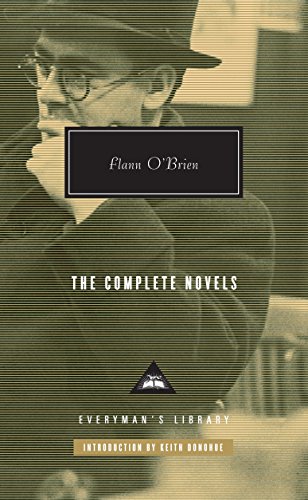
The Complete Novels: Introduction by Keith Donohue (Everyman's Library Contemporary Classics Series) - Hardcover
Inhaltsangabe
Flann O’Brien, along with Joyce and Beckett, is part of the holy trinity of modern Irish literature. His five novels–collected here in one volume–are a monument to his inspired lunacy and gleefully demented genius.
O’Brien’s masterpiece, At Swim-Two-Birds, is an exuberant literary send-up and one of the funniest novels of the twentieth century. The novel’s narrator is writing a novel about another man writing a novel, in a Celtic knot of interlocking stories. The riotous cast of characters includes figures “stolen” from Gaelic legends, along with assorted students, fairies, ordinary Dubliners, and cowboys, some of whom try to break free of their author’s control and destroy him.
The narrator of The Third Policeman, who has forgotten his name, is a student of philosophy who has committed murder and wanders into a surreal hell where he encounters such oddities as the ghost of his victim, three policeman who experiment with space and time, and his own soul (who is named “Joe”).
The Poor Mouth, a bleakly hilarious portrait of peasants in a village dominated by pigs, potatoes, and endless rain, is a giddy parody aimed at those who would romanticize Gaelic culture. A naïve young orphan narrates the deadpan farce The Hard Life, and The Dalkey Archive is an outrageous satiric fantasy featuring a mad scientist who uses relativity to age his whiskey, a policeman who believes men can turn into bicycles, and an elderly, bar-tending James Joyce. With a new Introduction by Keith Donohue
Die Inhaltsangabe kann sich auf eine andere Ausgabe dieses Titels beziehen.
Über die Autorin bzw. den Autor
Flann O'Brien is the pseudonym of Brian O'Nolan, an Irish novelist and political commentator who was born in 1911 in County Tyrone and raised in Dublin. He entered the Irish civil service in 1937 and formally retired in 1953. From 1940 until his death, he wrote a political column called "Cruiskeen Lawn" for The Irish Times, under the pseudonym of Myles na Gopaleen; his biting, satiric commentaries made him the conscience of the Irish government. He died in 1966.
Auszug. © Genehmigter Nachdruck. Alle Rechte vorbehalten.
I N T R O D U C T I O N
--
'I considered it desirable that he should know nothing about me but it was even better if he knew several things which were quite wrong.' So says the eccentric unnamed narrator of The Third Policeman, lost in a strange land, deliberately shielding his identity and true nature. The desire for self-effacement persists among all of the crazy narrators in Flann O'Brien's five novels, and perhaps it is key to understanding the man behind the novel, who has hidden himself as well under a penname. For the very first thing to know about Flann O'Brien is that he is one of the creations of Brian O'Nolan.
And there are more than one of him. Beginning in his college days and continuing on to the end of his life, O'Nolan was a serial pseudonymist, but we need only concern ourselves with two. In addition to Flann, the quondam author of the breathtaking At Swim-Two-Birds, The Third Policeman, The Hard Life, and The Dalkey Archive, there is Myles na gCopaleen, author of An Be´al Bocht (translated as The Poor Mouth), who appeared nearly every day as the first-person narrator of the column 'Cruiskeen Lawn' (The Overflowing Little Jug) in the Irish Times from through. More often than not, Myles was also a character in 'Cruiskeen Lawn,' serving not only as a narrator and jesting anatomist of the social and political life of Dublin, but also as an elusive figure. A man of so many identities that he had none. Variously self-described as the Uncrowned King of Ireland, the archetypical Dublin Man, ageless confidant of everyone from Synge to Joyce, Myles was a cross between the comic stage Irishman embodying every known stereotype and a savage critic of cliche´d language and thinking, bureaucracy, mendacity, and other social foibles. To the intelligentsia of Dublin, however, and habitue´s of the pubs, Myles was a real human being. He's that man in the corner nursing a pint, the fellow under the hat, the person otherwise known as Brian O'Nolan. On occasion, all three persons met in 'Cruiskeen Lawn,' such as this encounter in stimulated by the republication of At Swim-Two-Birds. In his thick mock Dublin accent, Myles says:
There's stories going round that Flann O'Brien and my good self are wan and the same pairson. I know my own know about that leaper. People has said that I have receded under many disguises in many papers, but nobody on or under this world knows what I have written or can declare on oath what I have not written.
Receding under many disguises, Flann and Myles and Brian are wan and the same, although all three have their respective roles. However, perhaps Myles is right to say that nobody can know for certain where one identity begins and ends.
This much is known: Brian O'Nolan was born on October, one of a family of twelve children, in Strabane, Ulster, Ireland. His cradle songs were sung in Irish. His father, Michael Nolan, was an Irish nationalist who met his mother, Agnes Gormley, in an Irish language class. After they married, the Nolans became theO´ Nualla´in (the Irish Gaelic form) and in their home Irish was spoken, with English reserved as the language of social intercourse for the outside world. The family led a peripatetic lifestyle before finally settling in Dublin proper in, where Brian was to spend the rest of his life. Brian O'Nolan's bilingualism played an important role in his intellectual and artistic career, and this split - Irish at home, English everywhere else - factors into the practice of masking his identity. The underlying linguistic differences between the two languages and the historic intertextual relationship with English play an integral role in the style and structure of the work done as Flann O'Brien and Myles na gCopaleen.
But before he was either of those two fellows, Brian O'Nolan entered an English-speaking school at age eleven, and seven years later, in 1929, began his studies at University College, Dublin. There he was to begin his literary career, primarily under the pen-name Brother Barnabas, in the college literary magazine Comhthrom Fe´inne. The fiction of a pen-name allowed Brian not only his highly cherished privacy but also the ability to critique his own humor, by commenting from the refuge of other pen-names on articles and essays he had written as Barnabas. After graduation, O'Nolan continued his shenanigans, aided and abetted by college friends, in the aptly named Blather, a comic magazine, all the while pursuing a master's degree by editing and translating a quite serious anthology on Irish nature poetry. In 1935, he took up a post with the Irish government, where he would remain for nearly eighteen years. Two years later, his father died, and for the next decade, Brian would be the primary provider for the younger children in the O'Nolan family.
Perhaps the suddenness of this domestic burden caused him to focus on the novel he had been tinkering with since his college days. By 1938, he had completed a draft of At Swim-Two-Birds, and on the strength of novelist Graham Greene's enthusiasm, it was accepted by Longmans, Green & Co. for publication the following year. With this triumph in hand, O'Nolan turned his attention to other literary matters, beginning in October with a letter to the editor of the Irish Times, signed by Flann O'Brien. Joining the contretemps between Sean O´ Faola´in and Frank O'Connor, O'Brien pointed to the absurdity of the literary feud, and his letter drew fire from both writers. His friend Niall Sheridan described the flood opened by this first chink in the dam:
Writing under several different names, he proceeded to carry on furious arguments on many topics, satirizing en passant almost every established literary figure. Before long, many notable personalities joined the mêlée and the whole affair exploded into a giant display of fireworks, a mixture of satire, polemics, criticism, savage invective, and sheer nonsense.
This extraordinary letter-writing campaign, with its wildly named participants, was carried out over two full years until the Irish Times offered its instigator a column of his own. 'Cruiskeen Lawn' debuted in October 1940, first alternately in Irish and English, but eventually given over entirely to its largely English-speaking audience. The invention of the pen-name Myles na gCopaleen is a nod to a prototypical 'stage Irishman' from a nineteenth-century melodrama, and hiding behind another identity enabled Brian O'Nolan to protect his status in the civil service. Myles would reign as the newspaper's licensed jester and resident wit for the next quarter decade, and many Dubliners began their day by turning first to 'Cruiskeen Lawn' to savor it with the morning tea or the hair of the dog.
At Swim-Two-Birds
One of the funniest Irish novels of the twentieth century, At Swim-Two-Birds is an exuberant send-up of literature, the novel, and the writer. Holed up in his uncle's Dublin home for the academic year, an unnamed narrator intermittently works on a mock-heroic novel about a man named Dermot Trellis who is, in turn, writing a novel, in which he freely borrows and steals his characters from Irish mythology and folklore, cowboy novels, and whole cloth invention based on the plain people of Ireland, who become strangely more alive while Trellis is asleep. These characters, frustrated by Trellis's authority, set off on a quest to find his son - the product of his union with one of his own characters - whom they commission to write a novel designed to capture, torture, and try Trellis and thus win their freedom.
At Swim-Two-Birds becomes a twisted Celtic knot, a book that eats its own tail, achieving its humor through parody and play. The figures from Irish mythology and folklore are exaggerated versions of the original and are re-enchanted through O'Brien's preposterous versions. Finn MacCool, the magical...
„Über diesen Titel“ kann sich auf eine andere Ausgabe dieses Titels beziehen.
Suchergebnisse für The Complete Novels: Introduction by Keith Donohue...

Beispielbild für diese ISBN
The Complete Novels of Flann O'Brien: Introduction by Keith Donohue
Anbieter: World of Books (was SecondSale), Montgomery, IL, USA
Verkäuferbewertung 5 von 5 Sternen

Hardback. Zustand: Very Good. Flann O'Brien, along with Joyce and Beckett, is part of the holy trinity of modern Irish literature. His five novels-collected here in one volume-are a monument to his inspired lunacy and gleefully demented genius. O'Brien's masterpiece, At Swim-Two-Birds, is an exuberant literary send-up and one of the funniest novels of the twentieth century. The novel's narrator is writing a novel about another man writing a novel, in a Celtic knot of interlocking stories. The riotous cast of characters includes figures "stolen" from Gaelic legends, along with assorted students, fairies, ordinary Dubliners, and cowboys, some of whom try to break free of their author's control and destroy him. The narrator of The Third Policeman, who has forgotten his name, is a student of philosophy who has committed murder and wanders into a surreal hell where he encounters such oddities as the ghost of his victim, three policeman who experiment with space and time, and his own soul (who is named "Joe"). The Poor Mouth, a bleakly hilarious portrait of peasants in a village dominated by pigs, potatoes, and endless rain, is a giddy parody aimed at those who would romanticize Gaelic culture. A naïve young orphan narrates the deadpan farce The Hard Life, and The Dalkey Archive is an outrageous satiric fantasy featuring a mad scientist who uses relativity to age his whiskey, a policeman who believes men can turn into bicycles, and an elderly, bar-tending James Joyce. With a new Introduction by Keith Donohue. Artikel-Nr. 00110076353
Gebraucht kaufen
EUR 21,63
Versand gratis
Versand innerhalb von USA
Versand innerhalb von USA
Anzahl: 1 verfügbar
Beispielbild für diese ISBN
The Complete Novels of Flann O'Brien: Introduction by Keith Donohue
Anbieter: World of Books (was SecondSale), Montgomery, IL, USA
Verkäuferbewertung 5 von 5 Sternen
Hardback. Zustand: Good. Flann O'Brien, along with Joyce and Beckett, is part of the holy trinity of modern Irish literature. His five novels-collected here in one volume-are a monument to his inspired lunacy and gleefully demented genius. O'Brien's masterpiece, At Swim-Two-Birds, is an exuberant literary send-up and one of the funniest novels of the twentieth century. The novel's narrator is writing a novel about another man writing a novel, in a Celtic knot of interlocking stories. The riotous cast of characters includes figures "stolen" from Gaelic legends, along with assorted students, fairies, ordinary Dubliners, and cowboys, some of whom try to break free of their author's control and destroy him. The narrator of The Third Policeman, who has forgotten his name, is a student of philosophy who has committed murder and wanders into a surreal hell where he encounters such oddities as the ghost of his victim, three policeman who experiment with space and time, and his own soul (who is named "Joe"). The Poor Mouth, a bleakly hilarious portrait of peasants in a village dominated by pigs, potatoes, and endless rain, is a giddy parody aimed at those who would romanticize Gaelic culture. A naïve young orphan narrates the deadpan farce The Hard Life, and The Dalkey Archive is an outrageous satiric fantasy featuring a mad scientist who uses relativity to age his whiskey, a policeman who believes men can turn into bicycles, and an elderly, bar-tending James Joyce. With a new Introduction by Keith Donohue. Artikel-Nr. 00108904635
Gebraucht kaufen
EUR 21,63
Versand gratis
Versand innerhalb von USA
Versand innerhalb von USA
Anzahl: 3 verfügbar
Beispielbild für diese ISBN
The Complete Novels of Flann O'Brien : Introduction by Keith Donohue
Verlag:
Knopf Doubleday Publishing Group, 2008
ISBN 10: 0307267490
ISBN 13: 9780307267498
Gebraucht
Hardcover
Anbieter: Better World Books, Mishawaka, IN, USA
Verkäuferbewertung 5 von 5 Sternen
Zustand: Very Good. Former library copy. Pages intact with possible writing/highlighting. Binding strong with minor wear. Dust jackets/supplements may not be included. Includes library markings. Stock photo provided. Product includes identifying sticker. Better World Books: Buy Books. Do Good. Artikel-Nr. 12346176-6
Gebraucht kaufen
EUR 27,33
Versand gratis
Versand innerhalb von USA
Versand innerhalb von USA
Anzahl: 1 verfügbar
Beispielbild für diese ISBN
The Complete Novels of Flann O Brien: Introduction by Keith Donohue
Anbieter: Kennys Bookstore, Olney, MD, USA
Verkäuferbewertung 5 von 5 Sternen
Zustand: New. 2008. Hardcover. . . . . . Books ship from the US and Ireland. Artikel-Nr. V9780307267498
Neu kaufen
EUR 45,89
EUR 9,36 Versand
Versand innerhalb von USA
Versand innerhalb von USA
Anzahl: 1 verfügbar
Beispielbild für diese ISBN
The Complete Novels of Flann O'Brien: Introduction by Keith Donohue (Everyman's Library Contemporary Classics Series)
Anbieter: Majestic Books, Hounslow, Vereinigtes Königreich
Verkäuferbewertung 4 von 5 Sternen

Zustand: New. pp. xxxiii + 824. Artikel-Nr. 8192764
Neu kaufen
EUR 49,27
EUR 7,71 Versand
Versand von Vereinigtes Königreich nach USA
Versand von Vereinigtes Königreich nach USA
Anzahl: 3 verfügbar
Beispielbild für diese ISBN
The Complete Novels: At Swim-two-birds, the Third Policeman, the Poor Mouth, the Hard Life, the Dalkey Archive
Anbieter: Revaluation Books, Exeter, Vereinigtes Königreich
Verkäuferbewertung 5 von 5 Sternen
Hardcover. Zustand: Brand New. 824 pages. 8.25x5.50x1.75 inches. In Stock. Artikel-Nr. 0307267490
Neu kaufen
EUR 51,67
EUR 14,84 Versand
Versand von Vereinigtes Königreich nach USA
Versand von Vereinigtes Königreich nach USA
Anzahl: 1 verfügbar
Foto des Verkäufers
The Complete Novels of Flann O'Brien : Introduction by Keith Donohue
Verlag:
Knopf Doubleday Publishing Group Jan 2008, 2008
ISBN 10: 0307267490
ISBN 13: 9780307267498
Neu
Hardcover
Anbieter: AHA-BUCH GmbH, Einbeck, Deutschland
Verkäuferbewertung 5 von 5 Sternen
Buch. Zustand: Neu. Neuware - Flann O Brien, along with Joyce and Beckett, is part of the holy trinity of modern Irish literature. His five novels collected here in one volume are a monument to his inspired lunacy and gleefully demented genius.O Brien s masterpiece, At Swim-Two-Birds, is an exuberant literary send-up and one of the funniest novels of the twentieth century. The novel s narrator is writing a novel about another man writing a novel, in a Celtic knot of interlocking stories. The riotous cast of characters includes figures stolen from Gaelic legends, along with assorted students, fairies, ordinary Dubliners, and cowboys, some of whom try to break free of their author s control and destroy him.The narrator of The Third Policeman, who has forgotten his name, is a student of philosophy who has committed murder and wanders into a surreal hell where he encounters such oddities as the ghost of his victim, three policeman who experiment with space and time, and his own soul (who is named Joe ).The Poor Mouth, a bleakly hilarious portrait of peasants in a village dominated by pigs, potatoes, and endless rain, is a giddy parody aimed at those who would romanticize Gaelic culture. A naïve young orphan narrates the deadpan farce The Hard Life, and The Dalkey Archive is an outrageous satiric fantasy featuring a mad scientist who uses relativity to age his whiskey, a policeman who believes men can turn into bicycles, and an elderly, bar-tending James Joyce. With a new Introduction by Keith Donohue. Artikel-Nr. 9780307267498
Neu kaufen
EUR 44,28
EUR 35,00 Versand
Versand von Deutschland nach USA
Versand von Deutschland nach USA
Anzahl: 1 verfügbar
Foto des Verkäufers
The Complete Novels
Verlag:
Knopf Doubleday Publishing Group, 2008
ISBN 10: 0307267490
ISBN 13: 9780307267498
Neu
Hardcover
Anbieter: moluna, Greven, Deutschland
Verkäuferbewertung 5 von 5 Sternen
Zustand: New. Flann O Brien is the pseudonym of Brian O Nolan, an Irish novelist and political commentator who was born in 1911 in County Tyrone and raised in Dublin. He entered the Irish civil service in 1937 and formally retired in 1953. From 1940 until his deat. Artikel-Nr. 151157952
Neu kaufen
EUR 33,12
EUR 48,99 Versand
Versand von Deutschland nach USA
Versand von Deutschland nach USA
Anzahl: Mehr als 20 verfügbar