
Verwandte Artikel zu The Lost City
Inhaltsangabe
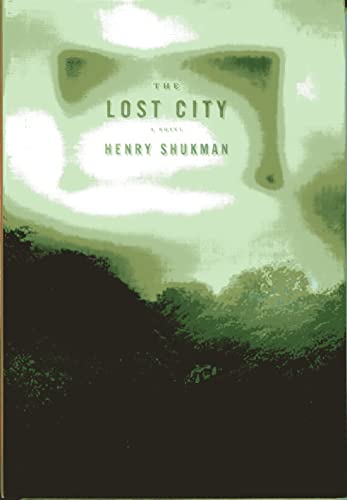
Henry Shukman’s debut fiction collection, Mortimer of the Maghreb, was acclaimed as “fearless, brilliantly realized, [and] richly rewarding” (Los Angeles Times Book Review). Now, in his first novel, he tells the story of a British expat searching for treasure and, more important, for connection, amid the seductions and dangers of a rootless life.
Jackson Small has just been discharged from the British military after witnessing the violent battlefield death of his closest friend, Connolly. It was Connolly who introduced him to the fascinations of ancient civilizations, enticing him with stories of La Joya, the capital of a vanished Peruvian empire. Coping with his grief, Jackson sets off in search of La Joya, hidden in the cloud forest hanging between the Andes and Amazonia.
It’s an arduous journey: through desert, arid mountains, inhospitable villages, and impenetrable jungle. And though he finds unexpected help—from a young boy as wily as he is innocent, from an irreverent village priest, and from a woman who both redefines and fulfills all of Jackson’s expectations—he’s also warned at every turn to abandon his search for a place that may not even exist. But he lets nothing stop him from entering the depths of the forest believed to protect the ruins of the lost city—where he will encounter other seekers whose methods are far more sinister than his own
With its starkly lyrical voice, its headlong pace, and the romanticism of the quest that fuels it, The Lost City is at once suspenseful, continually unexpected, and thoroughly mesmerizing.
Die Inhaltsangabe kann sich auf eine andere Ausgabe dieses Titels beziehen.
Über die Autorin bzw. den Autor
Henry Shukman’s fiction has won an Arts Council England award and was a finalist for the O. Henry Award; his first collection of poetry, In Dr. No’s Garden, won the Jerwood Aldeburgh First Collection Prize and was a Book of the Year in The Times (London) and The Guardian. He has also worked as a travel writer and lives in New Mexico.
Auszug. © Genehmigter Nachdruck. Alle Rechte vorbehalten.
Caballo Muerto: Chapter One
This wasn't a country you would visit unless you had to, if you were born there, say, or were sent in to check up on some account. I mean country in the broad Hemingway sense: terrain, land, country. The mountains rising ghostly and huge on one side, the strangely cold ocean on the other, and in between a strip of desert so barren not even cactuses grew. Half the year a blanket of low cloud covered the desert, the infamous garua, shouldered off the back of the Humboldt Current which came up glacial from Antarctica. The other half, blazing equatorial sun fired all things into immobility—the piles of gravel and sand by the never-improved highway, rubbish at the roadside, mummified dogs, old men waiting, waiting. It was too hot to move. It was enough to get through the day. To reach six p.m., when the red balloon of the sun regularly settled on the rim of the Pacific, felt like an achievement, a deliverance.
For six months the unrelenting fog hung a hundred feet overhead. No wind stirred. A fogbound desert—hot, drizzly, mind-achingly grey. Grey sand, grey rocks, grey sky, grey concrete in the cities (there were two), grey rain when it fell, grey dawn, grey dusk, grey days. Grey ocean even: in that season the Pacific lay lifeless and limp, more like a mass of gelatine than water, with barely the energy to slap at the long grey beaches. They weren't waves, let alone breakers. Lakeside ripples. Slap—then a little slurp—then slap again. Water the colour of slate.
Two rivers, the Caballo Muerto and the Malcorazon, broke westward from the mountains to run through the country. They were freaks, spindly and seasonal, but much feted. All other rivers that rose in the mountains went eastward into the jungle. Only these two made the perverse pilgrimage to the Pacific. They descended tremendous canyons of sandstone, dropping thousands of feet in a few miles, from the glinting peaks beyond the reach of cloud to the long decline of the desert, where they formed shallow wide valleys and their riverbeds became highways of gravel threaded with rivulets that snaked and criss-crossed each other like leather thongs. Even the water was leathery here—nothing endured the heat without transformation. Lower down, nearer the coast, the canyons became suddenly green. Banana trees bushed in the valleybeds, fields of alfalfa blazed under the sun and along either rim eucalyptus trees shivered and smoked, the colour of old copper.
Just north of the northern river a dirt track forged straight at the mountains then petered out in a path which soon forked and lost itself among the rocks of the foothills. Farmers used the track, piling ancient pickups with towers of bananas and pineapples among which they perched, struggling to keep the loads from tumbling as they swayed down to market.
Late on a Thursday afternoon toward the end of the garua season an empty truck made its way up the track. From above, all you saw was a plume of dust travelling along with a kind of self-absorbed determination, as if an animal were furiously burrowing its way just under the surface, an invisible point churning up a wake of dust. Then a little black dot showed at the front of the cloud, trembling in the distance. It grew slowly, coming straight up the hill; the only moving thing in the landscape. Then it stopped. It seemed to grow broader. A tiny human figure emerged. Then, as if in slow motion, the truck turned off the path, described a large lazy circle, rocked back onto the track facing the opposite way, and trundled back in the direction of the distant ocean.
The man who had got out pulled on a rucksack and took a step to balance himself. He was a young man who stood still, watching the truck drive away. Its gurgling engine soon faded in the crunch of wheels on dirt, then that too was lost and all that remained was a low hum, until even that became indistinguishable, and the man knew he was alone. The dust kicked up by the truck dispersed, leaving a faint blemish low in the sky.
The young man turned and looked up the hill. A mile away stood a red cliff, the beginning of the mountains.
The air was dusty, clean-dusty. Clean in a different way from the high mountain air. Thick, sure of itself. Clean like a parade ground on the morning of a big day, before anyone was up. There was something about it—it invigorated you. Perhaps it was just the relief of having got away from the coast, from the torpid ocean and the dull concrete city, the ugliest the man had seen in a long time.
He set off right away, glad of his boots, an old army pair. The leather had outlasted three complete sets of stitching. They were the most comfortable footwear he had ever known. There's no happiness like a good pair of boots, he thought as he walked. Boots, if they were just exactly right for you, changed the way you felt. In fact, there was no happiness like marching alone up a track toward evening in the desert. His limbs tingled. For a while he didn't care if he ever found what he was looking for, if he had to give it all up tomorrow. Nothing mattered but this march through the wide-open air of the desert hillside.
The good feeling suggested he was on the right track. He had an urge to stop and make a sketch, and that too was a kind of affirmation.
When the track ended he branched off to the left. It was harder going now, on the loose sand and gravel. He tried to plant his steps on the broken rocks lying here and there for better purchase. The slope steepened. He slowed his pace and kept up a steady mild pressure, his heart knocking. He looked at his watch: half an hour of daylight left though you would never tell by looking around. Night came without warning here. You noticed a hard-to-define dissolution in the air, as if the light had broken into particles. Then it was only a matter of minutes before the dark poured out of the solvent air, as if those particles were the first fragments of coming night.
He strode more quickly. He didn't want to get caught by nightfall without a camp, and he wanted to make camp at the foot of the cliff. His steps grew louder, rattling on the sand and gravel. No other sound. Just his footfalls. There might have been no other living thing in the world.
He was sweating hard by the time he got to the top of the slope. He was impatient to get the pack off his back and start looking around, but he made himself keep walking until he found a space between two rocks that would make a good camp: level ground, and only a few stones littering the dust. He slid the pack off. At once his shirt felt cool on his back and his body seemed to lift an inch clear of the ground.
A breeze sprang up. Perfect timing, he said to himself, thinking the breeze would cool him.
The nearest boulder was about his height, of pale yellow rock. He walked round, scanning it from top to bottom. Part way round, on the side facing the open west, where the light was still strong, he saw what he was looking for. Low down, around knee height, a pale carving of a star. The lines had been carefully chipped out, not hastily scratched. They formed eight radii. He ran his finger along one line, across the little bump of the centre, then sniffed his fingertip and caught the dry-plaster scent of stone.
He placed a rock on top of the boulder and made his way further round, stooping and scanning up and down. On another smooth rock face an animal had been carved, some quadruped. A llama, a cow, a dog, a jaguar—it could have been any of them.
Then he saw a kind of face, square with a wide-open mouth and four fangs. It was fainter than the other carvings, but unmistakable.
For a moment Connolly seemed very close. He had been right here, certainly.
His mind reeled: no one knew how old these carvings were. They...
„Über diesen Titel“ kann sich auf eine andere Ausgabe dieses Titels beziehen.
Suchergebnisse für The Lost City

Beispielbild für diese ISBN
The Lost City
Anbieter: World of Books (was SecondSale), Montgomery, IL, USA
Verkäuferbewertung 5 von 5 Sternen

Zustand: Good. Item in good condition. Textbooks may not include supplemental items i.e. CDs, access codes etc. Artikel-Nr. 00107341381
Gebraucht kaufen
EUR 4,85
Versand gratis
Versand innerhalb von USA
Versand innerhalb von USA
Anzahl: 1 verfügbar
Beispielbild für diese ISBN
The Lost City
Verlag:
Knopf Doubleday Publishing Group, 2008
ISBN 10: 030726694X
ISBN 13: 9780307266941
Gebraucht
Hardcover
Anbieter: Better World Books: West, Reno, NV, USA
Verkäuferbewertung 5 von 5 Sternen
Zustand: Very Good. Former library copy. Pages intact with possible writing/highlighting. Binding strong with minor wear. Dust jackets/supplements may not be included. Includes library markings. Stock photo provided. Product includes identifying sticker. Better World Books: Buy Books. Do Good. Artikel-Nr. 42620717-75
Gebraucht kaufen
EUR 8,26
Versand gratis
Versand innerhalb von USA
Versand innerhalb von USA
Anzahl: 2 verfügbar
Beispielbild für diese ISBN
The Lost City
Anbieter: ThriftBooks-Atlanta, AUSTELL, GA, USA
Verkäuferbewertung 5 von 5 Sternen
Hardcover. Zustand: Fair. No Jacket. Readable copy. Pages may have considerable notes/highlighting. ~ ThriftBooks: Read More, Spend Less. Artikel-Nr. G030726694XI5N00
Gebraucht kaufen
EUR 8,37
Versand gratis
Versand innerhalb von USA
Versand innerhalb von USA
Anzahl: 1 verfügbar
Beispielbild für diese ISBN
The Lost City
Anbieter: ThriftBooks-Atlanta, AUSTELL, GA, USA
Verkäuferbewertung 5 von 5 Sternen
Hardcover. Zustand: Fair. No Jacket. Former library book; Readable copy. Pages may have considerable notes/highlighting. ~ ThriftBooks: Read More, Spend Less. Artikel-Nr. G030726694XI5N10
Gebraucht kaufen
EUR 8,37
Versand gratis
Versand innerhalb von USA
Versand innerhalb von USA
Anzahl: 1 verfügbar
Beispielbild für diese ISBN
The Lost CIty (First Edition)
Verlag:
Knopf (New York), 2008
ISBN 10: 030726694X
ISBN 13: 9780307266941
Gebraucht
Hardcover
Erstausgabe
Anbieter: Dan Pope Books, West Hartford, CT, USA
Verkäuferbewertung 5 von 5 Sternen
Hardcover. Zustand: Fine. Zustand des Schutzumschlags: Fine. 1st Edition. First edition. First printing. Hardbound. Small tear to jacket at foot of spine, tape repaired, otherwise fine/fine. Some age toning to pages. CLS. Artikel-Nr. OCT09-1
Gebraucht kaufen
EUR 6,65
EUR 3,87 Versand
Versand innerhalb von USA
Versand innerhalb von USA
Anzahl: 1 verfügbar
Foto des Verkäufers
The Lost City (First American Edition)
Verlag:
Knopf (New York), 2008
ISBN 10: 030726694X
ISBN 13: 9780307266941
Gebraucht
Hardcover
Erstausgabe
Anbieter: Dan Pope Books, West Hartford, CT, USA
Verkäuferbewertung 5 von 5 Sternen
Hardcover. Zustand: As New. Zustand des Schutzumschlags: As New. 1st Edition. First American edition, first printing. Hardbound. Fine in a fine dust jacket. A tight, clean copy. NOT price-clipped. Comes with archival-quality mylar dust jacket protector. Shipped in well padded box. Artikel-Nr. fiction-stacks-34
Gebraucht kaufen
EUR 31,03
EUR 3,87 Versand
Versand innerhalb von USA
Versand innerhalb von USA
Anzahl: 1 verfügbar