
Verwandte Artikel zu The Forever War
Inhaltsangabe
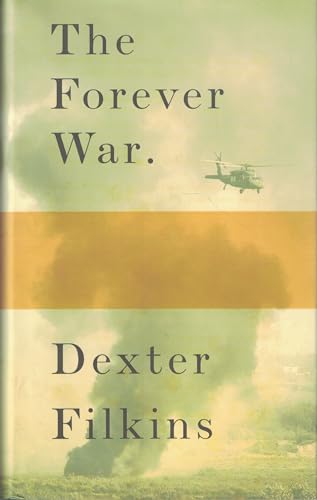
From the front lines of the battle against Islamic fundamentalism, a searing, unforgettable book that captures the human essence of the greatest conflict of our time.
Through the eyes of Dexter Filkins, the prizewinning New York Times correspondent whose work was hailed by David Halberstam as “reporting of the highest quality imaginable,” we witness the remarkable chain of events that began with the rise of the Taliban in the 1990s, continued with the attacks of 9/11, and moved on to the wars in Afghanistan and Iraq.
Filkins’s narrative moves across a vast and various landscape of amazing characters and astonishing scenes: deserts, mountains, and streets of carnage; a public amputation performed by Taliban; children frolicking in minefields; skies streaked white by the contrails of B-52s; a night’s sleep in the rubble of Ground Zero.
We embark on a foot patrol through the shadowy streets of Ramadi, venture into a torture chamber run by Saddam Hussein. We go into the homes of suicide bombers and into street-to-street fighting with a battalion of marines. We meet Iraqi insurgents, an American captain who loses a quarter of his men in eight days, and a young soldier from Georgia on a rooftop at midnight reminiscing about his girlfriend back home. A car bomb explodes, bullets fly, and a mother cradles her blinded son.
Like no other book, The Forever War allows us a visceral understanding of today’s battlefields and of the experiences of the people on the ground, warriors and innocents alike. It is a brilliant, fearless work, not just about America’s wars after 9/11, but ultimately about the nature of war itself.
Die Inhaltsangabe kann sich auf eine andere Ausgabe dieses Titels beziehen.
Über die Autorinnen und Autoren
Dexter Filkins, a foreign correspondent for The New York Times, has covered the wars in Afghanistan and Iraq since 2001. Before that, he worked for the Los Angeles Times, where he was chief of the paper’s New Delhi bureau, and for The Miami Herald. He has been a finalist for a Pulitzer Prize and a winner of a George Polk Award and two Overseas Press Club awards. Most recently, he was a fellow at the Carr Center for Human Rights Policy at Harvard University. He lives in Cambridge, Massachusetts.
Dexter Filkins is a fellow at the Carr Center for Human Rights Policy at the Kennedy School of Government. He has been a foreign correspondent in Afghanistan and Iraq for the New York Times since 2000.
Auszug. © Genehmigter Nachdruck. Alle Rechte vorbehalten.
Only This
They led the man to a spot at the middle of the field. A soccer field, grass, with mainly dirt around the center where the players spent most of the game. There was a special section for the handicapped on the far side, a section for women. The orphans were walking up and down the bleachers on my side selling candy and cigarettes.
A couple of older men carried whips. They wore grenade launchers on their backs.
The people are coming, a voice was saying into the loudspeaker, and the voice was right, the people were streaming in and taking their seats. Not with any great enthusiasm, as far as I could tell; they were kind of shuffling in. I probably had more enthusiasm than anybody. I had a special seat; they’d put me in the grass at the edge of the field. In America, I would have been on the sidelines, at the fifty yard line with the coaches. Come sit with us, they’d said; you are our honored guest.
A white Toyota Hi-Lux drove onto the field and four men wearing green hoods climbed out of the back. There was a fifth man, a prisoner, no hood, sitting in the bed of the truck. The hooded men laid their man in the grass just off midfield, flat on his back, and crouched around him. It was hard to see. The man on his back was docile; there was no struggle at all. The voice on the loudspeaker said he was a pickpocket.
“Nothing that is being done here is against God’s law,” the voice said.
The green hoods appeared busy, and one of them stood up. He held the man’s severed right hand in the air, displaying it for the crowd. He was holding it up by its middle finger, moving in a semicircle so everyone could see. The handicapped and the women. Then he pulled his hood back, revealing his face, and he took a breath. He tossed the hand into the grass and gave a little shrug.
I couldn’t tell if the pickpocket had been given any sort of anesthesia. He wasn’t screaming. His eyes were open very wide, and as the men with the hoods lifted him back into the bed of the Hi-Lux, he stared at the stump of his hand. I took notes the whole time.
I looked back at the crowd, and it was remarkably calm, unfeeling almost, which wasn’t really surprising, after all they’d been through. A small drama with the orphans was unfolding in the stands; they were getting crazy and one of the guards was beating them with his whip.
“Get back,” he was saying, drawing the whip over his head. The orphans cowered.
I thought that was it, but as it turned out the amputation was just a warm-up. Another Toyota Hi-Lux, this one ma-roon, rumbled onto midfield carrying a group of long-haired men with guns. The long hair coming out of their white turbans. They had a blindfolded man with them. The Taliban were known for a lot of things and the Hi-Lux was one, jacked up and fast and menacing; they had conquered most of the country with them. You saw a Hi-Lux and you could be sure that something bad was going to happen soon.
“The people are coming!” the voice said again into the speaker, louder now and more excited. “The people are coming to see, with their own eyes, what sharia means.”
The men with guns led the blindfolded man from the truck and walked him to midfield and sat him down in the dirt. His head and body were wrapped in a dull gray blanket, all of a piece. Seated there in the dirt at midfield at the Kabul Sports Stadium, he didn’t look much like a man at all, more like a sack of flour. In that outfit, it was difficult even to tell which way he was facing. His name was Atiqullah, one of the Talibs said.
The man who had pulled his hood back was standing at midfield, facing the crowd. The voice on the loudspeaker introduced him as Mulvi Abdur Rahman Muzami, a judge. He was pacing back and forth, his green surgical smock still intact. The crowd was quiet.
Atiqullah had been convicted of killing another man in an irrigation dispute, the Talibs said. An argument over water. He’d beaten his victim to death with an ax, or so they said. He was eighteen.
“The Koran says the killer must be killed in order to create peace in society,” the loudspeaker said, echoing inside the stadium. “If punishment is not meted out, such crimes will become common. Anarchy and chaos will return.”
By this time a group had gathered behind me. It was the family of the murderer and the family of the victim. The two groups behind me were toing-and-froing as in a rugby game. One family spoke, leaning forward, then the other. The families were close enough to touch. Sharia law allows for the possibility of mercy: Atiqullah’s execution could be halted if the family of the victim so willed it.
Judge Muzami hovered a few feet away, watching.
“Please spare my son,” Atiqullah’s father, Abdul Modin, said. He was weeping. “Please spare my son.”
“I am not ready to do that,” the victim’s father, Ahmad Noor, said, not weeping. “I am not ready to forgive him. He killed my son. He cut his throat. I do not forgive him.”
The families were wearing olive clothes that looked like old blankets and their faces were lined and dry. The women were weeping. Everyone looked the same. I forgot who was who.
“Even if you gave me all the gold in the world,” Noor said, “I would not accept it.”
Then he turned to a young man next to him. My son will do it, he said.
The mood tightened. I looked back and saw the Taliban guards whipping some children who had tried to sneak into the stadium. Atiqullah was still sitting on the field, possibly oblivious. The voice crackled over the loudspeaker.
“O ye who believe!” the voice in the loudspeaker called. “Revenge is prescribed for you in the matter of the murdered; the freeman for the freeman, and the slave for the slave, and the female for the female.
“People are entitled to revenge.”
One of the green hoods handed a Kalashnikov to the murder victim’s brother. The crowd fell silent.
Just then a jumbo jet appeared in the sky above, rumbling, forcing a pause in the ceremony. The brother stood holding his Kalashnikov. I looked up. I wondered how a jet airliner could happen by such a place, over a city such as this, wondered where it might be going. I considered for a second the momentary collision of the centuries.
The jumbo jet flew away and the echo died and the brother crouched and took aim, leveling his Kalashnikov at Atiqullah’s head.
“In revenge there is life,” the loudspeaker said.
The brother fired. Atiqullah lingered motionless for a second then collapsed in a heap under the gray blanket. I felt what I believed was a vibration from the stands. The brother stood over Atiqullah, aimed his AK-47 and fired again. The body lay still under the blanket.
“In revenge there is life,” the loudspeaker said.
The brother walked around Atiqullah, as if he were looking for signs of life. Seeing one, apparently, he crouched and fired again.
Spectators rushed onto the field just like the end of a college football game. The two men, killer and avenger, were carried away in separate Hi-Luxes, one maroon, one white. The brother stood up in the bed of the white truck as it rumbled away, surrounded by his fellows. He held his arms in the air and was smiling.
I had to move fast to talk to people before they went home. Most everyone said they approved, but no one seemed to have any enthusiasm.
“In America, you have television and movies—the cinema,” one of the Afghans told me. “Here, there is only this.”
I left the stadium and walked in a line of people through the...
„Über diesen Titel“ kann sich auf eine andere Ausgabe dieses Titels beziehen.
Weitere beliebte Ausgaben desselben Titels

Suchergebnisse für The Forever War

Beispielbild für diese ISBN
The Forever War
Anbieter: World of Books (was SecondSale), Montgomery, IL, USA
Verkäuferbewertung 5 von 5 Sternen

Zustand: Acceptable. Item in acceptable condition! Textbooks may not include supplemental items i.e. CDs, access codes etc. Artikel-Nr. 00100948667
Gebraucht kaufen
EUR 3,93
Versand gratis
Versand innerhalb von USA
Versand innerhalb von USA
Anzahl: 3 verfügbar
Beispielbild für diese ISBN
The Forever War
Anbieter: World of Books (was SecondSale), Montgomery, IL, USA
Verkäuferbewertung 5 von 5 Sternen
Zustand: Good. Item in good condition and has highlighting/writing on text. Used texts may not contain supplemental items such as CDs, info-trac etc. Artikel-Nr. 00106907421
Gebraucht kaufen
EUR 3,93
Versand gratis
Versand innerhalb von USA
Versand innerhalb von USA
Anzahl: 1 verfügbar
Beispielbild für diese ISBN
The Forever War
Anbieter: World of Books (was SecondSale), Montgomery, IL, USA
Verkäuferbewertung 5 von 5 Sternen
Zustand: Very Good. Item in very good condition! Textbooks may not include supplemental items i.e. CDs, access codes etc. Artikel-Nr. 00104780012
Gebraucht kaufen
EUR 3,93
Versand gratis
Versand innerhalb von USA
Versand innerhalb von USA
Anzahl: 3 verfügbar
Beispielbild für diese ISBN
The Forever War
Anbieter: World of Books (was SecondSale), Montgomery, IL, USA
Verkäuferbewertung 5 von 5 Sternen
Zustand: Good. Item in good condition. Textbooks may not include supplemental items i.e. CDs, access codes etc. Artikel-Nr. 00090665011
Gebraucht kaufen
EUR 3,93
Versand gratis
Versand innerhalb von USA
Versand innerhalb von USA
Anzahl: 16 verfügbar
Foto des Verkäufers
The Forever War
Anbieter: Dream Books Co., Denver, CO, USA
Verkäuferbewertung 5 von 5 Sternen
Zustand: acceptable. This copy has clearly been enjoyedâ"expect noticeable shelf wear and some minor creases to the cover. Binding is strong, and all pages are legible. May contain previous library markings or stamps. Artikel-Nr. DBV.0307266397.A
Gebraucht kaufen
EUR 5,15
Versand gratis
Versand innerhalb von USA
Versand innerhalb von USA
Anzahl: 1 verfügbar
Beispielbild für diese ISBN
The Forever War
Anbieter: Wonder Book, Frederick, MD, USA
Verkäuferbewertung 5 von 5 Sternen
Zustand: Very Good. Very Good condition. Good dust jacket. A copy that may have a few cosmetic defects. May also contain light spine creasing or a few markings such as an owner's name, short gifter's inscription or light stamp. Bundled media such as CDs, DVDs, floppy disks or access codes may not be included. Artikel-Nr. O06B-01882
Gebraucht kaufen
EUR 5,39
Versand gratis
Versand innerhalb von USA
Versand innerhalb von USA
Anzahl: 1 verfügbar
Beispielbild für diese ISBN
The Forever War
Anbieter: ThriftBooks-Phoenix, Phoenix, AZ, USA
Verkäuferbewertung 5 von 5 Sternen
Hardcover. Zustand: Very Good. No Jacket. Missing dust jacket; May have limited writing in cover pages. Pages are unmarked. ~ ThriftBooks: Read More, Spend Less. Artikel-Nr. G0307266397I4N01
Gebraucht kaufen
EUR 5,88
Versand gratis
Versand innerhalb von USA
Versand innerhalb von USA
Anzahl: 1 verfügbar
Beispielbild für diese ISBN
The Forever War
Anbieter: ThriftBooks-Phoenix, Phoenix, AZ, USA
Verkäuferbewertung 5 von 5 Sternen
Hardcover. Zustand: Very Good. No Jacket. Former library book; May have limited writing in cover pages. Pages are unmarked. ~ ThriftBooks: Read More, Spend Less. Artikel-Nr. G0307266397I4N10
Gebraucht kaufen
EUR 5,88
Versand gratis
Versand innerhalb von USA
Versand innerhalb von USA
Anzahl: 1 verfügbar
Beispielbild für diese ISBN
The Forever War
Anbieter: ThriftBooks-Dallas, Dallas, TX, USA
Verkäuferbewertung 5 von 5 Sternen
Hardcover. Zustand: Very Good. No Jacket. Missing dust jacket; May have limited writing in cover pages. Pages are unmarked. ~ ThriftBooks: Read More, Spend Less. Artikel-Nr. G0307266397I4N01
Gebraucht kaufen
EUR 5,90
Versand gratis
Versand innerhalb von USA
Versand innerhalb von USA
Anzahl: 1 verfügbar
Beispielbild für diese ISBN
The Forever War
Anbieter: ThriftBooks-Dallas, Dallas, TX, USA
Verkäuferbewertung 5 von 5 Sternen
Hardcover. Zustand: Very Good. No Jacket. Former library book; May have limited writing in cover pages. Pages are unmarked. ~ ThriftBooks: Read More, Spend Less. Artikel-Nr. G0307266397I4N10
Gebraucht kaufen
EUR 5,90
Versand gratis
Versand innerhalb von USA
Versand innerhalb von USA
Anzahl: 1 verfügbar