
Verwandte Artikel zu The Emperor's Children (Rough Cut)
Inhaltsangabe
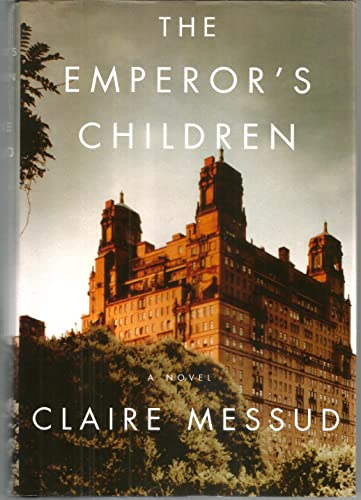
From a writer “of near-miraculous perfection” (The New York Times Book Review) and “a literary intelligence far surpassing most other writers of her generation” (San Francisco Chronicle), The Emperor’s Children is a dazzling, masterful novel about the intersections in the lives of three friends, now on the cusp of their thirties, making their way—and not—in New York City.
There is beautiful, sophisticated Marina Thwaite—an “It” girl finishing her first book; the daughter of Murray Thwaite, celebrated intellectual and journalist—and her two closest friends from Brown, Danielle, a quietly appealing television producer, and Julius, a cash-strapped freelance critic. The delicious complications that arise among them become dangerous when Murray’s nephew, Frederick “Bootie” Tubb, an idealistic college dropout determined to make his mark, comes to town. As the skies darken, it is Bootie’s unexpected decisions—and their stunning, heartbreaking outcome—that will change each of their lives forever.
A richly drawn, brilliantly observed novel of fate and fortune—of innocence and experience, seduction and self-invention; of ambition, including literary ambition; of glamour, disaster, and promise—The Emperor’s Children is a tour de force that brings to life a city, a generation, and the way we live in this moment.
Die Inhaltsangabe kann sich auf eine andere Ausgabe dieses Titels beziehen.
Über die Autorin bzw. den Autor
Claire Messud’s first novel, When the World Was Steady, and her book of novellas, The Hunters, were finalists for the PEN/Faulkner Award; her second novel, The Last Life, was a Publishers Weekly Best Book of the Year and an Editor’s Choice at The Village Voice. All three books were New York Times Notable Books of the Year. She has been awarded a Guggenheim Fellowship and a Radcliffe Fellowship, and is the current recipient of the Strauss Living Award from the American Academy of Arts and Letters. She lives in Somerville, Massachusetts, with her husband and children.
Auszug. © Genehmigter Nachdruck. Alle Rechte vorbehalten.
Our Chef Is Very Famous in London
Darlings! Welcome! And you must be Danielle?” Sleek and small, her wide eyes rendered enormous by kohl, Lucy Leverett, in spite of her resemblance to a baby seal, rasped impressively. Her dangling fan earrings clanked at her neck as she leaned in to kiss each of them, Danielle too, and although she held her cigarette, in its mother-of-pearl holder, at arm’s length, its smoke wafted between them and brought tears to Danielle’s eyes.
Danielle didn’t wipe them, for fear of disturbing her makeup. Having spent half an hour putting on her face in front of the grainy mirror of Moira and John’s bathroom, ogling her imperfections and applying vigorous remedial spackle—beneath which her weary, olive-shaped eyes were pouched by bluish bags, the curves of her nostrils oddly red, and her high forehead peeling—she had no intention of revealing to strangers the disintegration beneath her paint.
“Come in, darlings, come in.” Lucy moved behind them and herded the trio toward the party. The Leveretts’ living room was painted a deep purple—aubergine, in local parlance—and its windows were draped with velvet. From the ceiling hung a brutal wrought iron chandelier, like something salvaged from a medieval castle. Three men loitered by the bay window, talking to one another while staring out at the street, their glasses of red wine luminous in the reflected evening light. A long, plump, pillowed sofa stretched the length of one wall, and upon it four women were disposed like odalisques in a harem. Two occupied opposite ends of the divan, their legs tucked under, their extended arms caressing the cushions, while between them one rested her head upon another’s lap, and smiling, eyes closed, whispered to the ceiling while her friend stroked her abundant hair. The whole effect was, for Danielle, faintly cloudy, as if she had walked into someone else’s dream. She kept feeling this, in Sydney, so far from home: she couldn’t quite say it wasn’t real, but it certainly wasn’t her reality.
“Rog? Rog, more wine!” Lucy called to the innards of the house, then turned again to her guests, a proprietorial arm on Danielle’s bicep. “Red or white? He’s probably even got pink, if you’re after it. Can’t bear it myself—so California.” She grinned, and from her crows’ feet, Danielle knew she was forty, or almost.
Two men bearing bottles emerged from the candlelit gloom of the dining room, both slender, both at first glance slightly fey. Danielle took the imposing one in front, in a pressed lavender shirt and with, above hooded eyes, a high, smooth Nabokovian brow, to be her host. She extended a hand. “I’m Danielle.” His fingers were elegant, and his palm, when it pressed hers, was cool.
“Are you now?” he said.
The other man, at least a decade older, slightly snaggletoothed and goateed, spoke from behind his shoulder. “I’m Roger,” he said. “Good to see you. Don’t mind Ludo, he’s playing hard to get.”
“Ludovic Seeley,” Lucy offered. “Danielle—”
“Minkoff.”
“Moira and John’s friend. From New York.”
“New York,” Ludovic Seeley repeated. “I’m moving there next month.”
“Red or white?” asked Roger, whose open shirt revealed a tanned breast dotted with sparse gray hairs and divided by a narrow gold chain.
“Red, please.”
“Good choice,” said Seeley, almost in a whisper. He was—she could feel it rather than see it, because his hooded eyes did not so much as flicker—looking her up and down. She hoped that her makeup was properly mixed in, that no clump of powder had gathered dustily upon her chin or cheek.
The moment of recognition was, for Danielle, instantaneous. Here, of all places, in this peculiar and irrelevant enclave, she had spotted a familiar. She wondered if he, too, experienced it: the knowledge that this mattered. Ludovic Seeley: she did not know who he was, and yet she felt she knew him, or had been waiting for him. It was not merely his physical presence, the long, feline slope of him, a quality at once loose and controlled, as if he played with the illusion of looseness. Nor was it the timbre of his voice, deep and yet not particularly resonant, its Australian inflection so slight as to be almost British. It was, she decided, something in his face: he knew. Although what he knew she could not have said. There were the eyes, a surprising deep and gold-flecked gray, their lines slightly downturned in an expression both mournful and amused, and the particular small furrow that cut into his right cheek when he smiled even slightly. His ears, pinned close to his head, lent him a tidy aspect; his dark hair, so closely shaven as to allow the blue of his scalp to shine through, emphasized both his irony and his restraint. His skin was pale, almost as pale as Danielle’s own, and his nose a fine, sharp stretch of cartilage. His face, so distinctive, struck her as that of a nineteenth-century portrait, a Sargent perhaps, an embodiment of sardonic wisdom and society, of aristocratic refinement. And yet in the fall of his shirt, the line of his torso, the graceful but not unmanly movement of his slender fingers (and yes, discreetly, but definitely there, he had hair on the backs of his hands—she held to it, as a point of attraction: men ought not to be hairless), he was distinctly of the present. What he knew, perhaps, was what he wanted.
“Come on, darling.” Lucy took her by the elbow. “Let’s introduce you to the rest of the gang.”
This, dinner at the Leveretts’, was Danielle’s last evening in Sydney before heading home. In the morning, she would board the plane and sleep, sleep her way back to yesterday, or by tomorrow, to today, in New York. She’d been away a week, researching a possible television program, with the help of her friend Moira. It wouldn’t be filmed for months, if it were filmed at all, a program about the relationship between the Aborigines and their government, the formal apologies and amends of recent years. The idea was to explore the possibility of reparations to African Americans—a high-profile professor was publishing a book about it—through the Australian prism. It wasn’t clear even to Danielle whether this could fly. Could an American audience care less about the Aborigines? Were the situations even comparable? The week had been filled with meetings and bluster, the zealous singing exchanges of her business, the pretense of certainty where in fact there was none at all. Moira firmly believed it could be done, that it should be done; but Danielle was not convinced.
Sydney was a long way from home. For a week, in her pleasant waft of alienation, Danielle had indulged the fantasy of another possible life—Moira, after all, had left New York for Sydney only two years before—and with it, another future. She rarely considered a life elsewhere; the way, she supposed, with faint incredulity, most people never considered a life in New York. From her bedroom in her friends’ lacy tin-roofed row house at the end of a shady street in Balmain, Danielle could see the water. Not the great sweep of the harbor, with its arcing bridge, nor the ruffled seagull’s wings of the opera house, but a placid stretch of blue beyond the park below, rippled by the wake of occasional...
„Über diesen Titel“ kann sich auf eine andere Ausgabe dieses Titels beziehen.
Suchergebnisse für The Emperor's Children (Rough Cut)

Beispielbild für diese ISBN
The Emperor's Children
Anbieter: World of Books (was SecondSale), Montgomery, IL, USA
Verkäuferbewertung 5 von 5 Sternen

Hardback. Zustand: Good. In Manhattan, just after the century's turn, three thirty-year-old friends, Danielle, Marina and Julius, are seeking their fortunes. But the arrival of Marina's young cousin Bootie fresh from the provinces and keen, too, to make his mark forces them to confront their own desires and expectations. The Emperor's Children is a sweeping portrait of one of the most fascinating cities in the world, and a haunting illustration of how the events of a single day can change everything, for ever. 'Brilliant .a masterpiece' Independent on Sunday 'Intelligent and unsparing .The Emperor's Children is likely to be one of the most talked-about novels of the autumn .Buy two copies; give one to a friend' The Economist 'Messud's prose is a timely and intensely pleasurable reminder of the possibilities of the English language. To use the word clarity about her style dense, chaste, luminously intelligent is to return the word to its origins; this is style as illumination, shining a searching yet sympathetic light on the minds and inner worlds of her characters, and as a radiant mode of moral inquiry' The Times 'As large-hearted as it is ambitious, this is a novel that combines the old-fashioned art of storytelling with a clear-eyed view of the modern world' Sunday Times. Artikel-Nr. 00101420657
Gebraucht kaufen
EUR 3,97
Versand gratis
Versand innerhalb von USA
Versand innerhalb von USA
Anzahl: Mehr als 20 verfügbar
Beispielbild für diese ISBN
The Emperor's Children
Anbieter: World of Books (was SecondSale), Montgomery, IL, USA
Verkäuferbewertung 5 von 5 Sternen
Hardback. Zustand: Very Good. In Manhattan, just after the century's turn, three thirty-year-old friends, Danielle, Marina and Julius, are seeking their fortunes. But the arrival of Marina's young cousin Bootie fresh from the provinces and keen, too, to make his mark forces them to confront their own desires and expectations. The Emperor's Children is a sweeping portrait of one of the most fascinating cities in the world, and a haunting illustration of how the events of a single day can change everything, for ever. 'Brilliant .a masterpiece' Independent on Sunday 'Intelligent and unsparing .The Emperor's Children is likely to be one of the most talked-about novels of the autumn .Buy two copies; give one to a friend' The Economist 'Messud's prose is a timely and intensely pleasurable reminder of the possibilities of the English language. To use the word clarity about her style dense, chaste, luminously intelligent is to return the word to its origins; this is style as illumination, shining a searching yet sympathetic light on the minds and inner worlds of her characters, and as a radiant mode of moral inquiry' The Times 'As large-hearted as it is ambitious, this is a novel that combines the old-fashioned art of storytelling with a clear-eyed view of the modern world' Sunday Times. Artikel-Nr. 00102799123
Gebraucht kaufen
EUR 3,97
Versand gratis
Versand innerhalb von USA
Versand innerhalb von USA
Anzahl: 5 verfügbar
Beispielbild für diese ISBN
The Emperor's Children
Anbieter: World of Books (was SecondSale), Montgomery, IL, USA
Verkäuferbewertung 5 von 5 Sternen
Zustand: Acceptable. Item in acceptable condition! Textbooks may not include supplemental items i.e. CDs, access codes etc. Artikel-Nr. 00109899132
Gebraucht kaufen
EUR 3,97
Versand gratis
Versand innerhalb von USA
Versand innerhalb von USA
Anzahl: 2 verfügbar
Beispielbild für diese ISBN
The Emperor's Children
Anbieter: BooksRun, Philadelphia, PA, USA
Verkäuferbewertung 5 von 5 Sternen
Hardcover. Zustand: Fair. With dust jacket. The item might be beaten up but readable. May contain markings or highlighting, as well as stains, bent corners, or any other major defect, but the text is not obscured in any way. Artikel-Nr. 030726419X-7-18-29
Gebraucht kaufen
EUR 5,82
Versand gratis
Versand innerhalb von USA
Versand innerhalb von USA
Anzahl: 1 verfügbar
Beispielbild für diese ISBN
The Emperor's Children
Anbieter: BooksRun, Philadelphia, PA, USA
Verkäuferbewertung 5 von 5 Sternen
Hardcover. Zustand: Very Good. With dust jacket. It's a well-cared-for item that has seen limited use. The item may show minor signs of wear. All the text is legible, with all pages included. It may have slight markings and/or highlighting. Artikel-Nr. 030726419X-11-1-29
Gebraucht kaufen
EUR 6,23
Versand gratis
Versand innerhalb von USA
Versand innerhalb von USA
Anzahl: 1 verfügbar
Beispielbild für diese ISBN
The Emperor's Children
Anbieter: ThriftBooks-Dallas, Dallas, TX, USA
Verkäuferbewertung 5 von 5 Sternen
Hardcover. Zustand: Very Good. No Jacket. Former library book; May have limited writing in cover pages. Pages are unmarked. ~ ThriftBooks: Read More, Spend Less. Artikel-Nr. G030726419XI4N10
Gebraucht kaufen
EUR 6,42
Versand gratis
Versand innerhalb von USA
Versand innerhalb von USA
Anzahl: 1 verfügbar
Beispielbild für diese ISBN
The Emperor's Children
Anbieter: ThriftBooks-Atlanta, AUSTELL, GA, USA
Verkäuferbewertung 5 von 5 Sternen
Hardcover. Zustand: Very Good. No Jacket. Former library book; May have limited writing in cover pages. Pages are unmarked. ~ ThriftBooks: Read More, Spend Less. Artikel-Nr. G030726419XI4N10
Gebraucht kaufen
EUR 6,42
Versand gratis
Versand innerhalb von USA
Versand innerhalb von USA
Anzahl: 1 verfügbar
Beispielbild für diese ISBN
The Emperor's Children
Anbieter: ThriftBooks-Atlanta, AUSTELL, GA, USA
Verkäuferbewertung 5 von 5 Sternen
Hardcover. Zustand: Very Good. No Jacket. Missing dust jacket; May have limited writing in cover pages. Pages are unmarked. ~ ThriftBooks: Read More, Spend Less. Artikel-Nr. G030726419XI4N01
Gebraucht kaufen
EUR 6,42
Versand gratis
Versand innerhalb von USA
Versand innerhalb von USA
Anzahl: 1 verfügbar
Beispielbild für diese ISBN
The Emperor's Children
Anbieter: ThriftBooks-Dallas, Dallas, TX, USA
Verkäuferbewertung 5 von 5 Sternen
Hardcover. Zustand: Very Good. No Jacket. May have limited writing in cover pages. Pages are unmarked. ~ ThriftBooks: Read More, Spend Less. Artikel-Nr. G030726419XI4N00
Gebraucht kaufen
EUR 6,42
Versand gratis
Versand innerhalb von USA
Versand innerhalb von USA
Anzahl: 1 verfügbar
Beispielbild für diese ISBN
The Emperor's Children
Anbieter: Wonder Book, Frederick, MD, USA
Verkäuferbewertung 5 von 5 Sternen
Zustand: Very Good. Very Good condition. Very Good dust jacket. A copy that may have a few cosmetic defects. May also contain light spine creasing or a few markings such as an owner's name, short gifter's inscription or light stamp. Artikel-Nr. C12D-00926
Gebraucht kaufen
EUR 6,43
Versand gratis
Versand innerhalb von USA
Versand innerhalb von USA
Anzahl: 7 verfügbar