
Verwandte Artikel zu Unbowed: A Memoir
Inhaltsangabe
The recipient of the 2004 Nobel Peace Prize describes her life as a feminist, political activist, and environmentalist in Kenya, detailing her determination to receive an education despite the odds, her confrontations with the brutal Moi government, the 1977 establishment of the Green Belt Movement, her role in the transformation of Kenya's government, and her hope for the future. 100,000 first printing.
Die Inhaltsangabe kann sich auf eine andere Ausgabe dieses Titels beziehen.
Über die Autorin bzw. den Autor
Wangari Muta Maathai was born in Nyeri, Kenya, in 1940. She is the founder of the Green Belt Movement, which, through networks of rural women, has planted over thirty million trees across Kenya since 1977. In 2002, she was elected to Kenya s Parliament in the first free elections in a generation, and in 2003, she was appointed assistant minister for the environment. She lives and works in Nairobi.
Auszug. © Genehmigter Nachdruck. Alle Rechte vorbehalten.
Beginnings
I was born the third of six children, and the first girl after two sons, on April 1, 1940, in the small village of Ihithe in the central highlands of what was then British Kenya. My grandparents and parents were also born in this region near the provincial capital of Nyeri, in the foothills of the Aberdare Mountain Range. To the north, jutting into the sky, is Mount Kenya.
Two weeks into mbura ya njahi, the season of the long rains, my mother delivered me at home in a traditional mud-walled house with no electricity or running water. She was assisted by a local midwife as well as women family members and friends. My parents were peasant farmers, members of the Kikuyu community, one of forty-two ethnic groups in Kenya and then, as now, the most populous. They lived from the soil and also kept cattle, goats, and sheep.
At the time of my birth, the land around Ihithe was still lush, green, and fertile. The seasons were so regular that you could almost predict that the long, monsoon rains would start falling in mid-March. In July you knew it would be so foggy you would not be able to see ten feet in front of you, and so cold in the morning that the grass would be silvery-white with frost. In Kikuyu, July is known as mworia nyoni, the month when birds rot, because birds would freeze to death and fall from the trees.
We lived in a land abundant with shrubs, creepers, ferns, and trees, like the mitundu, mukeu, and migumo, some of which produced berries and nuts. Because rain fell regularly and reliably, clean drinking water was everywhere. There were large well-watered fields of maize, beans, wheat, and vegetables. Hunger was virtually unknown. The soil was rich, dark red-brown, and moist.
When a baby joined the community, a beautiful and practical ritual followed that introduced the infant to the land of the ancestors and conserved a world of plenty and good that came from that soil. Shortly after the child was born, a few of the women attending the birth would go to their farms and harvest a bunch of bananas, full, green, and whole. If any of the bananas had ripened and birds had eaten them, the women would have to find another full bunch. The fullness expressed wholeness and wellness, qualities the community valued. Along with the bananas, the women would bring to the new mother’s house sweet potatoes from her and their gardens and blue-purple sugarcane (kigwa kia nyamuiru). No ordinary sugarcane would do.
In anticipation of the birth, the expectant mother would fatten a lamb that slept and ate inside her home. While the women were gathered the ritual foods, the child’s father would sacrifice the lamb and roast a piece of the flesh. The bananas and the potatoes would also be roasted and along with the meat and the raw sugarcane given to the new mother. She would chew small pieces of each in turn and then put some of the juice into the baby’s tiny mouth. This would have been my first meal. Even before breast milk, I would have swallowed the juice of green bananas, blue-purple sugarcane, sweet potatoes, and a fattened lamb, all fruits of the local land. I am as much a child of my native soil as I am of my father, Muta Njugi, and my mother, Wanjiru Kibicho, who was more familiarly known by her Christian name, Lydia. Following the Kikuyu tradition, my parents named me for my father’s mother, Wangari, an old Kikuyu name.
According to the Kikuyu myth of origin, God created the primordial parents, Gikuyu and Mumbi, and from Mount Kenya showed them the land on which they were to settle: west from Mount Kenya to the Aberdares, on to Ngong Hills and Kilimambogo, then north to Garbatula. Together, Gikuyu and Mumbi had ten daughters—Wanjiru, Wambui, Wangari, Wanjiku, Wangui, Wangeci, Wanjeri, Nyambura, Wairimu, and Wamuyu—but they had no sons. The legend goes that, when the time came for the daughters to marry, Gikuyu prayed to God under a holy fig tree, mËœugumo, as was his tradition, to send him sons-in-law. God told him to instruct nine of his daughters—the tenth was too young to be married—to go into the forest and to each cut a stick as long as she was tall. When the daughters returned, Gikuyu took the sticks and with them built an altar under the migumo tree, on which he sacrificed a lamb. As the fire was consuming the lamb’s body, nine men appeared and walked out of the flames.
Gikuyu took them home and each daughter married the man who was the same height as she was, and together they gave rise to the ten clans to which all Kikuyus belong. (Even though the youngest daughter, Wamuyu, did not get married, she did have children.) Each clan is known for a particular trade or quality, such as prophecy, craftsmanship, and medicine. My clan, Anjiru, is associated with leadership. The daughters made the clans matrilineal, but many privileges, such as inheritance and ownership of land, livestock, and perennial crops, were gradually transferred to men. It is not explained how women lost their rights and privileges.
For the Kikuyus, Mount Kenya, known as Kirinyaga, or Place of Brightness, and the second-highest peak in Africa, was a sacred place. Everything good came from it: abundant rains, rivers, streams, clean drinking water. Whether they were praying, burying their dead, or performing sacrifices, Kikuyus faced Mount Kenya, and when they built their houses, they made sure the doors looked toward it. As long as the mountain stood, people believed that God was with them and that they would want for nothing. Clouds that regularly shrouded Mount Kenya were often followed by rain. As long as the rains fell, people had more than enough food for themselves, plentiful livestock, and peace.
Sadly, these beliefs and traditions have now virtually died away. They were dying even as I was born. When European missionaries came to the central highlands at the end of the nineteenth cen- tury, they taught the local people that God did not dwell on Mount Kenya, but rather in heaven, a place above the clouds. The proper place to worship him was in church on Sundays, a concept that was unknown to Kikuyus. Nevertheless, many people accepted the missionaries’ worldview, and within two generations they lost respect for their own beliefs and traditions. The missionaries were followed by traders and administrators who introduced new methods of exploiting our rich natural resources: logging, clear-cutting native forests, establishing plantations of imported trees, hunting wild- life, and undertaking expansive commercial agriculture. Hallowed landscapes lost their sacredness and were exploited as the local people became insensitive to the destruction, accepting it as a sign of progress.
At just over 17,000 feet above sea level Mount Kenya towers over the central highlands. Although it straddles the Equator, it is topped by glaciers year round. Beholding Mount Kenya for Kikuyus and other communities that live around the mountain—Kambas, Merus, and Embus—must have been awe-inspiring. The story goes that the explorers Johan Ludwig Krapf and Johannes Rebmann, upon encountering the mountain in 1849, asked their guide, a member of the Kamba community, who was carrying a gourd, “What do you call that?” Thinking the two Germans were referring to the gourd, he replied, “It’s called kii-nyaa,” pronounced Kenya by the British. This became the name of the mountain and later the country.
Throughout Africa, the Europeans renamed whatever they came across. This created a schism in many Africans’ minds and we are still wrestling with the realities of living in this dual world. At home, we learned the names of mountains,...
„Über diesen Titel“ kann sich auf eine andere Ausgabe dieses Titels beziehen.
Suchergebnisse für Unbowed: A Memoir

Beispielbild für diese ISBN
Unbowed
Anbieter: World of Books (was SecondSale), Montgomery, IL, USA
Verkäuferbewertung 5 von 5 Sternen

Hardback. Zustand: Good. In Unbowed, Nobel Prize winner Wangari Maathai recounts her extraordinary journey from her childhood in rural Kenya to the world stage. When Maathai founded the Green Belt Movement in 1977, she began a vital poor people's environmental movement, focused on the empowerment of women, that soon spread across Africa. Persevering through run-ins with the Kenyan government and personal losses, and jailed and beaten on numerous occasions, Maathai continued to fight tirelessly to save Kenya's forests and to restore democracy to her beloved country. Infused with her unique luminosity of spirit, Wangari Maathai's remarkable story of courage, faith, and the power of persistence is destined to inspire generations to come. Artikel-Nr. 00105714341
Gebraucht kaufen
EUR 4,29
Versand gratis
Versand innerhalb von USA
Versand innerhalb von USA
Anzahl: 4 verfügbar
Beispielbild für diese ISBN
Unbowed
Anbieter: ThriftBooks-Atlanta, AUSTELL, GA, USA
Verkäuferbewertung 5 von 5 Sternen
Hardcover. Zustand: Good. No Jacket. Pages can have notes/highlighting. Spine may show signs of wear. ~ ThriftBooks: Read More, Spend Less. Artikel-Nr. G0307263487I3N00
Gebraucht kaufen
EUR 5,93
Versand gratis
Versand innerhalb von USA
Versand innerhalb von USA
Anzahl: 1 verfügbar
Beispielbild für diese ISBN
Unbowed
Anbieter: ThriftBooks-Atlanta, AUSTELL, GA, USA
Verkäuferbewertung 5 von 5 Sternen
Hardcover. Zustand: Good. No Jacket. Former library book; Pages can have notes/highlighting. Spine may show signs of wear. ~ ThriftBooks: Read More, Spend Less. Artikel-Nr. G0307263487I3N10
Gebraucht kaufen
EUR 5,93
Versand gratis
Versand innerhalb von USA
Versand innerhalb von USA
Anzahl: 1 verfügbar
Beispielbild für diese ISBN
Unbowed
Anbieter: ThriftBooks-Dallas, Dallas, TX, USA
Verkäuferbewertung 5 von 5 Sternen
Hardcover. Zustand: Good. No Jacket. Former library book; Pages can have notes/highlighting. Spine may show signs of wear. ~ ThriftBooks: Read More, Spend Less. Artikel-Nr. G0307263487I3N10
Gebraucht kaufen
EUR 5,93
Versand gratis
Versand innerhalb von USA
Versand innerhalb von USA
Anzahl: 1 verfügbar
Beispielbild für diese ISBN
Unbowed
Anbieter: ThriftBooks-Dallas, Dallas, TX, USA
Verkäuferbewertung 5 von 5 Sternen
Hardcover. Zustand: Good. No Jacket. Pages can have notes/highlighting. Spine may show signs of wear. ~ ThriftBooks: Read More, Spend Less. Artikel-Nr. G0307263487I3N00
Gebraucht kaufen
EUR 5,93
Versand gratis
Versand innerhalb von USA
Versand innerhalb von USA
Anzahl: 1 verfügbar
Beispielbild für diese ISBN
Unbowed
Verlag:
Knopf (edition First Edition), 2006
ISBN 10: 0307263487
ISBN 13: 9780307263483
Gebraucht
Hardcover
Erstausgabe
Anbieter: BooksRun, Philadelphia, PA, USA
Verkäuferbewertung 5 von 5 Sternen
Hardcover. Zustand: Very Good. First Edition. With dust jacket. It's a well-cared-for item that has seen limited use. The item may show minor signs of wear. All the text is legible, with all pages included. It may have slight markings and/or highlighting. Artikel-Nr. 0307263487-11-1-29
Gebraucht kaufen
EUR 6,27
Versand gratis
Versand innerhalb von USA
Versand innerhalb von USA
Anzahl: 1 verfügbar
Beispielbild für diese ISBN
Unbowed
Anbieter: Wonder Book, Frederick, MD, USA
Verkäuferbewertung 5 von 5 Sternen
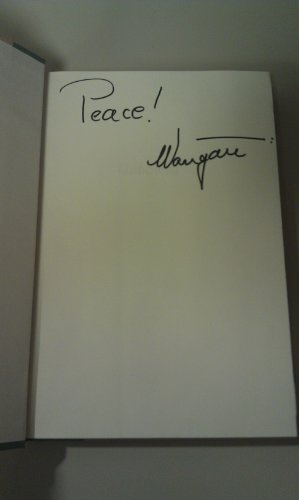
Zustand: Good. Signed Copy . Good dust jacket. Inscribed by author on half title page. Slightly dampstained. Dust jacket slightly dampstained. Artikel-Nr. B18OSa-00162
Gebraucht kaufen
EUR 6,35
Versand gratis
Versand innerhalb von USA
Versand innerhalb von USA
Anzahl: 1 verfügbar
Beispielbild für diese ISBN
Unbowed
Anbieter: Wonder Book, Frederick, MD, USA
Verkäuferbewertung 5 von 5 Sternen
Zustand: Very Good. Very Good condition. Good dust jacket. A copy that may have a few cosmetic defects. May also contain light spine creasing or a few markings such as an owner's name, short gifter's inscription or light stamp. Artikel-Nr. L05S-00721
Gebraucht kaufen
EUR 6,35
Versand gratis
Versand innerhalb von USA
Versand innerhalb von USA
Anzahl: 1 verfügbar
Beispielbild für diese ISBN
Unbowed : One Woman's Story
Verlag:
Knopf Doubleday Publishing Group, 2006
ISBN 10: 0307263487
ISBN 13: 9780307263483
Gebraucht
Hardcover
Anbieter: Better World Books, Mishawaka, IN, USA
Verkäuferbewertung 5 von 5 Sternen
Zustand: Good. Former library copy. Pages intact with minimal writing/highlighting. The binding may be loose and creased. Dust jackets/supplements are not included. Includes library markings. Stock photo provided. Product includes identifying sticker. Better World Books: Buy Books. Do Good. Artikel-Nr. 386090-6
Gebraucht kaufen
EUR 6,67
Versand gratis
Versand innerhalb von USA
Versand innerhalb von USA
Anzahl: 2 verfügbar
Beispielbild für diese ISBN
Unbowed : One Woman's Story
Verlag:
Knopf Doubleday Publishing Group, 2006
ISBN 10: 0307263487
ISBN 13: 9780307263483
Gebraucht
Hardcover
Anbieter: Better World Books, Mishawaka, IN, USA
Verkäuferbewertung 5 von 5 Sternen
Zustand: Good. Pages intact with minimal writing/highlighting. The binding may be loose and creased. Dust jackets/supplements are not included. Stock photo provided. Product includes identifying sticker. Better World Books: Buy Books. Do Good. Artikel-Nr. 4324640-6
Gebraucht kaufen
EUR 6,67
Versand gratis
Versand innerhalb von USA
Versand innerhalb von USA
Anzahl: 1 verfügbar