
Verwandte Artikel zu The Other
Inhaltsangabe
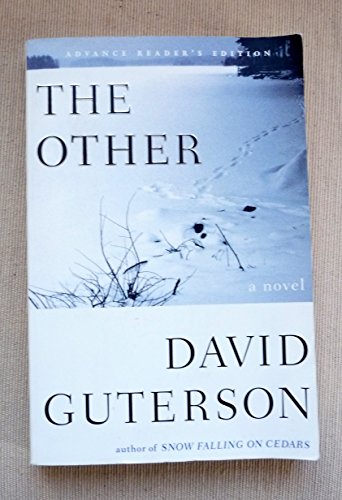
From the author of the best-selling Snow Falling on Cedars, a dazzling new novel about youth and idealism, adulthood and its compromises, and two powerfully different visions of what it means to live a good life.
John William Barry has inherited the pedigree—and wealth—of two of Seattle’s elite families; Neil Countryman is blue-collar Irish. Nevertheless, when the two boys meet in 1972 at age sixteen, they’re brought together by what they have in common: a fierce intensity and a love of the outdoors that takes them, together and often, into Washington’s remote backcountry, where they must rely on their wits—and each other—to survive.
Soon after graduating from college, Neil sets out on a path that will lead him toward a life as a devoted schoolteacher and family man. But John William makes a radically different choice, dropping out of college and moving deep into the woods, convinced that it is the only way to live without hypocrisy. When John William enlists Neil to help him disappear completely, Neil finds himself drawn into a web of secrets and often agonizing responsibility, deceit, and tragedy—one that will finally break open with a wholly unexpected, life-altering revelation.
Riveting, deeply humane, The Other is David Guterson’s most brilliant and provocative novel to date.
Die Inhaltsangabe kann sich auf eine andere Ausgabe dieses Titels beziehen.
Über die Autorin bzw. den Autor
David Guterson is the author of the novels Snow Falling on Cedars, East of the Mountains, and Our Lady of the Forest, as well as a story collection, The Country Ahead of Us, The Country Behind. A PEN/Faulkner Award winner, he is a cofounder of Field’s End, an organization for writers in Washington State.
Auszug. © Genehmigter Nachdruck. Alle Rechte vorbehalten.
No Escape from the Unhappiness Machine
I attended Roosevelt (the Teddies, Teds, or Roughriders), a public high school in North Seattle, while my friend John William Barry was a student at Lakeside, our city’s version of an East Coast private academy like Phillips Exeter or Deerfield. Besides slumping at my desk all day and getting high in Cowen Park at lunch, I also ran the 880—today called the eight-hundred-meter or the half-mile—for the RHS track team. It was a good niche for me. You didn’t need to be fast or have the wind of the distance runner. Mostly what you needed was a willingness to sign up. As a sophomore in 1972, I was a good enough half-miler to represent RHS with a time of 2:11.24. To put this in context, the world record in ’72 for the half-mile was held by Dave Wottle, with a time of 1:44.30. Roosevelt’s best half-miler of all time is Chris Vasquez, ’97, at 2:01.23. This is a race that takes runners twice around the red cinder oval found behind many high schools—I say this so you can imagine me losing to Vasquez by about thirty yards, or think of me still rounding the last bend, at the far end of the grandstands, while Wottle is crossing the finish line, arms raised victoriously. Either is a useful picture of me—of someone intimate with the middle of the pack. There’s good and bad in that.
I remember one race more vividly than others. It’s ’72, so Nixon is president, though he and everything else, the world, seem far away from Seattle. I’m sixteen and wear my hair like Peter Frampton’s and a mustache like Steve Prefontaine’s. (Because of this mustache, I’m sometimes referred to at school as “the Turk,” after the guy in the Camel cigarette ads. I’m not Turkish, but my mother’s father, whom I never met, was what people call Black Irish, and possibly I inherited his coloring.) I’ve got on hi-cut satin shorts and a satin jersey emblazoned with Roughriders, and I’m at the starting line along with seven other runners, six with better qualifying times than mine. Despite them, I’m a believer that if the ninety-nine-pound mother in the apocryphal story can lift the front end of a Volkswagen off her crushed toddler, I can win today.
I’ll dispense with the obligation to describe the weather—whether or not it was a sultry afternoon, with clouds of newly hatched mayflies above the track, or a windless May day smelling of moist turf and mown grass, is beside the point—and cut, literally, to in medias res: the eight of us stalwart and tortured young runners rounding the third curve of a high-school track and coming up on 250 yards. It’s my usual MO—out front early and counting on adrenaline to keep me there, but with heels nipped and a sinking feeling that’s anathema to winning. A race is a conversation with yourself, motivational in quality, until somebody interrupts by pulling away from you, and then it becomes an exercise in fathoming limits. Losing is like knowing that, in the movie scene where a thousand die but the hero lives, you’re one of the obliterated.
The right track term is “running in a pack.” That’s us—a band of runners hardly separated. One keeps exhaling humidly on my shoulders. Another’s left forearm hits my right elbow on its backswing. A runner pulls up beside me—the way a freeway driver pulls even in the adjacent lane to take your pulse—and I assess his chances with a panicked glance. Not strictured yet; striding with more ease than I feel; biding his time; relaxed. Working up a freshly adrenalized surge, I gain a quarter-step on him, but purchased with the last of my reserves.
The early leader in a half-mile race rarely crosses the finish line first. But he wants to have had the experience of leading—that’s part of it—and he’s perennially hopeful that, this time, things will be different in the home stretch. I still feel that way in the early part of curve three: that I might have heretofore undiscovered deposits of leg strength and cardiovascular capacity, not to mention will, at my disposal, all this against the grain of my foreboding. It turns out that my foreboding makes sense; at the curve’s apogee, I know I’ll flag, and with that, the flagging happens. Three runners pass me, going strong.
I’m needled by regret. Why don’t I have a better strategy than running as fast as I can from start to finish? I’ve squandered my energy; I’ve incurred too large a deficit. But it isn’t in me to plan; I just run, as my coach says, on unfocused emotion. These other runners, by the halfway mark—end of lap one, where we’re lashed on by friends and exhorted by teammates, a small fire zone of screaming and technical advice—are just stretching out and finding a rhythm, while I’m already in a battle with depletion. I drop to sixth, dragging with me a familiar sense of failure.
Then, on the back stretch, the runner in seventh tries to pass me, too. To anybody watching we’re in a pointless and even pathetic battle between losers, but for me what’s happening feels critical. Against good tactical judgment—it’s a move that slows you—I indulge in another assessment of an opponent: like me, long-haired; like me, in earnest; like me, goaded forward by, the word might be, convictions. In other words, this runner is approximately my doppelgänger.
Ask any track coach. The half-mile is a race for unadulterated masochists. Neither a sprint nor a distance event, it has the worst qualities of both. It’s not a glorious race, either. A lot of people can name a sprinter or two—Carl Lewis, for example—or a famous miler like Roger Bannister, but can very many name even a single half-miler? No athletic romance attaches to the half-mile. It’s not a legendary or even notable feat to beat other runners over 880 yards. At track meets, the half-mile contest is somehow lost between more compelling competitions, an event that unfolds while fans thumb their programs or use the bathroom. Into this gap of a race, this sideshow, step runners in search of a deeper agony than they can find elsewhere. They want to do battle with suffering itself. It’s the trauma they want, the anguished ordeal. It’s the approximately two minutes of self-mortification or private crucifixion. All half-milers have a similar love of pain. So this race is an intimation and an opening. In two minutes’ time, you get a glimpse.
I do, on the afternoon I’m telling about. There’s a kind of synchronicity that can happen in a running race, and it happens now. We run in tandem, my near doppelgänger and I. In running parlance, we match strides. I’m measuring him, as he, no doubt, is measuring me—all the while throwing ourselves forward into fresh pain, so that there are two perceptions, pain and the close presence of another agonized half-miler. In parallel this way, and canceling each other out, we’re neither of us ahead or behind for maybe forty-five seconds. That’s an unusually long time to run neck and neck in the 880. I’m oxygen-deprived, so everything looks well lit and startling, and from this perspective I see what I probably wouldn’t see otherwise. This guy, right here, running next to me, is a version of me. We both feel, romantically, that our running is transcendent. How do I know this? From running alongside him. I also have the benefit of hindsight.
Thirty-four years have passed, but I still remember how, in the final five yards, my double frees himself—like a shadow in a cartoon or a mirror-figure in a dream—and beats me by three-quarters of a...
„Über diesen Titel“ kann sich auf eine andere Ausgabe dieses Titels beziehen.
Suchergebnisse für The Other

Beispielbild für diese ISBN
The Other
Anbieter: World of Books (was SecondSale), Montgomery, IL, USA
Verkäuferbewertung 5 von 5 Sternen

Hardback. Zustand: Good. From the author of the bestselling Snow Falling on Cedars, a coming-of-age novel that presents two powerfully different visions of what it means to live a good life and the compromises that come with fulfillment. John William Barry and Neil Countryman shared a love of the outdoors, trekking often into Washington's remote backcountry where they had to rely on their wits--and each other--to survive. Soon after graduating from college, Neil sets out on a path that will lead him toward a life as a devoted schoolteacher and family man. But John William makes a radically different choice, dropping out of college and moving deep into the woods. When he enlists Neil to help him disappear completely, Neil finds himself drawn into a web of agonizing responsibility, deceit, and tragedy--one that will finally break open with a wholly unexpected, life-altering revelation. Artikel-Nr. 00086055079
Gebraucht kaufen
EUR 4,56
Versand gratis
Versand innerhalb von USA
Versand innerhalb von USA
Anzahl: 19 verfügbar
Beispielbild für diese ISBN
The Other
Anbieter: World of Books (was SecondSale), Montgomery, IL, USA
Verkäuferbewertung 5 von 5 Sternen
Hardback. Zustand: Fair. From the author of the bestselling Snow Falling on Cedars, a coming-of-age novel that presents two powerfully different visions of what it means to live a good life and the compromises that come with fulfillment. John William Barry and Neil Countryman shared a love of the outdoors, trekking often into Washington's remote backcountry where they had to rely on their wits--and each other--to survive. Soon after graduating from college, Neil sets out on a path that will lead him toward a life as a devoted schoolteacher and family man. But John William makes a radically different choice, dropping out of college and moving deep into the woods. When he enlists Neil to help him disappear completely, Neil finds himself drawn into a web of agonizing responsibility, deceit, and tragedy--one that will finally break open with a wholly unexpected, life-altering revelation. Artikel-Nr. 00105718626
Gebraucht kaufen
EUR 4,56
Versand gratis
Versand innerhalb von USA
Versand innerhalb von USA
Anzahl: 1 verfügbar
Beispielbild für diese ISBN
The Other
Anbieter: BooksRun, Philadelphia, PA, USA
Verkäuferbewertung 5 von 5 Sternen
Hardcover. Zustand: Very Good. With dust jacket. It's a well-cared-for item that has seen limited use. The item may show minor signs of wear. All the text is legible, with all pages included. It may have slight markings and/or highlighting. Artikel-Nr. 0307263150-11-6-29
Gebraucht kaufen
EUR 5,34
Versand gratis
Versand innerhalb von USA
Versand innerhalb von USA
Anzahl: 1 verfügbar
Beispielbild für diese ISBN
The Other
Verlag:
Knopf Doubleday Publishing Group, 2008
ISBN 10: 0307263150
ISBN 13: 9780307263155
Gebraucht
Hardcover
Anbieter: Better World Books, Mishawaka, IN, USA
Verkäuferbewertung 5 von 5 Sternen
Zustand: Good. Pages intact with minimal writing/highlighting. The binding may be loose and creased. Dust jackets/supplements are not included. Stock photo provided. Product includes identifying sticker. Better World Books: Buy Books. Do Good. Artikel-Nr. 2009175-6
Gebraucht kaufen
EUR 6,36
Versand gratis
Versand innerhalb von USA
Versand innerhalb von USA
Anzahl: 1 verfügbar
Beispielbild für diese ISBN
The Other
Verlag:
Knopf Doubleday Publishing Group, 2008
ISBN 10: 0307263150
ISBN 13: 9780307263155
Gebraucht
Hardcover
Anbieter: Better World Books: West, Reno, NV, USA
Verkäuferbewertung 5 von 5 Sternen
Zustand: Good. Former library copy. Pages intact with minimal writing/highlighting. The binding may be loose and creased. Dust jackets/supplements are not included. Includes library markings. Stock photo provided. Product includes identifying sticker. Better World Books: Buy Books. Do Good. Artikel-Nr. 2009176-6
Gebraucht kaufen
EUR 6,36
Versand gratis
Versand innerhalb von USA
Versand innerhalb von USA
Anzahl: 1 verfügbar
Beispielbild für diese ISBN
The Other
Anbieter: Wonder Book, Frederick, MD, USA
Verkäuferbewertung 5 von 5 Sternen
Zustand: Very Good. Very Good condition. Good dust jacket. A copy that may have a few cosmetic defects. May also contain light spine creasing or a few markings such as an owner's name, short gifter's inscription or light stamp. Artikel-Nr. Y00F-00939
Gebraucht kaufen
EUR 6,43
Versand gratis
Versand innerhalb von USA
Versand innerhalb von USA
Anzahl: 2 verfügbar
Beispielbild für diese ISBN
The Other
Anbieter: Wonder Book, Frederick, MD, USA
Verkäuferbewertung 5 von 5 Sternen
Zustand: As New. Like New condition. Very Good dust jacket. A near perfect copy that may have very minor cosmetic defects. Artikel-Nr. L02C-01001
Gebraucht kaufen
EUR 6,43
Versand gratis
Versand innerhalb von USA
Versand innerhalb von USA
Anzahl: 1 verfügbar
Beispielbild für diese ISBN
The Other
Anbieter: ThriftBooks-Dallas, Dallas, TX, USA
Verkäuferbewertung 5 von 5 Sternen
Hardcover. Zustand: Very Good. No Jacket. May have limited writing in cover pages. Pages are unmarked. ~ ThriftBooks: Read More, Spend Less. Artikel-Nr. G0307263150I4N00
Gebraucht kaufen
EUR 6,69
Versand gratis
Versand innerhalb von USA
Versand innerhalb von USA
Anzahl: 1 verfügbar
Beispielbild für diese ISBN
The Other
Anbieter: ThriftBooks-Atlanta, AUSTELL, GA, USA
Verkäuferbewertung 5 von 5 Sternen
Hardcover. Zustand: Very Good. No Jacket. Missing dust jacket; May have limited writing in cover pages. Pages are unmarked. ~ ThriftBooks: Read More, Spend Less. Artikel-Nr. G0307263150I4N01
Gebraucht kaufen
EUR 6,69
Versand gratis
Versand innerhalb von USA
Versand innerhalb von USA
Anzahl: 1 verfügbar
Beispielbild für diese ISBN
The Other
Verlag:
Knopf, 2008
ISBN 10: 0307263150
ISBN 13: 9780307263155
Gebraucht
Hardcover
Erstausgabe
Signiert
Anbieter: Wonder Book, Frederick, MD, USA
Verkäuferbewertung 5 von 5 Sternen
Zustand: As New. Signed Copy First edition copy. . Very Good dust jacket. Signed by author on label, laid in. In protective mylar cover. (Male Friendship, Recluses, Psychological Fiction). Artikel-Nr. SA02E-00426
Gebraucht kaufen
EUR 11,66
Versand gratis
Versand innerhalb von USA
Versand innerhalb von USA
Anzahl: 1 verfügbar