
Verwandte Artikel zu Landmark of the Spirit: The Eldridge Street Synagogue
Inhaltsangabe
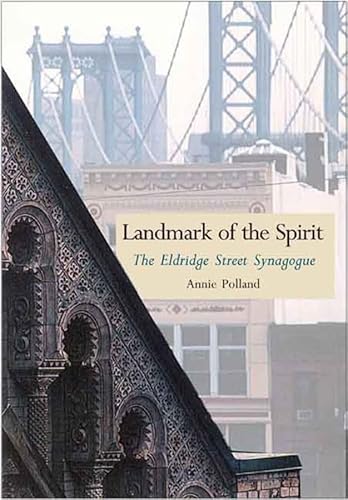
The first major history of the gloriously restored Eldridge Street Synagogue, the first synagogue in the United States built by east European Jews, has a seminal place in the history of American Jewry.
New York City’s magnificent Eldridge Street Synagogue was built in 1887 in response to the great wave of Jewish immigrants who fled persecution in eastern Europe. Finding their way to the Lower East Side, the new arrivals formed a vibrant Jewish community that flourished from the 1850s until the 1940s. Their synagogue served not only as a place of worship but also as a singularly important center in the development of American Judaism.
A near ruin in the 1980s that was recently reopened after a massive twenty-year restoration, the Eldridge Street Synagogue has been named a National Historic Landmark. But as Bill Moyers tells us in his foreword, the synagogue is also “a landmark of the spirit, . . . the spirit of a new nation committed to the old idea of liberty.”
Annie Polland uses elements of the building’s architecture—the façade, the benches, the grooves worn into the sanctuary floor—as points of departure to discuss themes, people, and trends at various moments in the synagogue’s history, particularly during its heyday from 1887 until the 1930s. Exploring the synagogue’s rich archives, the author shines new light on the religious life of immigrant Jews, introduces various rabbis, cantors and congregants, and analyzes the significance of this special building in the context of the larger American-Jewish experience.
For more information, go to: www.EldridgeStreet.org
Die Inhaltsangabe kann sich auf eine andere Ausgabe dieses Titels beziehen.
Über die Autorin bzw. den Autor
Annie Polland is vice president for education at the Museum at Eldridge Street, where she oversees the development of exhibits and curriculum and coordinates lecture series, and a visiting professor at the New School and at New York University.
Auszug. © Genehmigter Nachdruck. Alle Rechte vorbehalten.
LANDMARK OF THE SPIRIT
The Eldridge Street SynagogueBy Annie PollandYALE UNIVERSITY PRESS
Copyright © 2009 Annie PollandAll right reserved.
ISBN: 978-0-300-12470-5
Contents
Foreword by Bill Moyers........................................ixAcknowledgments................................................xvCHAPTER ONE A Landmark Synagogue..............................1CHAPTER TWO Laying the Cornerstone............................15CHAPTER THREE Opening Day.....................................32CHAPTER FOUR Music and Money..................................49CHAPTER FIVE E Pluribus Unum..................................64CHAPTER SIX Patriarchs and Matriarchs.........................90CHAPTER SEVEN The Burning of the Mortgage.....................114Notes..........................................................135Selected Bibliography..........................................151Index..........................................................157
Chapter One
A Landmark Synagogue
THE WESTERN SIDE OF Eldridge Street is home to a dizzying array of activities. Workers unload vegetable crates, merchants buy restaurant supplies, residents and tourists visit Chinese bakeries and noodle shops, and Buddhist priests offer sidewalk feasts to the gods. So vibrant is the mix of commerce, social activity, and religion that movie and television crews in search of a New York Chinatown scene often set up their cameras here to capture it on film. But their shots tend to omit the eastern side of the street, for there, in the center of the block, stands a synagogue. Its cream-colored brick, its Moorish finials, and its Star of David ornamentation catch the eye. What is a synagogue doing in the heart of Chinatown?
When it opened in September 1887, in what was the heart of the Jewish Lower East Side, the Eldridge Street Synagogue surprised spectators then, too. New York's east European Jewish population, made up of peddlers and tailors and their families, had worshipped in small, nondescript storefronts, partitioned tenement halls, and churches converted into synagogues. Although they eventually built dozens of synagogues, as well as notable, even palatial secular spaces-banks, newspaper headquarters, and theaters-in 1887 nothing in the neighborhood's architecture announced the Jewish presence as strikingly as the Eldridge Street Synagogue did. Opening just in time for the Jewish High Holidays, the synagogue permanently altered the streetscape and skyline of the Lower East Side, attracting not only downtown and uptown Jews but also reporters from New York City's leading papers, one of whom heralded the "elegant" and "magnificent" synagogue as "one of the finest Hebrew places of worship in the city."
For the tens of thousands of Jewish immigrants already settled on the Lower East Side, as for the hundreds of thousands who would arrive in the coming decades, New York's first great east European synagogue expressed the hope that the immigrants' religion and culture would flourish on American soil. For forty years after the synagogue's dedication, it was sustained by "lawyers, merchants, artisans, clerks, peddlers and laborers" who gathered to celebrate holidays, mark life-cycle events, and debate communal issues. Cantorial concerts and Sabbath sermons drew crowds; daily study sessions attracted a core constituency. When longtime members moved uptown at the turn of the twentieth century, new immigrants replenished the congregation. But by the 1920s the population, as economically and geographically mobile as earlier immigrants, had dispersed far beyond the Lower East Side, and immigration quotas stemmed the tide of arrivals. Still, the members who remained, many of whom operated small neighborhood businesses, kept the congregation going. By the 1950s a depleted but stalwart congregation could no longer afford the repairs needed to maintain the building, or even to heat its sanctuary, and met instead in the street-level chapel.
In the 1970s and 1980s the congregation still prayed in the street-level chapel, but the building itself was in grave disrepair, its cracked foundations, leaky roof, and unsound structure "held up only by strings to heaven." In 1971, New York University professor Gerard Wolfe persuaded Benjamin Markowitz, the sexton, to show him the sealed-off sanctuary. Although pigeons roosted in the balcony, grime covered the stained-glass windows and painted surfaces, and dust blanketed the wooden surfaces, Wolfe was amazed by its beauty, and together both Wolfe and Markowitz began to lead visitors on tours of the sanctuary. Hoping to preserve and ultimately restore the building, the journalist and preservationist Roberta Brandes Gratz and the attorney William Josephson incorporated the not-for-profit nonsectarian Eldridge Street Project (now renamed the Museum at Eldridge Street) in 1986, which mounted the largest independent restoration in New York City not supported by or attached to an institution or government agency. When raising funds and organizing the restoration fostered recognition of the site's potential as an educational and cultural space, the project sought and secured National Historic Landmark status and introduced tours and programs that brought tens of thousands of visitors to the synagogue.
In 2007 the Eldridge Street Synagogue became once again the magnificent edifice that had greeted throngs of worshippers 120 years earlier. From Eldridge Street, visitors can survey the same cream facade that immigrants beheld on opening day; inside, they can marvel at the fifty-foot barrel-vaulted ceiling, the richly hued stained-glass windows, and the majestic carved-walnut ark, still lined with its original crimson velvet. This restored synagogue is one of the last remaining-and arguably the best-preserved-edifices built by the east European immigrants who made the Lower East Side the world's largest Jewish city around 1900. Its history is perpetuated today in two separate but complementary ways. On the Sabbath and holidays, congregation members, who have, across the generations, never missed a Sabbath service, worship in the Orthodox tradition of their grandparents and great-grandparents. On Sundays and weekdays, the Museum at Eldridge Street explores the context of their worship, explaining to visitors of diverse ages and backgrounds how the immigrant founders and their children lived, worked, and prayed on the Lower East Side.
The museum's tours treat the synagogue as a historical artifact. Its architectural elements-the facade, reader's platform, even the lighting fixtures-prompt discourses on the shared history of the congregation and the Lower East Side. The architectural elements work well as prompts because the restorers, with meticulous sensitivity, retained elements and finishes that show the passage of time. The undulations left on the sanctuary's pine floors, formed by worshippers' feet rocking back and forth, are perhaps the most striking reminders of the past. A ring of light bulbs encircling the ark's Ten Commandments was added in 1907, when the congregation installed electricity to attract congregants as some established members moved uptown and new neighborhood synagogues drew others away. On the northern balcony wall, a section of plaster and lathwork interrupts the stenciling and shows where water damage stripped away layers of decorative paint, plaster, and wood during the half-century when both the congregation's membership and the Lower East Side's Jewish population declined. As beautiful as the building is, its real power lies in its ability...
„Über diesen Titel“ kann sich auf eine andere Ausgabe dieses Titels beziehen.
Suchergebnisse für Landmark of the Spirit: The Eldridge Street Synagogue

Beispielbild für diese ISBN
Landmark of the Spirit: The Eldridge Street Synagogue
Anbieter: World of Books (was SecondSale), Montgomery, IL, USA
Verkäuferbewertung 5 von 5 Sternen

Zustand: Good. Item in good condition. Textbooks may not include supplemental items i.e. CDs, access codes etc. Artikel-Nr. 00097729420
Gebraucht kaufen
EUR 5,09
Versand gratis
Versand innerhalb von USA
Versand innerhalb von USA
Anzahl: 1 verfügbar
Beispielbild für diese ISBN
Landmark of the Spirit: The Eldridge Street Synagogue
Verlag:
Yale University Press (edition 1), 2008
ISBN 10: 0300124708
ISBN 13: 9780300124705
Gebraucht
Hardcover
Anbieter: BooksRun, Philadelphia, PA, USA
Verkäuferbewertung 5 von 5 Sternen
Hardcover. Zustand: Very Good. 1. With dust jacket. It's a well-cared-for item that has seen limited use. The item may show minor signs of wear. All the text is legible, with all pages included. It may have slight markings and/or highlighting. Artikel-Nr. 0300124708-11-1-29
Gebraucht kaufen
EUR 5,10
Versand gratis
Versand innerhalb von USA
Versand innerhalb von USA
Anzahl: 1 verfügbar
Beispielbild für diese ISBN
Landmark of the Spirit: The Eldridge Street Synagogue
Anbieter: ThriftBooks-Atlanta, AUSTELL, GA, USA
Verkäuferbewertung 5 von 5 Sternen
Hardcover. Zustand: Good. No Jacket. Pages can have notes/highlighting. Spine may show signs of wear. ~ ThriftBooks: Read More, Spend Less. Artikel-Nr. G0300124708I3N00
Gebraucht kaufen
EUR 5,86
Versand gratis
Versand innerhalb von USA
Versand innerhalb von USA
Anzahl: 1 verfügbar
Beispielbild für diese ISBN
Landmark of the Spirit: The Eldridge Street Synagogue
Anbieter: ThriftBooks-Atlanta, AUSTELL, GA, USA
Verkäuferbewertung 5 von 5 Sternen
Hardcover. Zustand: Very Good. No Jacket. May have limited writing in cover pages. Pages are unmarked. ~ ThriftBooks: Read More, Spend Less. Artikel-Nr. G0300124708I4N00
Gebraucht kaufen
EUR 5,86
Versand gratis
Versand innerhalb von USA
Versand innerhalb von USA
Anzahl: 1 verfügbar
Beispielbild für diese ISBN
Landmark of the Spirit: The Eldridge Street Synagogue
Anbieter: ThriftBooks-Phoenix, Phoenix, AZ, USA
Verkäuferbewertung 5 von 5 Sternen
Hardcover. Zustand: Very Good. No Jacket. May have limited writing in cover pages. Pages are unmarked. ~ ThriftBooks: Read More, Spend Less. Artikel-Nr. G0300124708I4N00
Gebraucht kaufen
EUR 6,33
Versand gratis
Versand innerhalb von USA
Versand innerhalb von USA
Anzahl: 1 verfügbar
Beispielbild für diese ISBN
Landmark of the Spirit : The Eldridge Street Synagogue
Anbieter: Better World Books, Mishawaka, IN, USA
Verkäuferbewertung 5 von 5 Sternen
Zustand: Very Good. Pages intact with possible writing/highlighting. Binding strong with minor wear. Dust jackets/supplements may not be included. Stock photo provided. Product includes identifying sticker. Better World Books: Buy Books. Do Good. Artikel-Nr. 8933286-6
Gebraucht kaufen
EUR 7,26
Versand gratis
Versand innerhalb von USA
Versand innerhalb von USA
Anzahl: 1 verfügbar
Beispielbild für diese ISBN
Landmark of the Spirit: The Eldridge Street Synagogue.
Verlag:
Yale University Press, New Haven, Conn., 2009
ISBN 10: 0300124708
ISBN 13: 9780300124705
Gebraucht
Hardcover
Erstausgabe
Anbieter: Henry Hollander, Bookseller, Los Angeles, CA, USA
Verkäuferbewertung 4 von 5 Sternen

Hardbound. Zustand: Fine. First Edition. Royal octavo in dust jacket, map endpapers, color frontispiece photo, xx, 164 pp., b/w drawings and color photos, notes, selected bibliography, index Foreword by Bill Moyers. Artikel-Nr. 62185
Gebraucht kaufen
EUR 4,48
EUR 6,15 Versand
Versand innerhalb von USA
Versand innerhalb von USA
Anzahl: 3 verfügbar
Beispielbild für diese ISBN
Landmark of the Spirit: The Eldridge Street Synagogue
Verlag:
Yale University Press, 2008
ISBN 10: 0300124708
ISBN 13: 9780300124705
Gebraucht
Hardcover
Erstausgabe
Anbieter: Powell's Bookstores Chicago, ABAA, Chicago, IL, USA
Verkäuferbewertung 5 von 5 Sternen
Hardcover. Zustand: Used-Very Good. 1st Edition. 4to. Cloth, d.j. Some shelf-wear. Else clean copy. Artikel-Nr. 1772083
Gebraucht kaufen
EUR 7,23
EUR 4,39 Versand
Versand innerhalb von USA
Versand innerhalb von USA
Anzahl: 1 verfügbar
Beispielbild für diese ISBN
Landmark of the Spirit: The Eldridge Street Synagogue
Anbieter: Powell's Bookstores Chicago, ABAA, Chicago, IL, USA
Verkäuferbewertung 5 von 5 Sternen
Hardcover. Zustand: Like New. Clean copy. May have remainder mark. Artikel-Nr. 2044002
Gebraucht kaufen
EUR 8,14
EUR 4,39 Versand
Versand innerhalb von USA
Versand innerhalb von USA
Anzahl: 6 verfügbar
Beispielbild für diese ISBN
Landmark of the Spirit: The Eldridge Street Synagogue
Anbieter: Kennys Bookstore, Olney, MD, USA
Verkäuferbewertung 5 von 5 Sternen
Zustand: New. New York City's magnificent Eldridge Street Synagogue was built in 1887 in response to the great wave of Jewish immigrants who fled persecution in eastern Europe. This book discusses themes, people, and trends at various moments in the synagogue's history, particularly during its heyday from 1887 until the 1930s. Num Pages: 192 pages, 54 color illus. BIC Classification: JFSR1. Category: (P) Professional & Vocational; (UP) Postgraduate, Research & Scholarly; (UU) Undergraduate. Dimension: 235 x 184 x 18. Weight in Grams: 681. . 2008. hardcover. . . . . Books ship from the US and Ireland. Artikel-Nr. 9780300124705