
Verwandte Artikel zu Thomas Hardy: The Guarded Life
Inhaltsangabe
A major new biography of one of the giants of early modern fiction and poetry
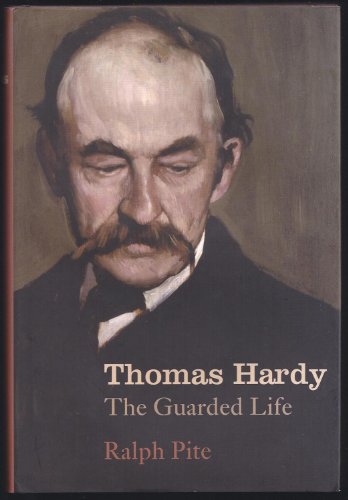
Internationally renowned as the author of Far From the Madding Crowd, Tess of the D’Urbervilles, Jude the Obscure, Wessex Poems and Other Verses, and Winter Words, Thomas Hardy (1840-1928) nonetheless remains an elusive and enigmatic figure. His own diligent efforts to guard his privacy—making bonfires of his papers, ghost-writing his own biography to be published after his death—have obscured many aspects of the author’s personal life. This book, the first major biography of Hardy in decades, draws on new and extensive archival research to present a more complex picture of Hardy than has been possible to date. Author Ralph Pite investigates the validity of long-accepted views of the author: Was his early life devoted to his preparation for becoming a writer? Did his first wife, Emma, trick him into an unwanted marriage? Was his poetry far dearer to his heart than the novels? And was Florence, his second wife, as conflicted and passionate as caricatures have suggested? Pite examines the relationships and contexts that shaped Hardy most—the women in his life, his friends and mentors, social and family pressures, career structures of his day, the Devonshire landscape—and offers new insight into the man who, until now, was hidden behind an opaque public image he helped to create.
Internationally renowned as the author of Far From the Madding Crowd, Tess of the D’Urbervilles, Jude the Obscure, Wessex Poems and Other Verses, and Winter Words, Thomas Hardy (1840-1928) nonetheless remains an elusive and enigmatic figure. His own diligent efforts to guard his privacy—making bonfires of his papers, ghost-writing his own biography to be published after his death—have obscured many aspects of the author’s personal life. This book, the first major biography of Hardy in decades, draws on new and extensive archival research to present a more complex picture of Hardy than has been possible to date. Author Ralph Pite investigates the validity of long-accepted views of the author: Was his early life devoted to his preparation for becoming a writer? Did his first wife, Emma, trick him into an unwanted marriage? Was his poetry far dearer to his heart than the novels? And was Florence, his second wife, as conflicted and passionate as caricatures have suggested? Pite examines the relationships and contexts that shaped Hardy most—the women in his life, his friends and mentors, social and family pressures, career structures of his day, the Devonshire landscape—and offers new insight into the man who, until now, was hidden behind an opaque public image he helped to create.
Die Inhaltsangabe kann sich auf eine andere Ausgabe dieses Titels beziehen.
Über die Autorin bzw. den Autor
Ralph Pite is professor of English at Cardiff University, Wales. His previous books include The Circle of Our Vision: Dante’s Presence in English Romantic Poetry, and Hardy’s Geography: Wessex and the Regional Novel.
Auszug. © Genehmigter Nachdruck. Alle Rechte vorbehalten.
THOMAS HARDY: THE GUARDED LIFE
By Ralph PiteYale University Press
Copyright © 2006 Ralph PiteAll right reserved.
ISBN: 978-0-300-12337-1
Contents
Acknowledgements.......................................................viiMaps...................................................................viiiIntroduction - Higher Bockhampton......................................11 - A railway bore him through.........................................112 - One who lived and died where he was born...........................253 - She who upheld me and I............................................464 - 'The playground of TH's childhood'.................................615 - His kindred they, his sweetheart I.................................746 - One who walks west, a city-clerk...................................927 - If but some vengeful god would call to me..........................1088 - Red roses and smug nuns............................................1249 - Believed-in things.................................................13610 - Rising and falling with the tide..................................14911 - With magic in my eyes.............................................16612 - That there should have come a change..............................18613 - Wasted were two souls in their prime..............................21014 - Lifelong to be I thought it.......................................22815 - Some hid dread afoot..............................................24416 - No such bower will be known.......................................25817 - Taking the universe seriously.....................................27018 - Life-loyalties....................................................28719 - If the true artist ever weeps.....................................30420 - That we had all resigned for love's dear ends.....................32121 - No balm for all your sorrow.......................................34222 - The day goeth away................................................35623 - Few persons are more martial than I...............................37724 - We kissed at the barrier..........................................39425 - The mind goes back to the early times.............................40926 - The sustaining power of poetry....................................42227 - No mean power in the contemporary world...........................43828 - Wistlessness......................................................450Conclusion - Max Gate..................................................465Notes..................................................................477Further Reading........................................................501Index..................................................................507
Chapter One
A railway bore him through
ON 2 JUNE 1840, Thomas Hardy was born in Higher Bockhampton, a tiny village lying a few miles outside Dorchester in the south-west of England. When he died in 1928, he was buried in Westminster Abbey, a figure of national importance given something like a state funeral. As an old man Hardy tried to give the impression that this extraordinary success story had taken place almost by accident - that he had never sought fame or worked to get it. This cannot possibly be the case. Growing up where he did, Hardy was on the very outer fringes of English society. It was an extremely long way from Higher Bockhampton to London, in terms of distance, time and cultural separation. If Hardy had been as passive and indifferent as he said he was, then we would never have heard of him. You might not be reading this book.
Other Victorian writers, of course, came from humble backgrounds. Upward mobility was a feature of the nineteenth century and writing was one of the best ways to rise in the world. Dickens was born in obscurity, the son of a clerk in the Navy office in Portsmouth. He died in 1870 an internationally famous man. George Eliot was as a child nothing more promising than the youngest daughter of a land agent in the Midlands. In her maturity, nonetheless, she received visits from princesses, when Queen Victoria's daughters came to her seeking words of wisdom.
Even so, Hardy's rise to fame is exceptional because his origins were uniquely obscure. Portsmouth was a key naval base with strong links to London; George Eliot's Coventry was an expanding industrial city. Dorset in 1840 was, on the other hand, one of the most remote, backward and poor counties in England. Over the next twenty years, as Hardy grew up, it became if anything more remote. While the railways drew the rest of the country closer together, making it more unified and homogeneous than ever before, Dorset was transformed into a backwater.
If you travel down to Dorset now, it still feels like an out-of-the-way place, at least by English standards. England is the most densely populated major country in Europe and its southern half is especially crowded. Settlements lie close together, running into one another in what can appear to be an endless suburb of London, and increasingly it is thought of like that: people refer to 'the south-east'; a generation ago they would have talked of Greater London and the Home Counties. City, suburb and country are blurred together in a process of development that seems now, if anything, to be accelerating. Hardy saw this coming: in 1909 he told his fellow-citizens in Dorchester that they should resign themselves to living in a suburb of London. Even so, in some ways, Dorchester and Dorset have escaped.
There are no motorways in the entire county and the railway into London does not form one of the major strands in the national network. The line runs through Basingstoke, Winchester, Southampton, Bournemouth and Poole. After the commuter belt, the industrial port and the swathes of housing behind the seaside resorts, the last little section from Poole into Dorchester has a different quality. Rural England reappears in heathland, pine forest and the winding River Frome, clear and delicate, more like an enlarged stream than a river.
That sense of escape gives the impression that Dorset is not a suburb of London at all, not yet at least, and implies perhaps that Hardy was being characteristically pessimistic. In fact, though, Dorset's idyllic rurality and almost quaint perfection were just what worried him in prospect, not least because he thought he had helped to bring them about.
* * *
Hardy's second published novel, Under the Greenwood Tree (1872), comes as near as he ever did in his fiction to portraying his family home. The Dewy family lives in a house modelled on Hardy's birthplace, and in successive editions over the years, Hardy changed the wording of the description to make the similarity more and more plain, though steadfastly denying it all the time. From the novel's first appearance, however, the likeness is present in the book because Hardy situates the house in a hamlet he called 'Lewgate' (later changed to Upper Mellstock) and the book's topography made Lewgate into an exact equivalent of Higher Bockhampton. Mellstock, Hardy wrote:
was a parish of considerable acreage, the hamlets composing it lying at a much greater distance from each other than is ordinarily the case. [...] There was East Mellstock, the main village; half a mile from this were the church and the vicarage, called West Mellstock, and originally the most thickly-populated portion. A mile north-east lay the hamlet of Lewgate [...] and at other points knots of cottages besides solitary farmsteads and dairies.
'East Mellstock',...
„Über diesen Titel“ kann sich auf eine andere Ausgabe dieses Titels beziehen.
Suchergebnisse für Thomas Hardy: The Guarded Life

Beispielbild für diese ISBN
Thomas Hardy: The Guarded Life
Anbieter: ThriftBooks-Atlanta, AUSTELL, GA, USA
Verkäuferbewertung 5 von 5 Sternen

Hardcover. Zustand: Good. No Jacket. Former library book; Pages can have notes/highlighting. Spine may show signs of wear. ~ ThriftBooks: Read More, Spend Less. Artikel-Nr. G030012337XI3N10
Gebraucht kaufen
EUR 6,70
Versand gratis
Versand innerhalb von USA
Versand innerhalb von USA
Anzahl: 1 verfügbar
Beispielbild für diese ISBN
Thomas Hardy: The Guarded Life
Anbieter: ThriftBooks-Dallas, Dallas, TX, USA
Verkäuferbewertung 5 von 5 Sternen
Hardcover. Zustand: Good. No Jacket. Former library book; Pages can have notes/highlighting. Spine may show signs of wear. ~ ThriftBooks: Read More, Spend Less. Artikel-Nr. G030012337XI3N10
Gebraucht kaufen
EUR 6,70
Versand gratis
Versand innerhalb von USA
Versand innerhalb von USA
Anzahl: 1 verfügbar
Beispielbild für diese ISBN
Thomas Hardy : The Guarded Life
Verlag:
Yale University Press, 2007
ISBN 10: 030012337X
ISBN 13: 9780300123371
Gebraucht
Hardcover
Erstausgabe
Anbieter: Better World Books, Mishawaka, IN, USA
Verkäuferbewertung 5 von 5 Sternen
Zustand: Good. 1st. Former library copy. Pages intact with minimal writing/highlighting. The binding may be loose and creased. Dust jackets/supplements are not included. Includes library markings. Stock photo provided. Product includes identifying sticker. Better World Books: Buy Books. Do Good. Artikel-Nr. 4999185-75
Gebraucht kaufen
EUR 10,76
Versand gratis
Versand innerhalb von USA
Versand innerhalb von USA
Anzahl: 2 verfügbar
Foto des Verkäufers
Thomas Hardy: The Guarded Life
Anbieter: Southampton Books, Sag Harbor, NY, USA
Verkäuferbewertung 5 von 5 Sternen
Hardcover. Zustand: Like New. FIRST THUS. First Edition Thus, First Printing. Published by Yale University Press, 2007. Octavo. Hardcover. Book is like new. Dust jacket is like new.100% positive feedback. 30 day money back guarantee. NEXT DAY SHIPPING! Excellent customer service. Please email with any questions. All books packed carefully and ship with free delivery confirmation/tracking. All books come with free bookmarks. Ships from Sag Harbor, New York. Artikel-Nr. 383718
Gebraucht kaufen
EUR 18,11
EUR 4,39 Versand
Versand innerhalb von USA
Versand innerhalb von USA
Anzahl: 1 verfügbar
Beispielbild für diese ISBN
Thomas Hardy: The Guarded Life
Anbieter: WorldofBooks, Goring-By-Sea, WS, Vereinigtes Königreich
Verkäuferbewertung 5 von 5 Sternen
Paperback. Zustand: Very Good. The book has been read, but is in excellent condition. Pages are intact and not marred by notes or highlighting. The spine remains undamaged. Artikel-Nr. GOR007161243
Gebraucht kaufen
EUR 23,92
EUR 6,50 Versand
Versand von Vereinigtes Königreich nach USA
Versand von Vereinigtes Königreich nach USA
Anzahl: 1 verfügbar
Beispielbild für diese ISBN
Thomas Hardy: The Guarded Life (First American Edition)
Verlag:
Yale University Press, New Haven, 2007
ISBN 10: 030012337X
ISBN 13: 9780300123371
Gebraucht
Hardcover
Erstausgabe
Anbieter: Dan Pope Books, West Hartford, CT, USA
Verkäuferbewertung 5 von 5 Sternen
Hardcover. Zustand: Fine. Zustand des Schutzumschlags: Fine. 1st Edition. Yale University Press, New Haven, 2007. First American edition. First printing (with full number line including the 1). A fine copy in a fine jacket. A clean copy in an unclipped jacket. Comes with archival-quality jacket protector. YALE. Artikel-Nr. FLAHIVE-3581
Gebraucht kaufen
EUR 31,70
EUR 3,96 Versand
Versand innerhalb von USA
Versand innerhalb von USA
Anzahl: 1 verfügbar
Beispielbild für diese ISBN
Thomas Hardy: The Guarded Life
Anbieter: Revaluation Books, Exeter, Vereinigtes Königreich
Verkäuferbewertung 5 von 5 Sternen
Hardcover. Zustand: Brand New. 544 pages. 9.50x6.25x1.50 inches. In Stock. Artikel-Nr. 030012337X
Neu kaufen
EUR 60,42
EUR 14,52 Versand
Versand von Vereinigtes Königreich nach USA
Versand von Vereinigtes Königreich nach USA
Anzahl: 1 verfügbar