
Verwandte Artikel zu Wit and the Writing of History: The Rhetoric of Historiograp...
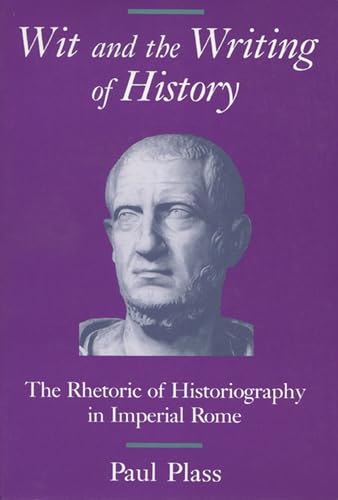
Wit and the Writing of History: The Rhetoric of Historiography in Imperial Rome (Wisconsin Studies in Classics Series) - Softcover
Inhaltsangabe
Wit has many uses in political discourse—to entertain, to underscore or unmask, to hinder or enhance insight. Wit and the Writing of History focuses on how this potential is realized in the historiography of the earlier Principate. Preeminently in Tacitus, to a lesser degree in Suetonius and Dio Cassius, wit is a vehicle for political understanding and judgment of the historical account. As part of Roman political life, hostile anecdotal or epigrammatic wit was deeply embedded in the sources used by historians and is reflected in the rhetoric of their narratives. Some anecdotes may, in fact, have been mere jests later taken as fact, hence the frequent problem of credulity. But what is historically false can be politically true. Not only were political jokes a weapon for making some fair points against the Principate; ancient rhetorical theory recognized that wit in general arises from a violation of normal, expected ways of thinking. What is “funny” is thus disturbing in a serious way as well as amusing, and in the hands of Tacitus wit becomes scalpel as well as sword.
Die Inhaltsangabe kann sich auf eine andere Ausgabe dieses Titels beziehen.
Über die Autorin bzw. den Autor
Paul Plass is professor emeritus in the Department of Classics at the University of Wisconsin–Madison. He is author of many articles and the book The Game of Death in Ancient Rome: Arena Sport and Political Suicide.
„Über diesen Titel“ kann sich auf eine andere Ausgabe dieses Titels beziehen.
Suchergebnisse für Wit and the Writing of History: The Rhetoric of Historiograp...

Beispielbild für diese ISBN
Wit and the Writing of History: The Rhetoric of Historiography in Imperial Rome
Verlag:
The University of Wisconsin Press (edition ), 1988
ISBN 10: 0299118045
ISBN 13: 9780299118044
Gebraucht
Paperback
Anbieter: BooksRun, Philadelphia, PA, USA
Verkäuferbewertung 5 von 5 Sternen

Paperback. Zustand: Fair. The item might be beaten up but readable. May contain markings or highlighting, as well as stains, bent corners, or any other major defect, but the text is not obscured in any way. Artikel-Nr. 0299118045-7-1
Gebraucht kaufen
EUR 9,85
Versand gratis
Versand innerhalb von USA
Versand innerhalb von USA
Anzahl: 1 verfügbar
Beispielbild für diese ISBN
Wit and the Writing of History. The Rheotic of Historiography in Imperial Rome
Verlag:
The University of Wisconsin Press, 1988
ISBN 10: 0299118045
ISBN 13: 9780299118044
Gebraucht
Softcover
Anbieter: Windows Booksellers, Eugene, OR, USA
Verkäuferbewertung 5 von 5 Sternen
Paperback. Wrapper edges slightly curled, slightly musty. Else good. 182 pp. Artikel-Nr. 735984
Gebraucht kaufen
EUR 7,34
EUR 6,68 Versand
Versand innerhalb von USA
Versand innerhalb von USA
Anzahl: 1 verfügbar
Beispielbild für diese ISBN
WIT AND THE WRITING OF HISTORY; The Rhetoric of Historiography in Imperial Rome
Verlag:
University of Wisconsin Press, Madison, WI, U.S.A., 1988
ISBN 10: 0299118045
ISBN 13: 9780299118044
Gebraucht
Softcover
Anbieter: Ancient World Books, Toronto, ON, Kanada
Verkäuferbewertung 5 von 5 Sternen
Softcover. Zustand: Very Good. Minor curling of wraps along foreedges. Light shelfwear.; Wit has many uses in political discourse?to entertain, to underscore or unmask, to hinder or enhance insight. Wit and the Writing of History focuses on how this potential is realized in the historiography of the earlier Principate. Preeminently in Tacitus, to a lesser degree in Suetonius and Dio Cassius, wit is a vehicle for political understanding and judgment of the historical account. As part of Roman political life, hostile anecdotal or epigrammatic wit was deeply embedded in the sources used by historians and is reflected in the rhetoric of their narratives. Some anecdotes may, in fact, have been mere jests later taken as fact, hence the frequent problem of credulity. But what is historically false can be politically true. Not only were political jokes a weapon for making some fair points against the Principate; ancient rhetorical theory recognized that wit in general arises from a violation of normal, expected ways of thinking. What is ?funny? is thus disturbing in a serious way as well as amusing, and in the hands of Tacitus wit becomes scalpel as well as sword.; Wisconsin Studies in Classics; 182 pages. Artikel-Nr. 21167
Gebraucht kaufen
EUR 9,18
EUR 6,68 Versand
Versand von Kanada nach USA
Versand von Kanada nach USA
Anzahl: 1 verfügbar
Foto des Verkäufers
Wit and the Writing of History: The Rhetoric of Historiography in Imperial Rome
Verlag:
University of Wisconsin Press, 1988
ISBN 10: 0299118045
ISBN 13: 9780299118044
Gebraucht
Softcover
Anbieter: crealivres, La fontennelle, Frankreich
Verkäuferbewertung 5 von 5 Sternen
Zustand: Good. Envoi rapide Bon état bonne tenue intérieur propre couverture un peu défraîchie. 15x23x1cm. 1988. Broché. Good. Artikel-Nr. 100098252
Gebraucht kaufen
EUR 25,00
EUR 14,00 Versand
Versand von Frankreich nach USA
Versand von Frankreich nach USA
Anzahl: 1 verfügbar
Foto des Verkäufers
Wit and the Writing of History. The Rhetoric of Historiography in Imperial Rome.
Verlag:
The University of Wisconsin Press, 1988, Wisconsin., 1988
ISBN 10: 0299118045
ISBN 13: 9780299118044
Gebraucht
Softcover
Anbieter: Librería y Editorial Renacimiento, S.A., VALENCINA DE LA CONCEPCIÓN, SE, Spanien
Verkäuferbewertung 5 von 5 Sternen
23x16. 182 pgs. Sello de librería en portadilla. Texto en inglés. 663938. Artikel-Nr. MP19420M
Gebraucht kaufen
EUR 24,00
EUR 17,00 Versand
Versand von Spanien nach USA
Versand von Spanien nach USA
Anzahl: 1 verfügbar