
Verwandte Artikel zu Immigration and the Border: Politics and Policy in...
Immigration and the Border: Politics and Policy in the New Latino Century (Latino Perspectives) - Softcover
Buch 2 von 5: Latino Perspectives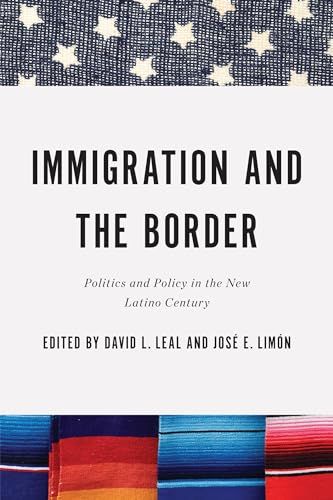
Inhaltsangabe
The advent of the twenty-first century marks a significant moment in the history of Latinos in the United States. The “fourth wave” of immigration to America is primarily Latino, and the last decades of the twentieth century saw a significant increase in the number of Latino migrants, a diversification of the nations contributing to this migration, and an increase in the size of the native-born Latino population. A backlash against unauthorized immigration, which may indict all Latinos, is also underway. Understanding the growing Latino population, especially its immigrant dimensions, is therefore a key task for researchers in the social sciences and humanities.
The contributors to Immigration and the Border address immigration and border politics and policies, focusing on the U.S. side of the border. The volume editors have arranged the essays into five sections. The two chapters in the first section set the stage and discuss the binational lives of Mexican migrants; chapters in the subsequent sections highlight specific political and policy themes: civic engagement, public policies, political reactions against immigrants, and immigrant leadership. Because the immigration experience encompasses many facets of political life and public policy, the varied perspectives of the contributors offer a mosaic that contextualizes the impact of and contributions by contemporary Latino immigrants. Their research will appeal not only to scholars but to policymakers and the public and will inform contentious debates about migration and migrants.
Die Inhaltsangabe kann sich auf eine andere Ausgabe dieses Titels beziehen.
Über die Autorinnen und Autoren
David L. Leal is associate professor of government and Mexican American studies, Director of the Irma Rangel Public Policy Institute, and Director of the Immigration Studies Initiative at the University of Texas at Austin.
José E. Limón is the Julian Samora Chair in Latino Studies and the Notre Dame Professor of American Literature as well as Director of the Institute for Latino Studies at the University of Notre Dame.
Auszug. © Genehmigter Nachdruck. Alle Rechte vorbehalten.
In an interdisciplinary examination of the impact of immigration on the North American social landscape at the end of the millennium, Marcelo Suárez-Orozco (1998) noted that the phenomenon is likely to have a “momentous” effect on American culture and society. The current climate of debate over national immigration policy makes clear how prescient Suárez-Orozco’s views were. And if immigration is having a significant effect upon the United States, the same can be said for its impact on the countries immigrants are leaving behind.
The research presented here is primarily interested in this phenomenon in terms of the psychology of immigration in the context of the Mexican experience. This mass migration of Mexicans north of the border is having as profound an impact on Mexico as on the United States. According to the most recent Pew Hispanic Center study on immigration patterns (Passel 2005), one out of every eleven Mexicans now resides in this country―a fact that clearly has equally momentous implications for both Mexico and the United States.
Our interest in the present chapter, however, is not to explore the impact of immigration upon Mexico and Mexicans as such, but rather to explore the ways in which that impact might “live” in the experience of the Mexican immigrant as a kind of imaginary, that is, as a conscious and unconscious “presence” in the psychological experience of the immigrant. This perception is derived from and embedded in an ongoing, explicit, and implicit understanding of how one’s fellow countrymen view the current immigration phenomenon and what the immigrant is undergoing.
Leaving one’s homeland for another land represents a dislocation of varied meanings and implications. In order to understand the psycho- logical impact of that experience, we must first understand the role of culture in identity, since the immigrant’s dislocation stirs, in part, internal, psychological dislocations as well. Elsewhere, the first author has written about culture in relation to the development of identity (Ainslie 1995). Others, too, have theorized related points (see Winnicott 1971; Volkan 1997).
From the very beginnings of human life the internalization of culture is part of identity. Indeed, Winnicott’s implication is that without theorizing culture as a psychological process it is impossible to conceive of relationships more generally. Relatedness between infant and caregiver may be the foundation for identity, but to theorize about relationships as if they stood outside of a cultural embeddedness is meaningless.
(excerpt from Chapter 2)
„Über diesen Titel“ kann sich auf eine andere Ausgabe dieses Titels beziehen.
Suchergebnisse für Immigration and the Border: Politics and Policy in...

Beispielbild für diese ISBN
Immigration and the Border : Politics and Policy in the New Latino Century
Verlag:
University of Notre Dame Press, 2013
ISBN 10: 0268013357
ISBN 13: 9780268013356
Gebraucht
Softcover
Anbieter: Better World Books, Mishawaka, IN, USA
Verkäuferbewertung 5 von 5 Sternen

Zustand: Good. Pages intact with minimal writing/highlighting. The binding may be loose and creased. Dust jackets/supplements are not included. Stock photo provided. Product includes identifying sticker. Better World Books: Buy Books. Do Good. Artikel-Nr. 19248988-6
Gebraucht kaufen
EUR 9,89
Versand gratis
Versand innerhalb von USA
Versand innerhalb von USA
Anzahl: 1 verfügbar
Beispielbild für diese ISBN
Immigration and the Border
Verlag:
MR - University of Notre Dame Press, 2013
ISBN 10: 0268013357
ISBN 13: 9780268013356
Neu
PAP
Anbieter: PBShop.store UK, Fairford, GLOS, Vereinigtes Königreich
Verkäuferbewertung 5 von 5 Sternen
PAP. Zustand: New. New Book. Shipped from UK. Established seller since 2000. Artikel-Nr. FW-9780268013356
Neu kaufen
EUR 44,75
EUR 7,04 Versand
Versand von Vereinigtes Königreich nach USA
Versand von Vereinigtes Königreich nach USA
Anzahl: 2 verfügbar
Beispielbild für diese ISBN
Immigration and the Border: Politics and Policy in the New Latino Century (Latino Perspectives)
Verlag:
University of Notre Dame Press, 2013
ISBN 10: 0268013357
ISBN 13: 9780268013356
Gebraucht
Softcover
Anbieter: Anybook.com, Lincoln, Vereinigtes Königreich
Verkäuferbewertung 5 von 5 Sternen
Zustand: Good. This is an ex-library book and may have the usual library/used-book markings inside.This book has soft covers. In good all round condition. Please note the Image in this listing is a stock photo and may not match the covers of the actual item,900grams, ISBN:9780268013356. Artikel-Nr. 8243540
Gebraucht kaufen
EUR 36,77
EUR 15,84 Versand
Versand von Vereinigtes Königreich nach USA
Versand von Vereinigtes Königreich nach USA
Anzahl: 1 verfügbar
Beispielbild für diese ISBN
Immigration and the Border: Politics and Policy in the New Latino Century (Latino Perspectives)
Verlag:
University of Notre Dame Press, 2013
ISBN 10: 0268013357
ISBN 13: 9780268013356
Neu
Softcover
Anbieter: California Books, Miami, FL, USA
Verkäuferbewertung 5 von 5 Sternen
Zustand: New. Artikel-Nr. I-9780268013356
Neu kaufen
EUR 61,02
EUR 2,69 Versand
Versand innerhalb von USA
Versand innerhalb von USA
Anzahl: Mehr als 20 verfügbar
Foto des Verkäufers
Immigration and the Border
Verlag:
University of Notre Dame Press, US, 2013
ISBN 10: 0268013357
ISBN 13: 9780268013356
Neu
Paperback
Anbieter: Rarewaves USA, HEBRON, KY, USA
Verkäuferbewertung 5 von 5 Sternen
Paperback. Zustand: New. The advent of the twenty-first century marks a significant moment in the history of Latinos in the United States. The "fourth wave" of immigration to America is primarily Latino, and the last decades of the twentieth century saw a significant increase in the number of Latino migrants, a diversification of the nations contributing to this migration, and an increase in the size of the native-born Latino population. A backlash against unauthorized immigration, which may indict all Latinos, is also underway. Understanding the growing Latino population, especially its immigrant dimensions, is therefore a key task for researchers in the social sciences and humanities. The contributors to Immigration and the Border address immigration and border politics and policies, focusing on the U.S. side of the border. The volume editors have arranged the essays into five sections. The two chapters in the first section set the stage and discuss the binational lives of Mexican migrants; chapters in the subsequent sections highlight specific political and policy themes: civic engagement, public policies, political reactions against immigrants, and immigrant leadership. Because the immigration experience encompasses many facets of political life and public policy, the varied perspectives of the contributors offer a mosaic that contextualizes the impact of and contributions by contemporary Latino immigrants. Their research will appeal not only to scholars but to policymakers and the public and will inform contentious debates about migration and migrants. Artikel-Nr. LU-9780268013356
Neu kaufen
EUR 77,40
Versand gratis
Versand innerhalb von USA
Versand innerhalb von USA
Anzahl: Mehr als 20 verfügbar
Beispielbild für diese ISBN
Immigration and the Border : Politics and Policy in the New Latino Century
Verlag:
University of Notre Dame Press, 2013
ISBN 10: 0268013357
ISBN 13: 9780268013356
Neu
Softcover
Anbieter: GreatBookPricesUK, Woodford Green, Vereinigtes Königreich
Verkäuferbewertung 5 von 5 Sternen
Zustand: New. Artikel-Nr. 18917703-n
Neu kaufen
EUR 68,05
EUR 17,98 Versand
Versand von Vereinigtes Königreich nach USA
Versand von Vereinigtes Königreich nach USA
Anzahl: 3 verfügbar
Beispielbild für diese ISBN
Immigration and the Border: Politics and Policy in the New Latino Century (Latino Perspectives)
Verlag:
University of Notre Dame Press, 2013
ISBN 10: 0268013357
ISBN 13: 9780268013356
Neu
Softcover
Erstausgabe
Anbieter: Kennys Bookshop and Art Galleries Ltd., Galway, GY, Irland
Verkäuferbewertung 5 von 5 Sternen
Zustand: New. Editor(s): Leal, David L.; Limon, Jose Eduardo. Series: Latino Perspectives. Num Pages: 504 pages, illustrations. BIC Classification: JFFN; JFSL4; JPQB; JPS. Category: (G) General (US: Trade). Dimension: 229 x 152 x 30. Weight in Grams: 803. . 2013. 1st Edition. Paperback. . . . . Artikel-Nr. V9780268013356
Neu kaufen
EUR 78,81
EUR 9,50 Versand
Versand von Irland nach USA
Versand von Irland nach USA
Anzahl: Mehr als 20 verfügbar
Foto des Verkäufers
Immigration and the Border : Politics and Policy in the New Latino Century
Verlag:
University of Notre Dame Press, 2013
ISBN 10: 0268013357
ISBN 13: 9780268013356
Gebraucht
Softcover
Anbieter: GreatBookPricesUK, Woodford Green, Vereinigtes Königreich
Verkäuferbewertung 5 von 5 Sternen
Zustand: As New. Unread book in perfect condition. Artikel-Nr. 18917703
Gebraucht kaufen
EUR 75,00
EUR 17,98 Versand
Versand von Vereinigtes Königreich nach USA
Versand von Vereinigtes Königreich nach USA
Anzahl: 3 verfügbar
Beispielbild für diese ISBN
Immigration and the Border Politics and Policy in the New Latino Century
Anbieter: Revaluation Books, Exeter, Vereinigtes Königreich
Verkäuferbewertung 5 von 5 Sternen
Paperback. Zustand: Brand New. 504 pages. 9.00x6.00x1.20 inches. In Stock. Artikel-Nr. x-0268013357
Neu kaufen
EUR 78,91
EUR 14,98 Versand
Versand von Vereinigtes Königreich nach USA
Versand von Vereinigtes Königreich nach USA
Anzahl: 2 verfügbar
Beispielbild für diese ISBN
Immigration and the Border: Politics and Policy in the New Latino Century (Latino Perspectives)
Verlag:
University of Notre Dame Press, 2013
ISBN 10: 0268013357
ISBN 13: 9780268013356
Neu
Softcover
Anbieter: Kennys Bookstore, Olney, MD, USA
Verkäuferbewertung 5 von 5 Sternen
Zustand: New. Editor(s): Leal, David L.; Limon, Jose Eduardo. Series: Latino Perspectives. Num Pages: 504 pages, illustrations. BIC Classification: JFFN; JFSL4; JPQB; JPS. Category: (G) General (US: Trade). Dimension: 229 x 152 x 30. Weight in Grams: 803. . 2013. 1st Edition. Paperback. . . . . Books ship from the US and Ireland. Artikel-Nr. V9780268013356
Neu kaufen
EUR 98,55
EUR 9,42 Versand
Versand innerhalb von USA
Versand innerhalb von USA
Anzahl: Mehr als 20 verfügbar