Inhaltsangabe
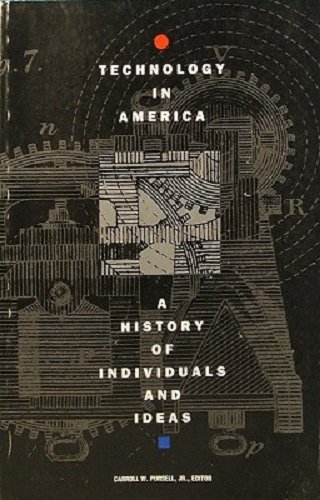
The American Revolution and the Industrial Revolution began at the same time, and ever since the development of America and the development of technology have proceeded in tandem, each dependent on and contributing to the other. From the beginning until well into the twentieth century, technical innovation was largely the work of the rugged individualists who have since entered the pantheon of American folklore: their names, coupled with the enterprises they opened up in the chapter titles below, are still for the most part familiar to American readers.
Contents: The Artisan during America's Wooden Age, Brooke Hindle; Thomas Jefferson and a Democratic Technology, Hugo A. Meier; Benjamin Henry Latrobe and the Transfer of Technology, Darwin H. Stapleton; Eli Whitney and the American System of Manufacturing, Merritt Roe Smith; Thomas P. Jones and the Evolution of Technical Education, Bruce Sinclair; Cyrus Hall McCormick and the Mechanization of Agriculture, Carroll W. Pursell, Jr.; James Buchanan Eads and the Engineer as Entrepreneur, John A. Kouwenhoven; James B. Francis and the Rise of Scientific Technology, Edwin T. Layton, Jr.; Alexander Graham Bell and the Conquest of Solitude, Robert V. Bruce; Thomas Alva Edison and the Rise of Electricity, Thomas Parke Hughes; George Eastman and the Coming of Industrial Research, Reese V. Jenkins; Ellen Swallow Richards: Technology and Women, Ruth Schwartz Cowan; Gifford Pinchot and the Conservation Movement, Samuel P. Hays; Henry Ford and the Triumph of the Automobile, James J. Flink; Charles A. Lindbergh: His Flight and the American Ideal, John William Ward; Keaton and Chaplin: The Silent Film's Response to Technology, George Basalla; Morris L. Cooke and Energy for America, Jean Christie; Enrico Fermi and the Development of Nuclear Power, Lawrence Badash; Robert H. Goddard and the Origins of Space Flight, Barton C. Hacker.
The book was originally published in 1979 in the Voice of America Forum Series for distribution outside the United States. This MIT Press edition contains a new preface by the editor.
Die Inhaltsangabe kann sich auf eine andere Ausgabe dieses Titels beziehen.
Reseña del editor
The American Revolution and the Industrial Revolution began at the same time, and ever since the development of America and the development of technology have proceeded in tandem, each dependent on and contributing to the other. From the beginning until well into the twentieth century, technical innovation was largely the work of the rugged individualists who have since entered the pantheon of American folklore: their names, coupled with the enterprises they opened up in the chapter titles below, are still for the most part familiar to American readers.Contents: "The Artisan during America's Wooden Age, " Brooke Hindle; "Thomas Jefferson and a Democratic Technology, " Hugo A. Meier; "Benjamin Henry Latrobe and the Transfer of Technology, " Darwin H. Stapleton; "Eli Whitney and the American System of Manufacturing, " Merritt Roe Smith; "Thomas P. Jones and the Evolution of Technical Education, " Bruce Sinclair; "Cyrus Hall McCormick and the Mechanization of Agriculture, " Carroll W. Pursell, Jr.; "James Buchanan Eads and the Engineer as Entrepreneur, " John A. Kouwenhoven; "James B. Francis and the Rise of Scientific Technology, " Edwin T. Layton, Jr.; "Alexander Graham Bell and the Conquest of Solitude, " Robert V. Bruce; "Thomas Alva Edison and the Rise of Electricity, " Thomas Parke Hughes; "George Eastman and the Coming of Industrial Research, " Reese V. Jenkins; "Ellen Swallow Richards: Technology and Women, " Ruth Schwartz Cowan; "Gifford Pinchot and the Conservation Movement, " Samuel P. Hays; " Henry Ford and the Triumph of the Automobile, " James J. Flink; "Charles A. Lindbergh: His Flight and the American Ideal, " John William Ward; "Keaton and Chaplin: The Silent Film's Response to Technology, " George Basalla; "Morris L. Cooke and Energy for America, " Jean Christie; "Enrico Fermi and the Development of Nuclear Power, " Lawrence Badash; "Robert H. Goddard and the Origins of Space Flight, " Barton C. Hacker.The book was originally published in 1979 in the Voice of America Forum Series for distribution outside the United States. This MIT Press edition contains a new preface by the editor.
„Über diesen Titel“ kann sich auf eine andere Ausgabe dieses Titels beziehen.
Weitere beliebte Ausgaben desselben Titels

Suchergebnisse für Technology in America: A History of Individuals and...

Beispielbild für diese ISBN
Technology in America : A History of Individuals and Ideas
Anbieter: Better World Books, Mishawaka, IN, USA
Verkäuferbewertung 5 von 5 Sternen

Zustand: Very Good. 1 Edition. Used book that is in excellent condition. May show signs of wear or have minor defects. Artikel-Nr. 13855157-6
Gebraucht kaufen
EUR 6,49
Versand gratis
Versand innerhalb von USA
Versand innerhalb von USA
Anzahl: 2 verfügbar
Beispielbild für diese ISBN
Technology in America: A History of Individuals and Ideas
Anbieter: ThriftBooks-Atlanta, AUSTELL, GA, USA
Verkäuferbewertung 5 von 5 Sternen
Paperback. Zustand: Good. No Jacket. Pages can have notes/highlighting. Spine may show signs of wear. ~ ThriftBooks: Read More, Spend Less. Artikel-Nr. G0262660490I3N00
Gebraucht kaufen
EUR 8,83
Versand gratis
Versand innerhalb von USA
Versand innerhalb von USA
Anzahl: 1 verfügbar
Beispielbild für diese ISBN
Technology in America : A History of Individuals and Ideas
Anbieter: Robinson Street Books, IOBA, Binghamton, NY, USA
Verkäuferbewertung 4 von 5 Sternen

Trade Paperbac. Zustand: Used: Very good. Prompt Shipment, shipped in Boxes, Tracking PROVIDEDHistory Of ScienceVERY GOOD TRADE PAPERBACK. VERY GOOD CLEAN PAGES. Artikel-Nr. WARE798MD061
Gebraucht kaufen
EUR 11,96
EUR 8,17 shipping
Versand innerhalb von USA
Versand innerhalb von USA
Anzahl: 1 verfügbar
Foto des Verkäufers
Technology in America: A History of Individuals and Ideas
Anbieter: Antiquariat im Kaiserviertel | Wimbauer Buchversand, Dortmund, NRW, Deutschland
Verkäuferbewertung 5 von 5 Sternen
Broschur. Zustand: Gut. 319 S. Kanten gering berieben / bestossen /// Standort Wimregal ISS-07961 ISBN 0262660490 Sprache: Deutsch Gewicht in Gramm: 362. Artikel-Nr. 126803
Gebraucht kaufen
EUR 10,40
EUR 15,00 shipping
Versand von Deutschland nach USA
Versand von Deutschland nach USA
Anzahl: 1 verfügbar
Foto des Verkäufers
Technology in America: a history of individuals and ideas
Anbieter: Acanthophyllum Books, Holywell, FLINT, Vereinigtes Königreich
Verkäuferbewertung 3 von 5 Sternen

Paper covers. Zustand: V.g. No Jacket. 2nd edition. Little used. Weight: 1.0 Language: English. Artikel-Nr. 35974
Gebraucht kaufen
EUR 14,14
EUR 25,11 shipping
Versand von Vereinigtes Königreich nach USA
Versand von Vereinigtes Königreich nach USA
Anzahl: 1 verfügbar