
Verwandte Artikel zu Emotional Intelligence: Science and Myth (Bradford...
Inhaltsangabe
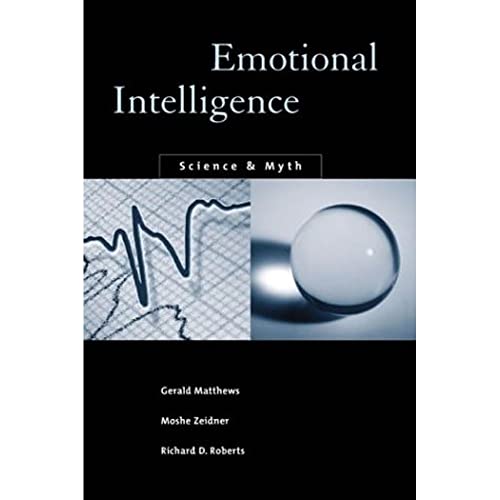
Emotional intelligence (EI) is one of the most widely discussed topics in current psychology. Although first mentioned in the professional literature nearly two decades ago, in the past five years it has received extensive media attention. The term "emotional intelligence" refers to the ability to identify, express, and understand emotions; to assimilate emotions into thought; and to regulate both positive and negative emotions in oneself and others. Yet despite the flourishing research programs and broad popular interest, scientific evidence for a clearly identified construct of EI is sparse. It remains to be seen whether there is anything to EI that researchers in the fields of personality, intelligence, and applied psychology do not already know.
This book offers a comprehensive critical review of EI. It examines current thinking on the nature, components, determinants, and consequences of EI, and evaluates the state of the art in EI theory, research, assessment, and applications. It highlights the extent to which empirical evidence supports EI as a valid construct and debunks some of the more extravagant claims that appear in the popular media. Finally, it examines the potential use of EI to guide practical interventions in various clinical, occupational, and educational settings.
Die Inhaltsangabe kann sich auf eine andere Ausgabe dieses Titels beziehen.
Über die Autorin bzw. den Autor
Gerald Matthews is Professor of Psychology at the University of Cincinnati.
„Über diesen Titel“ kann sich auf eine andere Ausgabe dieses Titels beziehen.
Suchergebnisse für Emotional Intelligence: Science and Myth (Bradford...

Beispielbild für diese ISBN
Emotional Intelligence â" Science and Myth
Verlag:
MIT Press Ltd, United States, Massachusetts, 2004
ISBN 10: 0262632969
ISBN 13: 9780262632966
Gebraucht
Paperback
Anbieter: WorldofBooks, Goring-By-Sea, WS, Vereinigtes Königreich
Verkäuferbewertung 5 von 5 Sternen

Paperback. Zustand: Very Good. The book has been read, but is in excellent condition. Pages are intact and not marred by notes or highlighting. The spine remains undamaged. Artikel-Nr. GOR008231209
Gebraucht kaufen
EUR 16,65
EUR 6,63 Versand
Versand von Vereinigtes Königreich nach USA
Versand von Vereinigtes Königreich nach USA
Anzahl: 3 verfügbar
Foto des Verkäufers
Emotional intelligence : science and myth.
Anbieter: Kloof Booksellers & Scientia Verlag, Amsterdam, Niederlande
Verkäuferbewertung 4 von 5 Sternen

Zustand: very good. Cambridge, MA : The MIT Press, 2004. Paperback. 697 pp.English text. Condition : very good, clean & unrea. - Emotional intelligence (EI) is one of the most widely discussed topics in current psychology. Although first mentioned in the professional literature nearly two decades ago, in the past five years it has received extensive media attention. The term emotional intelligence refers to the ability to identify, express, and understand emotions; to assimilate emotions into thought; and to regulate both positive and negative emotions in oneself and others. Yet despite the flourishing research programs and broad popular interest, scientific evidence for a clearly identified construct of EI is sparse. It remains to be seen whether there is anything to EI that researchers in the fields of personality, intelligence, and applied psychology do not already know. This book offers a comprehensive critical review of EI. It examines current thinking on the nature, components, determinants, and consequences of EI, and evaluates the state of the art in EI theory, research, assessment, and applications. It highlights the extent to which empirical evidence supports EI as a valid construct and debunks some of the more extravagant claims that appear in the popular media. Finally, it examines the potential use of EI to guide practical interventions in various clinical, occupational, and educational settings. Condition : very good copy. ISBN 9780262632966. Keywords : PSYCHOLOGY, Artikel-Nr. 44564
Gebraucht kaufen
EUR 20,95
EUR 30,00 Versand
Versand von Niederlande nach USA
Versand von Niederlande nach USA
Anzahl: 1 verfügbar
Beispielbild für diese ISBN
Emotional Intelligence: Science and Myth
Verlag:
Cambridge : London :Bradford Books, 2004
ISBN 10: 0262632969
ISBN 13: 9780262632966
Gebraucht
Softcover/Paperback.
Anbieter: BBB-Internetbuchantiquariat, Bremen, Deutschland
Verkäuferbewertung 5 von 5 Sternen
Softcover/Paperback. Zustand: Gut. First MIT Press Paperback Edittion. 697 S., Ill., graph. Darst., 23 cm Zustand: gut - sehr gut, D-AA4966 9780262632966 Wenn das Buch einen Schutzumschlag hat, ist das ausdrücklich erwähnt. Rechnung mit ausgewiesener Mwst. Sprache: Englisch Gewicht in Gramm: 990. Artikel-Nr. 100519
Gebraucht kaufen
EUR 15,20
EUR 79,00 Versand
Versand von Deutschland nach USA
Versand von Deutschland nach USA
Anzahl: 1 verfügbar