
Verwandte Artikel zu New Indians, Old Wars
Inhaltsangabe
Challenging received American history and forging a new path for Native American studies
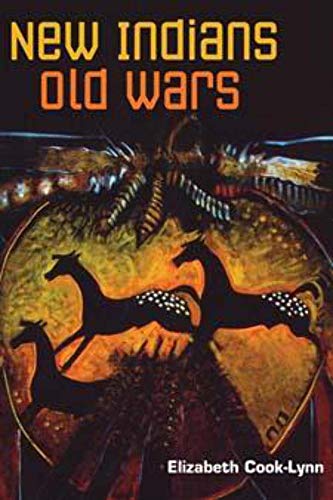
Addressing Native American Studies' past, present, and future, the essays in New Indians, Old Wars tackle the discipline head-on, presenting a radical revision of the popular view of the American West in the process. Instead of luxuriating in its past glories or accepting the widespread historians' view of the West as a shared place, Elizabeth Cook-Lynn argues that it should be fundamentally understood as stolen.
Firmly grounded in the reality of a painful past, Cook-Lynn understands the story of the American West as teaching the political language of land theft and tyranny. She argues that to remedy this situation, Native American studies must be considered and pursued as its own discipline, rather than as a subset of history or anthropology. She makes an impassioned claim that such a shift, not merely an institutional or theoretical change, could allow Native American studies to play an important role in defending the sovereignty of indigenous nations today.
Die Inhaltsangabe kann sich auf eine andere Ausgabe dieses Titels beziehen.
Über die Autorin bzw. den Autor
Elizabeth Cook-Lynn (1930-2023) was a member of the Crow Creek Sioux Tribe and a writer, poet, and professor emerita of Native American studies at Eastern Washington University. She was the author of many books, including Aurelia: A Crow Creek Trilogy and Anti-Indianism in Modern America, and the coauthor of The Politics of Hallowed Ground: Wounded Knee and the Struggle for Indian Sovereignty.
Auszug. © Genehmigter Nachdruck. Alle Rechte vorbehalten.
NEW INDIANS, OLD WARS
By Elizabeth Cook-LynnUNIVERSITY OF ILLINOIS PRESS
Copyright © 2007 Board of Trustees of the University of IllinoisAll right reserved.
ISBN: 978-0-252-03166-3
Contents
Preface...............................................................................................................xiIntroduction..........................................................................................................11. To Keep the Plot Moving............................................................................................72. An Aside: How Do We Know about Literary Indians?...................................................................433. Warriors, Still?...................................................................................................654. The Pitfalls of Telling Tribal Histories: Lewis and Clark, Colonial Diaries, and Fool Soldiers.....................875. Defensive, Regulatory, and Transformative Functions of Indian Studies..............................................1146. The Struggle for Cultural Heritage.................................................................................1547. The Ghosts of American History in Art and Literature...............................................................178Conclusion............................................................................................................197Notes.................................................................................................................211
Chapter One
TO KEEP THE PLOT MOVINGA LEARNED PROFESSION
In the first decade of the twenty-first century, the atmosphere in the academy toward indigenous studies seems to be varied, often seemingly lackluster, coated with a veneer of Cartesian blandishment of logic and rationalism but very little passion, a far different scene from that of the decades of the 1960s and 1970s. That is either a good thing or a bad thing, depending on what you expect as you remember, observe, and record the stories, secrets, and scandals of the past. It is a good thing because it is time for the passionate rhetoric to be cooled and the general agreement of our past struggles for our place in the sun to be, by common consent, intellectually and verbally conveyed into positive ideas and consequences in all ways. This is one of the significant pathways to American Indian Studies as an academic discipline. It is a bad thing because the discipline risks losing its evocative dialogue so important to an almost legendary time known in the vernacular as "the sixties" when American Indians told a callous and greedy America that we are not vanished and our lands our not for sale or trade.
It is almost impossible in this early decade of the 2000s to get anyone in the mainstream to talk about the things that aging American Indian scholars like the writer of this text want to talk about as participants in those fabulous years of origin. The average American does not want to talk about how to improve tribal governments or the schools, as Indians of the past century have wanted. The average American does not want to talk anymore about ongoing and radical racism in America, only the end of racism, according to Dinesh D'Souza, and nothing about the work of a contemporary Indian intellectual like Dr. David Wilkins, whose study of the U.S. Supreme Court and American Indians is perhaps the most important book of the past decade, which indicates that Indians are at great risk in U.S. law. When those subjects are brought up, silence falls upon the room and the speaker is looked at as though he or she has some contagious disease or has just brought up the subject of herpes or some other unmentionable horror.
In 2004, a public event illustrated the point that what America wants to talk to Indians about, if they want to talk at all, is distant and irrelevant; thus, this event caught the eye of mainstream folks and the media. I bring it up here to illustrate that the real issues of finding solutions to a better life for contemporary Indians in the region known for its racist atmosphere were once again put on the back burner so that that the public could look away from the actual troubling matters of the people and, instead, address the latest sensation. In the early winter, people flocked to the federal courthouse to witness a contrived/staged murder trial in Rapid City, South Dakota, of a hapless Oglala, Arlo Looking Cloud, who had spent most of the past few decades on the streets of Denver, Colorado, and was now caught in a dragnet for old American Indian Movement (AIM) personages and troublemakers. The trial was about who killed Anna Mae Pictou-Aquash, a Micmac Indian from Canada who joined AIM in those fabulous years of the 1970s; Looking Cloud, some thirty years later, was charged with her murder, found guilty, and sentenced to life in prison. The issue of that trial was whether Pictou-Aquash was murdered by Looking Cloud at the behest of some unnamed and unnamable participants in the discredited American Indian Movement because it was thought she was an FBI informant.
The trial drew in all of the old suspects and bystanders. Participants and news organizations from around the region were in attendance, notebooks and cameras in hand. Among the witnesses was Darlene Nichols (formerly known as Kamook), the ex-wife of AIM generalissimo Dennis Banks, who testified for a substantial time recounting the fear in her friend Pictou-Aquash who, it was said, was terrified of AIM. The truth is, Pictou-Aquash was probably scared of the FBI, too, as we all were during that period. At the time I was a professor in Indian Studies at Eastern Washington University in Cheney, Washington, and was casually visited and rigorously interrogated by the FBI a couple of times because of my acquaintance with the issues and some of the people involved in the movement. It was a frightening time and we were all afraid, not of movement leaders, but of the federal government and what it could do to us in terms of U.S. law and justice. We trusted no one. The belated trial itself was an astonishing event, not because the U.S. prosecutors had prevailed throughout the thirty years of investigation and court procedures, but rather because no one expected that luminaries of the movement would be found testifying against themselves and for the prosecution years later.
In the intervening years, as we all know, life has a tendency to just go on. Dennis Banks's ex-wife, a major witness for the prosecution in the Looking Cloud murder case, has become for a brief time a casting director for a movie studio in Hollywood, which means that we can probably expect some third-rate movies at our theaters soon, as well as some poorly written books about the subject of justice in Indian Country. Indeed, there is a book published by the University of Oklahoma Press about Dennis Banks entitled Ojibwa Warrior, written by Dennis Banks and Richard Erdoes. Does this sound familiar? It should. Erdoes, the European photographer who made a star of a half-breed teenager named Mary Moore (aka Mary Crow Dog), who bore a child during the 1974 seventy-one-day siege or takeover at Wounded Knee, South Dakota. In the heat of the battle, she was portrayed as a brave-hearted woman bearing a child in the midst of a warrior cult during a mythic time. At that same moment, without any press notices of any kind, matrons on the Lakota/Dakota homelands were objecting to her celebrity, saying, "No. No. Mary Moore is NOT a role model for our young daughters.... She is like the young girls caught up...
„Über diesen Titel“ kann sich auf eine andere Ausgabe dieses Titels beziehen.
Suchergebnisse für New Indians, Old Wars

Beispielbild für diese ISBN
New Indians, Old Wars
Verlag:
University of Illinois Press, 2007
ISBN 10: 0252031660
ISBN 13: 9780252031663
Gebraucht
Hardcover
Anbieter: World of Books (was SecondSale), Montgomery, IL, USA
Verkäuferbewertung 5 von 5 Sternen

Zustand: Good. Good condition ex-library book with usual library markings and stickers. Artikel-Nr. 00107858377
Gebraucht kaufen
EUR 6,48
Versand gratis
Versand innerhalb von USA
Versand innerhalb von USA
Anzahl: 1 verfügbar
Foto des Verkäufers
NEW INDIANS, OLD WARS
Verlag:
University of Illinois Press, 2007
ISBN 10: 0252031660
ISBN 13: 9780252031663
Gebraucht
Hardcover
Anbieter: Easton's Books, Inc., Mount Vernon, WA, USA
Verkäuferbewertung 5 von 5 Sternen
Hardcover. Zustand: VG+. Hardback in Very Good+ condition with Near Fine dust jacket. 6 X 0.8 X 9 inches. 248 pages. Light bump to upper corner of rear board. Quick shipping, excellent customer service. All books carefully packaged in boxes and ship with tracking information. Artikel-Nr. 73232
Gebraucht kaufen
EUR 13,35
EUR 5,19 Versand
Versand innerhalb von USA
Versand innerhalb von USA
Anzahl: 1 verfügbar
Beispielbild für diese ISBN
New Indians, Old Wars
Verlag:
MO - University of Illinois Press, 2007
ISBN 10: 0252031660
ISBN 13: 9780252031663
Neu
Hardcover
Anbieter: PBShop.store US, Wood Dale, IL, USA
Verkäuferbewertung 5 von 5 Sternen
HRD. Zustand: New. New Book. Shipped from UK. Established seller since 2000. Artikel-Nr. FW-9780252031663
Beispielbild für diese ISBN
New Indians, Old Wars
Verlag:
MO - University of Illinois Press, 2007
ISBN 10: 0252031660
ISBN 13: 9780252031663
Neu
Hardcover
Anbieter: PBShop.store UK, Fairford, GLOS, Vereinigtes Königreich
Verkäuferbewertung 5 von 5 Sternen
HRD. Zustand: New. New Book. Shipped from UK. Established seller since 2000. Artikel-Nr. FW-9780252031663
Neu kaufen
EUR 39,96
EUR 5,86 Versand
Versand von Vereinigtes Königreich nach USA
Versand von Vereinigtes Königreich nach USA
Anzahl: 15 verfügbar
Beispielbild für diese ISBN
New Indians, Old Wars
Anbieter: Majestic Books, Hounslow, Vereinigtes Königreich
Verkäuferbewertung 4 von 5 Sternen

Zustand: New. pp. xiii + 226. Artikel-Nr. 8204604
Neu kaufen
EUR 49,26
EUR 7,59 Versand
Versand von Vereinigtes Königreich nach USA
Versand von Vereinigtes Königreich nach USA
Anzahl: 3 verfügbar
Beispielbild für diese ISBN
New Indians, Old Wars
Anbieter: Ria Christie Collections, Uxbridge, Vereinigtes Königreich
Verkäuferbewertung 5 von 5 Sternen
Zustand: New. In English. Artikel-Nr. ria9780252031663_new
Neu kaufen
EUR 47,57
EUR 13,18 Versand
Versand von Vereinigtes Königreich nach USA
Versand von Vereinigtes Königreich nach USA
Anzahl: Mehr als 20 verfügbar
Beispielbild für diese ISBN
New Indians, Old Wars
Anbieter: Revaluation Books, Exeter, Vereinigtes Königreich
Verkäuferbewertung 5 von 5 Sternen
Hardcover. Zustand: Brand New. 248 pages. 9.25x6.25x1.00 inches. In Stock. Artikel-Nr. __0252031660
Neu kaufen
EUR 50,65
EUR 11,68 Versand
Versand von Vereinigtes Königreich nach USA
Versand von Vereinigtes Königreich nach USA
Anzahl: 2 verfügbar
Beispielbild für diese ISBN
New Indians, Old Wars
Anbieter: Kennys Bookstore, Olney, MD, USA
Verkäuferbewertung 5 von 5 Sternen
Zustand: New. 2007. Hardback. . . . . . Books ship from the US and Ireland. Artikel-Nr. V9780252031663
Neu kaufen
EUR 65,29
EUR 9,10 Versand
Versand innerhalb von USA
Versand innerhalb von USA
Anzahl: Mehr als 20 verfügbar