
Verwandte Artikel zu Les Misérables (Penguin Classics)
Inhaltsangabe
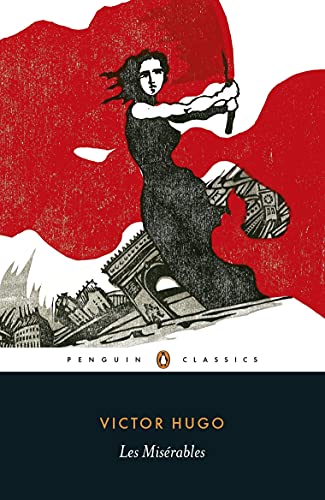
A brilliant modern translation by Christine Donougher of Victor Hugo's thrilling masterpiece, with an introduction by Robert Tombs.
This is the best translation of the novel available in English, as recommended by David Bellos in The Novel of the Century.
Victor Hugo's tale of injustice, heroism and love follows the fortunes of Jean Valjean, an escaped convict determined to put his criminal past behind him. But his attempts to become a respected member of the community are constantly put under threat: by his own conscience, and by the relentless investigations of the dogged policeman Javert. It is not simply for himself that Valjean must stay free, however, for he has sworn to protect the baby daughter of Fantine, driven to prostitution by poverty.
'A magnificent achievement. It reads easily, sometimes racily, and Hugo's narrative power is never let down ... An almost flawless translation, which brings the full flavour of one of the greatest novels of the nineteenth century to new readers in the twenty-first' - William Doyle, Times Literary Supplement
'The year's most interesting publication from Penguin Classics was [...] a new translation by Christine Donougher of the novel we all know as Les Misérables. You may think that 1,300 pages is a huge investment of time when the story is so familiar, but no adaptation can convey the addictive pleasure afforded by Victor Hugo's narrative voice: by turns chatty, crotchety, buoyant and savagely ironical, it's made to seem so contemporary and fresh in Donougher's rendering that the book has all the resonance of the most topical state-of-the-nation novel' - Telegraph
'Christine Donougher's seamless and very modern translation of Les Misérables has an astonishing effect in that it reminds readers that Hugo was going further than any Dickensian lament about social conditions [...]The Wretched touches the soul' - Herald Scotland
Die Inhaltsangabe kann sich auf eine andere Ausgabe dieses Titels beziehen.
Über die Autorinnen und Autoren
Victor Hugo was born in Besançon, France in 1802. In 1822 he published his first collection of poetry and in the same year, he married his childhood friend, Adèle Foucher. In 1831 he published his most famous youthful novel, Notre-Dame de Paris. A royalist and conservative as a young man, Hugo later became a committed social democrat and was exiled from France as a result of his political activities. In 1862, he wrote his longest and greatest novel, Les Misérables. After his death in 1885, his body lay in state under the Arc de Triomphe before being buried in the Panthéon.
Robert Tombs is Emeritus Professor of French History at Cambridge, and a Fellow of St John's College. Most of his writing and teaching has been on French and European history and on Franco-British relations, for which he was awarded the Palmes Académiques by the French government. Since his foray into English history, with the publication of The English and Their History in 2014, he has become a frequent commentator on contemporary issues, and is co-editor of the pro-Brexit academic website Briefings for Britain.
Von der hinteren Coverseite
Features Jean Valjean, an escaped convict determined to put his criminal past behind him. But his attempts to become a respected member of the community are constantly put under threat: by his own conscience, and by the relentless investigations of the dogged policeman Javert.
Auszug. © Genehmigter Nachdruck. Alle Rechte vorbehalten.
From the Introduction by Peter Washington- Victor Hugo might be regarded as the Mr Toad of French literature: vain, arrogrant, pompous, selfish, cold and stingy; a windbag, a humbug and a fraud, absurdly puffed up with the immensity of his own greatness. But unlike Mr Toad, he was also an astute and energetic promoter of hisown image as a Great Man. The process began early. Writing in Hugo's lifetime, Virginie Ancelot recalls the reception the young poet received in literary drawing-rooms when he arrived to read his latest ode. "...There was a few moments' silence; then someone rose and approached him with visible emotion, took his hand and raised their eyes to heaven.The multitude listened. A single word was heard, to the great surprise of the uninitiated. And this word, which echoed in every corner of the salon, was:'Cathedral!'Then the orator returned to his place; another rose and cried out: 'Ogive!'A third looked round him and ventured:'Egyptian Pyramid!'The assembly applauded, and then it was lost in profound reflection." To the Anglo-Saxon mind - and, it should be said, to many Frenchmen - this is Parisian literary life at its worst: the posturing, the pretension, the self-regard, masquerading under the name of art. Yet Hugo is the man who wrote a handful of the most exquisite lyrics - 'Victor Hugo, helas!'said Gide when someone asked him to name the finest French poet - and at least one novel judged to be supreme. In his person, he sums up all that is most monsterous in writerly vanity; in his best work he transcended his failings. How did he do it? How did a monster come to write the masterpiece that is Les Miserables? In an early essay on Scott, Hugo prophesies that"After the picturesque but prosaic novel of Walter Scott, there will still be another novel to create ... It is the novel which is at once drama and epic, picturesque and poetic, real and ieal, true and great, the novel which will enshrine Walter Scott in Homer."These words were written in 1823, just after the publication of his own first novel, Han d'Islande, and there is no doubt that Hugo had himself in mind as the man who could 'enshrine Walter Scott as Homer'. Anyone who can still get through this book may take a rather different view. Set in seventeeth-century Norway and dripping with gore on every page, Han d'Islande is nearer to the Gothic horror tradition than to Scott. For the man who really succeeded in reconciling the genres of epic and historic fiction we have to look further afield, to Hugo's own admirerer, Tolstoy. Yet it was Tolstoy who vindicated the French novelist's early ambition by judging Les Miserables one of the world's great novels, if not the greates, and acknowledged its effect on his own work. Les Miserables was completed in 1862, shortly before the Russian novelist began War and Peace. The two novels are set in the same period. It cannot be said that Hugo had much to teach his junior about structure or characterization; like all his attempts at epic, in prose and verse, Les Miserables rambles, there are huge digressions and absurdities of plot, the characters are often thin, the action melodramatic. But in spacious, vigorous story-telling, in the use of an historical framework, in the relating of human events to a larger philosophical and spiritual context, in the deployment of fiction as a social and political weapon, in the exalatation of 'the people' as a supreme authority, in the treatment of suffering as a dominant theme - in all these matters, Hugo exerted a profound influence on Tolstoy. Without his example, War and Peace might have been a very different novel. Perhaps the most extraordinary point of contact between them concerns Napoleon. ...
„Über diesen Titel“ kann sich auf eine andere Ausgabe dieses Titels beziehen.
Suchergebnisse für Les Misérables (Penguin Classics)

Beispielbild für diese ISBN
Les Mis?rables
Anbieter: PBShop.store US, Wood Dale, IL, USA
Verkäuferbewertung 5 von 5 Sternen

PAP. Zustand: New. New Book. Shipped from UK. Established seller since 2000. Artikel-Nr. GB-9780241248744
Beispielbild für diese ISBN
Les Mis?rables
Anbieter: PBShop.store UK, Fairford, GLOS, Vereinigtes Königreich
Verkäuferbewertung 5 von 5 Sternen
PAP. Zustand: New. New Book. Shipped from UK. Established seller since 2000. Artikel-Nr. GB-9780241248744
Neu kaufen
EUR 15,85
EUR 6,85 Versand
Versand von Vereinigtes Königreich nach USA
Versand von Vereinigtes Königreich nach USA
Anzahl: 15 verfügbar
Beispielbild für diese ISBN
Les Miserables
Anbieter: Majestic Books, Hounslow, Vereinigtes Königreich
Verkäuferbewertung 4 von 5 Sternen

Zustand: New. pp. 1456. Artikel-Nr. 373343397
Neu kaufen
EUR 19,06
EUR 7,58 Versand
Versand von Vereinigtes Königreich nach USA
Versand von Vereinigtes Königreich nach USA
Anzahl: 3 verfügbar
Beispielbild für diese ISBN
Les Misérables (Penguin Classics)
Anbieter: Kennys Bookstore, Olney, MD, USA
Verkäuferbewertung 5 von 5 Sternen
Zustand: New. Features Jean Valjean, an escaped convict determined to put his criminal past behind him. But his attempts to become a respected member of the community are constantly put under threat: by his own conscience, and by the relentless investigations of the dogged policeman Javert. Translator(s): Donougher, Christine; Donougher, Christine. Num Pages: 1456 pages. BIC Classification: FC; FYT. Category: (G) General (US: Trade). Dimension: 133 x 197 x 57. Weight in Grams: 858. . 2015. paperback. . . . . Books ship from the US and Ireland. Artikel-Nr. V9780241248744
Neu kaufen
EUR 18,26
EUR 9,14 Versand
Versand innerhalb von USA
Versand innerhalb von USA
Anzahl: Mehr als 20 verfügbar
Beispielbild für diese ISBN
Les Misà rables (Penguin Classics)
Verlag:
Penguin Books Ltd, United Kingdom, London, 2015
ISBN 10: 0241248744
ISBN 13: 9780241248744
Gebraucht
Paperback
Anbieter: WorldofBooks, Goring-By-Sea, WS, Vereinigtes Königreich
Verkäuferbewertung 5 von 5 Sternen
Paperback. Zustand: Very Good. A brilliant modern translation by Christine Donougher of Victor Hugo's thrilling masterpiece, with an introduction by Robert Tombs. This is the best translation of the novel available in English, as recommended by David Bellos in The Novel of the Century. Victor Hugo's tale of injustice, heroism and love follows the fortunes of Jean Valjean, an escaped convict determined to put his criminal past behind him. But his attempts to become a respected member of the community are constantly put under threat: by his own conscience, and by the relentless investigations of the dogged policeman Javert. It is not simply for himself that Valjean must stay free, however, for he has sworn to protect the baby daughter of Fantine, driven to prostitution by poverty. 'A magnificent achievement. It reads easily, sometimes racily, and Hugo's narrative power is never let down . An almost flawless translation, which brings the full flavour of one of the greatest novels of the nineteenth century to new readers in the twenty-first' - William Doyle, Times Literary Supplement 'The year's most interesting publication from Penguin Classics was [.] a new translation by Christine Donougher of the novel we all know as Les Miserables. You may think that 1,300 pages is a huge investment of time when the story is so familiar, but no adaptation can convey the addictive pleasure afforded by Victor Hugo's narrative voice: by turns chatty, crotchety, buoyant and savagely ironical, it's made to seem so contemporary and fresh in Donougher's rendering that the book has all the resonance of the most topical state-of-the-nation novel' - Telegraph 'Christine Donougher's seamless and very modern translation of Les Miserables has an astonishing effect in that it reminds readers that Hugo was going further than any Dickensian lament about social conditions [.]The Wretched touches the soul' - Herald Scotland. The book has been read, but is in excellent condition. Pages are intact and not marred by notes or highlighting. The spine remains undamaged. Artikel-Nr. GOR009223494
Gebraucht kaufen
EUR 23,55
EUR 6,53 Versand
Versand von Vereinigtes Königreich nach USA
Versand von Vereinigtes Königreich nach USA
Anzahl: 6 verfügbar
Beispielbild für diese ISBN
Les Miserables
Anbieter: Revaluation Books, Exeter, Vereinigtes Königreich
Verkäuferbewertung 5 von 5 Sternen
Paperback. Zustand: Brand New. 1415 pages. 7.75x5.25x2.25 inches. In Stock. Artikel-Nr. __0241248744
Neu kaufen
EUR 15,60
EUR 14,58 Versand
Versand von Vereinigtes Königreich nach USA
Versand von Vereinigtes Königreich nach USA
Anzahl: 1 verfügbar
Beispielbild für diese ISBN
Les Miserables (Penguin Classics)
Anbieter: Ria Christie Collections, Uxbridge, Vereinigtes Königreich
Verkäuferbewertung 5 von 5 Sternen
Zustand: New. In English. Artikel-Nr. ria9780241248744_new
Neu kaufen
EUR 16,66
EUR 17,42 Versand
Versand von Vereinigtes Königreich nach USA
Versand von Vereinigtes Königreich nach USA
Anzahl: Mehr als 20 verfügbar
Foto des Verkäufers
Les Misérables (Penguin Classics)
Anbieter: AHA-BUCH GmbH, Einbeck, Deutschland
Verkäuferbewertung 5 von 5 Sternen
Paperback. Zustand: Neu. Neu Neuware, Importqualität, auf Lager - A brilliant modern translation by Christine Donougher of Victor Hugo's thrilling masterpiece, with an introduction by Robert Tombs. This is the best translation of the novel available in English, as recommended by David Bellos in The Novel of the Century. Victor Hugo's tale of injustice, heroism and love follows the fortunes of Jean Valjean, an escaped convict determined to put his criminal past behind him. But his attempts to become a respected member of the community are constantly put under threat: by his own conscience, and by the relentless investigations of the dogged policeman Javert. It is not simply for himself that Valjean must stay free, however, for he has sworn to protect the baby daughter of Fantine, driven to prostitution by poverty. 'A magnificent achievement. It reads easily, sometimes racily, and Hugo's narrative power is never let down . An almost flawless translation, which brings the full flavour of one of the greatest novels of the nineteenth century to new readers in the twenty-first' - William Doyle, Times Literary Supplement 'The year's most interesting publication from Penguin Classics was [.] a new translation by Christine Donougher of the novel we all know as Les Misérables. You may think that 1,300 pages is a huge investment of time when the story is so familiar, but no adaptation can convey the addictive pleasure afforded by Victor Hugo's narrative voice: by turns chatty, crotchety, buoyant and savagely ironical, it's made to seem so contemporary and fresh in Donougher's rendering that the book has all the resonance of the most topical state-of-the-nation novel' - Telegraph 'Christine Donougher's seamless and very modern translation of Les Misérables has an astonishing effect in that it reminds readers that Hugo was going further than any Dickensian lament about social conditions [.]The Wretched touches the soul' - Herald Scotland. Artikel-Nr. INF1000820049
Neu kaufen
EUR 17,38
EUR 30,50 Versand
Versand von Deutschland nach USA
Versand von Deutschland nach USA
Anzahl: 1 verfügbar
Beispielbild für diese ISBN
LES MISERABLES
Anbieter: Speedyhen, Hertfordshire, Vereinigtes Königreich
Verkäuferbewertung 5 von 5 Sternen
Zustand: NEW. Artikel-Nr. NW9780241248744
Neu kaufen
EUR 14,16
EUR 47,81 Versand
Versand von Vereinigtes Königreich nach USA
Versand von Vereinigtes Königreich nach USA
Anzahl: Mehr als 20 verfügbar
Foto des Verkäufers
Les Miserables
Anbieter: moluna, Greven, Deutschland
Verkäuferbewertung 5 von 5 Sternen
Zustand: New. Features Jean Valjean, an escaped convict determined to put his criminal past behind him. But his attempts to become a respected member of the community are constantly put under threat: by his own conscience, and by the relentless investigations of the dogg. Artikel-Nr. 151156555
Neu kaufen
EUR 19,17
EUR 48,99 Versand
Versand von Deutschland nach USA
Versand von Deutschland nach USA
Anzahl: Mehr als 20 verfügbar