
Verwandte Artikel zu World Order: Reflections on the Character of Nations...
Inhaltsangabe
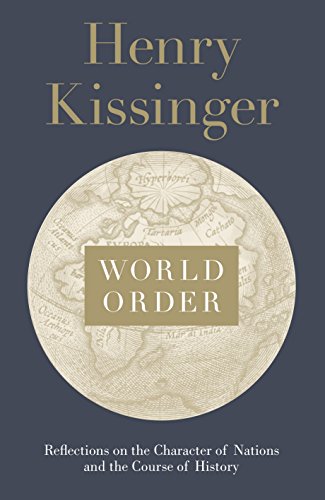
In World Order, Henry Kissinger - one of the leading practitioners of world diplomacy and author of On China - makes his monumental investigation into the 'tectonic plates' of global history and state relations
World Order is the summation of Henry Kissinger's thinking about history, strategy and statecraft. As if taking a perspective from far above the globe, it examines the great tectonic plates of history and the motivations of nations, explaining the attitudes that states and empires have taken to the rest of the world from the formation of Europe to our own times.
Kissinger identifies four great 'world orders' in history - the European, Islamic, Chinese and American. Since the end of Charlemagne's empire, and especially since the Peace of Westphalia in 1648, Europeans have striven for balance in international affairs, first in their own continent and then globally. Islamic states have looked to their destined expansion over regions populated by unbelievers, a position exemplified today by Iran under the ayatollahs. For over 2000 years the Chinese have seen 'all under Heaven' as being tributary to the Chinese Emperor. America views itself as a 'city on a hill', a beacon to the world, whose values have universal validity.
How have these attitudes evolved and how have they shaped the histories of their nations, regions, and the rest of the world? What has happened when they have come into contact with each other? How have they balanced legitimacy and power at different times? What is the condition of each in our contemporary world, and how are they shaping relations between states now?
To answer these questions Henry Kissinger draws upon a lifetime's historical study and unmatched experience as a world statesman. His account is shot through with observations about how historical change takes place, how some leaders shape their times and others fail to do so, and how far states can stray from the ideas which define them. World Order is a masterpiece of narrative, analysis and portraits of great historical actors that only Henry Kissinger could have written.
HENRY KISSINGER served in the US Army during the Second World War and subsequently held teaching posts in history and government at Harvard University for twenty years. He served as National Security Advisor and then Secretary of State under Richard Nixon and Gerald Ford, and has advised many other American presidents on foreign policy. He received the 1973 Nobel Peace Prize, the Presidential Medal of Freedom, and the Medal of Liberty, among other awards. He is the author of numerous books and articles on foreign policy and diplomacy, and is currently Chairman of Kissinger Associates, Inc., an international consulting firm.
Die Inhaltsangabe kann sich auf eine andere Ausgabe dieses Titels beziehen.
Über die Autorin bzw. den Autor
Henry Kissinger served in the US Army during the Second World War and subsequently held teaching posts in history and government at Harvard University for twenty years. He served as National Security Advisor and then Secretary of State under Richard Nixon and Gerald Ford, and has advised many other American presidents on foreign policy. He received the 1973 Nobel Peace Prize, the Presidential Medal of Freedom, and the Medal of Liberty, among other awards. He is the author of numerous books and articles on foreign policy and diplomacy, and is currently Chairman of Kissinger Associates, Inc., an international consulting firm.
Aus dem Klappentext
World Order is the summation of Henry Kissinger's thinking about history, strategy and statecraft. As if taking a perspective from far above the globe, it examines the great tectonic plates of history and the motivations of nations, explaining the attitudes that states and empires have taken to the rest of the world from the formation of Europe to our own times.
Kissinger identifies four great 'world orders' in history - the European, Islamic, Chinese and American. Since the end of Charlemagne's empire, and especially since the Peace of Westphalia in 1648, Europeans have striven for balance in international affairs, first in their own continent and then globally. Islamic states have looked to their destined expansion over regions populated by unbelievers, a position exemplified today by Iran under the ayatollahs. For over 2000 years the Chinese have seen 'all under Heaven' as being tributary to the Chinese Emperor. America views itself as a 'city on a hill', a beacon to the world, whose values have universal validity.
How have these attitudes evolved and how have they shaped the histories of their nations, regions, and the rest of the world? What has happened when they have come into contact with each other? How have they balanced legitimacy and power at different times? What is the condition of each in our contemporary world, and how are they shaping relations between states now?
To answer these questions Henry Kissinger draws upon a lifetime's historical study and unmatched experience as a world statesman. His account is shot through with observations about how historical change takes place, how some leaders shape their times and others fail to do so, and how far states can stray from the ideas which define them. World Order is a masterpiece of narrative, analysis and portraits of great historical actors that only Henry Kissinger could have written.
„Über diesen Titel“ kann sich auf eine andere Ausgabe dieses Titels beziehen.
Suchergebnisse für World Order: Reflections on the Character of Nations...

Beispielbild für diese ISBN
World Order: Reflections on the Character of Nations and the Course of History
Anbieter: WorldofBooks, Goring-By-Sea, WS, Vereinigtes Königreich
Verkäuferbewertung 5 von 5 Sternen

Paperback. Zustand: Fine. Artikel-Nr. GOR008612671
Gebraucht kaufen
EUR 4,58
EUR 6,53 Versand
Versand von Vereinigtes Königreich nach USA
Versand von Vereinigtes Königreich nach USA
Anzahl: 1 verfügbar
Beispielbild für diese ISBN
World Order: Reflections on the Character of Nations and the Course of History
Anbieter: WorldofBooks, Goring-By-Sea, WS, Vereinigtes Königreich
Verkäuferbewertung 5 von 5 Sternen
Paperback. Zustand: Very Good. The book has been read, but is in excellent condition. Pages are intact and not marred by notes or highlighting. The spine remains undamaged. Artikel-Nr. GOR006222325
Gebraucht kaufen
EUR 4,58
EUR 6,53 Versand
Versand von Vereinigtes Königreich nach USA
Versand von Vereinigtes Königreich nach USA
Anzahl: 5 verfügbar
Beispielbild für diese ISBN
World Order: Reflections on the Character of Nations and the Course of History
Anbieter: World of Books (was SecondSale), Montgomery, IL, USA
Verkäuferbewertung 5 von 5 Sternen
Zustand: Very Good. Item in very good condition! Textbooks may not include supplemental items i.e. CDs, access codes etc. Artikel-Nr. 00093166720
Gebraucht kaufen
EUR 12,15
Versand gratis
Versand innerhalb von USA
Versand innerhalb von USA
Anzahl: 2 verfügbar
Beispielbild für diese ISBN
World Order
Anbieter: Better World Books Ltd, Dunfermline, Vereinigtes Königreich
Verkäuferbewertung 5 von 5 Sternen
Zustand: Very Good. 0th Edition. Former library copy. Pages intact with possible writing/highlighting. Binding strong with minor wear. Dust jackets/supplements may not be included. Includes library markings. Stock photo provided. Product includes identifying sticker. Better World Books: Buy Books. Do Good. Artikel-Nr. GRP91842076
Gebraucht kaufen
EUR 7,79
EUR 5,83 Versand
Versand von Vereinigtes Königreich nach USA
Versand von Vereinigtes Königreich nach USA
Anzahl: 1 verfügbar
Foto des Verkäufers
World Order: Reflections on the Character of Nations and the Course of History
Anbieter: BoundlessBookstore, Wallingford, Vereinigtes Königreich
Verkäuferbewertung 5 von 5 Sternen
Hardcover. Zustand: Good. 1st GB edition. VG condition book with dust jacket. DJ is clean, has fresh colours and has little wear to edges. Book has clean and bright contents. Artikel-Nr. 9999-999109133853
Gebraucht kaufen
EUR 7,21
EUR 8,14 Versand
Versand von Vereinigtes Königreich nach USA
Versand von Vereinigtes Königreich nach USA
Anzahl: 1 verfügbar
Beispielbild für diese ISBN
World Order: Reflections on the Character of Nations and the Course of History
Anbieter: medimops, Berlin, Deutschland
Verkäuferbewertung 5 von 5 Sternen
Zustand: good. Befriedigend/Good: Durchschnittlich erhaltenes Buch bzw. Schutzumschlag mit Gebrauchsspuren, aber vollständigen Seiten. / Describes the average WORN book or dust jacket that has all the pages present. Artikel-Nr. M00241004268-G
Gebraucht kaufen
EUR 7,03
EUR 10,00 Versand
Versand von Deutschland nach USA
Versand von Deutschland nach USA
Anzahl: 5 verfügbar
Beispielbild für diese ISBN
World Order: Reflections on the Character of Nations and the Course of History
Anbieter: medimops, Berlin, Deutschland
Verkäuferbewertung 5 von 5 Sternen
Zustand: very good. Gut/Very good: Buch bzw. Schutzumschlag mit wenigen Gebrauchsspuren an Einband, Schutzumschlag oder Seiten. / Describes a book or dust jacket that does show some signs of wear on either the binding, dust jacket or pages. Artikel-Nr. M00241004268-V
Gebraucht kaufen
EUR 7,75
EUR 10,00 Versand
Versand von Deutschland nach USA
Versand von Deutschland nach USA
Anzahl: 1 verfügbar
Foto des Verkäufers
World Order _ Reflections on the Character of Nations and the Course of History
Anbieter: San Francisco Book Company, Paris, Frankreich
Verkäuferbewertung 5 von 5 Sternen
Hardcover. Zustand: Very good. Zustand des Schutzumschlags: good. Cloth/dust jacket Octavo. tan cloth, blue lettering, dust jacket, 420 pp dj lightly worn. Artikel-Nr. 109071
Gebraucht kaufen
EUR 20,00
EUR 45,00 Versand
Versand von Frankreich nach USA
Versand von Frankreich nach USA
Anzahl: 1 verfügbar