
Verwandte Artikel zu Israel and the Bomb
Inhaltsangabe
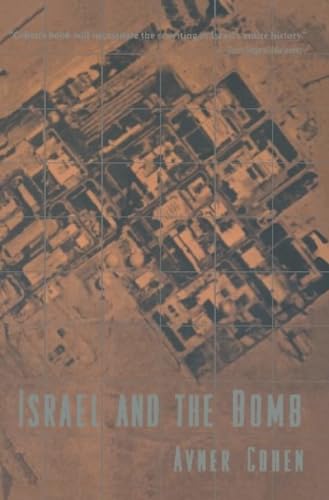
Until now, there has been no detailed account of Israel's nuclear history. Previous treatments of the subject relied heavily on rumors, leaks, and journalistic speculations. But with Israel and the Bomb, Avner Cohen has forged an interpretive political history that draws on thousands of American and Israeli government documents—most of them recently declassified and never before cited—and more than one hundred interviews with key individuals who played important roles in this story. Cohen reveals that Israel crossed the nuclear weapons threshold on the eve of the 1967 Six-Day War, yet it remains ambiguous about its nuclear capability to this day. What made this posture of "opacity" possible, and how did it evolve?
Cohen focuses on a two-decade period from about 1950 until 1970, during which David Ben-Gurion's vision of making Israel a nuclear-weapon state was realized. He weaves together the story of the formative years of Israel's nuclear program, from the founding of the Israeli Atomic Energy Commission in 1952, to the alliance with France that gave Israel the sophisticated technology it needed, to the failure of American intelligence to identify the Dimona Project for what it was, to the negotiations between President Nixon and Prime Minister Meir that led to the current policy of secrecy. Cohen also analyzes the complex reasons Israel concealed its nuclear program—from concerns over Arab reaction and the negative effect of the debate at home to consideration of America's commitment to nonproliferation.
Israel and the Bomb highlights the key questions and the many potent issues surrounding Israel's nuclear history. This book will be a critical resource for students of nuclear proliferation, Middle East politics, Israeli history, and American-Israeli relations, as well as a revelation for general readers.
Die Inhaltsangabe kann sich auf eine andere Ausgabe dieses Titels beziehen.
Über die Autorin bzw. den Autor
Avner Cohen is a senior research fellow at the National Security Archive at George Washington University. He has taught and researched in universities in Israel and the United States and has published numerous articles on subjects as diverse as skepticism, political theory, nuclear ethics, nuclear proliferation, and Israeli history. He is the coeditor of Nuclear Weapons and the Future of Humanity and The Institution of Philosophy.
„Über diesen Titel“ kann sich auf eine andere Ausgabe dieses Titels beziehen.
Suchergebnisse für Israel and the Bomb

Foto des Verkäufers
Israel and the Bomb
Verlag:
Columbia University Press, New York, 1998
ISBN 10: 0231104839
ISBN 13: 9780231104838
Gebraucht
Soft cover
Anbieter: Rosario Beach Rare Books, Lake Stevens, WA, USA
Verkäuferbewertung 5 von 5 Sternen

Soft cover. Zustand: Very Good. *Veteran-Owned, Family-Run, Small Book Store in the Pacific Northwest* FAST SHIPPING!! Clean text, no markings aside from 3 or so pages with a few notes, tight binding, minor shelf wear, minor soiling on the side text block. 3rd Printing, 1998. 470 pp. Artikel-Nr. ABE-1789342884487
Gebraucht kaufen
EUR 27,26
Versand gratis
Versand innerhalb von USA
Versand innerhalb von USA
Anzahl: 1 verfügbar
Beispielbild für diese ISBN
Israel and the Bomb
Verlag:
Columbia University Press (edition Revised ed.), 1999
ISBN 10: 0231104839
ISBN 13: 9780231104838
Neu
Paperback
Anbieter: BooksRun, Philadelphia, PA, USA
Verkäuferbewertung 5 von 5 Sternen
Paperback. Zustand: New. Revised ed. The item is brand new, never used or read. It's in perfect condition and may include supplements and/or access codes or come shrink-wrapped. Artikel-Nr. 0231104839-10-1
Beispielbild für diese ISBN
Israel and the Bomb
Anbieter: Revaluation Books, Exeter, Vereinigtes Königreich
Verkäuferbewertung 5 von 5 Sternen
Paperback. Zustand: Brand New. 478 pages. 9.25x6.25x1.25 inches. In Stock. Artikel-Nr. x-0231104839
Neu kaufen
EUR 76,90
EUR 14,90 Versand
Versand von Vereinigtes Königreich nach USA
Versand von Vereinigtes Königreich nach USA
Anzahl: 2 verfügbar
Beispielbild für diese ISBN
Israel and the Bomb
Verlag:
Columbia University Press, New York, 1998
ISBN 10: 0231104839
ISBN 13: 9780231104838
Gebraucht
Trade paperback
Erstausgabe
Anbieter: Ground Zero Books, Ltd., Silver Spring, MD, USA
Verkäuferbewertung 5 von 5 Sternen
Trade paperback. Zustand: Very good. First Printing [Stated]. xviii, [2], 470, [4] pages. Notes. Glossary. Sources and Bibliography. Index. Minor edge soiling. Avner Cohen (born 1951) is an Israeli-American writer, historian, and professor. He is a prominent figure in the nonproliferation and nuclear history academic communities, well known for his works on Israel's nuclear history and global nuclear history. He is currently a professor at the Nonproliferation and Terrorism Studies (NPTS) Program at the Middlebury Institute of International Studies, where he also serves as a senior affiliate at the James Martin Center for Nonproliferation Studies. Cohen started his work on nuclear weapons issues in the early 1980s from the perspective of a philosopher exploring the dilemmas of the nuclear age: acquisition, deterrence, and proliferation. It was motivated by the anti-nuclear protest of the early 1980s. Much of his early work, in the early-mid 1980s, focused on the moral dilemmas of the nuclear age. In 1990, after he was awarded the MacArthur Foundation Research and Writing grant, Cohen resigned his position at Tel Aviv University and took a research position at the Center of International Studies at MIT. With physicist Dr. Marvin Miller as a partner, they initiated a new project aimed to study the nuclear issue in the Middle East. Cohen's seminal work, Israel and the Bomb, which chronicled the political history of the Israeli nuclear program, was researched and written while he was at MIT. While researching for the book, Cohen encountered a series of confrontations with the Israeli security apparatus that ultimately resulted in an unprecedented criminal investigation against him. This was an unprecedented decade-long struggle over the research and publication of Israel and the Bomb. Previous treatments of the subject relied heavily on rumors, leaks, and journalistic speculations. But with Israel and the Bomb, Avner Cohen has forged an interpretive political history that draws on thousands of American and Israeli government documents most of them recently declassified and never before cited and more than one hundred interviews with key individuals who played important roles in this story. Cohen reveals that Israel crossed the nuclear weapons threshold on the eve of the 1967 Six-Day War, yet it remains ambiguous about its nuclear capability to this day. What made this posture of "opacity" possible, and how did it evolve? Cohen focuses on a two-decade period from about 1950 until 1970, during which David Ben-Gurion's vision of making Israel a nuclear-weapon state was realized. He weaves together the story of the formative years of Israel's nuclear program, from the founding of the Israeli Atomic Energy Commission in 1952, to the alliance with France that gave Israel the sophisticated technology it needed, to the failure of American intelligence to identify the Dimona Project for what it was, to the negotiations between President Nixon and Prime Minister Meir that led to the current policy of secrecy. Cohen analyzes the complex reasons Israel concealed its nuclear program from concerns over Arab reaction and the negative effect of the debate at home to consideration of America's commitment to nonproliferation. Israel and the Bomb highlights the key questions and the many potent issues surrounding Israel's nuclear history. Artikel-Nr. 90952
Gebraucht kaufen
EUR 91,69
EUR 4,45 Versand
Versand innerhalb von USA
Versand innerhalb von USA
Anzahl: 1 verfügbar
Foto des Verkäufers
Cohen, A: Israel and the Bomb
Anbieter: moluna, Greven, Deutschland
Verkäuferbewertung 5 von 5 Sternen
Zustand: New. This interpretive political history that draws on thousands of American and Israeli government documents-most of them recently declassified and never before cited-and more than one hundred interviews with key individuals who played important roles in this s. Artikel-Nr. 594456297
Neu kaufen
EUR 59,13
EUR 48,99 Versand
Versand von Deutschland nach USA
Versand von Deutschland nach USA
Anzahl: Mehr als 20 verfügbar
Foto des Verkäufers
Israel and the Bomb
Verlag:
Columbia University Press Sep 1999, 1999
ISBN 10: 0231104839
ISBN 13: 9780231104838
Neu
Taschenbuch
Anbieter: AHA-BUCH GmbH, Einbeck, Deutschland
Verkäuferbewertung 5 von 5 Sternen
Taschenbuch. Zustand: Neu. Neuware - Until now, there has been no detailed account of Israel's nuclear history. Previous treatments of the subject relied heavily on rumors, leaks, and journalistic speculations. But with Israel and the Bomb, Avner Cohen has forged an interpretive political history that draws on thousands of American and Israeli government documents -- most of them recently declassified and never before cited -- and more than one hundred interviews with key individuals who played important roles in this story. Cohen reveals that Israel crossed the nuclear weapons threshold on the eve of the 1967 Six-Day War, yet it remains ambiguous about its nuclear capability to this day. What made this posture of 'opacity' possible, and how did it evolve. Artikel-Nr. 9780231104838
Neu kaufen
EUR 80,63
EUR 35,00 Versand
Versand von Deutschland nach USA
Versand von Deutschland nach USA
Anzahl: 2 verfügbar