
Verwandte Artikel zu This Borrowed Earth: Lessons from the 15 Worst Environmental...
This Borrowed Earth: Lessons from the 15 Worst Environmental Disasters Around the World (MacSci) - Softcover
Buch 7 von 24: MacSci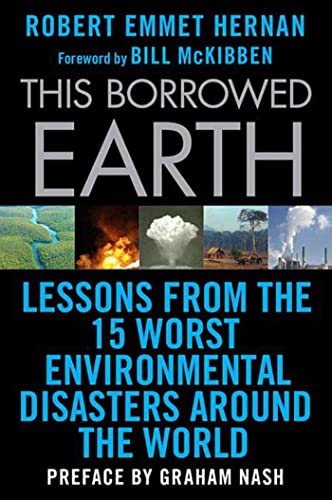
Inhaltsangabe
Over the last century mankind has irrevocably damaged the environment through the unscrupulous greed of big business and our own willful ignorance. Here are the strikingly poignant accounts of disasters whose names live in infamy: Chernobyl, Bhopal, Exxon Valdez, Three Mile Island, Love Canal, Minamata and others. And with these, the extraordinary and inspirational stories of the countless men and women who fought bravely to protect the communities and environments at risk.
Die Inhaltsangabe kann sich auf eine andere Ausgabe dieses Titels beziehen.
Über die Autorin bzw. den Autor
Robert Emmet Hernan is a former senior counsel for the New York State Department of Environmental Conservation and Assistant Attorney General for New York State. He was a trial lawyer for New York State in the infamous Love Canal Case. He lives in New York City.
Auszug. © Genehmigter Nachdruck. Alle Rechte vorbehalten.
This Borrowed Earth
Lessons From The Fifteen Worst Environmental Disasters Around The World
By Robert Emmet HernanPalgrave Macmillan
Copyright © 2010 Robert Emmet Hernan
All rights reserved.
ISBN: 978-0-230-61983-8All rights reserved.
Contents
Acknowledgments,
Foreword by Bill McKibben,
Preface by Graham Nash,
Introduction,
Minamata, Japan, 1950s,
London, England, 1952,
Windscale, England, 1957,
Seveso, Italy, 1976,
Love Canal, New York, 1978,
Three Mile Island, Pennsylvania, 1979,
Times Beach, Missouri, 1982,
Bhopal, India, 1984,
Chernobyl, Ukraine, 1986,
Rhine River, Switzerland, 1986,
Prince William Sound, Alaska, 1989,
Oil Spills and Fires of Kuwait, 1991,
Dassen and Robben Islands, South Africa, 2000,
Brazilian Rainforest,
Global Climate Change,
List of Some Environmental Organizations,
Notes,
Sources,
Index,
CHAPTER 1
MINAMATA, JAPAN 1950s
Minamata is a fishing town beautifully situated on a bay in the foothills of the mountains on Kyushu, the southernmost of Japan's four main islands. In 1908, the Chisso electrochemical company established a plant there. Labor and land were cheap, and water from the mountains supplied plenty of hydropower.
The company began by using calcium carbide to make acetylene, a fuel for lamps, and then developed facilities for making nitrogen fertilizer and other products. The fertilizer was important for Japanese farming, and it turned into a major export product when the First World War disrupted supplies from Europe. After the war, Chisso developed organic chemical compounds to produce a variety of materials, including acetaldehyde, which employed mercury as a catalyst. Acetaldehyde, first made in 1932, was used in plastics, pharmaceuticals, photographic chemicals, and perfumes. The company prospered as a result of the economic reconstruction following World War II and the Korean War. By the 1950s, the company reemerged as a dominant force in Minamata. Increased production of acetaldehyde and other organic chemical products resulted in a concomitant increase in wastewater, which Chisso continued to dump into Minamata Bay.
Already in the 1920s fishermen had complained about the pollution of their fishing grounds in Minamata Bay, but Chisso was a major source of jobs and revenue and was able to make small payments to the fishermen in return for the right to continue polluting. By the 1950s the waste disposal practices began to catch up with the company as the pollution's impact began to be felt by inhabitants of Minamata and neighboring villages.
Fishing was always a critical resource in Minamata. What the fishermen did not sell, they and their families and neighbors ate. In the early 1950s, mullet, lobster, and shad began to disappear from the once-fertile fishing grounds. Dead fish were found floating on the sea; birds dropped dead from the sky. The local fishermen had to borrow money to eat and to buy nylon nets in order to capture what few fish were left. Nets were often lifted out of the sea bearing only a heavy sludge from Chisso's wastewater. The cats in the village started to dance crazily, bash themselves against walls, jump into the sea, and drown.
In 1954, Dr. Hajime Hosokawa, director of the hospital at the Chisso plant, began to see patients with impaired nervous systems. Mostly fishermen and their families, they had difficulty walking and talking and suffered wild mood swings. Their bodies were racked with convulsions. Most disturbing, newborns were exhibiting symptoms, which indicated the presence of a congenital form of the disease. Local health officials conducted a survey of physicians in the area and found that scores of patients had presented similar symptoms and that many of them had died. Especially affected were the fishing communities south of Minamata, where several members of the same family were often afflicted.
Eiko Sugimoto was born in Modõ, a small fishing community just south of Minamata. Her father was the boss of the local net fishery, and as the only child, though a girl, she was expected to carry on the business. One day in 1958, she returned home from a fishing trip and found her mother confused and unable to light her cigarette; the floor was covered with matches. Sugimoto's father took her mother to the hospital. Since this strange illness appeared to affect members of the same family, neighbors feared the disease might be contagious. When Sugimoto walked down to the shore to care for their boat, she was stoned by her friends and neighbors. Covered with cuts and bruises, she tried to find comfort and safety in a neighboring house. Instead, her neighbors threw excrement on her. Shopkeepers refused to touch the diseased; they made them pass their money in special baskets or leave it on the floor so it could be picked up with chopsticks. When Sugimoto and her father also felt sick, they hid it. Treated like lepers in their own communities, the victims felt deeply ashamed. Recriminations destroyed once-close fishing communities.
As the disease spread through the mid-1950s, suspicions fell on Chisso's wastewater since it was widely known to have ruined the fishing grounds in the area. But no one knew what was in the wastewater, and Chisso was not providing any information. Researchers struggled with studies of a host of pollutants found in the bay and were not able to isolate any particular toxic material that would cause such a disease.
In late 1958 a British neurologist who had visited Minamata suggested in The Lancet that the disease's symptoms were similar to those produced by organic mercury poisoning. Organic, or methyl, mercury concentrates in the brain and attacks the central nervous system, killing brain cells and turning the brain into a sponge, full of holes. Since it destroys nerve cells, there is no cure for severe cases. The poison can kill a victim in weeks, or slowly eat away at the body for years.
Within a year, a pathologist, Dr. Tadao Takeuchi at Kumamoto University, confirmed the findings, and a special governmental research committee also found that organic mercury was the cause, although it did not attribute the mercury's origins to Chisso's operations. The government disbanded the committee as soon as the report was issued and transferred any further research to a group under the control of several trade ministers who were sympathetic to the company.
Chisso executives tried to deflect attention away from its wastewater by advancing its own theory that the disease was caused by ammunition dumped in the sea at the end of World War II. A researcher at Kumamoto University, Dr. K. Irukayama, discovered, however, that inorganic mercury used as a catalyst in the production of acetaldehyde in the factory was converted into organic mercury. He concluded that the illness was caused by the discharge from Chisso's wastewater, which contained organic mercury. Chisso disputed the charge and claimed that its wastewater could not be the cause since it used only harmless inorganic mercury in its production. The company did not share samples of its wastewater, so no one could disprove the claim.
No one, that is, except Chisso's own Dr. Hosokawa. The doctor had been conducting a series of experiments on cats by feeding them food sprinkled with various chemicals from Chisso's processes. When he fed wastewater from the process that produced acetaldehyde to a cat, it exhibited the same symptoms as those afflicted with Minamata Disease. An autopsy of the cat and lab results...
„Über diesen Titel“ kann sich auf eine andere Ausgabe dieses Titels beziehen.
Suchergebnisse für This Borrowed Earth: Lessons from the 15 Worst Environmental...

Beispielbild für diese ISBN
This Borrowed Earth: Lessons from the Fifteen Worst Environmental Disasters Around the World
Anbieter: World of Books (was SecondSale), Montgomery, IL, USA
Verkäuferbewertung 5 von 5 Sternen

Paperback. Zustand: Good. Humanity has the potential to preserve the earth for future generations or cause irreparable harm. For the first time here, environmental lawyer and activist Robert Emmet Hernan provides a comprehensive, up-to-date treatment of what happened at fifteen environmental disasters in ten countries across the globe. Artikel-Nr. 00100336234
Gebraucht kaufen
EUR 3,75
Versand gratis
Versand innerhalb von USA
Versand innerhalb von USA
Anzahl: 3 verfügbar
Beispielbild für diese ISBN
This Borrowed Earth: Lessons from the Fifteen Worst Environmental Disasters Around the World
Anbieter: World of Books (was SecondSale), Montgomery, IL, USA
Verkäuferbewertung 5 von 5 Sternen
Paperback. Zustand: Very Good. Humanity has the potential to preserve the earth for future generations or cause irreparable harm. For the first time here, environmental lawyer and activist Robert Emmet Hernan provides a comprehensive, up-to-date treatment of what happened at fifteen environmental disasters in ten countries across the globe. Artikel-Nr. 00107769962
Gebraucht kaufen
EUR 3,75
Versand gratis
Versand innerhalb von USA
Versand innerhalb von USA
Anzahl: 1 verfügbar
Beispielbild für diese ISBN
This Borrowed Earth: Lessons from the Fifteen Worst Environmental Disasters around the World (MacSci)
Verlag:
St. Martin's Griffin (edition 1), 2010
ISBN 10: 0230619835
ISBN 13: 9780230619838
Gebraucht
Paperback
Anbieter: BooksRun, Philadelphia, PA, USA
Verkäuferbewertung 5 von 5 Sternen
Paperback. Zustand: Very Good. 1. It's a well-cared-for item that has seen limited use. The item may show minor signs of wear. All the text is legible, with all pages included. It may have slight markings and/or highlighting. Artikel-Nr. 0230619835-8-6
Gebraucht kaufen
EUR 4,67
Versand gratis
Versand innerhalb von USA
Versand innerhalb von USA
Anzahl: 1 verfügbar
Beispielbild für diese ISBN
This Borrowed Earth
Anbieter: ThriftBooks-Phoenix, Phoenix, AZ, USA
Verkäuferbewertung 5 von 5 Sternen
Paperback. Zustand: Very Good. No Jacket. May have limited writing in cover pages. Pages are unmarked. ~ ThriftBooks: Read More, Spend Less. Artikel-Nr. G0230619835I4N00
Gebraucht kaufen
EUR 6,06
Versand gratis
Versand innerhalb von USA
Versand innerhalb von USA
Anzahl: 1 verfügbar
Beispielbild für diese ISBN
This Borrowed Earth
Anbieter: ThriftBooks-Atlanta, AUSTELL, GA, USA
Verkäuferbewertung 5 von 5 Sternen
Paperback. Zustand: Very Good. No Jacket. May have limited writing in cover pages. Pages are unmarked. ~ ThriftBooks: Read More, Spend Less. Artikel-Nr. G0230619835I4N00
Gebraucht kaufen
EUR 6,06
Versand gratis
Versand innerhalb von USA
Versand innerhalb von USA
Anzahl: 1 verfügbar
Beispielbild für diese ISBN
This Borrowed Earth
Anbieter: ThriftBooks-Dallas, Dallas, TX, USA
Verkäuferbewertung 5 von 5 Sternen
Paperback. Zustand: Very Good. No Jacket. May have limited writing in cover pages. Pages are unmarked. ~ ThriftBooks: Read More, Spend Less. Artikel-Nr. G0230619835I4N00
Gebraucht kaufen
EUR 6,06
Versand gratis
Versand innerhalb von USA
Versand innerhalb von USA
Anzahl: 1 verfügbar
Beispielbild für diese ISBN
This Borrowed Earth : Lessons from the Fifteen Worst Environmental Disasters Around the World
Anbieter: Better World Books: West, Reno, NV, USA
Verkäuferbewertung 5 von 5 Sternen
Zustand: Good. Pages intact with minimal writing/highlighting. The binding may be loose and creased. Dust jackets/supplements are not included. Stock photo provided. Product includes identifying sticker. Better World Books: Buy Books. Do Good. Artikel-Nr. GRP97583865
Gebraucht kaufen
EUR 6,19
Versand gratis
Versand innerhalb von USA
Versand innerhalb von USA
Anzahl: 1 verfügbar
Beispielbild für diese ISBN
This Borrowed Earth : Lessons from the Fifteen Worst Environmental Disasters Around the World
Anbieter: Better World Books, Mishawaka, IN, USA
Verkäuferbewertung 5 von 5 Sternen
Zustand: Good. Former library copy. Pages intact with minimal writing/highlighting. The binding may be loose and creased. Dust jackets/supplements are not included. Includes library markings. Stock photo provided. Product includes identifying sticker. Better World Books: Buy Books. Do Good. Artikel-Nr. GRP56642207
Gebraucht kaufen
EUR 6,19
Versand gratis
Versand innerhalb von USA
Versand innerhalb von USA
Anzahl: 2 verfügbar
Beispielbild für diese ISBN
This Borrowed Earth : Lessons from the Fifteen Worst Environmental Disasters Around the World
Anbieter: Better World Books, Mishawaka, IN, USA
Verkäuferbewertung 5 von 5 Sternen
Zustand: Good. Pages intact with minimal writing/highlighting. The binding may be loose and creased. Dust jackets/supplements are not included. Stock photo provided. Product includes identifying sticker. Better World Books: Buy Books. Do Good. Artikel-Nr. GRP97583865
Gebraucht kaufen
EUR 6,19
Versand gratis
Versand innerhalb von USA
Versand innerhalb von USA
Anzahl: 1 verfügbar
Beispielbild für diese ISBN
This Borrowed Earth: Lessons from the Fifteen Worst Environmental Disasters around the World
Anbieter: Wonder Book, Frederick, MD, USA
Verkäuferbewertung 5 von 5 Sternen
Zustand: Good. Good condition. A copy that has been read but remains intact. May contain markings such as bookplates, stamps, limited notes and highlighting, or a few light stains. Artikel-Nr. U02B-05332
Gebraucht kaufen
EUR 6,43
Versand gratis
Versand innerhalb von USA
Versand innerhalb von USA
Anzahl: 1 verfügbar